

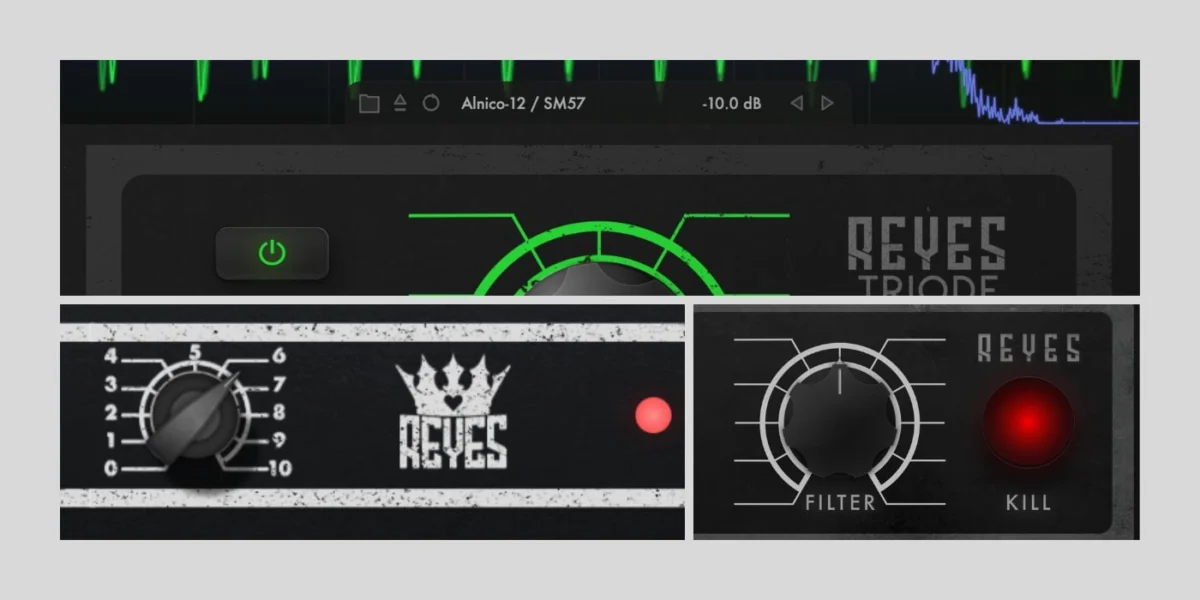
Developer Reyes Amplifonics has meticulously resurrected the distinctive sonic character of the classic 1959 Harmony H303 tube amplifier, translating its unique warmth and dynamic response into a suite of three new audio plugins: Triode, Reyes 303, and Kill Filter. This ambitious project, which involved the physical reconstruction of an original H303 amplifier from the ground up, offers musicians and producers an unprecedented opportunity to integrate a revered piece of audio history into their digital workflows, with two of the three plugins available as free downloads. The Triode plugin, a comprehensive component model of the vintage H303, is priced at $39.99, while the Reyes 303 and Kill Filter plugins are accessible to all at no cost, providing a strategic entry point into Reyes Amplifonics’ dedication to authentic vintage emulation. This release not only introduces powerful new tools for sound design and music production but also highlights a profound commitment to audio archeology and precision engineering, aiming to preserve and disseminate the unique sonic textures of a bygone era through cutting-edge digital signal processing.
The Enduring Legacy of the Harmony H303: A Cult Classic Reborn
To truly appreciate the significance of Reyes Amplifonics’ latest offerings, one must delve into the rich history of the Harmony Company and the particular allure of its H303 tube amplifier. Founded in Chicago in 1892, Harmony grew to become one of the largest manufacturers of musical instruments in the United States, particularly renowned for its affordable yet characterful guitars, banjos, mandolins, and amplifiers throughout the mid-20th century. While not always at the forefront of high-end innovation, Harmony instruments and amplifiers were ubiquitous, serving as the entry point for countless aspiring musicians and finding their way into the hands of professionals seeking unique tones.
The Harmony H303, often referred to as the "Harmony Amp," was a modest yet surprisingly potent amplifier produced during the late 1950s and early 1960s. Its compact design belied a distinctive sonic personality that has garnered a devoted following over the decades. Characterized by its relatively simple circuit, the H303 typically featured a 12SQ7 triode preamp tube and a 50L6 pentode output tube, often paired with a small 6-inch Jensen Alnico speaker. This specific tube complement, more commonly found in 1950s radio sets than in typical guitar amplifiers, contributed to the H303’s unique tonal fingerprint: a warm, somewhat gritty sound that could range from clean, slightly compressed tones at lower volumes to a wonderfully saturated, harmonically rich overdrive when pushed. Its lo-fi yet musical qualities made it a favorite among blues, garage rock, and experimental musicians seeking a raw, authentic vintage vibe that stood apart from the more polished sounds of Fender or Marshall.
The appeal of vintage tube amplifiers, such as the Harmony H303, in contemporary music production stems from their inherent analog characteristics. Unlike solid-state circuits, vacuum tubes introduce non-linear harmonic distortion, natural compression, and dynamic responsiveness that interact intimately with a musician’s playing style. This organic interaction results in a perceived "warmth," "depth," and "mojo" that digital emulations relentlessly strive to replicate. The H303, with its distinct voice, represents a specific corner of this sonic landscape—one that offers unique textures often difficult to achieve with more common amplifier models. Its re-emergence in plugin form addresses a niche demand for these specific, often elusive, vintage sounds.
A Journey of Sonic Reconstruction: Reyes Amplifonics’ Meticulous Process
The genesis of these new plugins is rooted in an extraordinary undertaking by Reyes Amplifonics: the complete, part-for-part physical reconstruction of a 1959 Harmony H303 tube amplifier. This wasn’t merely about acquiring an old unit and sampling it; it was an act of audio archaeology and engineering prowess. The developer’s commitment to authenticity is evident in every detail of this rebuild, documented extensively on the Reyes Amplifonics Instagram page, offering a fascinating glimpse into the painstaking process.
The reconstruction began with the careful sourcing of original specifications and, where possible, New Old Stock (NOS) components. This included the critical vacuum tubes – the 12SQ7 triode and 50L6 pentode – which are integral to the H303’s sonic character. NOS tubes are unused, vintage tubes manufactured decades ago, often possessing slightly different characteristics than modern reproductions, which can subtly but significantly impact an amplifier’s tone and feel. The decision to use these specific tubes, rather than more common guitar amplifier tubes, underscores the developer’s dedication to recreating the precise sonic nuances of the original design.
Further emphasizing this commitment was the use of point-to-point wiring. This traditional method, common in vintage electronics, involves directly connecting components with short wire runs, minimizing signal path length and ensuring optimal signal integrity. While more labor-intensive than modern printed circuit boards, point-to-point wiring is often credited by audiophiles and engineers for contributing to the open, dynamic, and responsive feel of classic tube amplifiers. Rebuilding the H303 with this original wiring scheme ensured that the electrical characteristics, and thus the sonic behavior, of the recreated amplifier mirrored its 1959 counterpart as closely as possible.
Crucially, the rebuild also incorporated a 6-inch Jensen Alnico speaker, a vital component in shaping the H303’s overall sound. Jensen speakers were a staple in many American amplifiers of the era, and their specific cone materials, magnet structures (Alnico, in this case), and voice coil designs play an immense role in the amplifier’s frequency response, breakup characteristics, and overall dynamic feel. By rebuilding the amplifier with these precise specifications, Reyes Amplifonics established an unparalleled foundation for its subsequent digital emulation.
Following the physical reconstruction, the next phase involved advanced component-modeling. This sophisticated technique goes far beyond simple impulse responses (IRs) or black-box modeling. Instead, component modeling involves mathematically simulating the behavior of each individual electronic component within the amplifier’s circuit – every resistor, capacitor, tube, transformer, and even the speaker’s interaction with the cabinet. By understanding and replicating these individual behaviors and their complex interactions, the developer can create a highly accurate and dynamic digital twin that responds to input signals in a manner almost indistinguishable from the original hardware. All three new plugins from Reyes Amplifonics leverage the original DSP derived from this meticulous H303 component model, ensuring a consistent and authentic sonic lineage across the suite.
The Plugin Suite: Unpacking Reyes 303, Kill Filter, and Triode
The release comprises three distinct plugins, each designed to offer unique functionalities while sharing the foundational DSP derived from the Harmony H303 component model. This tiered approach provides flexibility for users, from those seeking simple, effective tools to those demanding comprehensive control and analytical capabilities.
Reyes 303: Raw Amp Circuitry, One-Knob Simplicity (Free)
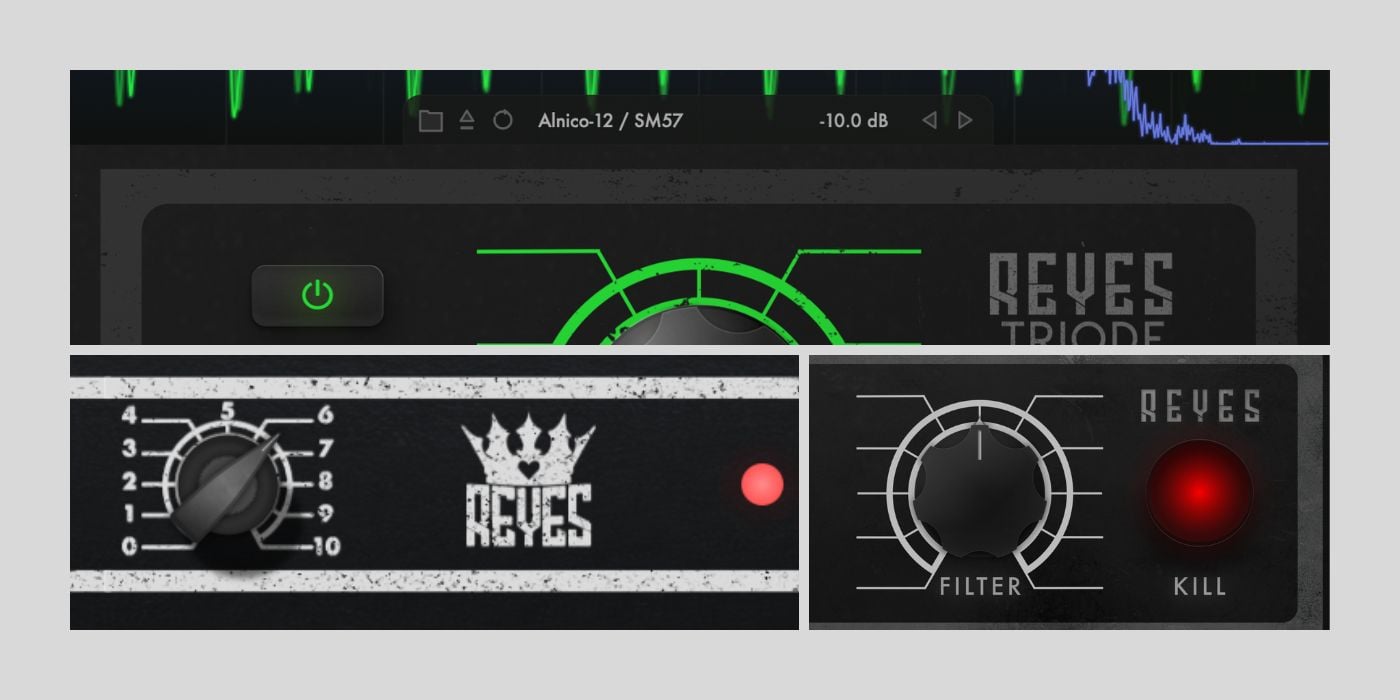
The Reyes 303 plugin serves as an accessible gateway into the H303’s distinctive sonic world. Offered as a free download, it presents the raw amp circuit with intuitive one-knob functionality, making it incredibly easy to dial in compelling tones. At its core, this plugin is built around the precise emulation of the 12SQ7 triode preamp and the 50L6 pentode output stage – the two primary amplifier tubes that were meticulously sourced as New Old Stock for the H303 rebuild.
These tubes, with their common connection to 1950s radio technology, offer a sonic character that diverges from the typical vintage amp models found in the market. Instead of the familiar EL34 or 6L6 sounds, the Reyes 303 delivers a unique blend of warmth, clarity, and a distinctly gritty saturation that evokes the golden age of lo-fi rock and blues. One of its standout features is its dynamic tube saturation, which is remarkably responsive to playing dynamics. This means the plugin doesn’t simply apply a static distortion; instead, it reacts authentically to the intensity of a player’s attack, cleaning up with a lighter touch and breaking into rich, harmonically complex overdrive when "dug into." This touch-sensitivity is a hallmark of real tube amplifiers and is crucial for an authentic playing experience, allowing for expressive performances ranging from subtle bluesy growls to aggressive garage rock crunch. For guitarists, bassists, and producers seeking to infuse tracks with a genuine vintage flavor without the complexities of multi-parameter interfaces, Reyes 303 offers an immediate and impactful solution. Its simplicity belies a sophisticated underlying engine, making it a powerful tool for adding character to a wide array of instruments or even entire mixes.
Kill Filter: Creative Sound Design with Vintage Saturation (Free)
Alongside Reyes 303, Reyes Amplifonics also offers Kill Filter as another free plugin, expanding the creative possibilities within the suite. This one-knob plugin is a DJM-style resonant high-pass/low-pass filter, complemented by a kill switch, making it a highly performative and dynamic tool. The term "DJM-style" refers to the highly popular and influential filters found on Pioneer DJM mixers, renowned for their smooth yet dramatic filter sweeps and resonant peaks.
What makes Kill Filter particularly interesting is its integration with the Reyes 303 saturation model. The filter is fed directly into this saturation stage, allowing users to produce aggressive, textured filter sweeps that combine frequency manipulation with the H303’s unique tube overdrive. This synergy enables a wide range of creative effects, from subtle tonal shaping to dramatic, rhythmic filtering, or even intense sound destruction. Imagine a synth pad slowly opening up with a resonant sweep, simultaneously gaining the gritty warmth of the H303, or a drum loop transformed by rhythmic filtering and tube saturation.
Kill Filter is designed for real-time manipulation and creative performance. It is fully automatable within any Digital Audio Workstation (DAW), allowing for precise, tempo-synced filter movements. Furthermore, its MIDI-assignable capabilities mean it can be controlled by physical MIDI controllers, making it an invaluable tool for live performances, DJ sets, or interactive sound design sessions. Its applications extend far beyond guitar, making it a versatile asset for electronic music producers, sound designers, and anyone looking to add dynamic movement and vintage texture to their audio.
Triode: The Full H303 Experience with Advanced Control ($39.99)
For those who enjoy the character of Reyes 303 and demand deeper control and analytical capabilities, Triode offers the full-component model of the vintage H303 amp. This paid plugin, priced at $39.99, represents the most comprehensive and feature-rich emulation within the suite, catering to engineers, sound designers, and guitarists who want to fully explore and sculpt the H303’s sonic possibilities.
Triode distinguishes itself with a suite of advanced features designed for precision and insight. It includes an oscilloscope and a spectral viewer, powerful visual tools that allow users to monitor the audio signal’s waveform and frequency content in real-time. The oscilloscope displays the audio signal’s amplitude over time, helping users visualize compression, distortion, and transient response, while the spectral viewer provides a detailed frequency analysis, illustrating how the H303’s circuitry shapes the tonal balance and harmonic content. These analytical tools are invaluable for understanding the subtle nuances of the H303’s behavior and for making informed mixing and sound design decisions.
Perhaps one of Triode’s most significant enhancements is its integrated impulse-response (IR) loader. Impulse responses are essentially sonic snapshots of speaker cabinets, microphones, and room acoustics. While the original H303 featured a 6-inch Jensen Alnico speaker, an IR loader allows users to bypass this fixed speaker emulation and pair the H303 amplifier model with virtually any speaker cabinet
