

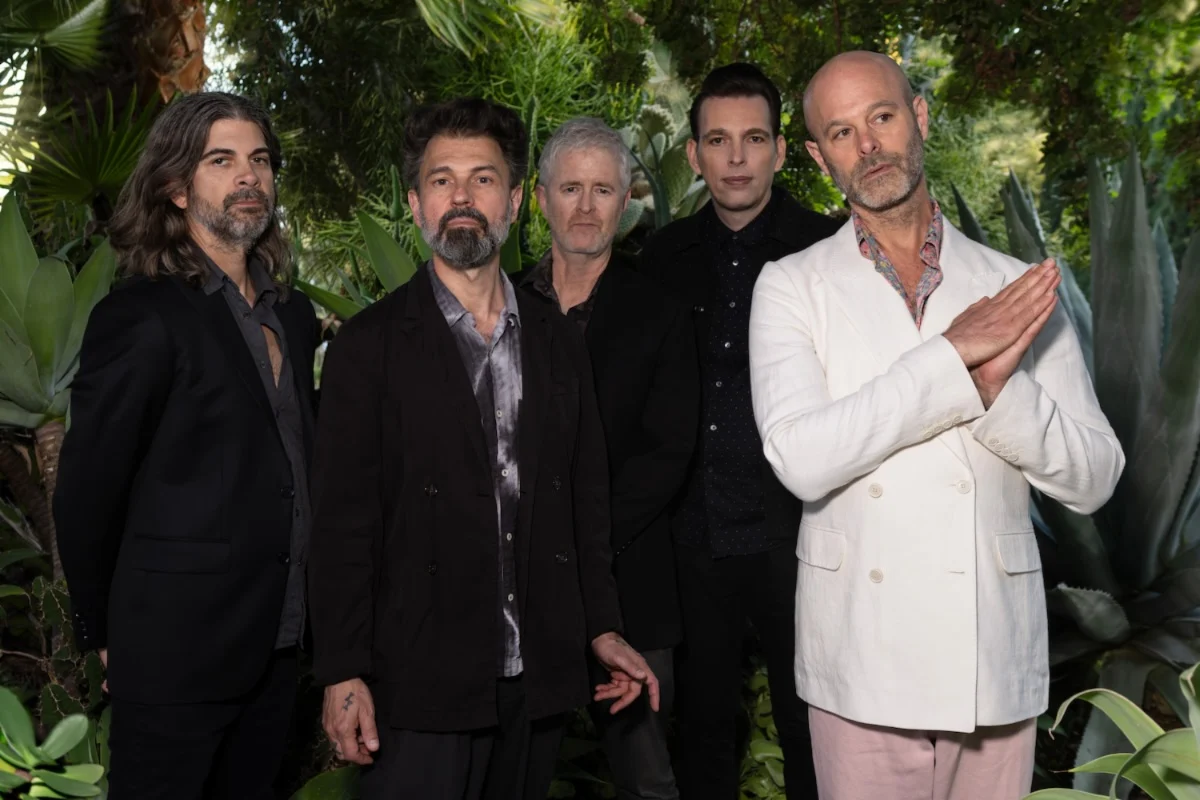
In a significant musical event that underscores the increasing fluidity of genre boundaries in contemporary music, Washington D.C.’s iconic art-punk ensemble Shudder To Think has released an urgently reimagined cover of Depeche Mode’s 1984 track "Something To Do." This unexpected homage precedes the release of their forthcoming three-track EP, Who Sent You?, set to launch on September 11 via the legendary Dischord Records. The release marks a pivotal moment for the reunited band, following their first new material in 27 years last year, and offers a compelling narrative about artistic evolution, enduring influence, and the breaking down of traditional musical silos.
The Unexpected Homage: Shudder To Think’s "Something To Do"
Shudder To Think’s rendition of "Something To Do" transforms Depeche Mode’s synth-driven original into a distinctively "Shudder To Think track," as noted by early listeners. The band injects their signature blend of angular guitars, intricate rhythms, and emotive vocals into the composition, maintaining the original’s underlying urgency while imbuing it with their unique post-hardcore sensibility. The choice of "Something To Do," a lesser-known gem from Depeche Mode’s seminal album Some Great Reward, rather than one of their more prominent singles, speaks to a deeper appreciation for the synth-pop pioneers’ artistic depth and an understanding of the track’s thematic resonance.
The original "Something To Do," the opening track from Some Great Reward, captured a specific zeitgeist of youthful ennui, burgeoning sexuality, and the search for meaning in an industrial landscape. Its lyrics, referencing "leather boots" and a desire to escape boredom, painted a vivid picture of adolescent angst that, surprisingly, finds a spiritual kinship with the raw, questioning energy often found in punk and post-hardcore. Shudder To Think’s interpretation amplifies this inherent tension, translating the original’s electronic textures into a more visceral, guitar-driven soundscape that feels both respectful of its source material and authentically their own. The cover serves as a testament to the enduring power of well-crafted songwriting, capable of transcending its original genre to connect with new generations and musical styles.
Return of a Post-Hardcore Institution: The Who Sent You? EP
The cover of "Something To Do" is a key component of Shudder To Think’s Who Sent You? EP. This three-track offering is a highly anticipated follow-up to their two-song single released last year, which marked their first new recordings since 1998. The previous single included the title track of the new EP, "Who Sent You?," signaling a renewed creative vigor from the long-dormant group. For fans who have waited nearly three decades for fresh material, the Who Sent You? EP represents not merely a return, but a re-engagement with the band’s innovative spirit.
The EP’s release on Dischord Records is particularly symbolic. Dischord, co-founded by Ian MacKaye, has been a bastion of independent music and a cornerstone of the D.C. punk and post-hardcore scene since 1980. Its commitment to DIY ethics, artistic integrity, and anti-corporate stance has shaped countless bands and influenced the broader independent music landscape. Shudder To Think’s continued association with Dischord underscores their roots and the label’s enduring relevance as a home for challenging and experimental music. The new material, including the Depeche Mode cover, demonstrates that the band’s creative wellspring remains active and capable of producing work that both honors their past and pushes into new territories.
A Storied History: Shudder To Think’s Legacy
Formed in Washington D.C. in the mid-1980s, Shudder To Think quickly distinguished themselves within the burgeoning post-hardcore scene. While initially rooted in the aggressive, angular sounds associated with their Dischord peers, the band, comprising vocalist Craig Wedren, guitarist William Rule, bassist Stuart Hill (later replaced by Mark Ibold of Pavement and The Dustdevils for the reunion), and drummer Mike Dougherty (later replaced by Kevin March), consistently demonstrated a more expansive and adventurous musical palate. Their early albums, such as Curses, Spells, Voodoo, Moans (1989) and Ten Spot (1990), showcased a growing penchant for complex song structures, melodic invention, and Wedren’s distinctive, often falsetto, vocal delivery.
It was with albums like Get Your Goat (1992) and especially Pony Express Record (1994) that Shudder To Think truly solidified their "art-punk" identity and embraced a more "glamorous" and theatrical aesthetic. These records saw them incorporating elements of pop, progressive rock, and even classical music into their aggressive framework, defying easy categorization. Their sound became increasingly intricate, often characterized by dissonant harmonies, unexpected time signature changes, and a dynamic range that shifted from whispers to screams. This artistic fearlessness set them apart from many of their contemporaries and established them as one of the most intellectually stimulating and emotionally resonant bands of the era.
Following the release of 50,000,000,000,000,000,000,000,000,000 Watts of God in 1997 and a subsequent hiatus, the band members pursued various other projects. Craig Wedren embarked on a successful career in film and television scoring, while also releasing solo material. The reunion, spearheaded by Wedren and Rule, with new members Kevin March on drums and Mark Ibold on bass, signals a potent resurgence, bringing their unique vision back into the contemporary musical discourse after a lengthy period of dormancy.
Depeche Mode’s "Some Great Reward": A Deeper Dive
Depeche Mode’s 1984 album Some Great Reward occupies a crucial position in the band’s storied discography and the broader history of electronic music. Released just three years after their debut, Speak & Spell, which was characterized by brighter, more upbeat synth-pop, Some Great Reward marked a significant pivot towards the darker, more introspective, and industrially-tinged sound that would become their hallmark. It was the band’s fourth studio album and saw them further refining their songwriting and production techniques, moving beyond simple pop hooks to explore more complex emotional and lyrical landscapes.
The album, produced by Depeche Mode and Daniel Miller, was a critical and commercial success, solidifying their status as pioneers of the burgeoning synth-pop and new wave movements. Tracks like "People Are People," "Master and Servant," and "Blasphemous Rumours" became iconic, showcasing a band unafraid to tackle themes of social injustice, sexual politics, and religious skepticism. However, as Shudder To Think notes, Some Great Reward also contained tracks like "Something To Do" that exemplified a "garish audacity" and a raw, unrefined energy that perfectly captured the feeling of being a "suburban teenager, wild on the inside, about to burst, misunderstoooood, romantic as fuck."
This period represented the "crescendo of their first phase," where "indelible pop hooks collided with kid-in-candy-store synth experiments and impossible yearning fumbled with the bra clasps of the blackest bedroom malaise." The album’s sonic palette was characterized by a meticulous layering of synthesizers, samples, and drum machines, creating rich, atmospheric soundscapes that were both melancholic and strangely uplifting. Some Great Reward laid much of the groundwork for Depeche Mode’s subsequent global superstardom and their enduring influence on countless electronic, alternative, and even rock acts.
The Confluence of Worlds: Dischord and Depeche Mode
The decision by a Dischord-affiliated band to cover Depeche Mode holds significant historical weight. In the "back in the day," as the original article notes, the perceived chasm between the aggressive, DIY ethos of hardcore punk and the often polished, electronic soundscapes of synth-pop was vast. These genres were often seen as diametrically opposed, catering to different subcultures and embodying contrasting musical philosophies. Punk valued raw authenticity and guitar-driven urgency, while synth-pop often embraced technology, melodic sophistication, and a more stylized aesthetic.
However, the musical landscape has undergone a profound transformation. The digital age, with its democratizing effect on music consumption and creation, has largely dissolved these rigid boundaries. Listeners are no longer confined by physical record store sections or specific radio formats, leading to a much broader appreciation for diverse sounds. Contemporary artists, too, draw from an eclectic range of influences, blurring lines that once seemed immutable.
Shudder To Think, with its unique "art-punk" identity, has always been positioned to bridge such divides. Their music, even within the confines of post-hardcore, consistently demonstrated a theatricality, melodicism, and willingness to experiment that transcended the typical expectations of the genre. Their "glammier" leanings and sophisticated songwriting made them an outlier within the Dischord roster, inherently more open to the sonic and emotional textures found in artists like Depeche Mode. This inherent flexibility makes their choice of "Something To Do" feel not just natural, but almost inevitable, highlighting the shared emotional core that can exist across seemingly disparate musical universes. It speaks to a maturation of musical discourse, where genuine artistic merit and thematic resonance supersede superficial genre distinctions.
Behind the Cover: The Band’s Perspective
The band’s statement accompanying the cover provides invaluable insight into the genesis of their decision, offering a glimpse into the creative process and the profound impact of Some Great Reward. For some members, the album represents "the pinnacle of their brilliance and creativity," specifically highlighting its blend of "indelible pop hooks" and "kid-in-candy-store synth experiments." They articulate how the album captured a specific kind of teenage experience – "wild on the inside, about to burst, misunderstoooood, romantic as fuck."
The specific choice of "Something To Do" was sparked by a serendipitous moment. The song came on the radio while the band was working on their new album, jogging vocalist Craig Wedren’s "sense-memory back to 16." He vividly recalls a family trip to Israel, where he would "candy-flip the cassette in his Walkman from Some Great Reward to XTC’s English Settlement and the great Dukes Of Stratosphear," a nostalgic image that perfectly encapsulates the eclectic influences of a musically curious teenager. This personal connection imbued the track with an irresistible allure.
The recording of the cover itself was remarkably spontaneous. "Minutes after finishing basic tracks for the final song on the album," the band quickly learned its structure and "let it rip, maybe three takes, no corrections." This raw, improvisational approach aligns with the energetic and unfiltered spirit they felt in the original. Adding to the moment was the presence of Thomas Lennon, actor and comedian, and Craig Wedren’s brother-in-law, who is described as both a "big Depeche Mode fan and a big Shudder To Think fan." Lennon’s "energy and enthusiasm completed the circuit," providing the necessary impetus for the band to capture the track’s essence. The band describes this creative burst as "magic gunk left at the bottom of the fuel tank, like potent resin at the bottom of the bowl," a powerful metaphor for the potent, unspent creative energy that often emerges at the culmination of a larger project.
The Resurgence of Veteran Acts: Broader Implications
Shudder To Think’s return with new music and a compelling cover is part of a broader trend within the music industry: the resurgence of veteran acts. In an era where legacy and authenticity are increasingly valued, many influential bands from previous decades are reuniting, touring, and releasing new material. This phenomenon is driven by several factors, including fan demand, the emotional connection established over decades, and the financial viability of tapping into established fanbases through streaming, vinyl reissues, and curated live experiences.
For independent labels like Dischord, the return of a band like Shudder To Think reaffirms their continued cultural relevance. It demonstrates that these labels are not merely historical archives but living entities that continue to foster artistic creation. The release of Who Sent You? on Dischord also highlights the enduring appeal of physical media and the curated experience that independent labels often provide, standing in contrast to the often-overwhelming vastness of digital platforms. This comeback also offers a unique opportunity for younger audiences to discover bands that were formative for previous generations, fostering a cross-generational appreciation for influential artists who continue to evolve and inspire.
Conclusion
Shudder To Think’s urgent take on Depeche Mode’s "Something To Do" is more than just a cover; it’s a statement. It’s a testament to the band’s enduring artistic curiosity, their ability to infuse disparate influences with their unique identity, and the increasingly permeable nature of musical genres. As the Who Sent You? EP prepares for its release on September 11, it stands as a significant marker in the ongoing narrative of a band that consistently defied easy categorization. By bridging the worlds of D.C. post-hardcore and British synth-pop, Shudder To Think not only pays tribute to a foundational influence but also reasserts their vital role in an ever-evolving musical landscape, proving that true artistry knows no boundaries.
