

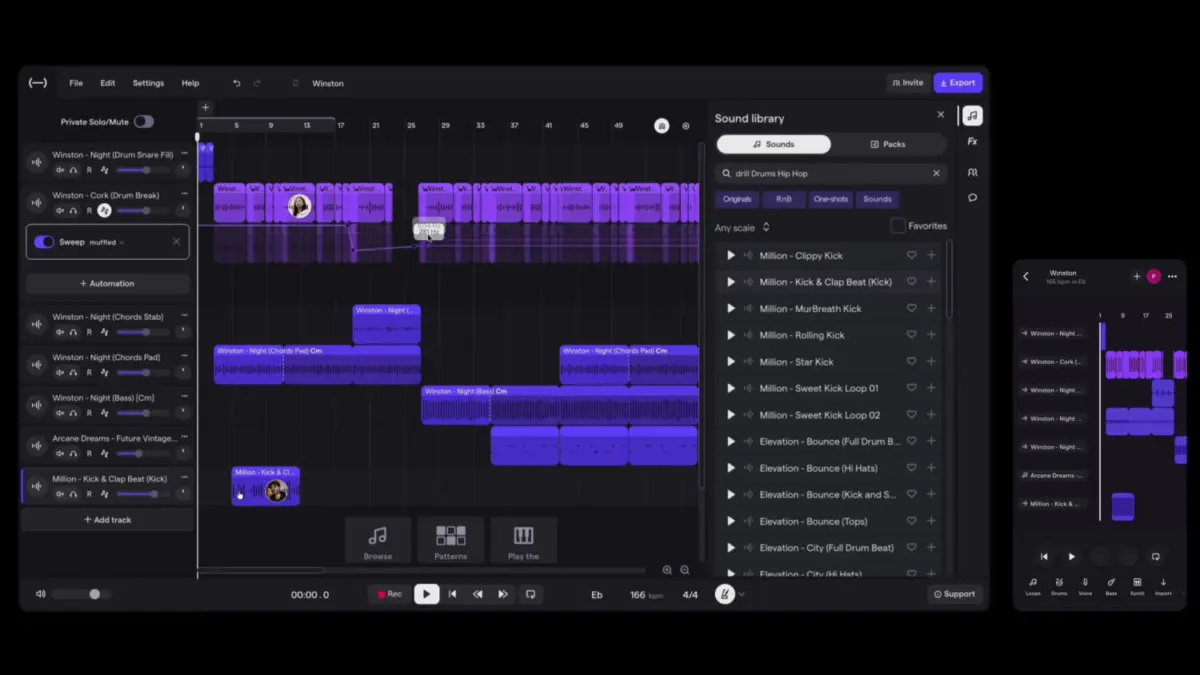
The landscape of digital music production has undergone a fundamental transformation as Soundtrap, the pioneering browser-based Digital Audio Workstation (DAW), officially announced a strategic partnership with Arturia, a global leader in high-end music hardware and software. This collaboration marks a significant technological leap for online creation, as Arturia’s flagship wavetable synthesizer, Pigments, and its sophisticated rhythmic effect processor, Efx MOTIONS, are integrated directly into the Soundtrap ecosystem. The move signals a narrowing gap between professional-grade desktop software and the accessibility of cloud-based platforms, providing emerging artists with tools that were previously reserved for high-end studio environments.
Frédéric Brun, the founder of Arturia, emphasized the importance of this milestone, noting that the partnership is designed to meet the next generation of creators at the very start of their creative process. By embedding professional-grade instruments like Pigments into a web-native platform, Arturia aims to democratize sophisticated sound design, ensuring that modern sonic exploration is available to anyone with an internet connection. This sentiment was echoed by Soundtrap Co-Founder and CEO Per Emanuelsson, who observed that the shift of creativity toward online, multi-device environments necessitates a broader and more powerful suite of tools.
The Evolution of Soundtrap and the Web-Based DAW Market
Founded in Stockholm in 2013, Soundtrap was built on the premise that music production should be collaborative and device-agnostic. In 2017, the company gained global prominence when it was acquired by Spotify, a move that integrated Soundtrap’s creative tools into the world’s largest music streaming ecosystem. While the company eventually transitioned back to independent ownership under its original founders in 2023, its mission remained focused on lowering the barrier to entry for music production while maintaining a high standard of audio quality.
The integration of Arturia’s software follows a period of rapid technological advancement for Soundtrap. Only recently, the platform unveiled support for VST (Virtual Studio Technology) effects, headlined by a partnership with Antares to bring the industry-standard Auto-Tune to the browser. The addition of virtual instrument support represents the next logical step in this evolution. Historically, web-based DAWs were limited by the processing power of browsers and the constraints of the Web Audio API. However, advancements in WebAssembly (Wasm) and cloud computing have enabled platforms like Soundtrap to run complex algorithms—such as those found in Arturia’s modeling engines—with minimal latency and high fidelity.
Technical Deep Dive: Pigments and Efx MOTIONS
The choice of Pigments and Efx MOTIONS as the inaugural flagship integrations is a calculated move to offer Soundtrap users the cutting edge of modern sound design. Pigments is widely regarded as one of the most versatile software synthesizers on the market. Unlike traditional synthesizers that rely on a single method of sound generation, Pigments utilizes a "polychrome" engine that combines virtual analog, wavetable, sample-based, and granular synthesis. For Soundtrap users, this means access to a vast palette of sounds, ranging from cinematic textures and aggressive basslines to ethereal pads and intricate leads.
Efx MOTIONS, on the other hand, serves as a powerful creative tool for adding movement and dynamic complexity to audio tracks. It combines five distinct processing modules—filter, noise, drive, volume, and pan—with an advanced sequencing system. In the context of the Soundtrap platform, Efx MOTIONS allows creators to transform static loops or simple recordings into evolving rhythmic patterns. This is particularly relevant for the "next generation" of creators mentioned by Brun, many of whom operate within genres like trap, hyperpop, and electronic dance music, where movement and texture are as important as melody.
A Chronology of Soundtrap’s Platform Expansion
The partnership with Arturia is part of a broader timeline of strategic updates aimed at positioning Soundtrap as a legitimate alternative to traditional desktop DAWs like Ableton Live, Logic Pro, or FL Studio.
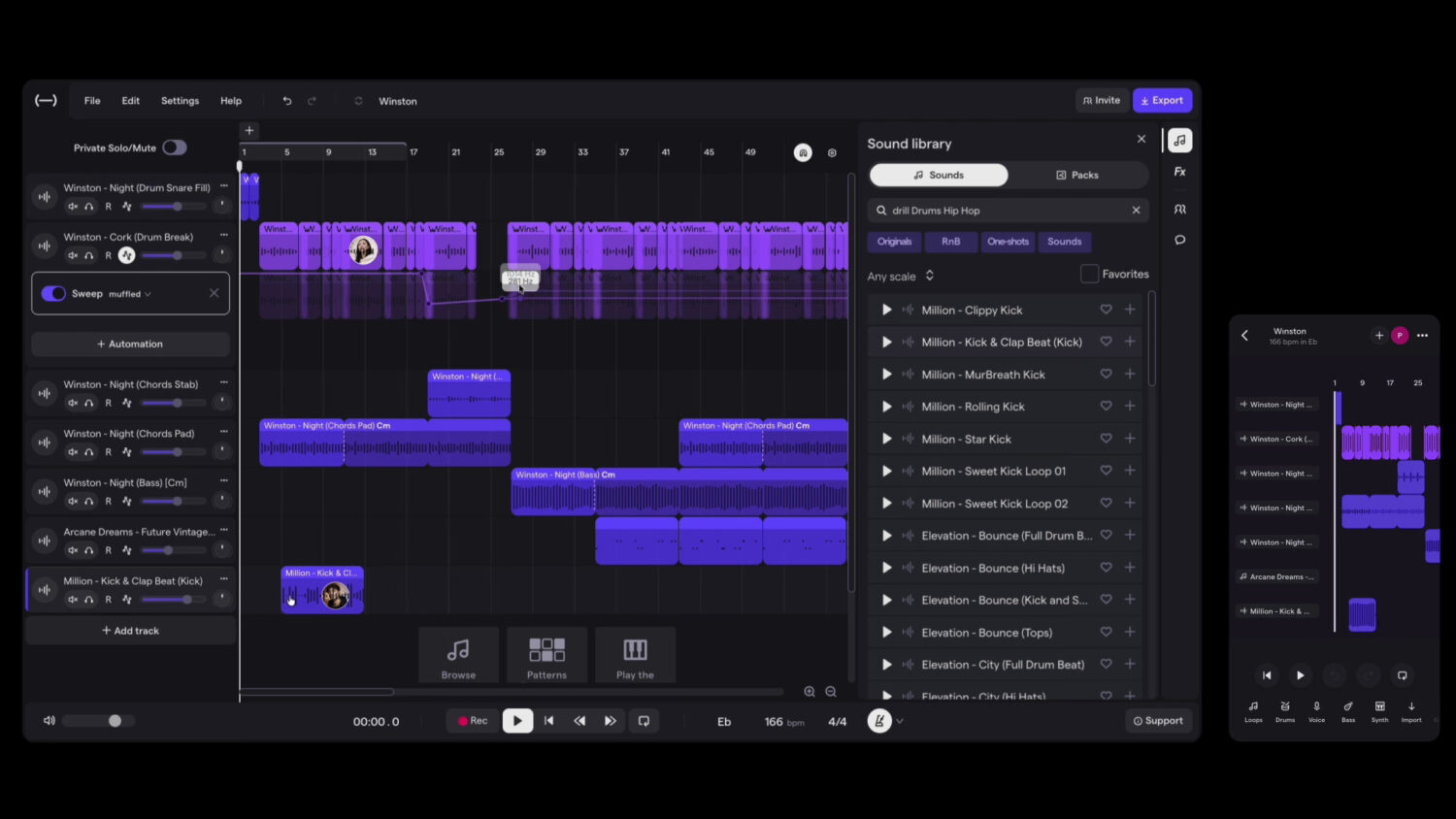
- 2013–2016: Soundtrap launches as the first web-based DAW with real-time collaboration features, primarily targeting the education sector and hobbyist creators.
- 2017–2022: Under Spotify’s ownership, Soundtrap expands its library of loops and introduces "Soundtrap for Storytellers," a dedicated environment for podcasting.
- Early 2023: The company returns to independent status, signaling a renewed focus on professional-leaning features for independent music makers.
- Late 2023: Soundtrap introduces VST effects compatibility, beginning with Antares Auto-Tune, solving one of the primary complaints of vocalists using the platform.
- 2024: The partnership with Arturia is finalized, introducing high-performance virtual instrument support (VSTi) and advanced modulation effects.
This timeline illustrates a clear trajectory from a simplified educational tool to a robust production environment capable of handling professional workflows.
Industry Implications and Market Analysis
The integration of Arturia products into Soundtrap reflects a broader trend in the music technology industry: the "SaaS-ification" (Software as a Service) and democratization of high-end tools. According to market research, the global music production software market was valued at approximately $1.2 billion in 2022 and is projected to reach nearly $2.5 billion by 2030. A significant portion of this growth is driven by the "creator economy," which comprises over 50 million individuals worldwide who identify as content creators.
By bringing Arturia’s pro-grade tools to a browser-based platform, Soundtrap is tapping into a market segment that values portability and collaboration over the traditional, stationary studio setup. This has significant implications for:
- Education: Music educators can now provide students with access to industry-standard synthesis without requiring expensive hardware or complex software installations on school computers.
- Collaboration: Because Soundtrap is cloud-based, two producers in different parts of the world can now use Pigments on the same project in real-time, a workflow that remains cumbersome in many traditional DAWs.
- Accessibility: The subscription-based model of Soundtrap allows creators who may not be able to afford the several-hundred-dollar upfront cost of professional VSTs to access these tools as part of their monthly platform fee.
Official Responses and Strategic Vision
The leadership at both companies views this partnership as more than just a technical integration; it is a statement of intent regarding the future of music creation. Frédéric Brun’s assertion that Arturia is "meeting emerging artists right at the inception of their creative journeys" suggests a long-term strategy to build brand loyalty among younger creators. By the time these artists transition to more advanced setups, they will already be proficient in Arturia’s ecosystem.
Per Emanuelsson’s vision for Soundtrap emphasizes that "music making is no longer tied to a single device or instance." This philosophy aligns with the modern consumer’s expectation that their creative work should be accessible on a laptop at home, a tablet in a café, or a desktop in a professional studio. The collaboration with Arturia ensures that this mobility does not come at the cost of sonic quality.
Conclusion and Future Outlook
As the boundaries between web applications and desktop software continue to blur, the Soundtrap and Arturia partnership stands as a definitive example of the industry’s direction. For Soundtrap, the inclusion of Pigments and Efx MOTIONS solidifies its status as a serious contender in the DAW market. For Arturia, it expands their reach into the rapidly growing sector of cloud-based creators.
Looking forward, the industry can expect further integrations of this nature. As browser technology continues to improve, it is likely that other major software developers will follow Arturia’s lead, bringing more iconic instruments and effects to the cloud. This shift not only empowers the individual creator but also redefines the studio as a digital, borderless space where professional tools are available to anyone with a creative vision. The partnership between Soundtrap and Arturia is not merely an update to a feature list; it is a significant step toward a more inclusive and technologically advanced future for global music production.
