

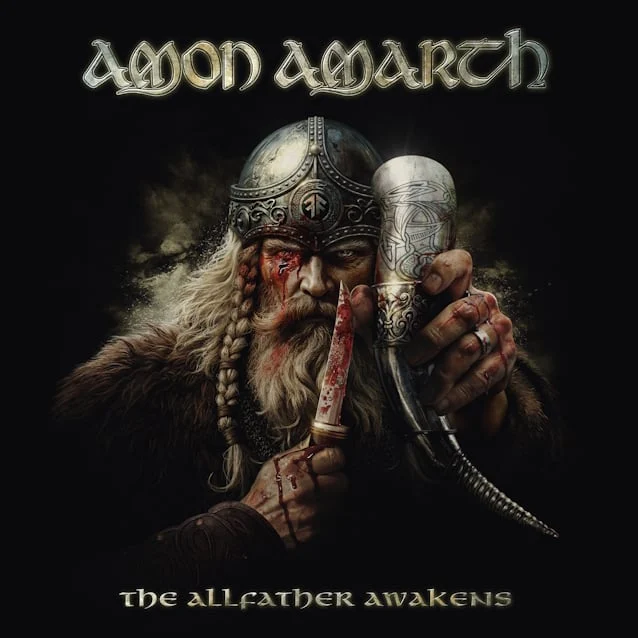
In a candid conversation with Steve Harkins on TalkShopLive, Amon Amarth’s vocalist Johan Hegg and bassist Ted Lundström offered an in-depth look into the creation of their highly anticipated 13th studio album, "The Allfather Awakens," set for release on October 2 via Metal Blade Records. The interview shed light not only on the album’s thematic core, deeply rooted in Norse mythology and Oden, the "all father," but also on the band’s evolving creative process, their enduring connection to Viking lore, and their significant impact on the global metal landscape.
A Thematic Tapestry of Norse Mythology and History
"The Allfather Awakens" continues Amon Amarth’s long-standing tradition of drawing inspiration from the rich tapestry of Norse mythology, with Oden serving as a central figure. However, Hegg clarified that the album is not a strict concept album, but rather a curated collection of epic tales inspired by historical conflicts and acts of sacrifice for a greater purpose. "It’s a themed album, I would say, where most of the songs, not all of the songs, but most of the songs, they are in one way or another connected to the Norse god Oden," Hegg explained, as transcribed by Blabbermouth.net. "And it’s dipped into a lot of the mythological aspects of Oden from Norse mythology, but also some historical motifs as well, when it comes to Viking history and the Vikings’ relations to that god, so to speak."
This thematic focus on Oden, a deity embodying war, wisdom, death, magic, and poetry, provides a unifying thread throughout the album’s lyrics and artwork. The album cover itself features a commanding portrait of Oden, rendered by artist Tom Thiel, who has contributed to seven of the band’s previous album covers, underscoring a consistent visual identity rooted in their thematic preoccupations.
The Genesis of Viking Fascination: From Childhood Wonder to Band Identity
The interview delved into the origins of Amon Amarth’s deep-seated fascination with Viking folklore. Hegg traced his interest back to his childhood, sparked by a seemingly simple act: his sister writing runes on their wall. "I was interested in Vikings from when I was very young," Hegg recalled. "And I think it started in a really silly way in a way because I was interested in history in general. Obviously I knew about Vikings, but I didn’t get interested in them until my sister actually wrote with pencil runes on her wall. And I was amazed. I was maybe, like, nine or 10, and I was amazed that we had this written language in Sweden from a thousand years ago. So that’s kind of where my interest started, and then I found that this awesome comic book series called the Valhalla series by a Danish cartoonist. And, yeah, it just rolled on from there, basically."
Lundström echoed this sentiment, highlighting how this personal passion evolved into a cornerstone of the band’s identity. "It was an interest from a young age," he stated. "And then when we started the band, when we [began working on music in] ’92, we were just looking for our own little genre, to stand out from all the other bands in Stockholm and Sweden at the time. So we kind of put our interest from the Viking mythology into the band, which worked really good for us. There were a couple of bands before us that wrote about Vikings, but it was not too many, so it was kind of like a very small genre." This strategic integration of their thematic interests proved to be a defining element, allowing Amon Amarth to carve out a distinct niche in the burgeoning metal scene of the early 1990s.
A Collaborative Partnership with Producer Jacob Hansen
The band also shared their positive experiences working with Danish producer Jacob Hansen on "The Allfather Awakens." This marked their first collaboration with Hansen, and the feedback was overwhelmingly favorable. "It was the first time we worked with him, and it was great. He’s a good guy," Hegg commented. Lundström elaborated on the initial meeting, which took place during a day off on a previous European tour. "We went to [Jacob] on a previous tour we did in Europe. We had a day off in Denmark, so we called him up and said, ‘We wanna come and have a chat and have a look at the studio.’ So we got a good day talking to him about what we wanted to do and asking him what he could bring from his side to the new production, and everything felt really good. So he was very, very easy to work with. It was very smooth sailing, the whole recording session."
Hegg, when asked if there were any moments of creative friction, dismissed the idea, emphasizing the smooth and productive nature of the sessions. "No, no, definitely not," he responded. "I think maybe the other way around because I kept wanting to do other new takes and different versions of what I already did. But no, it was super smooth. I think he was very open to our ideas, I think, and what we wanted out of this recording. And then he came up, as far as I remember anyways, he came up with some cool ideas to enhance the whole production." This collaborative spirit and Hansen’s openness to the band’s vision were crucial in shaping the final sound of the album.
Rethinking the Songwriting and Recording Process
A significant aspect of the interview revolved around Amon Amarth’s innovative approach to songwriting and recording for "The Allfather Awakens." Traditionally, the band would begin composing new material after completing a touring cycle. However, an extended period of touring for their previous album necessitated a shift in strategy. "In the past, after we were finished with touring, we started the new album," Lundström explained. "But this time, since the touring was much longer than we anticipated in the beginning – we got a lot of cool tours we couldn’t say no to – so we started, or mainly the guitar players, Olavi [Mikkonen] and Johan [Söderberg], they were starting riffing already and bouncing ideas on the tour, actually. So when we were finished touring for the last album, we already had a head start with a couple of good songs already in the backpack."
This on-the-road songwriting process was facilitated by the availability of rehearsal spaces, even if rudimentary. Hegg noted the absence of a dedicated rehearsal room for over a decade, highlighting how touring provided a makeshift environment for creative development. "I also remember that for the first time… One of the things is that we haven’t had a proper rehearsal room for over a decade," he said. "And I know especially Olavi misses the chance to work on his ideas in a rehearsal room environment. And I think one of the reasons why it worked really well to work on tour was that we could have a warm-up room with a setup with drums, like digital drums and small amplifiers, and they could jam out the songs in there, which I know that Olavi really likes to do. So I think that’s also one of the reasons why it worked so well, that we had to write on tour, that we had that opportunity."
Furthermore, the band implemented a novel recording methodology: focusing on one track at a time rather than recording all instruments for all songs concurrently. This approach was proposed to producer Jacob Hansen and met with his approval. "Yeah, that was one of the ideas we brought to Jacob, asking him if he was okay with doing [it] song by song," Lundström detailed. "And we also divided the whole album into two studio sessions. So we basically just had five or six songs each time, just to be able to focus 100 percent on each song. Because if you record 10 songs in a row, you really get like… It’s so much riffs in your head, so it just gets less quality in a way. So we recorded like one song at the time with drums, bass, guitars, vocals, and it also gave Johan a lot of time to rest his voice until the next song was ready for vocals. So it was kind of a very relaxing and 100% focus on each song."
Hegg elaborated on the benefits of this song-by-song recording process. "And also the benefit is that you record the full song, and then you can leave it. And then at the end of the session, you come back and listen to the songs and see, ‘All right, is there anything here we need to change? Is there anything that doesn’t really work here? Would it be better to have this kind of drum fill instead of that?’" he stated. "And working the way we used to in the past, where you record all the drums for all the songs and then you break down the drums, then you can’t change any drums, for instance, at the end of the recording session. So it is a good way to work because you can always do a bit of changes here and there… For the first session we had six songs, and we recorded those. And then we had to record a couple of more songs, but we had to write them first as well."
This methodical approach, characterized by focused studio sessions and song-centric completion, allowed for greater flexibility and refinement, ultimately contributing to the album’s polished and impactful sound. The album’s creation spanned two distinct recording sessions, separated by months, with the first session occurring in spring 2025 and the final recordings completed in March 2026, signifying a deliberate and unhurried creative journey.
Sonic Evolution and Enduring Power
"The Allfather Awakens" represents Amon Amarth’s 13th studio album since their 1998 debut, "Once Sent From The Golden Hall." Sonically, the band has opted for a slightly less modern approach, transitioning back to Marshall amplifiers from 5150 amps, a move that suggests a conscious effort to refine their signature sound. The songwriting process prioritized music over lyrics, with instrumental compositions often dictating the lyrical themes. The album’s title track, "The Allfather Awakes," was notably the last song to be written, solidifying Oden’s central role.
The album features a compelling tracklist, including songs like "Eight Legs Of Thunder," "Kvasir’s Blood," and "Die With A War Cry," which are imbued with historical influences and powerful lyrical themes. The latter, for instance, features the rallying cry: "Facing destruction / Annihilation / Master your thoughts and mind." Lyrically, the song "We Rule The Waves" encapsulates the band’s unyielding spirit and global reach, with lines like: "From cradle until the grave / As long as the sun sets in the west / We rule the waves / Our restless hearts / Have brought us far / As far as Vinland’s shores / We’ve gone further / Than any man has ever gone before."
A Legacy Forged in Three Decades of Metal Mastery
Formed in Tumba, Sweden, in 1992, Amon Amarth has cultivated a formidable legacy over three decades. Their influence extends far beyond their recorded music, encompassing their electrifying live performances and their profound impact on metal culture. The band has shared stages with iconic acts such as Slayer, Iron Maiden, Slipknot, and Pantera, and has commanded massive audiences at legendary venues like Los Angeles’s The Forum and Denver’s Red Rocks Amphitheatre. They have also headlined numerous major European festivals, including Wacken Open Air (2024), Bloodstock Open Air (twice), Download Festival (four times), and Summer Breeze (eight times, six as headliner).
Amon Amarth’s rapidly increasing sales and touring numbers, coupled with anticipation for their 2026 North American tour with Dethklok and Castle Rat, underscore their sustained mainstream success without compromising their creative evolution or sonic heaviness. Their appeal spans a broad demographic, from young teenagers to seasoned metal fans, fostering an inclusive environment characterized by epic positivity and inspirational lyrical content.
The "Viking Row" Phenomenon: A Testament to Fan Engagement
Perhaps one of the most striking examples of Amon Amarth’s cultural impact is the genesis of the "Viking row." This iconic fan-driven ritual, where audience members mimic rowing an invisible longship in unison, is widely believed to have originated during a 2009 Amon Amarth set at Bloodstock. This powerful display of unity and shared experience has since spread to other concerts and global events, even being observed at the 2026 World Cup. The band’s 2022 single and accompanying video, "Put Your Back Into The Oar," was a direct tribute to this phenomenon, with Hegg stating, "we thought it was a good idea to write a song about The Row! This one is for you, the fans, wherever you are—and may Oden guide you as you row to your destiny in uncharted seas!" This symbiotic relationship between the band and their dedicated fanbase highlights the profound connection they have forged over the years.
A New Era of Live Spectacle
Looking ahead, "The Allfather Awakens" is poised to translate into an even more immersive live experience. The band plans to unveil an entirely new stage production inspired by Oden’s legendary Golden Hall, transforming their concerts into a dynamic extension of the new album’s thematic and sonic landscape. This commitment to evolving their live show, combined with the fresh creative output on "The Allfather Awakens," signals a band at the peak of their powers, ready to embark on another chapter of their storied career.
"The Allfather Awakens" Track Listing:
- Gjallarhorn
- Eight Legs Of Thunder
- Kvasir’s Blood
- We Rule The Waves
- Upphaf
- Die With A War Cry
- Raven God
- The Allfather Awakes
- Oden’s Hunt
- Ascending Like An Eagle
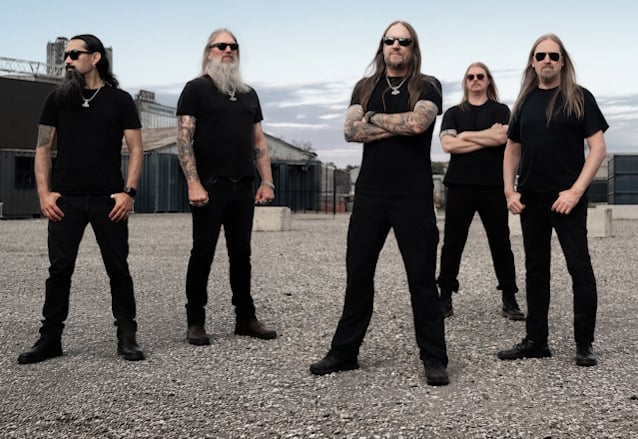
Amon Amarth is:
- Johan Hegg – Vocals
- Olavi Mikkonen – Guitar
- Johan Söderberg – Guitar
- Ted Lundström – Bass
- Jocke Wallgren – Drums
Photo Credit: Sylwia Makris and Christian Martin Weiss
