

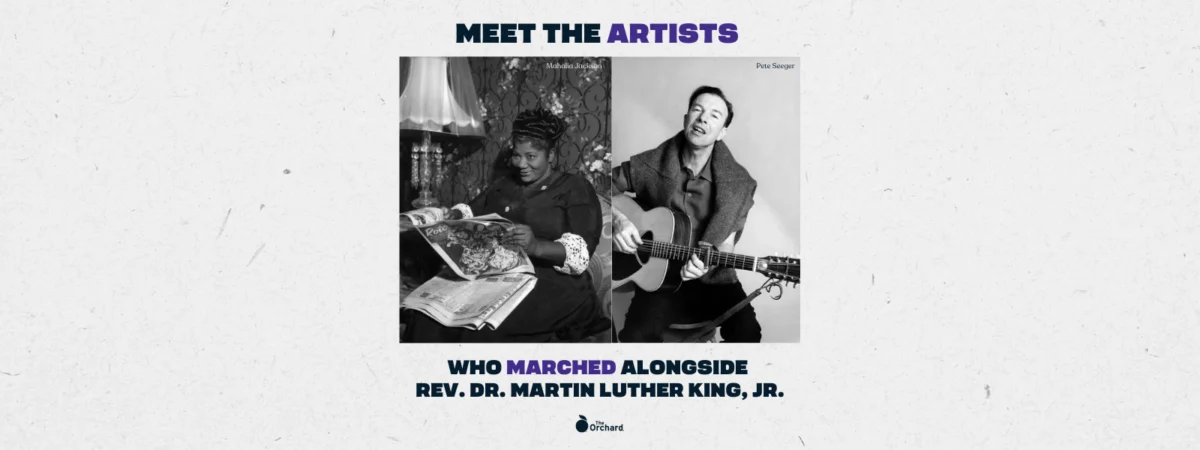
On this Rev. Dr. Martin Luther King, Jr. Day of Service, January 19, 2026, it is imperative to reflect on the profound influence of artists who not only marched alongside Dr. King but whose music served as the very soundtrack to the Civil Rights Movement. Among these pivotal figures, Mahalia Jackson and Pete Seeger stand out for their unwavering dedication, powerful voices, and the indelible mark they left on the struggle for equality. Their contributions, both on and off the stage, provided a guiding light and a source of unwavering strength for activists and ordinary citizens alike, demonstrating the potent synergy between artistic expression and social change. This exploration delves into their roles, the historical context of their involvement, and the enduring legacy of their music, encouraging a deeper understanding of the forces that shaped this transformative era.
The March on Washington and a Moment of Divine Inspiration
The year 1963 marked a pivotal moment in the Civil Rights Movement, culminating in the monumental March on Washington for Jobs and Freedom on August 28th. This event, which drew an estimated 250,000 participants to the National Mall, was more than just a political demonstration; it was a testament to the collective yearning for justice and equality. Amidst the throngs of activists, clergy, and everyday citizens, the resonant voice of Mahalia Jackson, the "Queen of Gospel," filled the air, offering solace and inspiration.
Jackson, a close friend and confidante of Dr. King, had a long history of supporting the Southern Christian Leadership Conference (SCLC), an organization co-founded by King and a leading force in the movement. Her presence at the March was not merely ceremonial; she performed, her powerful renditions of spirituals stirring the hearts of those gathered. It was during this historic event that Jackson played an instrumental role in shaping one of the most iconic speeches in American history. As Dr. King delivered his address, his prepared remarks took an unexpected turn. It was then that Mahalia Jackson, from her position on the dais, passionately urged him, "Tell them about the dream, Martin!" This impassioned plea, amplified by her own profound faith and understanding of King’s vision, is widely credited with prompting King to launch into his extemporaneous, soaring "I Have a Dream" segment, a passage that has since become synonymous with the pursuit of racial harmony and equality.
The impact of this spontaneous interjection cannot be overstated. Jackson’s divine inspiration, rooted in her deep spiritual conviction, helped transform a powerful speech into an immortal testament to hope and the promise of a more just America. Her ability to connect with the emotional core of the audience, to sense the moment’s spiritual gravity, and to encourage King to articulate the deepest aspirations of the movement underscored her unique role not just as a singer, but as a spiritual anchor and a catalyst for profound expression.
Pete Seeger: The Bard of the Movement
Long before the March on Washington, and continuing long after, Pete Seeger was a ubiquitous presence at rallies, picket lines, and marches, his banjo and guitar serving as potent instruments of social change. A prolific folk singer, songwriter, and activist, Seeger dedicated his life to championing a wide array of interlocking causes, including civil rights, workers’ rights, and environmental protection. His music was not merely entertainment; it was a call to action, a rallying cry for justice, and a source of solidarity for those engaged in arduous struggles.
Seeger’s repertoire included anthems that became intrinsically linked to the Civil Rights Movement. His co-written protest song, "If I Had a Hammer," became a powerful declaration of hope and a plea for justice. Similarly, his iconic labor songs, such as "Solidarity Forever" and "Which Side Are You On?," resonated deeply with the interconnected struggles of marginalized communities fighting for fair treatment and dignity. These songs, imbued with a spirit of collective action and unwavering resolve, provided a soundtrack for the movement’s most challenging moments.
A particularly significant contribution of Seeger’s to the Civil Rights Movement was his role in popularizing the song "We Shall Overcome." While the song has roots in earlier spirituals and labor songs, Seeger learned it from Zilphia Horton, director of Highlander Folk School in Tennessee, a renowned center for civil rights training. Seeger adapted and popularized the song, bringing it to wider audiences. It was Pete Seeger’s version that Dr. Martin Luther King, Jr. first encountered, and the song soon became the unofficial anthem of the Civil Rights Movement, sung at countless demonstrations, marches, and prayer vigils. The song’s simple yet profound message of perseverance and eventual triumph offered a beacon of hope during times of intense struggle and violence. King himself quoted the song in his final speech in Memphis in March 1968, a poignant testament to its enduring power.
Seeger’s commitment to the cause was not confined to the recording studio or concert hall. He actively participated in demonstrations, notably accepting Dr. King’s invitation to perform at the 1965 Selma to Montgomery March. This march, a critical event in the fight for voting rights, saw activists facing brutal opposition from state and local law enforcement. Seeger’s presence, his music echoing through the tense atmosphere, offered a vital source of moral support and amplified the message of the marchers to the nation. His unwavering dedication to the "musician of the people" ethos cemented his legacy as a true ally and a voice for the voiceless.
The Orchard and Smithsonian Folkways: Preserving the Sound of Freedom
The enduring legacy of artists like Mahalia Jackson and Pete Seeger is made accessible to new generations through organizations committed to preserving and disseminating this vital cultural heritage. The Orchard, a global music distribution company, plays a crucial role in making the music of freedom fighters available to a wider audience. Through its partnership with Smithsonian Folkways Recordings, a nonprofit record label dedicated to preserving American folk music, a vast catalog of recordings that document the sound of the Civil Rights Movement is readily accessible.
Smithsonian Folkways, in particular, has been instrumental in archiving and releasing a wealth of material related to the movement. Their collection includes recordings of gospel music, protest songs, speeches, and oral histories that provide invaluable insight into the struggles and triumphs of the era. By distributing this music, The Orchard ensures that the powerful messages and emotional resonance of these artists continue to inspire and educate. Exploring this catalog is not just an act of listening to music; it is an immersive journey into the heart of a movement that fundamentally reshaped American society.
Supporting the Movement: A Call to Action
The Rev. Dr. Martin Luther King, Jr. Day of Service serves as a powerful reminder that the fight for justice and equality is an ongoing endeavor. The artists who marched and sang alongside Dr. King understood the importance of active participation and mobilization. Their legacy extends beyond their music, urging us to engage in meaningful action within our own communities.
Organizations like YourCause Connect offer platforms for individuals to discover volunteer opportunities and support causes aligned with the principles of the Civil Rights Movement. By connecting individuals with non-profit organizations, these platforms facilitate direct action and community engagement. Furthermore, exploring the work of organizations dedicated to civil rights, social justice, and community empowerment provides avenues for individuals to contribute their time, skills, and resources. The spirit of service, embodied by Dr. King and amplified by the artists of his era, calls for active participation in building a more equitable and just society.
The digital age has also amplified the reach and impact of social movements. Following and amplifying the social media accounts of organizations and individuals dedicated to social justice ensures that important messages are disseminated widely and that a broader public remains informed and engaged. This digital activism, when coupled with tangible action, creates a powerful force for positive change.
The Enduring Impact and Broader Implications
The contributions of Mahalia Jackson and Pete Seeger, alongside countless other artists and activists, underscore the profound and multifaceted nature of social change. Their music transcended mere entertainment, serving as a unifying force, a source of courage, and a powerful means of communicating the urgency and moral imperative of the Civil Rights Movement. The data on the impact of the Civil Rights Movement is stark: it led to the dismantling of Jim Crow segregation laws, the passage of landmark legislation like the Civil Rights Act of 1964 and the Voting Rights Act of 1965, and a significant shift in national consciousness regarding racial equality.
The implications of their work continue to resonate today. In an era still grappling with issues of racial injustice, economic inequality, and social disparities, the lessons learned from the Civil Rights Movement and the power of art as a catalyst for change remain remarkably relevant. The artists of this era demonstrated that music, poetry, and visual art can be potent tools for raising awareness, fostering empathy, and mobilizing communities to demand a better future.
As we observe Rev. Dr. Martin Luther King, Jr. Day, it is essential to remember that the struggle for justice is a continuum. The voices of Mahalia Jackson and Pete Seeger, echoing through recordings preserved by institutions like Smithsonian Folkways and distributed by companies like The Orchard, serve as a powerful reminder of the courage, resilience, and artistic brilliance that fueled one of the most significant social justice movements in history. Their legacy is a call to action, urging us to continue the work of building a society where the dreams of equality and justice are fully realized for all. The ongoing efforts to promote diversity, equity, and inclusion in all facets of society are a direct continuation of the path paved by these courageous individuals and the movement they so powerfully supported. The continued availability of their art ensures that future generations can draw inspiration from their unwavering commitment to a more just and humane world.
