

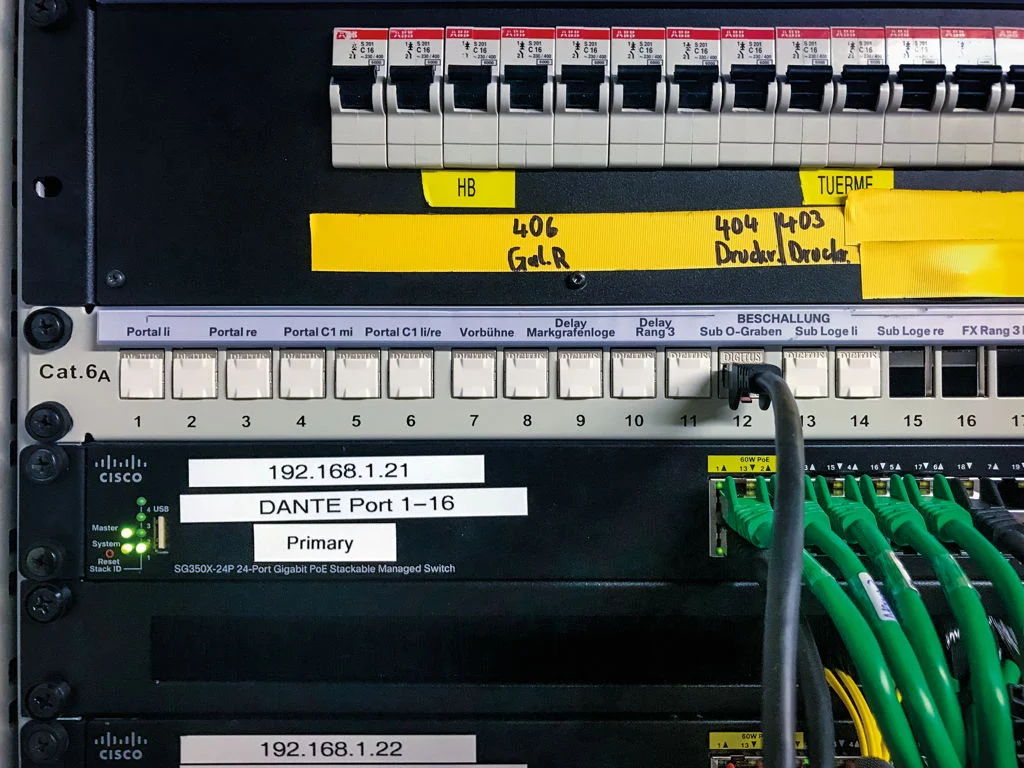
The landscape of event technology and media production has undergone a radical transformation over the last two decades, shifting from proprietary analog systems to standardized digital networks. At the heart of this transition is the humble twisted-pair cable, a component that has evolved from basic telephony use to supporting massive bandwidths through standards such as CAT6a and CAT8.1. As professional environments increasingly rely on these copper-based infrastructures, the technical nuances of installation, power delivery, and signal integrity have become critical concerns for system integrators and planners. Peter Rieck, a prominent Key Account and Product Manager at Sommer Cable, highlights that while these systems offer unprecedented flexibility, they also introduce complex variables—ranging from thermal degradation in Power over Ethernet (PoE) applications to the often-misunderstood distinction between component categories and network application classes.
The Strategic Choice: Copper vs. Fiber Optics in Professional Media
The debate between copper (CAT) and fiber optic cabling is central to modern infrastructure planning. While fiber optics offer virtually unlimited bandwidth and total immunity to electromagnetic interference (EMI) and potential differences, copper remains the dominant choice for localized deployments. According to Rieck, the advantages of fiber are clear regarding segment length and electrical isolation, yet the practical hurdles remain significant. Fiber requires active signal converters for almost every endpoint, as few professional audio or video devices feature native fiber ports. Furthermore, the termination of fiber optics requires specialized tools and expertise, making field repairs or rapid adjustments difficult in the high-pressure environment of live events.
Conversely, copper-based CAT cabling has maintained its relevance through the integration of Power over Ethernet (PoE). The ability to deliver both data and power over a single cable is a decisive advantage for copper. In a modern installation, devices such as PTZ cameras, wireless access points, and networked loudspeakers can be powered directly from a network switch, eliminating the need for local power outlets. However, this convenience comes with physical trade-offs. While CAT cables are easier to terminate and more universally compatible, they are subject to strict segment length limitations—typically 100 meters for standard applications—and require careful management of potential equalization between connected devices.
The PoE Revolution and the Physics of Thermal Aging
Power over Ethernet has transitioned from a niche utility for IP phones to a heavyweight power delivery system. With the advent of the IEEE 802.3bt standard (PoE++), up to 90 or 100 watts of power can be transmitted over twisted-pair cabling. This surge in power has significant implications for the physical longevity of the cable. Rieck points out that PoE is not a marvel of efficiency; in many cases, approximately 30% of the energy is lost as heat within the cable itself.
In large-scale installations where cables are tightly bundled in trays or conduits, this heat accumulation becomes a critical failure point. The internal temperature rise can accelerate the aging process of the cable’s insulation and jacket materials. A technical rule of thumb shared by industry experts is that a sustained temperature increase of just 10°C can effectively halve the operational lifespan of the cable. The choice of shielding also plays a vital role in thermal management. Unshielded (U/UTP) or braid-only (S/UTP) cables dissipate heat less effectively than foil-shielded cables, which can heat up more than twice as fast under heavy PoE loads. For integrators, this necessitates a shift toward cables with larger cross-sections, such as AWG22, and superior shielding to ensure long-term reliability.
Connector Integrity and the Danger of Electric Arcing
The physical connection point—the RJ45 jack and plug—is another area where PoE introduces hidden risks. When a cable carrying high-wattage PoE is unplugged while the circuit is active, a small electric arc can occur between the contact surfaces. This arc, though tiny, is hot enough to vaporize the thin gold plating on the connector pins. Over time, this degradation leads to increased resistance, intermittent signals, and eventually, total connection failure.
To combat this, the industry has turned toward "PoE-optimized" connectors designed to ensure that the arcing occurs on a part of the contact that is not used for data transmission once the plug is fully seated. Furthermore, as bandwidth requirements climb toward 10Gbps (CAT6a) and 40Gbps (CAT8.1), the precision of these connectors becomes paramount. Issues such as Near-End Crosstalk (NEXT), particularly between wire pairs 3/6 and 4/5, can cripple high-speed data transfers. Rieck emphasizes the importance of using components certified by independent testing bodies like the GHMT, which verify that connectors meet the stringent compensation requirements for their respective categories.
Decoupling Categories from Application Classes
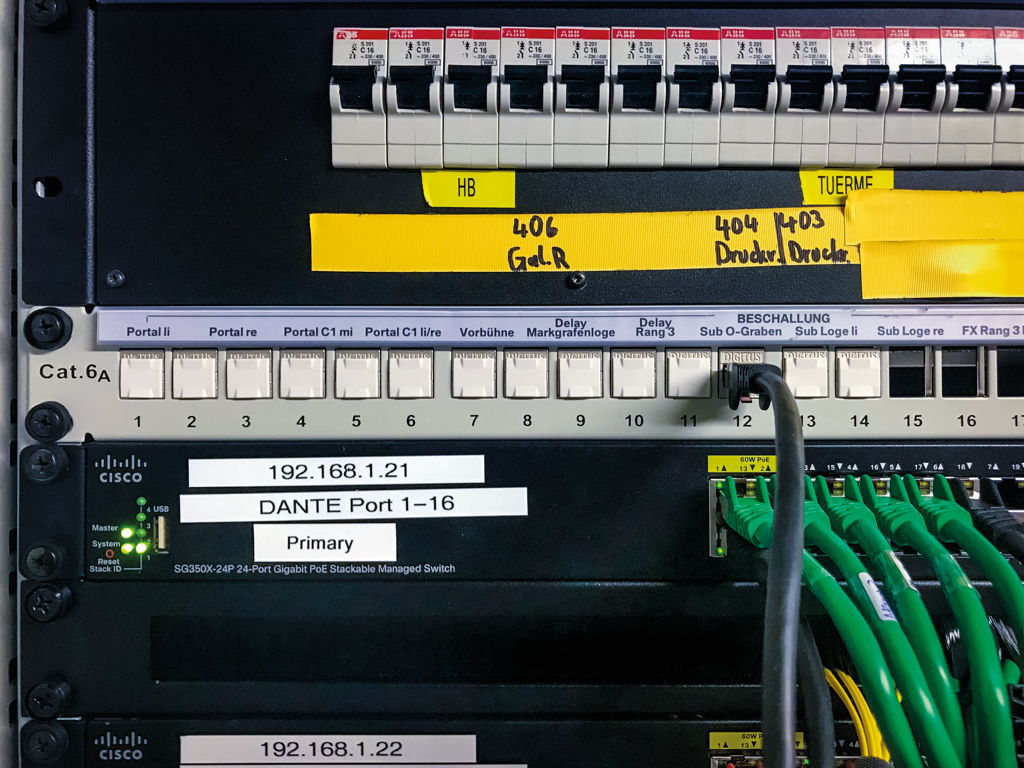
One of the most persistent points of confusion in the networking industry is the difference between a component "Category" and a "Network Application Class." In formal standards such as ISO/IEC 11801, a "Category" refers strictly to an individual component, such as a single reel of cable or a specific wall outlet (e.g., a CAT7 cable). In contrast, a "Class" refers to the entire permanent link or channel—the sum of the cable, the patch panels, and the patch cords (e.g., a Class F link).
Rieck notes that while the industry colloquially uses "CAT5" or "CAT6" to describe networks, it is more accurate to speak of Class D, E, or EA. This distinction is critical because a network is only as strong as its weakest link; using CAT7 cable with CAT5e connectors results in a Class D network, regardless of the high-quality cable used. Interestingly, the industry skipped certain logical steps in its evolution. For instance, there are no standardized RJ45 connectors for CAT7; instead, CAT7 was designed for non-RJ45 interfaces like the GG45 or TERA. The RJ45 interface only returned to the high-end standard with CAT8.1 (Class I), which supports frequencies up to 2000 MHz.
Technical Data: Frequency and Bandwidth Standards
To understand the trajectory of these technologies, one must look at the relationship between frequency and data rates. The following data outlines the progression of twisted-pair capabilities:
- Class D (CAT5e): Operates at frequencies up to 100 MHz. It is the baseline for 1Gbps Ethernet (1000Base-T) and remains the most common standard for basic digital audio and control signals.
- Class E (CAT6): Supports up to 250 MHz. Notably, Rieck mentions that this class is often a "phantom" standard in practice, as there are few standardized protocols that specifically require Class E without being able to run on Class D or requiring the higher overhead of Class EA.
- Class EA (CAT6a): Operates at 500 MHz and is the requirement for 10Gbps Ethernet (10GBase-T). This has become the gold standard for modern video-over-IP and high-density data environments.
- Class F/FA (CAT7/7a): Supports 600 MHz to 1000 MHz. While the cable is high-performing, the lack of an RJ45-compatible standard limited its adoption in pure networking, though it found a niche in analog audio distribution.
- Class I (CAT8.1): The cutting edge, supporting up to 2000 MHz. It is designed for 25Gbps and 40Gbps speeds over short distances (up to 30 meters), making it ideal for data center "top-of-rack" cabling.
Chronology of Ethernet in Event Technology
The adoption of these standards in the event industry followed a distinct timeline:
- The Late 1990s: The emergence of CobraNet and EtherSound introduced the industry to the possibility of transporting multi-channel audio over CAT5. These systems were revolutionary but sensitive to network traffic.
- The Mid-2000s: The rise of Audinate’s Dante protocol and the development of AVB (Audio Video Bridging) moved the industry toward standard IT hardware. CAT5e became the ubiquitous touring standard.
- The 2010s: HDBaseT transformed video distribution by sending 4K video, power, and control over CAT6/6a. This era saw the massive expansion of PoE applications.
- The 2020s: The shift toward "Converged Networks," where lighting (Art-Net/sACN), audio (Dante/Milan), and video (SDVoE/SMPTE 2110) all share a single high-capacity CAT6a or fiber backbone.
The Case for Unified Infrastructures and Analog Audio
The current trend in system integration is the move toward unified networks. Historically, each department—lighting, sound, and video—maintained its own isolated cabling infrastructure. However, with the bandwidth provided by CAT6a and CAT8.1, the physical infrastructure can now be shared. This requires sophisticated network management (VLANs and QoS) but significantly reduces the weight and cost of the permanent cabling.
Interestingly, CAT cabling has also found a second life in the analog domain. In fixed installations, CAT7 or CAT7a cables are frequently used to transmit four channels of balanced analog audio. Rieck observes that this is a highly cost-effective solution. A CAT7 cable uses AWG23 or AWG22 conductors, which provide a larger cross-section than many dedicated analog multi-pair cables. Because the pairs are individually shielded, crosstalk is minimal, and the high-frequency design of the cable ensures excellent signal integrity for audio. The only drawback is the shared shield connection at the RJ45 housing, but for most professional applications, this is a negligible trade-off.
Implications for Sustainability and Future Planning
As the industry looks toward a more sustainable future, the longevity of infrastructure becomes a primary concern. The "throwaway" culture of cheap patch cables is increasingly at odds with the need for durable, long-term installations. Rieck argues that sustainability in cabling is achieved through the selection of high-quality materials and correct installation practices. By over-specifying the cable (e.g., using CAT7 or CAT8 for a 1Gbps application), integrators can "future-proof" a building, ensuring that the physical copper in the walls does not need to be replaced when the next generation of network switches arrives.
In conclusion, while the world moves toward wireless and fiber solutions, the twisted-pair copper cable remains an indispensable tool in the professional media arsenal. Its ability to adapt—from carrying simple telephone calls to delivering 40Gbps of data and 100W of power—is a testament to the robustness of the standard. However, as Peter Rieck and the experts at Sommer Cable emphasize, the complexity of these systems requires a deeper level of technical expertise than ever before. Success in the modern era of networking depends on a holistic understanding of thermal dynamics, connector physics, and the rigorous application of international standards.
