

The summer 2026 US concert season has been markedly characterized by what industry observers are dubbing "blue dot fever," a pervasive trend of tour cancellations and significantly undersold shows plaguing the live music sector. This phenomenon is largely attributed to an confluence of escalating costs, an increasingly demanding consumer environment, and external logistical hurdles. A recent Pollstar study illuminated the financial strain, revealing that the average ticket price for the top 100 worldwide tours surged by an alarming 37.2% between 2019 and 2025. Beyond the initial ticket purchase, auxiliary expenses compound the financial burden for concertgoers. For instance, a parking pass for a single event at some major amphitheaters can eclipse the cost of the actual concert tickets. At Blossom Music Center, an upcoming Mötley Crüe concert offers reserved VIP parking at $275 per vehicle, while lawn seats are available for a mere $24.75 each through a promotional "Summer Of Live 4-Pack." When these financial pressures are coupled with environmental factors such as severe weather, wildfire smoke, and extreme temperatures, alongside logistical frustrations like high gas prices, impolite crowds, and restrictive bag policies, the prospect of attending a live show becomes less appealing, often making staying home seem like the more attractive option.
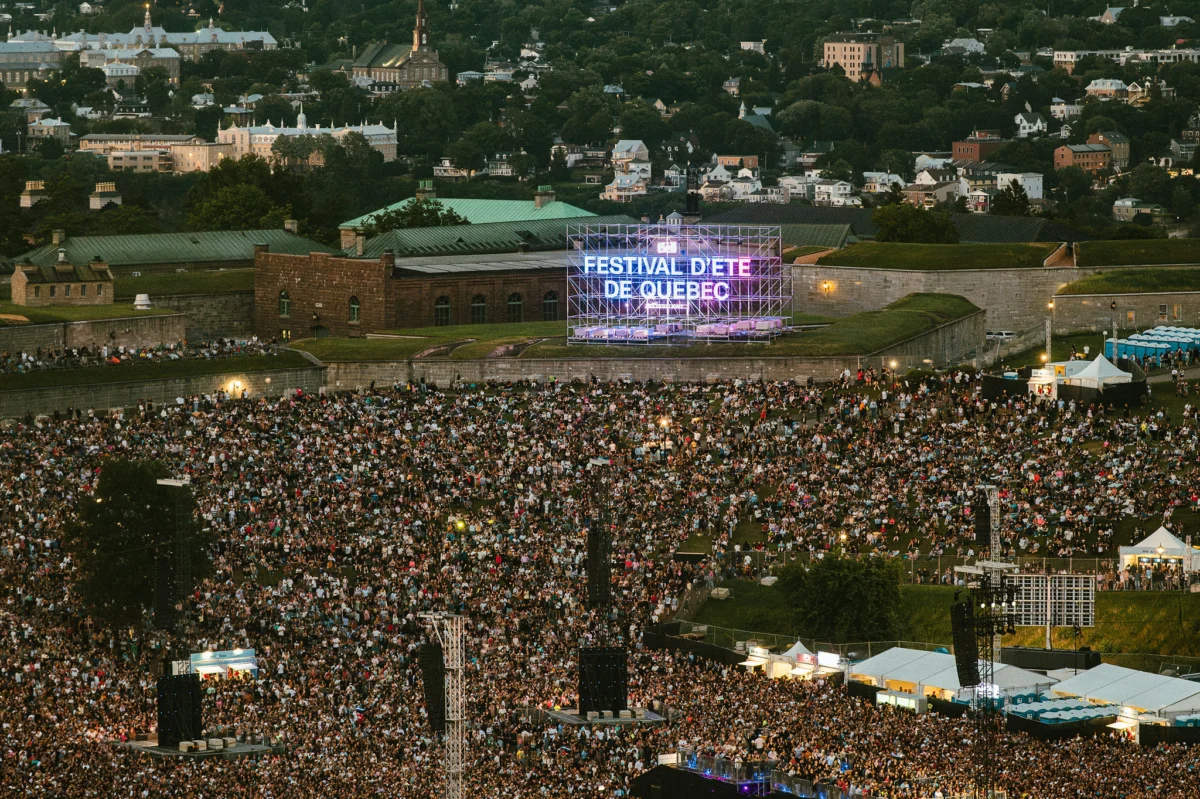
Amidst this challenging backdrop, the Festival d’été de Québec (FEQ) in Quebec City has emerged as a remarkable counter-narrative, demonstrating that a large-scale music festival can still deliver an exceptionally enjoyable and accessible experience. An attendee’s three-day immersion in FEQ was reportedly devoid of common festival frustrations—no unruly patrons, no uninspired performances, and no organizational irritations. This successful execution positions FEQ not merely as an anomaly but as a potential blueprint for the future of live music festivals.
The Enduring Legacy and Unique Model of FEQ
The Festival d’été de Québec, established in 1968, holds the distinction of being older than the iconic Glastonbury Festival. Over its more than five-decade history, FEQ has evolved into Canada’s largest outdoor music festival, presenting over 150 shows across six stages during an 11-night span. Its past lineups boast an impressive roster of global superstars, including the Rolling Stones, Beck, Lorde, Lady Gaga, Lana Del Rey, Rush, and Iron Maiden, cementing its reputation as a premier international music event.
What sets FEQ apart is its strategic integration within the urban fabric of Quebec City. Unlike many large festivals that require attendees to travel to remote, expansive fields, FEQ’s stages are thoughtfully situated within the city itself, occupying a compact and easily navigable footprint. This urban setting facilitates effortless movement between different performance areas and allows attendees to take breaks without feeling disconnected from the festival. Remarkably, despite the proximity of stages, sound bleed is virtually non-existent, ensuring a high-quality auditory experience for each performance. The main Bell Stage, capable of accommodating an astounding 90,000 people, manages to blend seamlessly into the urban landscape, its immense capacity only truly appreciated upon entering the grounds.
The festival’s operational design also prioritizes attendee comfort and convenience. Music typically commences in the early evening, transforming the experience from a grueling, all-day marathon into something more akin to attending a series of individual concerts. This scheduling, combined with Quebec City’s generally temperate summer climate, often allows for comfortable attire like jeans and sweatshirts, a welcome departure from the often sweltering conditions at other festivals. Furthermore, Quebec City itself is renowned for its picturesque beauty and relaxed atmosphere, enhancing the overall visitor experience. The culinary offerings at FEQ are another highlight, providing a diverse array of high-quality options, from warm brie-and-jam sandwiches to classic poutine, elevating the food experience beyond typical festival fare.
A cornerstone of FEQ’s success, particularly in the current economic climate, is its exceptional affordability. A general admission ticket, granting access to all 11 nights of performances, was priced at just $180 Canadian (approximately $129 USD). For those seeking an enhanced viewing experience, an upgraded Silver Front Stage Zone ticket for the main stage was available for $615 Canadian (around $439 USD) for the entire festival. Unsurprisingly, both options consistently sell out well in advance, a testament to the festival’s perceived value and high demand. This pricing strategy stands in stark contrast to the exorbitant costs prevalent in other markets, making FEQ a truly accessible event for a broad audience.
A Multifaceted Musical Journey: Curatorial Excellence
FEQ’s programming philosophy embraces a "choose-your-own-adventure" model, catering to diverse musical tastes and preferred viewing experiences. Attendees seeking the grandeur of a major production can gravitate towards the Bell Stage. For a more relaxed evening, the Sirius XM and Loto-Québec stages are conveniently located next to each other, featuring alternating bands for a continuous, low-key musical flow. Each of the individual stages cultivates its own distinct ambiance, further enriched by nightly lineups that often adhere to specific genres such as metal, punk, indie, world music, or hip-hop. This meticulous curation, blending established artists like Billy Bragg, Testament, and Basia Bulat with buzzy emerging acts such as electro duo Haute & Freddy, ensures a rich and varied musical landscape.
A notable aspect of FEQ’s curation is its strong emphasis on Canadian talent, providing a significant platform for national artists. This commitment was evident in several standout performances.
Bell Stage Spectacles: Headliners and Homegrown Stars
One impressive Canadian showcase featured Toronto-born Jessie Reyez, who delivered an hour-long set on the Bell Stage prior to Gwen Stefani. Reyez commanded the stage with a captivating blend of versatility and charisma. Declaring her show a "no shame zone" and promising "good vibrations," she fulfilled her mission with a tight live band, effortlessly traversing hip-hop, R&B, dancehall, and pop. Highlights included Ariana Grande-esque vocal trills on "Coffin," a heartfelt, acoustic rendition of "Forever," a rock-infused "Ridin’" culminating in ferocious headbanging, and her powerful interpretation of "One Kiss," a hit she co-wrote for Dua Lipa and Calvin Harris. Reyez’s genuine connection with the audience, engaging them like old friends, and even stepping off stage to embrace emotional fans in the front row, underscored her authentic artistry.
Another Canadian act making a significant impact was Vancouver’s Mother Mother, opening for Muse on the Bell Stage. The band, known for their viral hit "Hayloft," presented a confident and vivacious performance. Their sound, a dynamic fusion of grungy rock, folk-rock, and spring-loaded indie—with tracks like "Explode!" evoking Los Campesinos! and "I Love Life" exuding 2000s indie vibes—demonstrated their broad appeal. The multi-vocal configuration of siblings Ryan and Molly Guldemond and keyboardist Jasmin Parkin was a key asset, allowing for nuanced performances on tender tracks like "Ghosting" and evocative ones such as "Oh Ana." Their set also included compelling covers of Nirvana’s "In Bloom" and Pixies’ "Where Is My Mind," building anticipation for the explosive, set-closing "Hayloft II," amplified by powerful synth cracks and progressive flourishes.
The headlining performances on the Bell Stage offered a global spectacle. Kesha headlined one evening with her "Freedom Tour," a poignant artistic statement following her extrication from her contract with Dr. Luke’s Kemosabe Records. Her current concerts reflect a mature artist reclaiming her narrative and re-interpreting her catalog. While this approach occasionally challenged the set’s momentum, individual moments shone brightly, showcasing her evolved artistry. The country-EDM hit "Timber" was reconfigured with speckled synths and trap beats, while "Blow" adopted a slower, more menacing tone. The show-opener, "TiK ToK," became an immediate catharsis, with Kesha, adorned in gigantic angel wings, declaring a moratorium on abusive men and encouraging the tens of thousands in attendance to raise their middle fingers to the song’s new, defiant opening line: "Wake up in the morning like fuck P. Diddy!" The "Freedom Tour" drew parallels to Lady Gaga’s Mayhem Ball in its tightly choreographed, stylized delivery and interwoven messages. Kesha’s performance incorporated a Ram Dass interlude and theatrical elements, such as feigned knife-slashing of dancers during "Cannibal" and an embrace of sexual empowerment on "Sleazy." Beyond the provocative imagery, the overarching message championed misfits and freaks, celebrating individuality and solidarity through graceful moves with her dancers on "Crazy Kids" and beaming through life-affirming anthems like "We R Who We R" and "Warrior." Opening for Kesha, reggae superstar Shaggy delivered a crowd-pleasing and lighthearted set, engaging the audience with his humor and hits like "It Wasn’t Me" and "Angel," alongside a more serious rendition of Bill Withers’ "Ain’t No Sunshine."
Gwen Stefani’s headlining appearance marked her first public full-length solo gig since December, following her performances with No Doubt at the Sphere. Her stage persona perfectly bridged her recent Las Vegas residency with her Quebec performance, sporting a No Doubt-esque black-and-yellow plaid outfit and two-tone hair reminiscent of Berlin’s Terri Nunn. Her solo setlist judiciously featured many No Doubt hits and fan favorites, performed with characteristic ska-pop gusto by a formidable live band including a horn section. Supercharged renditions of "Sunday Morning," a passionate "It’s My Life" (the Talk Talk cover), and the elastic "Hella Good" were highlights. Stefani also focused on her most recognized solo pop hits, such as the sugarspun "The Sweet Escape," the indelible "Hollaback Girl," and the spikier "Wind It Up" and "What You Waiting For?" A notable inclusion was her 2024 single "Somebody Else’s," which surprisingly resonated as revved-up punkish new wave. While her stage banter occasionally felt less authentic—a comment about her reluctance to perform "Ex-Girlfriend" ("But because I love you guys, I’m going to do this one, even though I want to throw up in my mouth") struck an awkward note—and her interaction with an adorably shell-shocked fan felt rushed, the overall performance was a powerful display of her enduring talent.
The most enduring performance was Muse’s jaw-dropping Friday night headlining set. Known for their wildly creative stage shows, the UK trio did not disappoint. Their performance seamlessly wove together themes of fighting dystopian systems and embracing the possibilities of outer space, creating a bombastic rock spectacle that merged progressive excess with electronic music’s pulsating humanity. "Madness" took on a Kraftwerkian quality, while "Uprising" sounded even more intricate than its original recording, drawing parallels to Battles’ complexity. The epic "Knights Of Cydonia," introduced by Ennio Morricone’s "Man With A Harmonica," steadily built to its ferocious, anti-establishment conclusion. Promoting their newly released LP, The Wow! Signal, Muse adeptly integrated new tracks like "Cryogen" and "Hexagons" with older material, giving hits such as "Plug In Baby," "Stockholm Syndrome," and "Supermassive Black Hole" a supercharged intensity. Frontman Matt Bellamy even donned a jacket and glasses with light-up panels for the electro-funky new single "Nightshade Superstar," evoking a welcome Daft Punk aesthetic. The encore featured a single, galvanizing song, "Take a Bow," a biting condemnation of corrupt leadership. Pulsating keyboards crescendoed with dazzling multicolored cubes suspended above the stage. Bathed in red light, Bellamy raised his arms, resembling a preacher casting damnation, before unleashing hellfire riffs as streamers shot over the crowd, culminating in a burst of pyro. As Muse bid farewell, a fan’s sign on screen succinctly captured the night’s spirit: "The Resistance Lives On."
Intimate Discoveries: The Smaller Stages
FEQ’s smaller stages offered more intimate, yet equally compelling, musical experiences. Montreal’s No Joy delivered an incredible set on the SiriusXM stage despite a criminally sparse crowd. Adorned with stuffed and inflatable butterflies, the band unleashed tornadic shoegaze and grimy dreampop tunes, spearheaded by the My Bloody Valentine-esque distortion-fest "Here Tarot Lies" and the synth-swirled noise jam "Four." Other moments evoked a decaying antique music box or paired quirky keyboard effects with viscous dark grooves.
On another day, an early evening rain shower did not deter Ontario singer-songwriter Billianne. Her debut album, 2025’s Modes of Transportation, is a sleeper folk-pop gem filled with dreamy coming-of-age sentiments. Her set was highlighted by "Save Me," which powerfully underscored her quiet strength. Following her was Ottawa-born Leif Vollebekk, a Juno-nominated folk-rocker whose music is infused with smoky soul and blues. Vollebekk exuded a Bruce Hornsby-esque vibe on "Elegy" with glassy piano and groove-heavy rhythms. "Elijah Rose" featured evocative guitar work and jazzy drums, while "False-Hearted Lover" was blissfully laid-back. His set concluded with "Hot Tears," which included a subtle Oasis lyrical nod ("What’s the story morning glory?") and a propulsive ending where Vollebekk simultaneously played piano and guitar before abandoning the former to unleash a storm of forceful, distorted blues riffing.
Australia’s Dope Lemon, fronted by Angus Stone, began playing as the sun was still up, an incongruous setting for their dark, devilish sound. Clad in black cowboy hats, the band favored gothic psychedelic rock with a desert-cowboy edge, characterized by ominous harmonica, distorted vocals, and thundering guitars, reminiscent of Nick Cave and the Bad Seeds, Black Rebel Motorcycle Club, and The Verve. To temper the darkness, goofy dancers wearing stuffed headgear, including a lemon with fangs, danced around onstage, adding a whimsical counterpoint.
Another standout was Faux Real, a charmingly deadpan French electro duo comprising brothers Elliott and Virgile Arndt. Their performance, recalling Sparks with more elaborate choreography, featured matching all-white outfits—wide-legged pants under ruffled miniskirts and midriff-baring tops. The pair executed body-bending calisthenics and exaggerated coordinated dance moves, occasionally punctuated by a flute solo from Elliott. Faux Real’s music was serious and expertly executed, bringing to mind acts like Hot Chip and Chromeo. Their new single "One & Done" served as a retro electroclash throwback.
Implications for the Live Music Industry: The FEQ Model
FEQ’s enduring success and high attendee satisfaction, particularly in contrast to the "blue dot fever" affecting other markets, offer crucial insights for the broader live music industry. The festival’s ability to maintain accessibility and affordability while delivering a high-caliber, diverse lineup is a significant achievement. Its urban integration, which minimizes ancillary costs and maximizes convenience for attendees, represents a strategic advantage over more remote, purpose-built festival sites. The emphasis on a positive overall experience, from comfortable logistics and quality food to a respectful crowd atmosphere, reinforces the idea that value extends far beyond just the headlining acts.
The "blue dot fever" suggests a market saturation point or a critical price sensitivity among consumers who are no longer willing to tolerate exorbitant costs and frustrating experiences. FEQ’s model demonstrates that a sustainable and thriving festival can prioritize the attendee experience and offer genuine value. This could imply a shift in consumer expectations, where an immersive, well-organized, and financially reasonable event is favored over one that simply boasts big names at steep prices. Promoters and organizers grappling with declining attendance and undersold shows might do well to study FEQ’s operational ethos, considering how to better integrate their events into existing infrastructure, manage auxiliary costs, and foster an environment of comfort and positive engagement. The festival’s dedication to showcasing national talent also strengthens its cultural relevance and provides a unique draw that differentiates it from purely international-artist-driven events.
Conclusion: A Blueprint for Enjoyable Live Music
In an era where the live music industry faces significant headwinds, the Festival d’été de Québec stands out as a genuine "unicorn" – a large-scale music festival that consistently delivers an affordable, enjoyable, and impeccably organized experience. Its longevity, strategic urban integration, diverse programming, and commitment to attendee satisfaction provide a compelling case study. FEQ proves that it is possible to cultivate a vibrant, popular music event without succumbing to the pricing pressures and logistical challenges that have hampered other festivals. As the live music landscape continues to evolve, the FEQ model offers a refreshing and practical blueprint for fostering engaging, accessible, and ultimately, truly enjoyable musical celebrations.
