

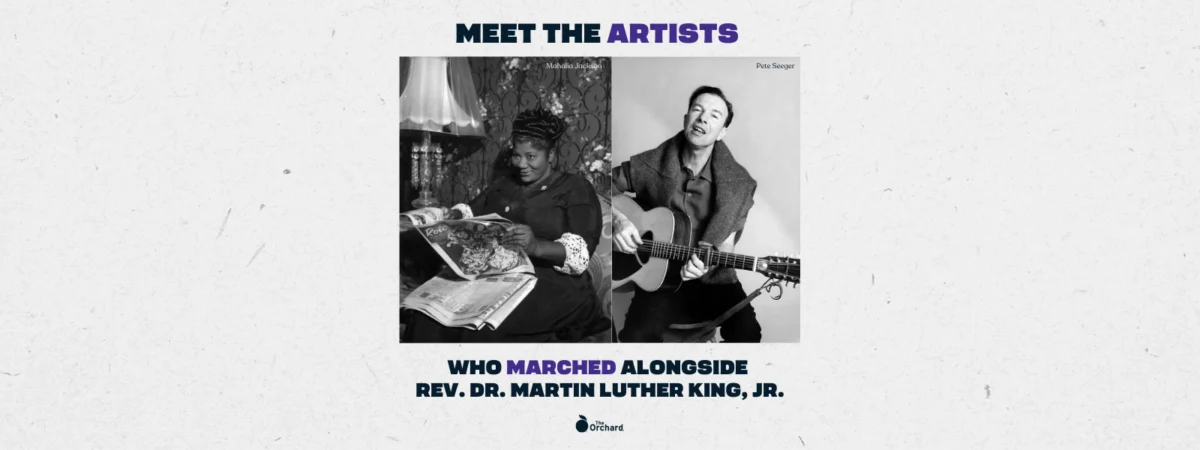
January 19, 2026 – On this Rev. Dr. Martin Luther King, Jr. Day of Service, a profound reflection on the enduring impact of the Civil Rights Movement necessitates an examination of the artistic forces that amplified its message and galvanized its participants. Beyond the powerful oratory of Dr. King himself, the voices of artists like Mahalia Jackson and Pete Seeger served as the very soul of the struggle for equality, their music not merely accompaniment but a potent instrument of change. Their contributions, both on and off the stage, continue to resonate, offering a guiding light for contemporary activism and a testament to the power of art in driving social progress.
The Unwavering Voice of Mahalia Jackson
Mahalia Jackson, rightfully hailed as one of the most revered gospel singers of the 20th century, was more than an artist; she was a confidante and a crucial ally to Rev. Dr. Martin Luther King, Jr. Their profound friendship, forged in the crucible of the Civil Rights Movement, saw Jackson frequently performing before Dr. King’s sermons and at vital fundraising events for the Southern Christian Leadership Conference (SCLC). Her voice, imbued with an unparalleled spiritual depth and raw emotional power, had the unique ability to uplift, inspire, and unify audiences, a critical component in sustaining the morale of activists facing immense adversity.
Jackson’s most indelible contribution to the public consciousness of the Civil Rights Movement occurred during the historic 1963 March on Washington for Jobs and Freedom. As Dr. King delivered his monumental "I Have a Dream" speech from the steps of the Lincoln Memorial, it was Mahalia Jackson, seated on the dais, who famously spurred him to articulate his most iconic lines. Her impassioned cry, "Tell them about the dream, Martin!" served as a direct, powerful prompt, urging King to move beyond his prepared remarks and share the deeply personal and universally resonant vision that would forever define the struggle for racial justice in America. This spontaneous interaction underscores the symbiotic relationship between the movement’s leaders and its artistic champions, where inspiration flowed in both directions.
The impact of Mahalia Jackson’s music extended far beyond the immediate context of political rallies. Her recordings, characterized by their emotional authenticity and unwavering faith, became anthems for those seeking solace and strength. Songs like "Move On Up a Little Higher" and "Precious Lord, Take My Hand" offered a spiritual anchor, reminding listeners of the ultimate triumph of justice and the inherent dignity of all human beings. These spirituals and gospel hymns, deeply rooted in the African American experience, provided a vital emotional and psychological bulwark against the violence and discrimination faced daily by activists. The sheer volume of her recordings and the widespread acclaim she garnered in the 1950s and 60s meant her music reached millions, embedding the ideals of the movement into the cultural fabric of the nation.
Pete Seeger: The Folk Bard of Social Justice
Pete Seeger, a titan of American folk music, embodied the spirit of activism through his extensive songwriting and tireless advocacy. His career, spanning decades, became inextricably linked with the pursuit of social justice, encompassing civil rights, workers’ rights, environmental protection, and peace. Seeger’s understanding of music’s power to mobilize and educate led him to craft songs that served as rallying cries for a more equitable society.
His dedication to the interlocking causes of the 1960s saw him actively participating in and lending his voice to numerous demonstrations and campaigns. Songs like "Solidarity Forever" and "Which Side Are You On?" became enduring anthems for the labor movement, articulating the struggles and aspirations of working-class Americans. "If I Had a Hammer," co-written with Lee Hays, transcended its initial context as a protest song, becoming a universal plea for love, peace, and justice that resonated across diverse social movements. These songs were not mere entertainment; they were educational tools, empowering individuals with a shared language and a collective sense of purpose.
Seeger’s connection to the Civil Rights Movement was particularly profound through his introduction of "We Shall Overcome." While the song’s origins are complex and rooted in earlier spirituals, Seeger played a pivotal role in popularizing it and adapting it for the movement. His rendition of the song became Dr. King’s first exposure to it, a moment that would forever bind Seeger’s musical legacy to the struggle for racial equality. "We Shall Overcome" evolved into the unofficial anthem of the Civil Rights Movement, its simple yet powerful refrain offering hope and resilience in the face of overwhelming opposition. Dr. King himself recognized its significance, quoting the song in his final public address in March 1968, just days before his assassination, a poignant testament to its enduring power.
Seeger’s personal commitment to the movement was further exemplified by his participation in the 1965 Selma to Montgomery Marches, an event that marked a critical turning point in the fight for voting rights. He marched at the invitation of Dr. King, standing shoulder-to-shoulder with activists who faced brutal violence from law enforcement. His presence, alongside his guitar, symbolized the fusion of artistic expression and direct action, demonstrating that musicians could be active participants in shaping history. Seeger’s legacy as a "musician of the people" continues to inspire, his life’s work a testament to the belief that art can be a powerful force for positive social change.
The Orchard and Smithsonian Folkways: Preserving the Sound of Freedom
The enduring legacy of artists like Mahalia Jackson and Pete Seeger is actively preserved and disseminated through organizations like Smithsonian Folkways Recordings, a nonprofit record label dedicated to supporting cultural diversity and preserving the nation’s folk music heritage. As a distributed partner of The Orchard, Smithsonian Folkways plays a crucial role in making the "music of freedom fighters" accessible to new generations. Their extensive catalog features not only the seminal works of Jackson and Seeger but also a vast array of recordings that document the rich tapestry of American folk and protest music.
Smithsonian Folkways’ commitment goes beyond mere archival. They actively engage in educational outreach, highlighting the historical and cultural significance of these recordings. By partnering with The Orchard, they leverage modern distribution channels to ensure that these vital pieces of American history reach a global audience. This ensures that the songs that once fueled marches and inspired hope remain readily available for study, reflection, and continued inspiration. The availability of these recordings allows for a deeper understanding of the Civil Rights Movement, not just through historical texts but through the very sounds that animated it.
Data and Context: The Music’s Reach and Impact
The impact of music during the Civil Rights Movement can be quantified through various lenses. Studies have shown that singing together in group settings, such as during marches and rallies, fosters a sense of solidarity and shared identity, which are crucial for sustaining long-term activism. For instance, research on collective effervescence, a sociological concept describing the intense energy in shared emotional experiences, directly applies to the communal singing of protest songs. The repeated performance of songs like "We Shall Overcome" created a palpable sense of unity and determination among participants, often in the face of fear and intimidation.
Economically, the recordings of artists like Mahalia Jackson achieved significant commercial success, demonstrating the broad appeal of gospel music and its intersection with social consciousness. Jackson’s album sales in the late 1950s and 1960s were substantial, with many of her singles topping gospel charts and crossing over into mainstream popularity. This commercial success not only provided financial support for the artist but also served to introduce the messages and ethos of the Civil Rights Movement to a wider, more diverse audience than might have been reached through rallies alone.
Pete Seeger’s career also demonstrated the power of folk music as a vehicle for social commentary. His performances at festivals and concerts across the country, often for free or at reduced rates for benefit events, reached hundreds of thousands of people. Furthermore, his songs were frequently adapted and sung by activists without formal musical training, highlighting their accessibility and their power to be disseminated organically within communities. The widespread adoption of his songs, often through word-of-mouth and informal gatherings, underscores their effectiveness in unifying and mobilizing people at a grassroots level.
Chronology of Artistic Engagement
The intertwining of music and the Civil Rights Movement unfolded over several decades, with key moments highlighting the roles of artists like Jackson and Seeger:
- Early 1950s: Mahalia Jackson gains national prominence as a gospel singer, her powerful voice becoming synonymous with spiritual uplift.
- Late 1950s: Pete Seeger actively engages in social activism, beginning to popularize songs that would become anthems for various progressive movements. He begins to introduce "We Shall Overcome" in its evolving form.
- 1957: The Southern Christian Leadership Conference (SCLC) is founded, with Mahalia Jackson becoming an early and consistent supporter, often providing musical accompaniment for its events.
- 1960s: The Civil Rights Movement intensifies. Pete Seeger dedicates himself fully to supporting interlocking causes, including civil rights. His songs are widely sung at marches and sit-ins.
- August 28, 1963: The March on Washington for Jobs and Freedom. Mahalia Jackson’s spontaneous encouragement of Dr. King during his "I Have a Dream" speech becomes a legendary moment.
- 1965: Pete Seeger performs at the Selma to Montgomery March, accepting an invitation from Dr. King. This event solidifies his role as a direct participant in key civil rights actions.
- 1968: Dr. Martin Luther King, Jr. quotes "We Shall Overcome" in his final speech, underscoring the song’s profound significance as an anthem of the movement.
- Ongoing: Smithsonian Folkways Recordings, with distribution support from The Orchard, continues to release and promote recordings by Mahalia Jackson, Pete Seeger, and other artists whose music shaped the Civil Rights Movement, ensuring their continued accessibility and educational value.
Official Responses and Broader Implications
The impact of these artists was not lost on the leaders of the Civil Rights Movement, who consistently recognized and leveraged their talents. Dr. King himself often spoke of the power of music to sustain hope and courage. In his autobiography, "Stride Toward Freedom," he acknowledged the role of spirituals in sustaining the Montgomery bus boycott, stating, "The freedom songs are the spirituals of our struggle. They are the voice of our pain and the promise of our hope."
The broader implications of this artistic engagement are far-reaching. It demonstrates that social movements are not solely driven by political strategy and leadership but are also profoundly shaped by cultural expression. The music of the Civil Rights era provided a unifying language, a shared emotional experience, and a constant source of inspiration. It helped to humanize the struggle, making it relatable and compelling to a wider audience, including those who might have been hesitant to engage with purely political rhetoric.
Furthermore, the preservation and continued dissemination of this music through organizations like Smithsonian Folkways and The Orchard serve as a crucial educational tool. By providing access to the sounds that powered the movement, they allow future generations to connect with this pivotal period in history on a deeper, more visceral level. This fosters an understanding that social change is often a multifaceted endeavor, requiring not only activism and policy reform but also the powerful, unifying force of art.
Conclusion: A Legacy of Song and Service
On this Rev. Dr. Martin Luther King, Jr. Day of Service, the enduring contributions of Mahalia Jackson and Pete Seeger serve as a potent reminder of the multifaceted nature of activism. Their voices, amplified by the power of their artistry, were instrumental in weaving the fabric of the Civil Rights Movement. Their music provided solace, inspiration, and a unifying force that transcended the challenges of the era. As we reflect on Dr. King’s legacy, it is imperative to acknowledge and celebrate the artists who marched alongside him, whose songs continue to echo as a testament to the unyielding pursuit of justice and equality. Exploring their music and their stories is not merely an act of remembrance but a vital step in understanding the enduring power of art to shape history and inspire service.
