

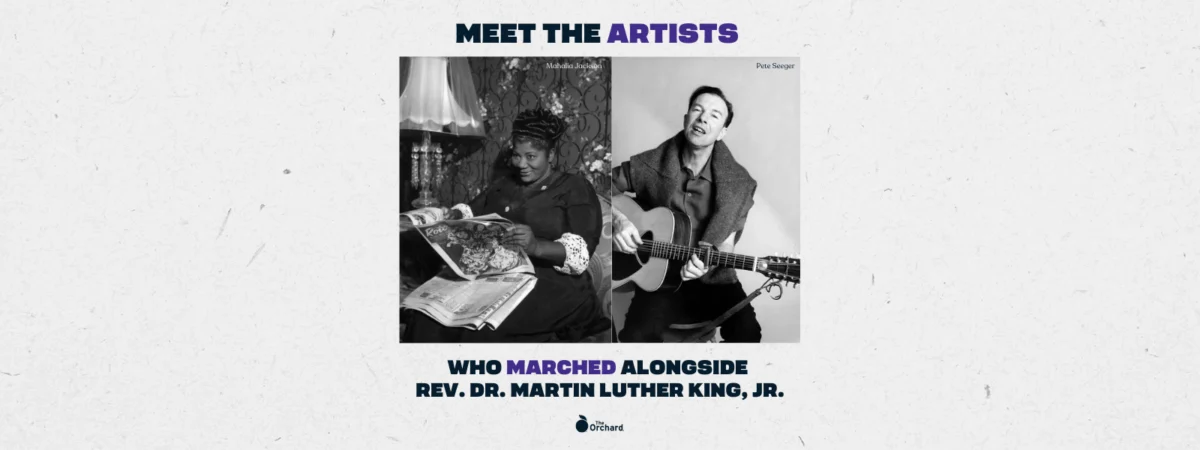
On this Martin Luther King, Jr. Day of Service, the enduring legacy of the Civil Rights Movement is powerfully illuminated through the contributions of artists who stood shoulder-to-shoulder with Dr. King, their voices and melodies becoming integral to the struggle for equality. This day of remembrance and action serves as a crucial reminder of the multifaceted nature of activism, highlighting how music and art served not only as inspiration but as potent tools for mobilization and change. Among the most impactful were gospel titan Mahalia Jackson and folk music icon Pete Seeger, whose artistry resonated deeply within the movement and continues to inspire generations. Their involvement underscores a critical historical truth: that the fight for civil rights was as much a battle of hearts and minds as it was a struggle for legislative and social reform, with music acting as a vital bridge between the two.
Mahalia Jackson: The Voice of Divine Inspiration
Mahalia Jackson, rightfully hailed as one of the most revered gospel singers of the 20th century, was far more than just a performer; she was a trusted confidante and a spiritual anchor for Reverend Dr. Martin Luther King, Jr. Their profound friendship was forged in the crucible of the Civil Rights Movement, with Jackson frequently performing at his sermons and crucial fundraising events for the Southern Christian Leadership Conference (SCLC). Her powerful voice, imbued with an unparalleled ability to stir the soul, became synonymous with hope and resilience for African Americans facing systemic oppression.
Jackson’s most iconic contribution to the movement’s narrative, however, occurred on August 28, 1963, during the monumental March on Washington for Jobs and Freedom. As Dr. King delivered his seminal "I Have a Dream" speech at the Lincoln Memorial, it was Jackson, from her seat on the dais, who famously called out, "Tell them about the dream, Martin!" This spontaneous interjection, captured by millions and etched into historical memory, prompted Dr. King to deviate from his prepared remarks and launch into the extemporaneous, soaring oration that would define the aspirations of a generation. Her plea was not merely a request for more content, but a testament to the shared vision and the profound emotional resonance of the moment. Jackson understood the power of King’s message and the collective yearning of the crowd, acting as a conduit for the unexpressed hopes of those present.
The impact of Mahalia Jackson’s music extended beyond specific moments. Her performances, often infused with a deep spirituality and a palpable sense of justice, provided solace and strength to activists facing violence and despair. Her rendition of spirituals like "Precious Lord, Take My Hand" became anthems of perseverance, offering a spiritual balm in times of profound hardship. Data from the era indicates that gospel music played a significant role in community organizing. Churches served as vital centers for planning and disseminating information, and music was an integral part of these gatherings, fostering unity and a shared sense of purpose. Jackson’s recordings, distributed widely, offered a constant source of encouragement and a reminder of the moral imperative driving the movement. Her presence and vocal contributions at key events like the SCLC’s annual conferences and fundraising dinners were not merely ceremonial; they were strategic, galvanizing attendees and reinforcing the moral and spiritual underpinnings of the fight for racial equality.
Pete Seeger: The Bard of Social Justice
Pete Seeger, a towering figure in American folk music, embodied the spirit of a musician as a dedicated social activist. Throughout the 1960s, his unwavering commitment extended across a spectrum of interlocking causes, including civil rights, workers’ rights, and environmental protection. Seeger’s songwriting and performances were not detached observations but deeply engaged calls to action, articulating the grievances and aspirations of marginalized communities. His commitment was not passive; he actively participated in protests and marches, using his platform to amplify the voices of those seeking change.
Seeger’s repertoire includes some of the most potent protest songs in American history. Classics such as "Solidarity Forever" and "Which Side Are You On?" became rallying cries for labor movements, emphasizing the importance of collective action and unwavering solidarity. His co-authored song with Lee Hays, "If I Had a Hammer," transcended its initial context to become a universal anthem for peace and justice, its hopeful melody belying a powerful message of dismantling oppression. These songs, often simple yet profoundly resonant, were easily learned and sung by large groups, fostering a sense of shared identity and collective strength at rallies, picket lines, and marches.
A pivotal moment in Seeger’s relationship with the Civil Rights Movement, and specifically with Dr. King, involved the song "We Shall Overcome." While the song’s origins are complex, tracing back to an African American spiritual, it was Seeger’s 1947 adaptation, "We Will Overcome," that significantly influenced its popularization. In 1963, Seeger performed "We Shall Overcome" at the March on Washington, and it was his version that Dr. King first heard. This encounter proved instrumental, as King embraced the song, adapting it to "We Shall Overcome," which subsequently became the unofficial anthem of the Civil Rights Movement. The song’s simple, yet powerful, repetition offered a profound message of hope and inevitable victory against injustice. Its adoption by the movement underscores how music can distill complex political and social aspirations into easily digestible and emotionally resonant messages.
Seeger’s direct involvement in the movement’s most critical junctures further cemented his legacy. At Dr. King’s personal invitation, Seeger performed at the historic 1965 Selma to Montgomery March, a pivotal event in the struggle for voting rights. His presence alongside activists facing brutal opposition served as a powerful symbol of solidarity and moral support. The act of a prominent white artist marching with African American activists was a significant gesture, demonstrating a commitment that transcended racial and cultural divides. Seeger’s dedication to using his music for social change, exemplified by his participation in such crucial events, continues to inspire artists and activists alike. His legacy is not just in the songs he wrote or performed, but in the unwavering belief that music could and should be a force for good in the world.
The Orchard and Smithsonian Folkways: Preserving the Sound of Freedom
The enduring power of Mahalia Jackson and Pete Seeger’s music is amplified through their continued availability via distribution partners like The Orchard, which works with labels such as Smithsonian Folkways. This partnership ensures that the "music of freedom fighters" remains accessible to new generations, allowing for continued exploration and education. Smithsonian Folkways, in particular, has a rich archive dedicated to documenting and preserving American folk music, including seminal recordings from the Civil Rights era. Their commitment to educational outreach and archiving plays a crucial role in contextualizing this music, providing historical background and analysis that deepens understanding of its significance.
The availability of these artists’ discographies through modern distribution channels highlights a crucial aspect of historical preservation. In an age where digital access is paramount, such partnerships ensure that the sonic artifacts of social movements are not lost to time. This accessibility is vital for educational institutions, researchers, and the general public seeking to understand the historical context of the Civil Rights Movement. The ability to stream or purchase Mahalia Jackson’s powerful gospel renditions or Pete Seeger’s stirring folk anthems allows for direct engagement with the sounds that fueled a generation’s fight for justice. This also includes the vast catalog of music from other artists who contributed to the movement, offering a comprehensive sonic landscape of the era.
The Broader Impact: Music as a Catalyst for Change
The contributions of Mahalia Jackson and Pete Seeger exemplify a recurring theme in social justice movements throughout history: the potent role of music as a catalyst for change. Beyond providing entertainment or emotional expression, music in the Civil Rights Movement served several critical functions:
- Mobilization and Unity: Songs like "We Shall Overcome" and "This Little Light of Mine" were simple, easily learned, and sung collectively, fostering a powerful sense of unity and shared purpose among participants. They transformed disparate individuals into a cohesive force.
- Inspiration and Resilience: In the face of violence, intimidation, and despair, music offered hope, courage, and a reminder of the moral righteousness of the cause. Mahalia Jackson’s gospel fervor, in particular, provided spiritual strength.
- Communication and Education: Songs often articulated the movement’s goals, grievances, and strategies in accessible language, serving as a form of public education and awareness-raising. Pete Seeger’s ballads often told stories of injustice and the need for collective action.
- Documentation and Legacy: Recorded music preserved the spirit and message of the movement, creating a historical record that continues to inform and inspire future generations. The work of distributors and archives ensures this legacy endures.
The statistical impact of music on the movement, while difficult to quantify precisely, is evident in the sheer volume of song usage at rallies, marches, and church gatherings. Oral histories and contemporary accounts consistently describe music as an indispensable element of nearly every significant event. The ability of a song to unify thousands of people, to instill courage in the face of danger, and to articulate a collective vision for a better future cannot be overstated.
A Call to Action: Continuing the Legacy
In recognition of Martin Luther King, Jr. Day of Service, the engagement with artists like Jackson and Seeger serves as an inspiration for contemporary activism. The article encourages individuals to explore their music and to connect with organizations dedicated to social justice. Platforms like YourCause Connect offer avenues for community engagement and support, enabling individuals to find and contribute to causes aligned with the principles of civil rights and equality.
The legacy of Dr. King, Mahalia Jackson, and Pete Seeger is not confined to historical records; it is a living testament to the power of collective action and the transformative potential of art. As we commemorate this day, the call to "show up" and "get social" by following and amplifying relevant social media accounts underscores the ongoing need for active participation in the pursuit of justice and equality. By understanding and celebrating the contributions of these artists, we are better equipped to continue the work of building a more just and equitable society, ensuring that the songs of freedom continue to resonate and inspire action for years to come. The amplification of these voices, both historically and in the present, is a crucial part of honoring the spirit of Dr. King’s enduring message.
