

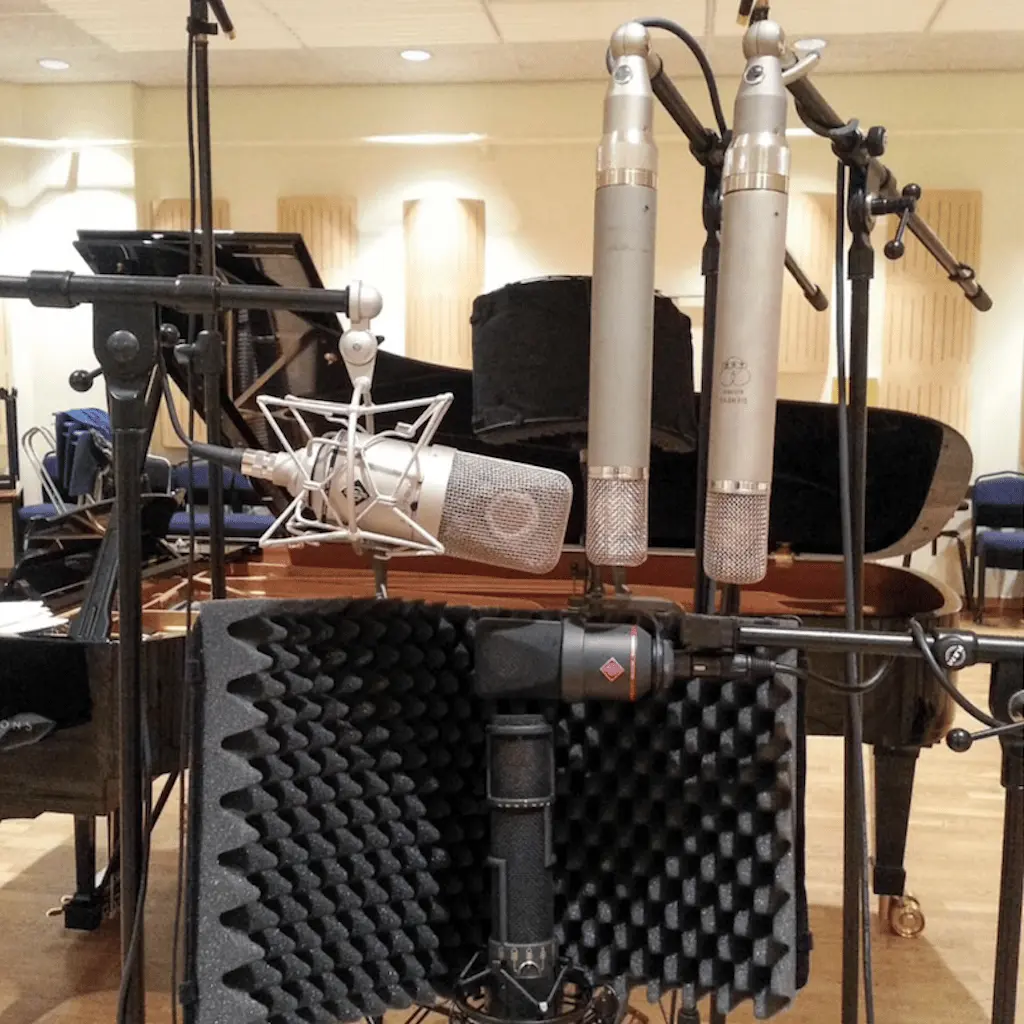
The transition of immersive audio techniques from the controlled environments of recording studios into the complex arena of live sound reinforcement has raised fundamental questions regarding the efficacy of traditional microphone arrangements. For decades, a central paradox has occupied the minds of audio engineers: while psychoacoustic theory suggests that only "Small AB" microphone setups—with capsule spacing between 50 and 100 centimeters—provide accurate localization for the human ear, many legendary "Tonmeisters" have long preferred "Large AB" techniques, utilizing omnidirectional microphones spaced several meters apart. This discrepancy, first identified in academic circles over 25 years ago at the University of Music and Performing Arts in Vienna, has led to a comprehensive re-evaluation of how microphone positioning influences the perceived "spaciousness" and "naturalness" of a recording, particularly in the context of modern 5.1 surround and 3D audio formats.

The Frequency-Dependent Cross-Correlation Coefficient
The investigation into the validity of various stereophonic techniques gained significant momentum in the early 2000s under the leadership of Dr. Edwin Pfanzagl-Cardone, the Head of Acoustics for the Salzburg Festival. Through a series of measurements presented in Audio Engineering Society (AES) convention preprints in 2002 and 2008, a new analytical method was established: the Frequency-Dependent Cross-Correlation Coefficient (FCC). This metric acts as an "acoustic fingerprint," analyzing the similarity between the left and right signals across the entire audible spectrum.
The data revealed a surprising reality: most traditional microphone techniques do not maintain stereophonic integrity across all frequencies. As the frequency decreases, many setups become increasingly monophonic. This technical limitation directly impacts the ability of an audio system to convey a sense of physical space. Research indicates that the impression of "roominess" or spatial envelopment is primarily dependent on maintaining a high degree of signal de-correlation below 500 Hz, and specifically in the critical range below 200 Hz. When signals in this low-frequency band are highly correlated—meaning they are nearly identical in both channels—the resulting sound is perceived as "narrow" and "unnatural."

Historical Context and the Evolution of Spatial Standards
To understand the current state of immersive audio, one must look back at the "Legacy" recordings of the mid-20th century. Labels such as RCA, with their "Living Stereo" series, and Mercury, with their "Living Presence" releases, often utilized Large AB setups with minimal spot microphones. Analysis using the FCC method shows that these recordings often possess a superior sense of spatial depth compared to modern productions that rely on a Small AB main system supplemented by dozens of close-proximity spot microphones.
The historical timeline of spatial audio research includes several key milestones:

- 1930s: Initial stereo experiments at Bell Laboratories and EMI’s Abbey Road Studios.
- 1968: Development of the Binaural Quality Index (BQI) by Keet, focusing on signal correlation at the listener’s ears in a concert hall.
- 1973: Research by Gottlob identifying an optimal cross-correlation value of 0.23 for binaural music signals in high-quality acoustic environments.
- 2000-Present: Systematic analysis of surround microphone techniques (OCT, Decca Tree, KFM) at the Salzburg Festival.
These milestones highlight a shift from purely artistic choices to a data-driven understanding of how microphone spacing interacts with the physics of the listening environment.
Surround Sound and the Challenge of Direct vs. Diffuse Fields
The primary advantage of surround and 3D audio over traditional two-channel stereo is the ability to separate the direct sound from the diffuse sound or reverberation. In a 2.0 stereo setup, both the direct instrument sound and the room’s echo must be reproduced from the same two speakers in front of the listener. In a multichannel environment, these elements can be physically separated, mimicking the way sound reaches the ears in a physical concert hall—direct sound from the stage and reflections from the sides and rear.

However, the effectiveness of this separation depends entirely on the microphone technique used. Many modern surround techniques are simply adaptations of stereo arrays that suffer from high correlation in the bass frequencies. If the microphones capturing the rear "ambience" channels are too close together, they fail to provide the necessary de-correlation, and the "surround" effect is significantly diminished.
Comparative Analysis of Modern Techniques: Ambisonics vs. Discrete Arrays
The rise of 3D audio has brought First-Order Ambisonics (FOA) into the mainstream, largely due to its compact hardware and the convenience of software-based re-rendering. However, technical analysis suggests that the popularity of Ambisonics may be driven more by ease of use than by acoustic superior quality. Measurements of the SoundField MK V microphone, a staple of Ambisonic recording, show remarkably high correlation values between channels. In many frequency bands, the correlation reaches 0.8 or 0.9, rendering the signal nearly monophonic.

In contrast, discrete arrays like the Optimal Cardioid Technique (OCT) or the Decca Tree offer better channel separation at higher frequencies but still struggle with low-frequency correlation. To address these gaps, newer innovations have emerged, such as the Blumlein-Pfanzagl-Triple (BPT). This patented technique utilizes three microphones with figure-eight patterns to capture a more authentic spatial image, maintaining de-correlation where it matters most for human perception.
The Binaural Quality Index of Reproduced Music (BQIrep)
A significant development in the objective assessment of audio quality is the proposal of the "Binaural Quality Index of Reproduced Music" (BQIrep). This index is based on the principle that regardless of how many speakers are used in a 3D audio setup—whether it is an Auro 9.1 system or a massive Hamasaki 22.2 array—the final sound must be processed by two human ears.

The BQIrep utilizes a "dummy head" (such as the Neumann KU81i) to measure the sound field at the "sweet spot" of a listening room. By comparing the binaural cross-correlation of the reproduced sound with the original binaural recording made in the concert hall, engineers can assign a numerical value to the "spatial truth" of a microphone technique. If the reproduced sound shows significantly higher correlation than the original hall measurement, the technique is deemed insufficient for high-fidelity spatial reproduction.
Practical Implications for Live Sound and Large-Scale Venues
The research conducted at the Salzburg Festival has immediate implications for the world of live theater and large-scale event production. In a domestic hi-fi environment, speakers are typically spaced 3 to 4 meters apart. In a professional theater, that distance can exceed 20 meters.

Experience has shown that microphone techniques that sound acceptable in a small room often fail when scaled up to a massive sound system. A high degree of signal correlation in a large venue leads to a "phasing" effect and a lack of clarity. Therefore, only microphone techniques with high signal de-correlation at low frequencies are suitable for achieving a sense of "naturalness" in large-scale live reinforcement. This necessitates a move away from compact, coincident microphone setups toward more widely spaced, discrete arrays that respect the laws of physics over the convenience of equipment transport.
Future Outlook and Industry Impact
The ongoing study of microphone techniques suggests that the future of immersive audio lies in a more nuanced understanding of psychoacoustics. As 3D audio becomes the standard for streaming services and home cinema, the pressure on recording engineers to provide "authentic" spatial data will only increase.

The work of specialists like Dr. Pfanzagl-Cardone emphasizes a "Natural Perspective" approach. This philosophy argues that the goal of a recording should not just be to capture the sound of an instrument, but to capture the instrument within its acoustic context. By utilizing tools like the 2BC multiCorr plugin or integrated correlation meters in modern Digital Audio Workstations (DAWs), engineers can now monitor signal similarity in real-time, allowing for immediate adjustments to microphone positioning during a session.
Ultimately, the marriage of art and science in the recording process ensures that the "spaciousness" of a performance is not an accidental byproduct, but a deliberate, measurable, and repeatable outcome. As the industry moves toward even more complex 3D formats, the foundational principles of signal correlation and binaural perception will remain the "arbiters" of what constitutes truly high-quality audio reproduction.
