

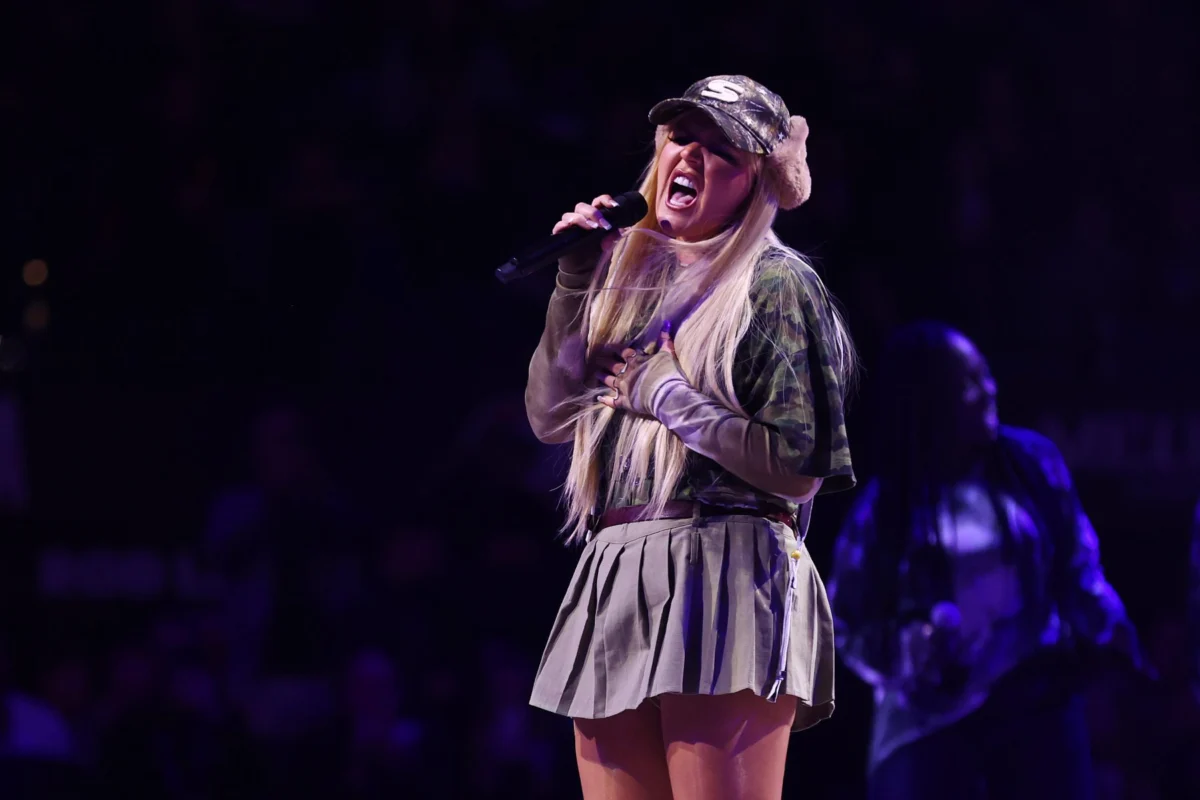
Australia’s highly anticipated National Rugby League (NRL) Grand Final will proceed without its planned headline music act, Tones And I, after negotiations for a pre-match performance fell through due to a scheduling conflict. The acclaimed singer-songwriter, whose real name is Toni Watson, was initially slated to perform at the sport’s showpiece event on Sunday, October 4, at Sydney’s iconic Accor Stadium. However, representatives for Tones And I confirmed that a prior commitment with Grammy Award-winning artist Macklemore in the United States made it impossible to accept the late offer from the NRL. In a significant pivot, the league has announced it will not seek a replacement artist, instead opting to reallocate the estimated A$1 million budget for the entertainment slot towards funding sports programs for underprivileged children.
The decision marks a notable shift in the NRL’s approach to its Grand Final festivities, an event historically renowned for blending elite sporting competition with high-profile musical performances. For decades, the Grand Final has been a stage where global music icons and beloved local artists alike have shared the spotlight with rugby league’s biggest stars, creating a unique cultural spectacle that transcends sport. The absence of a major musical draw this year, particularly following the last-minute nature of the cancellation, has ignited discussion about the role and value of pre-match entertainment at such significant national events.
A Chronology of Negotiations and Withdrawal
The timeline of events leading to Tones And I’s withdrawal indicates a rapid sequence of discussions. According to a statement released by Lemon Tree Management, Tones And I’s management team, the artist was "recently approached to perform the preshow at the NRL Grand Final." An official offer was extended to her management on September 5, less than a month before the scheduled event.
Upon receiving the offer, Tones And I’s team embarked on a thorough exploration of "all avenues to make it work," acknowledging the prestige associated with performing at the NRL Grand Final. However, these efforts ultimately proved unsuccessful. Crucially, the statement emphasized that "nothing was signed or confirmed in writing," indicating that the discussions remained in a preliminary phase without a binding agreement. Due to the "last minute nature" of the offer and Tones And I’s "prior commitments," her team concluded that they were "unable to accept the offer." The statement concluded with well wishes for the NRL’s event, signaling an amicable parting of ways despite the disappointment.
The "prior commitment" in question involved a planned engagement with American hip-hop artist Macklemore. Tones And I has previously expressed her admiration for Macklemore, describing him as her "favorite artist," and the two collaborated on the track "Chant" in 2022, forging a professional and presumably personal connection. While specific details of the American commitment remain private, the logistics of international travel and performance schedules for artists of their stature, especially on short notice, often present insurmountable challenges. This commitment for Tones And I comes at a time when Macklemore himself has garnered recent headlines, including a widely publicized early exit from Ed Sheeran’s Loop tour of the United States following his "Free Palestine" remarks onstage, adding an unexpected layer of context to his recent activities, though not directly impacting Tones And I’s scheduling conflict.
NRL’s Strategic Shift and Financial Reallocation

Following Tones And I’s formal declination, the Australian Rugby League Commission (ARLC) made the decisive announcement that it would not pursue another artist to fill the void. Instead, the league declared its intention to redirect the substantial budget earmarked for the entertainment segment. Peter V’landys, Chairman of the ARLC, confirmed to the Australian Broadcasting Corporation (ABC) that the cost associated with the Grand Final entertainment was approximately A$1 million.
V’landys articulated a clear rationale for this strategic pivot, emphasizing the league’s commitment to community development. "I’d prefer to see 20,000 underprivileged kids who can’t afford to play rugby league play rugby league, rather than spend a million dollars on 11 minutes of a musical performance," he stated. This sentiment underscores a philosophical shift within the NRL, prioritizing grassroots engagement and accessibility over what some might perceive as extravagant pre-game theatrics. V’landys maintained that the league harbored "no hard feelings" towards Tones And I, expressing personal admiration for her talent. "I’m a fan of Tones And I," he remarked. "She is a great performer, no doubt about that, and she’s got some great songs, but as I said, we both decided to go to a different direction."
This "different direction" signals a potential long-term re-evaluation of the Grand Final entertainment model. V’landys firmly asserted that the sport’s appeal is self-sustaining, declaring, "Our game sells itself. People come to watch rugby league. They don’t come to watch a pop concert." This perspective challenges the conventional wisdom that major sporting events require a significant musical component to draw and retain audience interest, particularly in an era of intense competition for viewership.
The "Dance Monkey" Factor: Creative Control vs. Crowd Pleaser
Adding another layer of intrigue to the withdrawal, The Sydney Morning Herald reported, citing unnamed sources, that a contributing factor to the breakdown in negotiations might have been the NRL’s alleged demand that Tones And I perform her global smash hit, "Dance Monkey." The report suggested that the singer-songwriter had declined this specific request.
"Dance Monkey," released in 2019, catapulted Tones And I to international superstardom, becoming one of the most streamed songs in history. It held the top spot on the Australian charts for an unprecedented 24 weeks and reigned over the U.K. survey for 11 weeks, a record for a solo female artist. The track also cracked the top 5 on the Billboard Hot 100 and topped charts in some 30 territories worldwide. Despite its undeniable commercial success and widespread recognition, Tones And I has openly discussed her complex relationship with the song. In a 2022 interview for Australian commercial radio, she candidly remarked that "a lot of time, I don’t want to sing it." This sentiment, common among artists whose breakthrough hit overshadows their subsequent work, highlights the tension between an artist’s desire for creative evolution and an audience’s, or in this case, an event organizer’s, expectation for a beloved signature performance. While Tones And I has performed "Dance Monkey" at other high-profile events, including New Year’s Eve celebrations at Time’s Square heading into 2026 and Sydney’s NYE event in 2022, the reported demand from the NRL may have touched upon her artistic boundaries.
Historical Context of NRL Grand Final Entertainment
The NRL Grand Final has a rich history of featuring iconic musical performances that have become synonymous with the event itself. Legendary acts like Tina Turner, whose "The Best" became an unofficial anthem for the league in the early 1990s, set a high bar for entertainment. Other notable performers over the years have included Billy Idol, The Kid LAROI, and in 2025, American singer Teddy Swims. These performances were not merely intermissions but integral parts of the Grand Final experience, designed to build excitement, appeal to a broader demographic beyond traditional rugby league fans, and enhance the overall spectacle.

The A$1 million budget cited by V’landys is consistent with the scale of artists typically engaged for such events, covering performance fees, production costs, staging, and logistics. The decision to forgo such an investment entirely represents a significant departure from this established tradition. It suggests a re-evaluation of what constitutes value for money in a major sporting event, particularly when weighed against community benefits.
Broader Implications and Future Outlook
The NRL’s decision to redirect its entertainment budget towards grassroots programs has several implications. Firstly, it could set a precedent for other major sporting organizations to reconsider their spending priorities, especially in an era where social responsibility and community engagement are increasingly valued. By funneling funds into programs for underprivileged children, the NRL gains significant positive public relations, aligning itself with altruistic goals rather than perceived lavish spending. This move resonates deeply in a country where sport is often seen as a pathway to social inclusion and personal development.
Secondly, the absence of a headline music act might test the theory that "the game sells itself." While rugby league undeniably boasts a passionate fan base, the cross-promotional appeal of a global music star can attract casual viewers and international audiences who might not otherwise tune in. The Grand Final has historically been one of Australia’s great annual crossover moments for music and sport, drawing in millions of viewers. The impact on overall viewership figures and international appeal, if any, will be closely watched in the coming years.
Thirdly, for artists and their management, this incident highlights the complexities of navigating high-stakes performance opportunities, especially when tight schedules and creative demands clash. While the NRL Grand Final offers immense exposure, artists must weigh such opportunities against existing commitments and artistic integrity. Tones And I, with two ARIA No. 1 albums (2021’s Welcome to the Madhouse and 2024’s Beautifully Ordinary, which featured her follow-up hit "Fly Away") and a globally recognized discography, has a strong enough career foundation to make independent choices about her performance schedule and repertoire.
In conclusion, Tones And I’s withdrawal from the NRL Grand Final, driven by a prior commitment with Macklemore and potentially complicated by creative differences over song selection, has triggered a significant policy shift within the National Rugby League. The decision to reallocate a substantial entertainment budget to grassroots community programs reflects a changing philosophy towards event management and social responsibility. While the Grand Final will undoubtedly remain a thrilling sporting spectacle, its quieter pre-match atmosphere will mark a notable departure from tradition, potentially ushering in a new era where the focus is squarely on the game and its enduring impact on the community. The lasting effects of this decision on both the event’s cultural footprint and the broader intersection of sports and entertainment in Australia will unfold in the years to come.
