

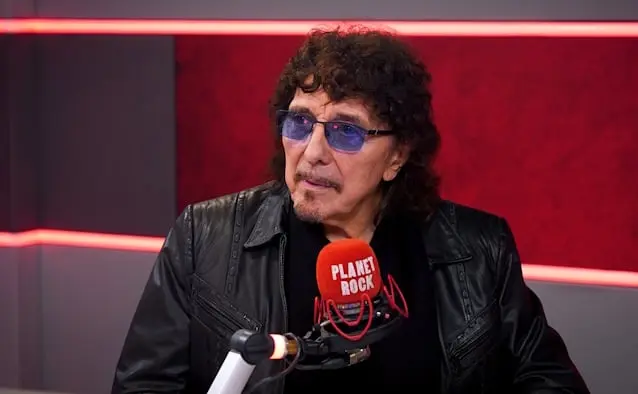
In a recent interview with Planet Rock’s Ian Danter, Black Sabbath guitarist Tony Iommi reaffirmed his long-standing intention to remix the band’s 1983 album "Born Again." The album, a unique and often polarizing chapter in Black Sabbath’s discography, marked the sole studio collaboration with Deep Purple vocalist Ian Gillan and the final Black Sabbath album to feature drummer Bill Ward. Iommi detailed the arduous journey to recover the original master tapes, a process that has been underway for years, and expressed his determination to rectify what he perceives as significant sonic shortcomings in the original release.
The Elusive Tapes and the Genesis of a Remix
The prospect of a remixed "Born Again" has been a recurring topic for Iommi, who has consistently voiced his dissatisfaction with the album’s final sound. "Yes, there is a plan," Iommi confirmed to Danter, referencing the ongoing efforts to bring the remix to fruition. He elaborated on the considerable challenges faced in locating the original recording materials, stating, "To be honest, we couldn’t find those tapes for a long time. They disappeared." The whereabouts of the tapes remained a mystery for years, eventually surfacing in record company storage. "And I don’t know who located them at the end, whether it was Ralph [Baker], my manager, or who found them. But they were in some record company storage. And anyway, we’ve gotten them back and they were transferred. So they are ready to start work on."
This recovery marks a significant milestone, paving the way for the meticulous work required to revisit and re-engineer the album. The transfer process itself is crucial, as older magnetic tape recordings require careful digitization to preserve their integrity and allow for modern mixing techniques.
Acknowledging Fan Devotion Amidst Production Flaws
Iommi acknowledged that a segment of the fanbase has developed an appreciation for "Born Again" in its original form, including its perceived production flaws. "So many people have got used to" the album’s sound, he noted. "Some of them liked it. And I’m sure if I do a remix on it, it’ll be, ‘Oh, no. It’s not as good as it was before.’" Despite this potential fan resistance, Iommi remains committed to the project. "We’re definitely gonna give it a go. Because when we actually did it and we heard it in a studio, it was great. And then we went on tour, and the next thing, it’s in the charts here, and we heard it. We thought, ‘God, it’s really muffly. What happened?’ Somewhere in the process along the way, something happened."
This sentiment echoes comments made by Ian Gillan himself. In May 2025, Gillan shared his perspective with Rolling Stone Brasil, stating, "I think the songs [on the album] are great. I just thought it was ridiculous – the mix was outrageous." He drew a parallel to the iconic mockumentary "This Is Spinal Tap," humorously remarking, "All you could hear – if you ever saw the movie ‘[This Is] Spinal Tap’ – then that’s the story of ‘Born Again.’ The bass level was so high, they couldn’t play it on the radio." Gillan also expressed a degree of resignation, adding, "So they’re gonna remix it. It’s a bit late, but, yeah, probably for aficionados or collectors or whatever."
The "Born Again" Era: A Unique Interlude
The creation of "Born Again" was born out of a period of significant flux for Black Sabbath. Following the departures of vocalist Ronnie James Dio and drummer Vinny Appice after the "Live Evil" album, the band found itself in search of a new frontman. This led to an unexpected but ultimately amicable collaboration with Ian Gillan, a move that injected a different energy into the band. The album, recorded in May 1983 at The Manor Studios, represented a departure from the band’s signature dark, brooding sound. Produced by Black Sabbath and Robin Black, who had previously worked on albums like "Sabotage" and "Technical Ecstasy," "Born Again" featured a more spirited and, at times, lighthearted approach to songwriting.
Anecdotes surrounding the album’s creation further highlight its unconventional nature. The opening track, "Trashed," was reportedly inspired by an incident where Ian Gillan, under the influence of alcohol, crashed Bill Ward’s car on the studio grounds. Similarly, "Disturbing The Priest" is said to have originated from a vicar’s complaint about the loud music disturbing a local choir practice. These stories contribute to the album’s folklore, painting a picture of a band experimenting and embracing a different creative dynamic.
A Shared Vision for Sonic Improvement
The desire for a remix isn’t solely Iommi’s; Ian Gillan has also expressed his hope for a sonic facelift. "It’s always a joy to write with Tony," Gillan told Rolling Stone Brasil. "And we certainly had some fun making the record… It was quite a fantastic time, and I enjoyed the tour. It was the longest party I’ve ever been to. It lasted one year." He reiterated his belief in the album’s songwriting merit, despite the production issues. "I think the album is actually great," Gillan added. "I always thought, we always recognized the fact that Ozzy’s [Osbourne] the singer with Black Sabbath, and people identify with that. So it was a kind of a weird hybrid kind of situation. But all in all, thank God they’re gonna remix it."
Tony Iommi echoed this sentiment in a May 2024 interview on SiriusXM’s "Trunk Nation With Eddie Trunk," emphasizing that not only he but also bassist Geezer Butler and, presumably, Ian Gillan, are keen on the remix project. "Well, eventually we got the tapes, but we couldn’t find them for years," Iommi stated. "We didn’t know where they were… And so eventually we got them, and then we’ve had them, or [we are] having them transferred, ’cause obviously it’s tape. And so we’re having them transferred so we can have a look at that. And that’s sort of a plan as well; I’d like to do that. And I know Ian would like that to happen as well. Well, Geezer would as well, I’m sure."
The "Spinal Tap" Connection and Chart Success
The "Born Again" era is intrinsically linked to the cult classic film "This Is Spinal Tap," which satirized the excesses and eccentricities of the heavy metal scene. The film’s creators drew inspiration from real-life incidents and absurdities that occurred during this period of Black Sabbath’s history. The infamous Stonehenge stage set, intended to be life-sized but ultimately too large to fit on many stages, is a prime example. Gillan recounted the story of how the concept for Stonehenge arose: "And as we were walking through these corridors, one of the guys said, ‘By the way, anyone got any idea of a concept for a stage set or anything?’ And Geezer Butler said, ‘Yeah. Stonehenge.’ And the guy said, ‘Wow! That’s great.’ He said, ‘How do you visualize it?’ And Geezer said, ‘Well, lifesize, of course.’" The band’s ambition far outstripped their practical capabilities, leading to a stage prop that became a legendary anecdote.
Despite the production issues, "Born Again" achieved considerable commercial success upon its release in August 1983. It marked the highest-charting Black Sabbath album in the United Kingdom since "Sabbath Bloody Sabbath" and became an American Top 40 hit. However, it notably became the first Black Sabbath album to not receive any RIAA certification (gold or platinum) in the U.S., a detail that underscores the mixed reception it received despite its chart performance.
Iommi’s Vision for the Remix: Enhancing the Core
Iommi’s vision for the remix centers on enhancing the album’s inherent strengths. "There’s things that really need adjusting on it, because there’s some really good songs on that album too," he explained in a June 2023 interview with "Trunk Nation With Eddie Trunk." He elaborated on specific areas that require attention: "Well, when it was originally recorded, in the studio it sounded great; we loved it. But we went on tour then and somehow the sound got muffled. And whether it was from the pressing or what, I don’t know. But I’d like to look at that. I have heard, when I played the ‘Born Again’ album, there’s parts where I go, ‘Oh, that should have been louder,’ ‘This should have been more prominent’ – drums or whatever it may have been."
The goal is not to fundamentally alter the album’s character but to present it with a clarity and impact that was lost in the original production. "But it would be nice to give it an up-to-date quality now, of what you can do now, and be able to listen to it differently," Iommi continued. "Because, obviously, when you’re involved with this stuff at the time, you’re hearing nothing but it, and then you leave it into somebody else’s hands, like we did with that. We went on tour, [came] back and heard it, and we went, ‘Oh my God. What happened?’ We don’t want that to happen. I want to be able to pull the tapes out again and really give it a good listen to and see what we need to adjust and change and make it a better-sounding album."
Gillan’s Candid Reflections on the Mix and His Sabbath Tenure
Ian Gillan’s recollections of the "Born Again" mixing process are candid and often humorous. When asked in November 2022 by RockFM Spain if he had "broken" the album, he responded with a laugh, "I didn’t break it. I threw it out the window of my car." He explained his disappointment: "I was disappointed. I didn’t have the mentality of all the guys in Black Sabbath. I loved it. I had a fantastic year; it was insane. But when we finished the mixes… I still have a cassette at my home of the monitor mixes of ‘Born Again,’ and it sounds fantastic – just on a cassette. And that’s the last thing I heard in the recording studio. When I heard the album, I went, ‘What is this?’ The bass rumble was a bit too much for me."
Gillan also reflected on his tenure with Black Sabbath, acknowledging the inherent challenge of stepping into the shoes of Ozzy Osbourne. "I was with Black Sabbath for a year and I sang Ozzy Osbourne songs as well as the songs from ‘Born Again.’ And I never felt right doing that," he admitted. "It was great – I could sing them okay – but I didn’t sound like Ozzy. There was something not quite right." This sentiment underscores the unique position Gillan occupied, bridging the gap between different eras of Black Sabbath and forging his own distinct, albeit brief, chapter.
The Enduring Legacy of "Born Again"
Despite its controversies and production issues, "Born Again" holds a special place in the hearts of many hardcore Black Sabbath fans. The album has seen a resurgence in interest over the decades, a phenomenon Iommi attributes to word-of-mouth and the internet. "Yeah, it’s funny. That does happen," he said regarding fans rediscovering the album. "And it’s the same as the Tony Martin-era Black Sabbath stuff as well. People didn’t know of it at the time, and then it’s word of mouth that gets around and the Internet, and they get interested and eventually, they [go], ‘Oh, yeah, it’s good.’ And that’s what’s happened with ‘Born Again’ a little bit."
The album was re-released in the spring of 2011 as a two-CD set, including a 1983 live performance from the Reading Festival, offering fans a more comprehensive look at the "Born Again" period. The planned remix promises to further illuminate this fascinating, albeit flawed, chapter in the history of one of heavy metal’s most iconic bands, offering a fresh sonic perspective on an album that, despite its shortcomings, contains songs that Tony Iommi and Ian Gillan believe are truly great. The journey from the initial recording to a potential definitive remix is a testament to the enduring legacy of Black Sabbath and the band members’ commitment to their music.
