

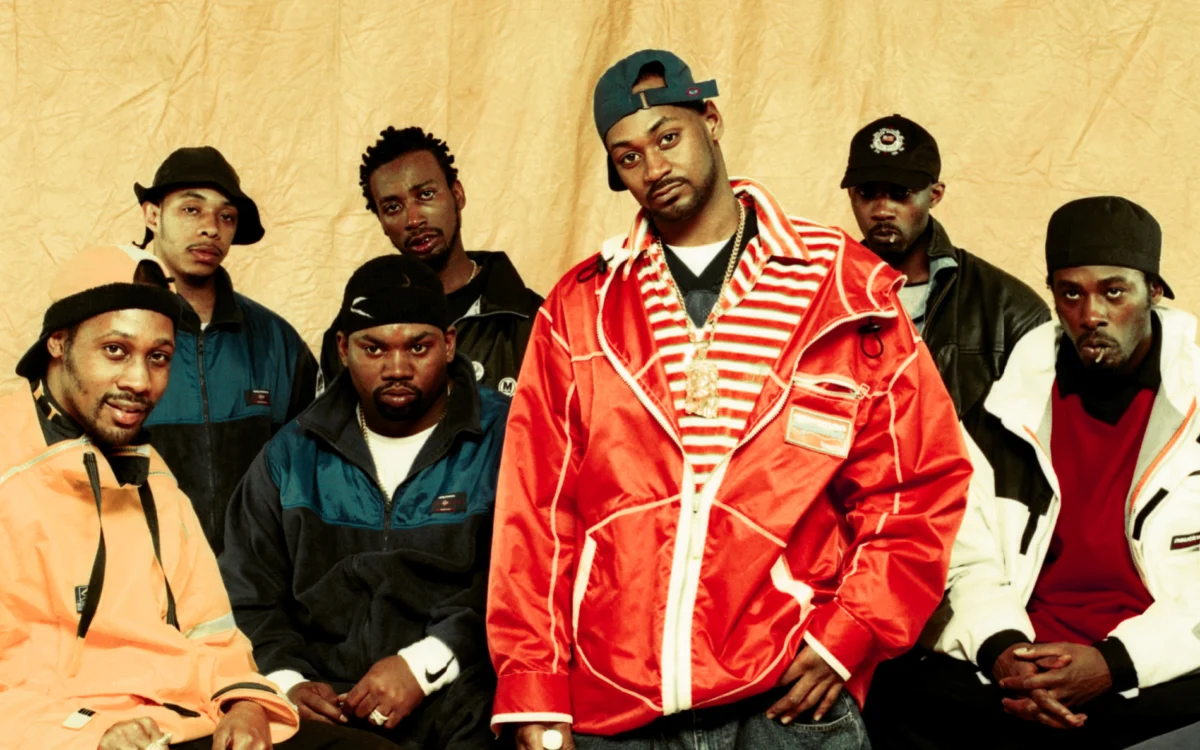
The legendary hip-hop collective Wu-Tang Clan has officially been voted into the prestigious Rock & Roll Hall of Fame as part of the esteemed Class of 2026 inductees. The announcement, made on Monday, April 13, marks a monumental recognition of the Staten Island group’s profound and lasting impact on music and popular culture. Alongside Wu-Tang Clan, the Class of 2026 will also celebrate the induction of a diverse array of musical titans, including the iconic British singer-songwriter Sade, R&B luminary Luther Vandross, the influential British rock band Oasis, the pioneering heavy metal group Iron Maiden, the prolific solo artist Phil Collins, rock stalwart Billy Idol, and the seminal post-punk bands Joy Division and its successor New Order.
Adding further weight to hip-hop’s expanding presence within the Hall of Fame, fellow rap pioneers Queen Latifah and MC Lyte will be honored with the “Early Influence” award. This accolade specifically recognizes their groundbreaking contributions and their status as cultural trailblazers who have shaped the landscape of music and beyond. The formal induction ceremony is scheduled to take place on November 14 at the state-of-the-art Peacock Theater in Los Angeles, a venue that has hosted numerous significant cultural events. For those unable to attend in person, the proceedings will be broadcast in December on ABC and will be available for streaming on Disney+.
The announcement has been met with widespread acclaim and a palpable sense of pride from the Wu-Tang Clan members and their devoted fanbase. RZA, the de facto leader and architect of the Wu-Tang sound, expressed his profound emotions in a heartfelt Instagram post. "In all Humility. This announcement filled me with joy, proudness, profound achievement, and awe," RZA shared, reflecting on the group’s journey. "I’m grateful to all my brothers and those who helped us on the path. Thank you Rock & Roll Hall of Fame. This is a true Triumph – Wutang Forever." His sentiment was echoed by other members, with Raekwon, a pivotal voice in the clan, proclaiming, "History books will know this club! this my grammy. what we talking bout! haaaaaaaaaaa. shout out to all our mothers who birth these men. they won tonite." GZA, known for his intricate lyricism, further emphasized the collective effort behind this achievement: "We couldn’t have reached this milestone without our hip hop predecessors, fans, collaborators, friends and family. We thank you."
This induction signifies a significant moment in the ongoing acknowledgment of hip-hop’s legitimacy and its undeniable influence on the broader spectrum of rock and roll and popular music. While many viewed the Rock & Roll Hall of Fame as historically biased towards rock music, its recent years have seen a more inclusive approach, recognizing the genre-bending and genre-creating power of hip-hop artists.
A Legacy Forged in the Shaolin
The Wu-Tang Clan, formed in Staten Island, New York, in the early 1990s, rapidly ascended to become one of the most influential and critically acclaimed hip-hop groups of all time. Comprising nine distinct MCs – RZA, GZA, Ol’ Dirty Bastard (posthumously), Method Man, Raekwon, Ghostface Killah, Inspectah Deck, U-God, and Masta Killa – and DJ/producer Mathematics, the collective distinguished itself through its raw lyrical prowess, intricate storytelling, gritty production, and a unique philosophical and martial arts-inspired aesthetic. Their debut album, "Enter the Wu-Tang (36 Chambers)," released in 1993, is widely regarded as a masterpiece and a watershed moment in hip-hop history, injecting a much-needed dose of authenticity and innovation into the genre.
The group’s innovative business model, which allowed members to sign solo deals with different labels while retaining group rights, further revolutionized the music industry. This strategy led to a string of successful solo albums from members like Method Man, Raekwon, Ghostface Killah, and GZA, each contributing to the Wu-Tang brand’s ever-growing stature and critical acclaim. Their sonic tapestry, characterized by RZA’s distinctive sample-heavy production, often incorporating obscure soul, funk, and martial arts film soundtracks, created a soundscape that was both nostalgic and forward-thinking.
Expanding Hip-Hop’s Footprint in the Hall of Fame
The inclusion of Wu-Tang Clan, Queen Latifah, and MC Lyte brings the total number of hip-hop acts inducted into the Rock & Roll Hall of Fame to 18. This growing roster underscores the genre’s undeniable cultural significance and its transformative impact on global music. The journey of hip-hop into the Hall of Fame began in 2007 with the induction of Grandmaster Flash and the Furious Five, a landmark moment that paved the way for subsequent honorees.
Over the years, a constellation of hip-hop giants has been recognized, including Run-DMC, Beastie Boys, Public Enemy, and N.W.A., each representing different eras and stylistic evolutions within the genre. More recent inductees have further solidified hip-hop’s enduring legacy, with JAY-Z, Eminem, 2Pac, The Notorious B.I.G., OutKast, Missy Elliott, and A Tribe Called Quest all receiving their well-deserved nods. Additionally, artists like LL Cool J, Salt-N-Pepa, and DJ Kool Herc have been acknowledged through the Early Influence or Musical Excellence Awards, further attesting to their foundational roles in shaping the genre.
The Rigorous Selection Process
The path to Rock & Roll Hall of Fame induction is a rigorous and highly competitive one. Nominees are considered by various committees, including the Rock & Roll Hall of Fame’s Nominating Committee and the Musical Excellence Committee. The final inductees are then chosen by an international voting body comprising over 1,200 artists, historians, and music industry professionals. This year’s ballot also featured formidable contenders such as Lauryn Hill, Mariah Carey, and Shakira, among others, who, despite their significant contributions, did not garner sufficient votes from the electorate. The selection process emphasizes an artist’s or band’s influence, innovation, and impact on the development and continuation of rock and roll and its related music genres.
Broader Implications and Future Outlook
The induction of Wu-Tang Clan into the Rock & Roll Hall of Fame is more than just an individual honor; it is a testament to the evolution of musical appreciation and the broadening definition of what constitutes "rock and roll" in the 21st century. It acknowledges that the spirit of rebellion, innovation, and cultural commentary inherent in rock music has found powerful expression and continuation within hip-hop. This recognition is likely to inspire future generations of hip-hop artists and further solidify the genre’s place in the pantheon of musical greats.
The Class of 2026, with its diverse lineup, highlights the interconnectedness of musical genres and the shared threads of artistry that transcend stylistic boundaries. The inclusion of Wu-Tang Clan, alongside such varied artists as Sade, Iron Maiden, and Luther Vandross, underscores the Hall of Fame’s commitment to celebrating the rich tapestry of music history. As hip-hop continues to evolve and influence global culture, its presence within institutions like the Rock & Roll Hall of Fame is expected to grow, reflecting its undeniable and enduring legacy. The November ceremony promises to be a celebratory occasion, marking a historic milestone for the Wu-Tang Clan and a significant moment for the ongoing recognition of hip-hop’s vital role in shaping the soundtrack of our lives.
