

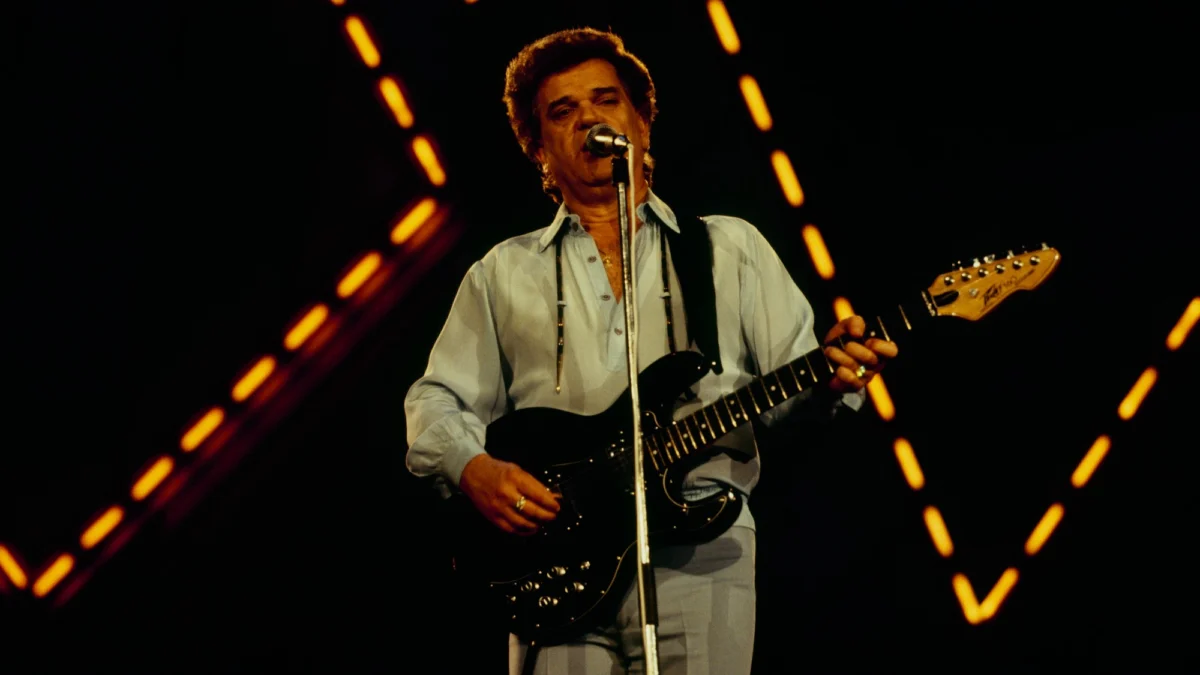
Conway Twitty remains a titan of American music history, recognized not merely for his staggering number of chart-topping hits but for his profound versatility as an artist. Throughout a career that spanned nearly four decades, Twitty successfully navigated the shifts of the musical landscape, transitioning from a rockabilly rebel in the 1950s to the "High Priest of Country Music" in the 1970s and 80s. His ability to bridge the gap between genres was perhaps most evident in his 1983 interpretation of "Three Times a Lady," a song that had already achieved legendary status as a pop and R&B masterpiece by The Commodores. This cross-genre adoption highlighted the universal appeal of soulful storytelling and cemented Twitty’s reputation as a master interpreter of the American songbook.
The Genesis of a Classic: The Commodores and Lionel Richie
To understand the impact of Conway Twitty’s version, one must first examine the cultural phenomenon of the original. Released in 1978, "Three Times a Lady" served as the lead single from The Commodores’ sixth studio album, Natural High. Written by Lionel Richie, the track represented a significant departure from the group’s earlier funk-heavy hits like "Brick House" or "Machine Gun."
The song was a sophisticated waltz, a rarity in the R&B-dominated charts of the late 1970s. Its success was immediate and historic. "Three Times a Lady" became the first song for The Commodores to reach the No. 1 position on three major Billboard charts: the Hot 100, the Adult Contemporary chart, and the R&B chart. Internationally, it was a juggernaut, topping the UK Singles Chart for five weeks and becoming one of Motown’s biggest-selling singles of all time.
The inspiration for the song was deeply personal, rooted in the domestic life of the Richie family. Lionel Richie has frequently recounted the story of his father, Lionel Richie Sr., delivering a surprise toast to his mother, Alberta, during an anniversary celebration. Richie noted that his father, usually a warm but grounded man, stood up and declared his wife to be "a great lady, a great mother, and a great friend."
Richie recalled to Billboard that the sincerity of the moment struck him immediately. While he jokingly wondered if his father was "guilty of something" because the toast came out of the blue, the sentiment formed the lyrical backbone of the song. By translating those three roles—lady, mother, friend—into a melodic tribute, Richie created a song that resonated with a global audience, transcending racial and cultural boundaries.
Conway Twitty’s 1983 Interpretation: A Strategic Pivot
By 1983, Conway Twitty was already a living legend in Nashville. Having achieved more No. 1 hits than any other artist at that time, he was known for a baritone voice that could convey deep intimacy and raw emotion. However, the early 1980s were a period of transition for country music. The "Urban Cowboy" movement had brought a slicker, more pop-oriented production style to the genre, and Twitty was keen to stay relevant in this changing environment.
Twitty included "Three Times a Lady" on his 46th studio album, Lost In The Feeling. This record was a testament to his willingness to experiment with contemporary sounds. The album featured several covers that signaled Twitty’s intent to draw from the broader pop-rock lexicon. In addition to the Richie-penned ballad, the album included a cover of The Eagles’ "Heartache Tonight" and Van Stephenson’s "You’ve Got A Good Love Coming."
Twitty’s version of "Three Times a Lady" was not a radical departure in terms of arrangement, but his vocal delivery infused the track with a distinct country-soul sensibility. While Richie’s original was polished and ethereal, Twitty’s version felt grounded in the tradition of the country crooner. It was a move that paid off; the song became a staple of his live performances and helped Lost In The Feeling maintain his momentum during a highly competitive era of country music.
Chronology of Success: A Timeline of Two Versions
The journey of "Three Times a Lady" from an R&B ballad to a country standard follows a clear chronological path of commercial dominance:
- 1977-1978: Lionel Richie writes the song following his father’s toast. The Commodores record it for the Natural High sessions.
- June 1978: The Commodores release the single. It quickly climbs the charts, eventually spending two weeks at No. 1 on the Billboard Hot 100 in August.
- 1979-1982: The song becomes a global wedding standard. Lionel Richie’s profile as a songwriter sky-rockets, eventually leading to his solo career.
- 1983: Conway Twitty releases Lost In The Feeling. His version of "Three Times a Lady" is released as part of the promotional cycle for the album.
- 1983-1985: Twitty experiences a remarkable "second wind" of No. 1 hits. Following the release of the Lost In The Feeling album, he achieved a consecutive string of chart-toppers, including "Somebody’s Needin’ Somebody," "I Don’t Know A Thing About Love (The Moon Song)," "Ain’t She Somethin’ Else," and "Don’t Call Him A Cowboy."
Analytical Perspective: The Convergence of R&B and Country
The success of "Three Times a Lady" in both the R&B and Country spheres is not a coincidence but rather a reflection of the shared DNA between the two genres. Both R&B and Country are built on the foundation of narrative storytelling and emotional honesty. In the late 70s and early 80s, the "Nashville Sound" was increasingly incorporating R&B elements—smooth strings, electric pianos, and soulful backing vocals—making it easier for pop hits to be "countrified."
Twitty’s decision to cover Richie was also a savvy business move. By 1983, Richie was one of the most successful songwriters in the world (having recently written "Lady" for Kenny Rogers). Twitty recognized that Richie’s melodies were perfectly suited for the adult contemporary-leaning country market. This crossover appeal helped Twitty reach a broader demographic, including younger listeners who were fans of The Commodores but appreciated Twitty’s legendary status.
Furthermore, the "waltz" structure (3/4 time signature) of the song made it an ideal fit for country radio. The waltz has been a staple of country music since its inception, and Twitty’s ability to navigate the rhythmic nuances of the song allowed it to feel like a natural extension of his own repertoire rather than a forced cover.
Broader Implications and Artistic Legacy
The legacy of "Three Times a Lady" serves as a benchmark for how a well-crafted song can transcend its original context. For Lionel Richie, it was the catalyst that proved he could sustain a solo career based on his songwriting prowess. For Conway Twitty, it was a demonstration of his "everyman" appeal—his ability to take a song born in a different cultural space and make it resonate with the rural and working-class audiences of Middle America.
Twitty’s career was defined by these types of bold choices. Whether he was recording legendary duets with Loretta Lynn or exploring the boundaries of country-pop, he maintained a level of authenticity that prevented him from being seen as a mere trend-follower. His interpretation of Richie’s work remains a highlight of his 1980s catalog, illustrating the period when the lines between Nashville, Detroit, and Los Angeles were more blurred than ever before.
Statistically, Twitty’s dominance during this period is almost unparalleled. At the time of his passing in 1993, he held the record for the most No. 1 singles in country music history (55), a record that stood for decades until it was surpassed by George Strait. Songs like "Three Times a Lady" were essential components of this record-breaking run, providing the variety and emotional depth needed to sustain a career of such longevity.
Today, both versions of the song continue to receive significant airplay on classic hits and gold country stations. They represent a moment in music history where the quality of the song was the primary driver of success, allowing it to move seamlessly from the soul charts to the country charts. Conway Twitty’s contribution to this legacy ensures that "Three Times a Lady" is remembered not just as a Lionel Richie masterpiece, but as a quintessential example of the power of the great American cover.
