

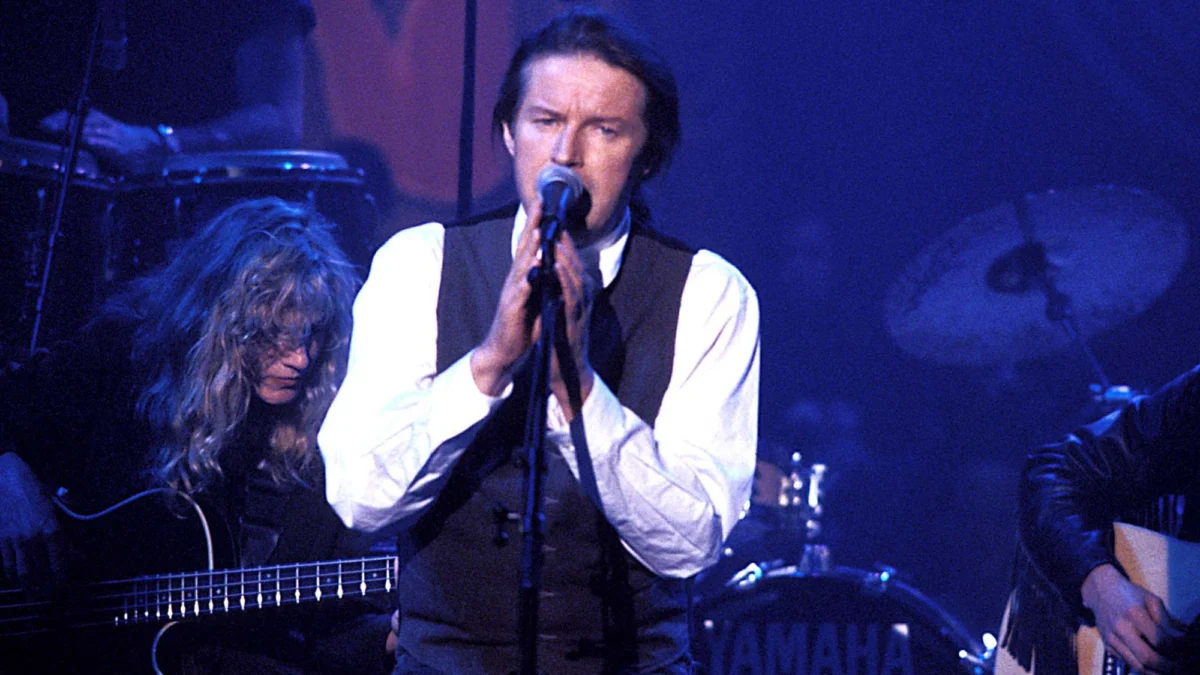
The year 1989 served as a transformative bridge in the history of modern music, marking the twilight of the high-gloss production era that defined the 1980s and the dawn of the more raw, introspective sounds of the 1990s. While the burgeoning Seattle grunge scene and the rise of "Golden Era" hip-hop were beginning to reshape the cultural zeitgeist, the established giants of soft rock and adult contemporary pop continued to dominate the airwaves. This period saw the release of three seminal tracks that encapsulated the decade’s sonic sophistication while hinting at a deeper, more mature lyrical focus: Don Henley’s "The End of the Innocence," Cher and Peter Cetera’s "After All," and Phil Collins’ "Another Day in Paradise." These songs did more than top the charts; they documented a society in flux, moving from the excess of the mid-80s toward a more reflective and socially conscious era.
The Socio-Political Elegy of Don Henley’s The End of the Innocence
Released in June 1989, "The End of the Innocence" arrived as the title track of Don Henley’s third solo studio album. The song, co-written with Bruce Hornsby, represents a pinnacle of the "sophisti-pop" and soft rock genres. While the 1980s were often characterized by a sense of unbridled optimism and material gain, Henley’s track offered a stark, poetic counter-narrative. The collaboration with Hornsby was particularly fruitful; Hornsby’s signature piano style, characterized by its rolling, jazz-influenced chords, provided a melancholy yet beautiful foundation for Henley’s gravelly, evocative vocals.
Lyrically, the song is a complex meditation on the loss of American idealism. Henley used the metaphor of a fading childhood to critique the political landscape of the late Reagan and early Bush eras. Lines such as "Offer up your best defense / But this is the end / This is the end of the innocence" served as a poignant farewell to the decade. The song peaked at number 8 on the Billboard Hot 100 but reached number 1 on the Mainstream Rock Tracks chart, illustrating its broad appeal across both pop and rock demographics.
The production of the track also signaled a shift in recording aesthetics. Eschewing the aggressive gated reverb and heavy synthesizers that dominated 1984–1986, "The End of the Innocence" utilized a cleaner, more organic sound. This stylistic choice helped Henley secure the 1990 Grammy Award for Best Male Rock Vocal Performance. Critics at the time noted that the song felt like a "grown-up" version of the rock music that had dominated the early 80s, proving that Henley’s transition from the Eagles to a solo powerhouse was complete.
The Cinematic Romance of Cher and Peter Cetera’s After All
As 1989 progressed, the power ballad remained a staple of the American Top 40, and few duets from the era are as enduring as Cher and Peter Cetera’s "After All." Released in February 1989, the song served two purposes: it was the lead single for Cher’s nineteenth studio album, Heart of Stone, and it was the "Love Theme" for the film Chances Are, starring Cybill Shepherd and Robert Downey Jr. The song was written by the powerhouse duo of Dean Pitchford and Tom Snow, who were responsible for many of the decade’s most recognizable hits.
For Cher, "After All" was a continuation of her massive late-80s career resurgence. Having won an Academy Award for Moonstruck just a year prior, she was at the height of her cultural power. Pairing her with Peter Cetera, the former bassist and vocalist for Chicago who had already established himself as a solo "ballad king" with hits like "Glory of Love," was a masterstroke of marketing and musical synergy. The track is a textbook example of late-80s adult contemporary production, featuring soaring choruses, lush orchestral arrangements, and the distinct vocal interplay between Cetera’s high tenor and Cher’s rich contralto.
The song reached number 6 on the Billboard Hot 100 and spent several weeks at number 1 on the Adult Contemporary chart. Its legacy was further cemented when it was nominated for Best Original Song at the 62nd Academy Awards. While it did not win, the song’s performance on the charts helped Heart of Stone become Cher’s most successful album of the decade, eventually being certified 3x Platinum by the RIAA. The success of "After All" also paved the way for Cher’s next massive hit, "If I Could Turn Back Time," which would further define her rock-icon persona.
Phil Collins and the Call for Social Consciousness in Another Day in Paradise
While Henley looked at political loss and Cher explored romantic endurance, Phil Collins closed out the decade with a stark look at social inequality. Released in October 1989, "Another Day in Paradise" was the lead single from Collins’ fourth solo album, …But Seriously. By this point, Collins was arguably the most successful male artist in the world, having dominated the charts both solo and with Genesis. However, "Another Day in Paradise" marked a significant departure from his previous upbeat pop hits like "Sussudio" or his heartbreak ballads like "Against All Odds."
The song was inspired by Collins’ personal observations of the growing homelessness crisis in major cities, specifically Washington D.C. and London. Collins recalled seeing people sleeping on heating vents in the shadow of the United States Capitol, an image that struck him as a profound "extraordinary contradiction." The track features David Crosby on backing vocals, adding a folk-rock sensibility to the otherwise polished pop production.
"Another Day in Paradise" was a global phenomenon, reaching number 1 in the United States, Germany, the Netherlands, and several other countries. It became Collins’ final number 1 single on the Billboard Hot 100. Despite its commercial success, the song was not without controversy. Some critics accused Collins, a multi-millionaire, of "poverty tourism" or hypocrisy. However, Collins defended the track, stating his intention was to use his massive platform to highlight a neglected segment of society. The industry validated his effort at the 1991 Grammy Awards, where the track won the prestigious Record of the Year.
Chronology and Chart Performance: 1989’s Soft Rock Dominance
To understand the impact of these songs, one must look at the timeline of their release and their performance within the competitive landscape of 1989. The year began with Cher and Cetera’s ballad capturing the Valentine’s Day market, followed by Henley’s summer anthem for a maturing baby boomer generation, and concluding with Collins’ winter plea for empathy.
- February 1989: "After All" is released. It anchors the Chances Are soundtrack and begins a slow climb to its #6 peak.
- June 1989: "The End of the Innocence" debuts. It becomes a staple of FM radio and solidifies Don Henley as a solo artist capable of intellectual depth.
- October 1989: "Another Day in Paradise" is released. It tops the charts by December and becomes the final #1 song of the 1980s on the Billboard Hot 100.
The data supports the narrative of a genre at its peak. In 1989, the Adult Contemporary (AC) chart was often a better indicator of long-term cultural stay-power than the Hot 100. All three of these tracks spent significant time in the AC Top 5, illustrating their resonance with an older, affluent audience that still purchased physical media—vinyl, cassettes, and the increasingly popular compact disc.
Broader Impact and Musical Implications
The enduring popularity of these three tracks highlights a specific moment in music production. In 1989, the industry was perfecting the "analog-digital hybrid" sound. Engineers were using high-end digital synthesizers and sequencers but recording them to high-fidelity tape, resulting in a sound that was both "clean" and "warm." This technical perfection is a hallmark of these songs, making them staples of high-definition radio and streaming playlists decades later.
Furthermore, these songs signaled the end of the "MTV Rock" era. As the 90s approached, the theatricality of the 80s began to wane. Henley, Cher, and Collins were veterans who successfully navigated this transition by leaning into "adult" themes—politics, lasting love, and social justice. They provided a roadmap for how legacy artists could remain relevant in a changing market.
The implications of these songs are still felt in the "yacht rock" and "soft rock" revivals of the 21st century. "The End of the Innocence" is frequently cited by modern indie-folk artists as a masterclass in songwriting structure. "After All" remains a quintessential wedding song, appearing in countless romantic compilations. "Another Day in Paradise" continues to be sampled and covered by R&B and hip-hop artists, most notably by Brandy and Ray J, proving that its social message remains unfortunately relevant.
In conclusion, 1989 was not merely the end of the 80s; it was the final refinement of a decade’s worth of musical evolution. Through the work of Don Henley, Cher, Peter Cetera, and Phil Collins, soft rock achieved a level of sophistication and social relevance that allowed it to survive the impending grunge revolution. These tracks remain cultural touchstones, reminding listeners of a time when the pop charts were a place for both romantic escapism and profound social reflection.
