

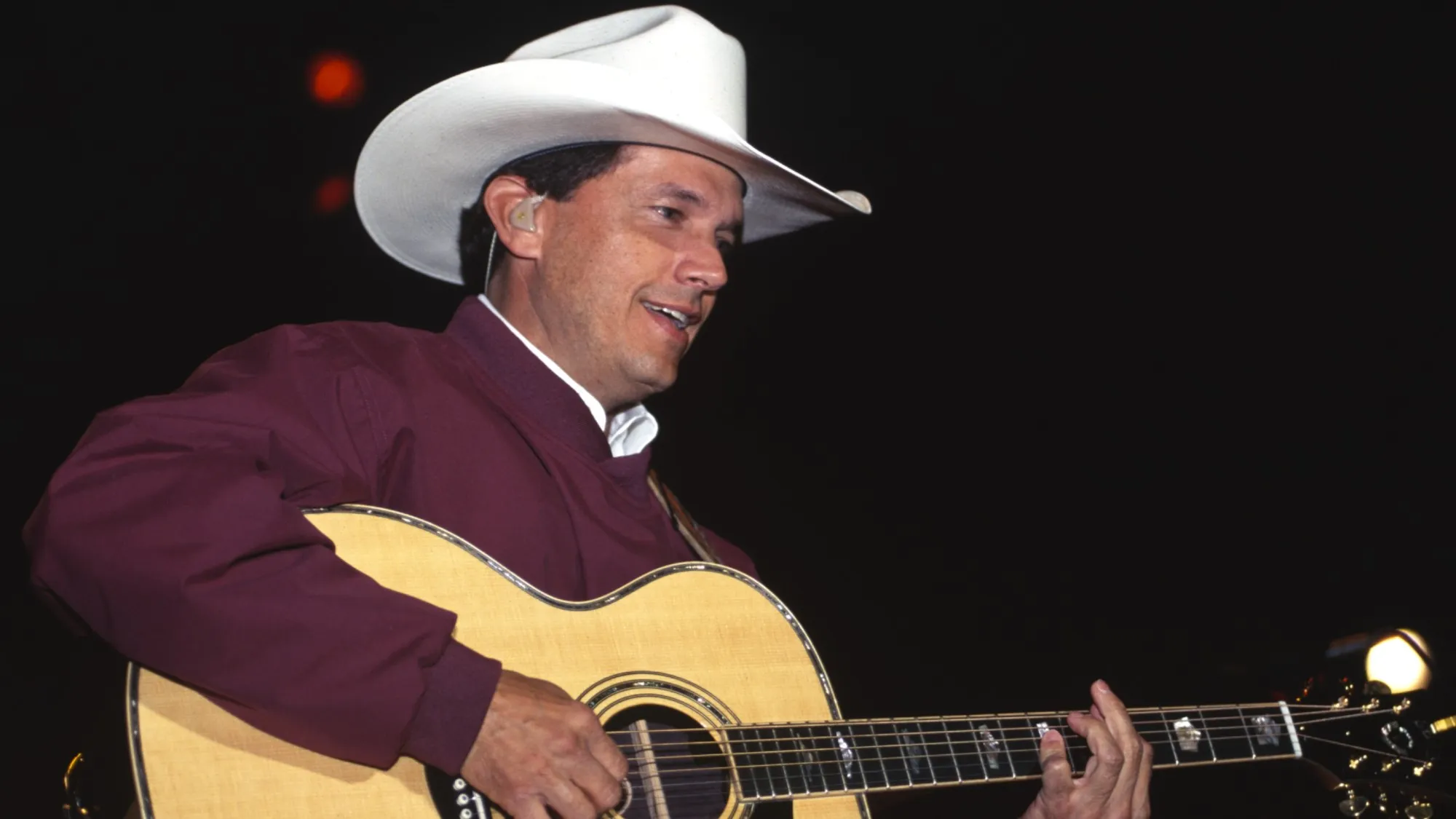
The year 1996 stands as a monumental period in the history of American country music, serving as a pinnacle for the neotraditionalist movement while simultaneously paving the way for the polished, crossover-ready sounds that would dominate the turn of the millennium. During this calendar year, the country music industry witnessed an unprecedented convergence of legendary icons and rising stars, resulting in a series of chart-topping singles that have since become permanent fixtures in the American cultural canon. Among the most significant releases of that year were George Strait’s "Carried Away," Mindy McCready’s "Guys Do It All The Time," and Alan Jackson’s "Little Bitty." These three tracks not only dominated the Billboard Hot Country Songs charts but also illustrated the diverse thematic range of the era, from heartfelt romanticism and social satire to the celebration of simplistic, small-town values.
The King of Country and the Milestone of Blue Clear Sky
By 1996, George Strait had already established himself as a cornerstone of the genre, but the release of his sixteenth studio album, Blue Clear Sky, solidified his status as "The King of Country Music." The album’s second single, "Carried Away," released in June 1996, became a defining moment in Strait’s career. Written by the seasoned songwriting duo of Steve Bogard and Jeff Stevens, the track offered a quintessential example of the "Strait sound": a blend of traditional instrumentation, smooth vocal delivery, and an emotionally resonant narrative.
"Carried Away" reached the No. 1 spot on the Billboard Hot Country Singles & Tracks chart in August 1996, holding the position for three consecutive weeks. Historically, this was a significant achievement as it marked Strait’s 30th number-one hit, a feat that few artists in any genre have ever accomplished. The song’s lyrical content—metaphorically comparing the feeling of love to a feather caught in the wind—struck a chord with a broad demographic, bridging the gap between older fans of Western swing and a younger generation of country listeners.
The production of the track, helmed by Strait and longtime collaborator Tony Brown, utilized a crisp, clean arrangement that emphasized the fiddle and steel guitar, maintaining the genre’s roots even as country music began to flirt with pop-production techniques. The industry’s recognition of the song’s quality was formalised when it received a nomination for Single of the Year at the 1996 Country Music Association (CMA) Awards. Although the award eventually went to Deana Carter’s "Strawberry Wine," the enduring popularity of "Carried Away" in recurrent radio play and streaming data suggests its impact was arguably as significant as any other track released that decade.
Mindy McCready and the Shift in Gender Dynamics
While George Strait represented the established guard, 1996 also saw the meteoric rise of Mindy McCready, a newcomer whose debut album, Ten Thousand Angels, would eventually be certified double-platinum by the RIAA. Her second single, "Guys Do It All The Time," released in mid-1996, became a cultural touchstone by addressing gender double standards with a blend of humor and sass. Written by Bobby Whiteside and Kim Tribble, the song flipped the script on common tropes of the era, depicting a woman adopting the stereotypical "carefree" and often negligent behaviors of men.
"Guys Do It All The Time" remains McCready’s only No. 1 hit, reaching the summit of the charts in September 1996. The song’s success was indicative of a broader trend in the mid-90s, where female artists like Shania Twain, Faith Hill, and Martina McBride were increasingly using their platforms to challenge traditional domestic roles and advocate for female agency. McCready’s delivery was both playful and defiant, resonating with a female audience that was increasingly seeking representation in the lyrics of Nashville’s output.
From a sociological perspective, the song served as a precursor to the "girl power" movement that would sweep through country and pop music in the late 90s. The music video, which featured McCready in a position of power while men performed domestic chores, was a staple on CMT (Country Music Television) and helped propel the single to crossover success. Despite the personal tragedies that would later overshadow McCready’s career, the 1996 success of "Guys Do It All The Time" remains a vital chapter in the history of women in country music, showcasing a moment when the genre was willing to engage in satirical social commentary.
Alan Jackson and the Legacy of the Storyteller
In the autumn of 1996, Alan Jackson released "Little Bitty," the lead single from his album Everything I Love. Jackson, who alongside George Strait was a standard-bearer for the neotraditionalist movement, chose a song written by the legendary "Storyteller" of country music, Tom T. Hall. The collaboration between a modern superstar and a Hall of Fame songwriter resulted in one of the most infectious and enduring hits of the decade.
"Little Bitty" is characterized by its upbeat tempo and its philosophical yet accessible lyrics, which celebrate the beauty of small things and the brevity of life. The song reached No. 1 in December 1996 and, like Strait’s "Carried Away," maintained its position for three weeks. The track’s success was bolstered by a high-concept music video that utilized "giant" props to emphasize the song’s message that life is "little bitty" in the grand scheme of the universe.
The significance of "Little Bitty" lies in its ability to maintain country music’s tradition of simple, honest storytelling during an era when the industry was under pressure to produce high-octane, stadium-filling anthems. Jackson’s insistence on recording a Tom T. Hall composition was viewed by purists as a respectful nod to the genre’s history. Analysts of the era note that Jackson’s dominance in the 90s—accruing over a dozen No. 1 hits in that decade alone—was due to his uncanny ability to select material that felt timeless rather than trendy. "Little Bitty" remains a staple of country radio today, often cited as a prime example of the "feel-good" country music that defined the mid-90s.
1996: A Statistical and Chronological Overview
To understand the impact of these three songs, one must look at the broader industry data from 1996. The mid-90s represented the peak of the "Garth Brooks era," a time when country music sales were at an all-time high, often outperforming pop and rock in many American markets.
Chronology of 1996 Milestones:
- April 1996: George Strait releases Blue Clear Sky. The album debuts at No. 1 on the Top Country Albums chart and peaks at No. 7 on the Billboard 200.
- April 1996: Mindy McCready releases Ten Thousand Angels. It becomes one of the best-selling debut albums by a female country artist that year.
- June 1996: "Carried Away" is released to radio, beginning its ascent to the top of the charts.
- July 1996: "Guys Do It All The Time" enters the charts, riding a wave of popularity for female-led "attitude" songs.
- October 1996: Alan Jackson releases Everything I Love. The album is eventually certified 3x Platinum.
- December 1996: "Little Bitty" closes the year as the dominant song on country radio, providing a transition into the 1997 chart year.
Data from the RIAA indicates that the albums containing these three songs—Blue Clear Sky, Ten Thousand Angels, and Everything I Love—have collectively sold over 8 million copies in the United States alone. This volume of sales underscores the massive reach of the genre during this period, as country music moved out of its regional strongholds and into the national mainstream.
Broader Impact and Genre Implications
The success of these three tracks in 1996 had lasting implications for the trajectory of Nashville’s music industry. For George Strait, "Carried Away" proved that a traditionalist could maintain contemporary relevance without compromising his artistic integrity. For Mindy McCready, her success opened doors for other female artists to explore more provocative and humorous themes. For Alan Jackson, "Little Bitty" reaffirmed that the "three chords and the truth" philosophy could still result in massive commercial success.
Furthermore, these songs helped define the "90s Country" sound that is currently experiencing a massive resurgence in popularity among Gen Z and Millennial listeners. Modern artists such as Luke Combs, Jon Pardi, and Lainey Wilson frequently cite the mid-90s era—and these specific artists—as primary influences on their own work. The production values of 1996, which balanced organic instruments with high-fidelity recording techniques, have become the gold standard for what many consider "authentic" country music.
The thematic consistency found across "Carried Away," "Guys Do It All The Time," and "Little Bitty" also highlights a specific moment in American history. These songs reflect a pre-digital age where the focus remained on interpersonal relationships, domestic life, and the pursuit of contentment in a rapidly changing world. As the industry moved toward the more pop-infused "Shania-era" of the late 90s, these 1996 hits remained as anchors of the genre’s core identity.
In conclusion, the year 1996 was a vintage year for country music, characterized by a high volume of quality releases that have stood the test of time. Through the lens of George Strait, Mindy McCready, and Alan Jackson, one can see a genre at the height of its cultural powers, capable of producing music that was both commercially dominant and artistically significant. These three songs remain essential listening for any student of the genre, serving as a reminder of an era when country music was the heartbeat of the American airwaves.
