

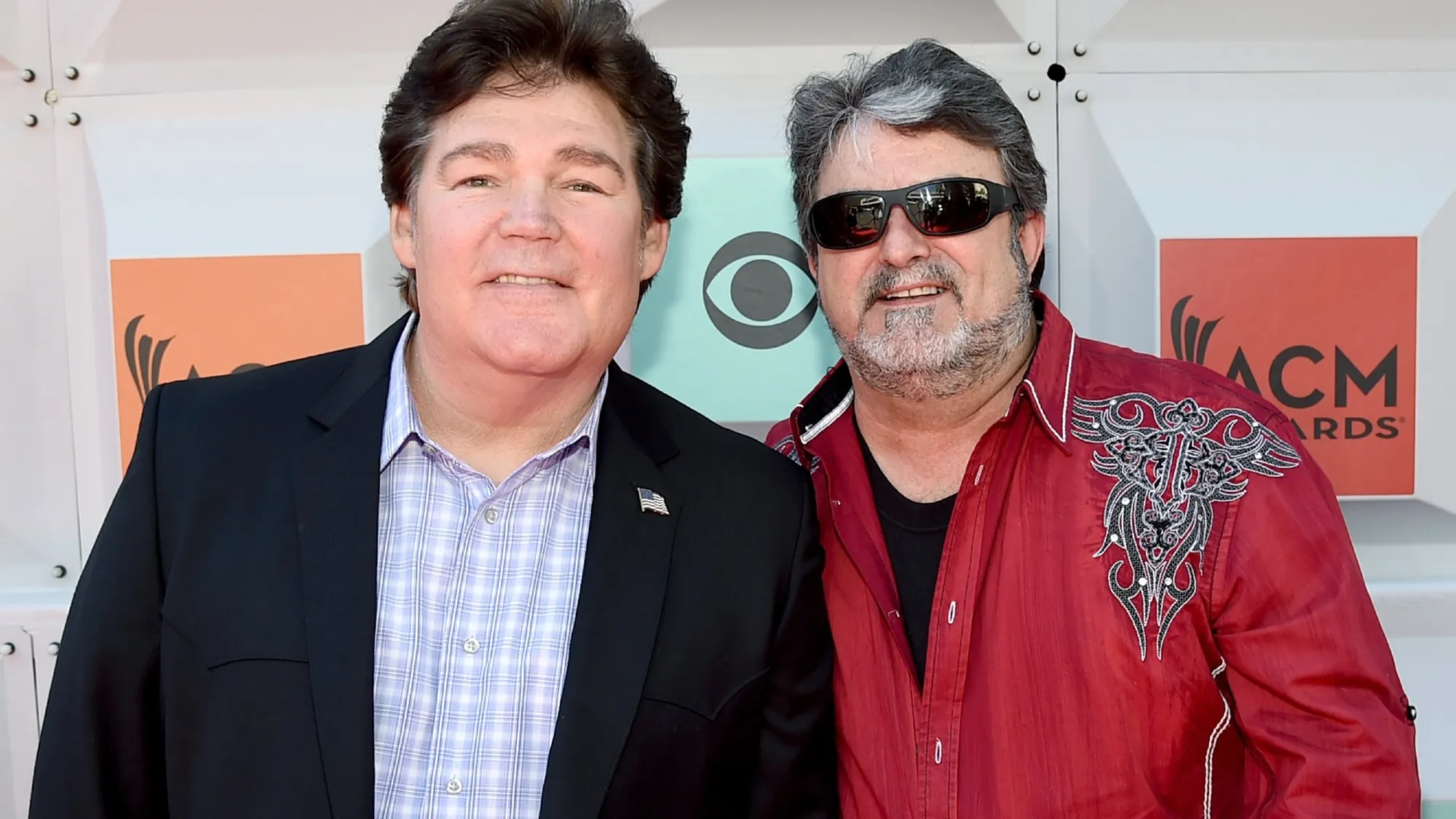
The release of The Church On Cumberland Road in early 1989 marked a pivotal moment in the trajectory of the country music band Shenandoah, catapulting the group from regional favorites to national superstars. As the fifth single from their sophomore studio effort, The Road Not Taken, the track achieved a significant milestone by becoming the band’s first number-one hit on the Billboard Hot Country Songs chart. This success was not merely a commercial victory; it solidified Shenandoah’s place within the "New Traditionalist" movement that revitalized country music in the late 1980s. Written by the prolific songwriting trio of Bob DiPiero, John Scott Sherrill, and Dennis Robbins, the song remains a quintessential example of high-energy storytelling and vocal prowess, characterized by the distinctive lead vocals of Marty Raybon.
Narrative Structure and Lyrical Themes
The lyrical core of The Church On Cumberland Road centers on a classic comedic trope: the race against time. The protagonist is a soon-to-be groom who, having spent the previous night in a state of excessive celebration, finds himself dangerously behind schedule on his wedding morning. The stakes are high, as the narrative implies the bride is waiting at the altar, potentially fearing she has been abandoned. The song’s uptempo rhythm mirrors the frantic pace of the groom’s journey, creating a sense of urgency that resonated deeply with audiences.
The chorus serves as the song’s emotional and rhythmic anchor, emphasizing the mechanical limitations of the groom’s vehicle: "Oh, I didn’t know a bored-out Ford could go so slow / Oh, you got to put your foot down on the floor." The mention of a "bored-out Ford"—a reference to an engine that has had its cylinder diameters enlarged to increase displacement and horsepower—adds a layer of blue-collar authenticity to the track. This specific detail appeals to a demographic familiar with automotive culture, a recurring theme in the country genre. The narrative tension between the "rockin’ all night" and the spiritual obligation of the "church on Cumberland Road" highlights a common thematic duality in country music: the struggle between Saturday night revelry and Sunday morning redemption.
The Transatlantic Origins of a Southern Anthem
Despite its quintessentially American Southern setting, the inspiration for The Church On Cumberland Road originated thousands of miles away in London, England. Songwriter Bob DiPiero provided the foundational spark for the track following a night of social drinking with colleagues in the United Kingdom. According to co-writer John Scott Sherrill, the story began when DiPiero exited a pub in a state of significant intoxication.
Under the light of a full moon, DiPiero encountered an ancient stone church featuring a prominent steeple. In a moment of sentimental inebriation, he reportedly approached the structure and physically embraced it, vowing to immortalize the building in a future composition. Upon returning to Nashville, DiPiero shared this anecdote with Sherrill and Dennis Robbins. The trio had already been experimenting with a high-energy melody and decided to transpose DiPiero’s London experience into an American context. The "ancient British church" was reimagined as a rural American chapel located on "Cumberland Road," a name that evokes the historic Cumberland Gap and the rugged landscapes of Tennessee and Kentucky.
The Billy Hill Boys and the Experimental First Release
Before Shenandoah recorded their definitive version, the songwriters attempted to launch the track themselves through an experimental project known as The Billy Hill Boys. Signed to Warner Brothers, the group was built around a unique, albeit confusing, marketing concept: the lead singer, "Billy Hill," was a fictitious character. The band members, including DiPiero, Sherrill, and Robbins, performed the music, but the lack of a tangible frontman created significant logistical hurdles.
John Scott Sherrill later reflected on the difficulties this persona-driven approach caused within the industry. Radio stations and concert promoters struggled to market a band whose central figure did not exist in reality. While the project resulted in one album and a partially completed second record, it failed to gain mainstream traction. However, the failure of The Billy Hill Boys proved to be a stroke of luck for Shenandoah. When the band members heard the track, they recognized its potential for Marty Raybon’s soulful, high-tenor delivery. Shenandoah’s polished production and Raybon’s vocal urgency transformed the songwriters’ demo into a polished radio hit.
Shenandoah and the Muscle Shoals Connection
The success of The Church On Cumberland Road cannot be separated from Shenandoah’s roots in Muscle Shoals, Alabama. Formed in 1984, the band consisted of Marty Raybon, Jim Seales, Stan Thorn, Roger Moore, and Mike McGuire. They were seasoned session musicians and performers who benefited from the rich musical heritage of the Muscle Shoals region, known for its "swampers" and soul-infused country sound.
By the time they recorded The Road Not Taken, the band had refined a sound that blended traditional bluegrass harmonies with contemporary country-rock instrumentation. The Church On Cumberland Road showcased this synergy perfectly. The production featured crisp guitar work and a driving drum beat that provided a modern edge, while Raybon’s vocals maintained a traditional "twang" that satisfied purists. The song’s ascent to the top of the charts in 1989 occurred during a transformative year for the genre—the same year that saw the debut of the "Class of ’89," including Garth Brooks, Clint Black, Alan Jackson, and Travis Tritt. Amidst this influx of new talent, Shenandoah managed to distinguish themselves through narrative-driven hits that felt both fresh and familiar.
Chronology of Success and Chart Performance
The timeline of the song’s impact illustrates its rapid climb to legendary status within the Nashville ecosystem:
- Late 1988: Shenandoah records The Road Not Taken at the Soundshop in Nashville, produced by Robert Byrne and Rick Hall.
- January 1989: "The Church On Cumberland Road" is released as a single, following the moderate success of "She Doesn’t Cry Anymore."
- Spring 1989: The song climbs the Billboard Hot Country Songs chart, eventually reaching the No. 1 spot. This begins a streak of hits for the band, including "Sunday in the South" and "Two Dozen Roses."
- 1990: The song helps Shenandoah earn the Academy of Country Music (ACM) award for Vocal Group of the Year.
- 2025: In a surprising cross-genre move, Shenandoah partners with the multi-platinum rock band Nickelback to release a revamped, high-octane version of the song for a new generation.
The 2025 Nickelback Collaboration and Modern Context
The decision to revisit The Church On Cumberland Road in 2025 with Nickelback highlights a growing trend of "genre-blurring" in the music industry. Nickelback, a band primarily associated with post-grunge and hard rock, has often cited country influences in their songwriting. Chad Kroeger, the band’s frontman, has expressed a long-standing admiration for the storytelling and vocal grit of 80s and 90s country music.
This collaboration serves multiple strategic purposes. For Shenandoah, it introduces their catalog to a younger audience and international fans who may be more familiar with Nickelback’s global reach. For Nickelback, it reinforces their versatility and taps into the booming "Country-Rock" market currently dominated by artists like Morgan Wallen and Hardy. The 2025 version retains the frantic energy of the original but incorporates heavier guitar riffs and a dual-vocal dynamic between Raybon and Kroeger, illustrating the song’s timeless appeal and its ability to adapt to modern production standards.
Technical Analysis and Cultural Implications
From a musicological perspective, The Church On Cumberland Road is notable for its use of the "train beat," a rhythmic pattern common in country and bluegrass that mimics the chugging of a locomotive. This tempo (approximately 140-150 BPM) is essential for conveying the "racing" aspect of the lyrics. The song’s bridge and solo sections allow for instrumental virtuosity, a hallmark of the Muscle Shoals musicianship that Shenandoah brought to the table.
Socially, the song serves as a time capsule of late-20th-century American life. It depicts a world where community life revolved around local landmarks like "Cumberland Road" and where the "Sunday morning church service" remained a non-negotiable social contract, even for those who spent their Saturday nights in less-than-pious pursuits. The "bored-out Ford" is more than a vehicle; it is a symbol of American ingenuity and the DIY culture of the working class.
Legacy and Conclusion
Thirty-six years after its initial release, The Church On Cumberland Road continues to be a staple of country radio and a "must-play" at weddings and social gatherings across the United States. Its enduring popularity is a testament to the songwriting prowess of DiPiero, Sherrill, and Robbins, who managed to turn a drunken moment in London into a cornerstone of American music.
The song’s legacy is further cemented by its role in the career of Shenandoah. While the band faced various lineup changes and legal challenges regarding their name in the 1990s, this track remained their calling card. It represents a moment in time when country music was reclaiming its roots while simultaneously embracing the high-production values of the stadium rock era. Whether through the original 1989 recording or the 2025 rock-infused reimagining, the story of the groom in the bored-out Ford remains one of the most recognizable and beloved narratives in the history of the genre. The song stands as a reminder that the best stories often come from the most unexpected places—even from a moonlit hug of a stone church in a foreign land.
