

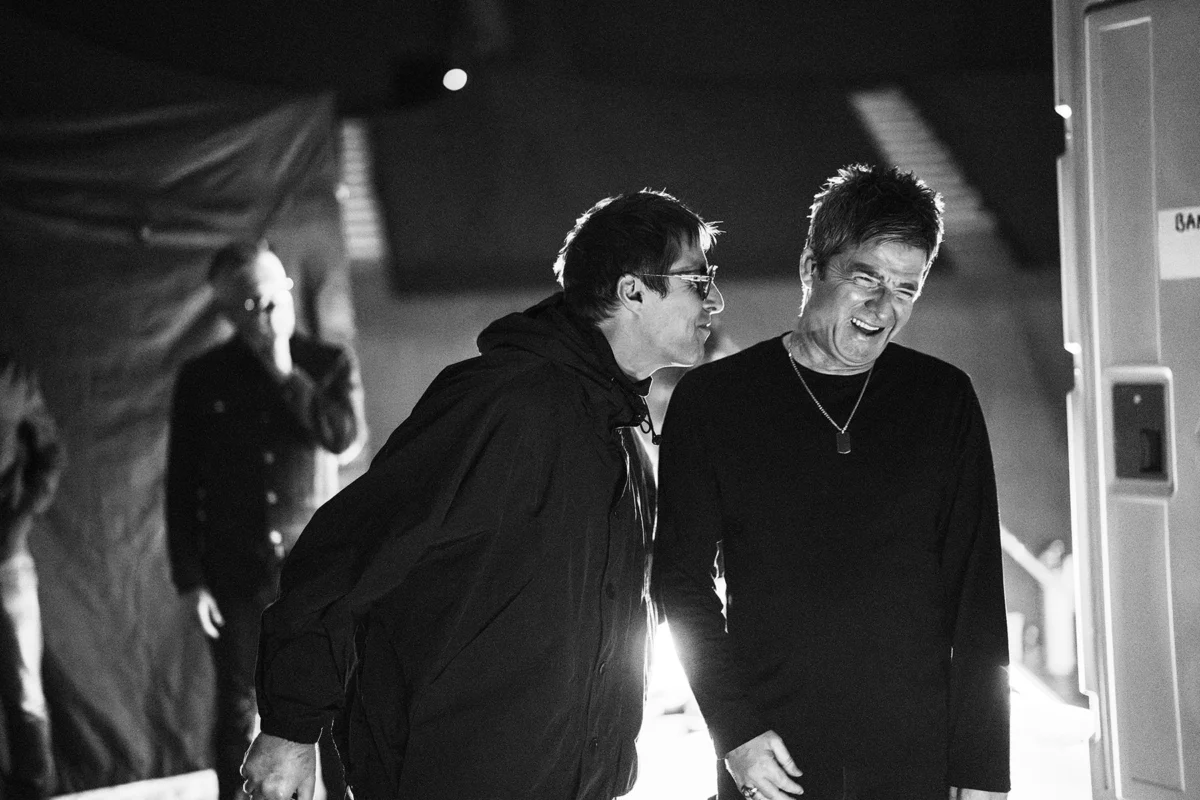
Stephen Knight’s highly anticipated documentary, Oasis: Don’t Look Back In Anger, offers an exhilarating and deeply personal chronicle of the iconic Manchester band’s long-awaited reunion. The film, released in cinemas this week on September 9, 2026, dives into the intricate dynamics of Liam and Noel Gallagher, presenting them as perfectly calibrated opposites whose familiar friction now appears underscored by a surprising depth of affection. Directed by Knight, celebrated for his work on Peaky Blinders, the documentary combines stunning tour footage from the 2025 Live ’25 Tour with candid, never-before-seen interviews and behind-the-scenes moments, painting a comprehensive picture of one of music’s most significant comebacks after a 16-year hiatus.
The Road to Reunion: A Legacy Reawakened
The initial breakup of Oasis in 2009 left a gaping void in the music landscape. Emerging from the vibrant Britpop scene of the 1990s, Oasis had carved out a colossal legacy with anthems like "Wonderwall," "Champagne Supernova," and "Don’t Look Back In Anger." Their meteoric rise saw them become one of the biggest bands in the world, selling over 70 million albums globally and headlining historic concerts like Knebworth in 1996, which drew 250,000 fans over two nights. However, their success was perpetually overshadowed by the volatile, often explosive relationship between brothers Liam and Noel Gallagher, the band’s principal songwriter and vocalists. The sibling rivalry, a hallmark of their public persona, eventually led to the band’s dramatic implosion at Paris’s Rock en Seine festival in August 2009, following a backstage altercation that saw Noel walk away, declaring he "could not go on working with Liam a day longer."
For over a decade and a half, the music world clamored for a reunion. Both brothers pursued successful solo careers: Noel with Noel Gallagher’s High Flying Birds, achieving critical acclaim and multiple chart-topping albums, and Liam with Beady Eye and later a highly successful solo career that saw him reclaim his rock ‘n’ roll frontman status. Despite their individual successes, the shadow of Oasis loomed large, and interviews were frequently peppered with questions about a potential comeback. Public spats and cryptic social media posts kept the hope alive, yet concrete plans remained elusive, fueling fan speculation and media frenzy.
The announcement of the Oasis reunion in late 2024 sent shockwaves through the industry. Details slowly emerged, culminating in the "Live ’25 Tour," a monumental 41-show global stadium tour slated for the summer of 2025. This tour was not just a series of concerts; it was a cultural event, promising to bridge generations of fans.
Inside the ‘Live ’25’ Phenomenon: Bridging Generations
Knight’s documentary meticulously chronicles this extraordinary journey, from the tense, initial rehearsals to the electrifying stadium performances. The film captures the raw emotion and undeniable chemistry that, despite years of estrangement, still defines Oasis. One particularly dramatic scene shows Liam momentarily disappearing during rehearsals for "Champagne Supernova," leaving the room before the final chord, a poignant echo of past tensions. Yet, these moments are balanced by scenes of genuine camaraderie and shared joy.
The Live ’25 Tour itself was a testament to Oasis’s enduring appeal. Playing to sold-out stadiums across continents – from London’s Wembley Stadium to the Tokyo Dome, and iconic venues across North America and Australia – the tour reportedly grossed over $300 million, solidifying its place as one of the highest-earning tours of the decade. More significantly, the audiences comprised not only lifelong devotees, many of whom had followed the band since the 90s, but also a striking new generation of fans. Teenagers and young adults, introduced to Oasis through their parents’ record collections or streaming platforms, flocked to witness the legendary brothers perform live. This intergenerational appeal underscored the timeless quality of Oasis’s music and its continued resonance. The documentary highlights how the reunion took on a different character in each city, shaped by the unique reactions and rituals of the diverse fanbases, unequivocally proving that Oasis no longer belongs solely to the generation that grew up with them. Social media analytics from 2025 showed a significant spike in engagement from the 18-24 age demographic whenever Oasis-related content was posted, indicating a renewed interest far beyond nostalgia.
The Gallaghers Unfiltered: Affection Beneath the Friction

At the heart of Oasis: Don’t Look Back In Anger is the compelling, often contradictory, relationship between Liam and Noel. The documentary offers unprecedented access to both brothers as they prepare to return to the stage, allowing their individual accounts of the 2009 split – which Noel describes as "disgraceful" – and their evolving feelings about each other to gradually emerge.
What surprises many viewers is the palpable sense of affection that now exists beneath their famous friction. Noel, typically reserved with his emotions, is depicted as genuinely enthralled by Liam’s presence. At one point, he declares Liam placing a tambourine on his head during a Live ’25 performance as "the coolest f***ing thing in the world," and describes his younger brother simply as "delightful" to be around. Liam, in turn, is shown to be relentlessly trying to make his elder sibling laugh at any given moment, a playful dynamic that fans had rarely witnessed with such intimacy. These moments of warmth offer a stark contrast to their public image of perpetual animosity, suggesting a profound bond that even years of bitter rivalry couldn’t fully sever.
The documentary also brings into sharp focus the demanding reality of such a high-stakes reunion. Liam reveals his rigorous commitment to the tour, explaining that he treated the songs with "respect" by giving up drinking and smoking before the shows – a significant personal sacrifice for the famously hard-living frontman. The striking evidence of this discipline is heard in his voice, which, according to multiple concert reviews and the documentary’s audio, sounds remarkably strong and clear throughout the tour, silencing skeptics who questioned his vocal longevity. Noel, too, shares moments of vulnerability. On opening night in Cardiff, he recounts feeling visibly overwhelmed, admitting he nearly needed a "time out" to exhale and truly take in the magnitude of what was happening – a rare glimpse into the usually stoic guitarist’s emotional landscape.
Filmmaking Perspective and Unprecedented Access
Stephen Knight, renowned for his character-driven narratives and atmospheric storytelling, brings a distinctive directorial vision to Oasis: Don’t Look Back In Anger. Working alongside filmmakers Dylan Southern and Will Lovelace, who previously directed the acclaimed 2016 documentary Oasis: Supersonic, Knight benefits from a pre-existing trust and rapport that allowed for truly intimate access. Supersonic had laid the groundwork, charting the band’s meteoric rise from 1991 to 1996, and establishing a narrative framework for understanding the band’s foundational years. Don’t Look Back In Anger builds upon this, offering a rare, fly-on-the-wall perspective of the Gallagher brothers’ interactions, both on and off stage.
Knight’s approach emphasizes authenticity, allowing the story to unfold naturally rather than adhering to a rigid, pre-determined script. The documentary’s rich visual texture, combining archival footage with modern, high-definition concert cinematography, immerses viewers in the experience. The candid interviews, conducted separately with Liam and Noel, provide individual perspectives on the past, the present, and their hopes for the future, without shying away from uncomfortable truths. The filmmakers masterfully weave these narratives together, creating a complex, multi-layered portrait of a band and brothers attempting to reconcile their past with their present.
Broader Impact and Legacy
The release of Oasis: Don’t Look Back In Anger is more than just a film about a band reunion; it’s a significant cultural event that recontextualizes Oasis’s place in music history. The documentary, much like the reunion tour it chronicles, serves as a powerful reminder of the band’s enduring influence and the timeless appeal of their music. It reaffirms Oasis’s status not just as a 90s phenomenon, but as a perennial force in rock and roll.
Industry analysts suggest that the documentary will likely spark renewed interest in Oasis’s back catalog, potentially driving streaming numbers and album sales for years to come. The film’s portrayal of the Gallagher brothers’ evolving relationship also offers a compelling narrative about family, forgiveness, and the complex bonds that define us. For fans, it provides closure and celebration; for newcomers, it serves as an insightful introduction to one of Britain’s most iconic musical exports.
The success of the Live ’25 Tour and the anticipated critical acclaim for Don’t Look Back In Anger have inevitably led to speculation about Oasis’s future. While neither brother has explicitly committed to further projects beyond the documentary’s release, the palpable warmth and reconciliation depicted in the film offer a glimmer of hope. The documentary concludes with five standout scenes that encapsulate the reunion’s spirit, ranging from moments of pure musical transcendence to deeply personal interactions that reveal the men behind the legends. These vignettes serve as a powerful testament to the enduring magic of Oasis and the unexpected, yet deeply felt, comeback of the Gallagher brothers. As the credits roll, the message is clear: while the past was fraught with anger, the present is infused with a rediscovered camaraderie, leaving fans worldwide eagerly awaiting the next chapter.
