

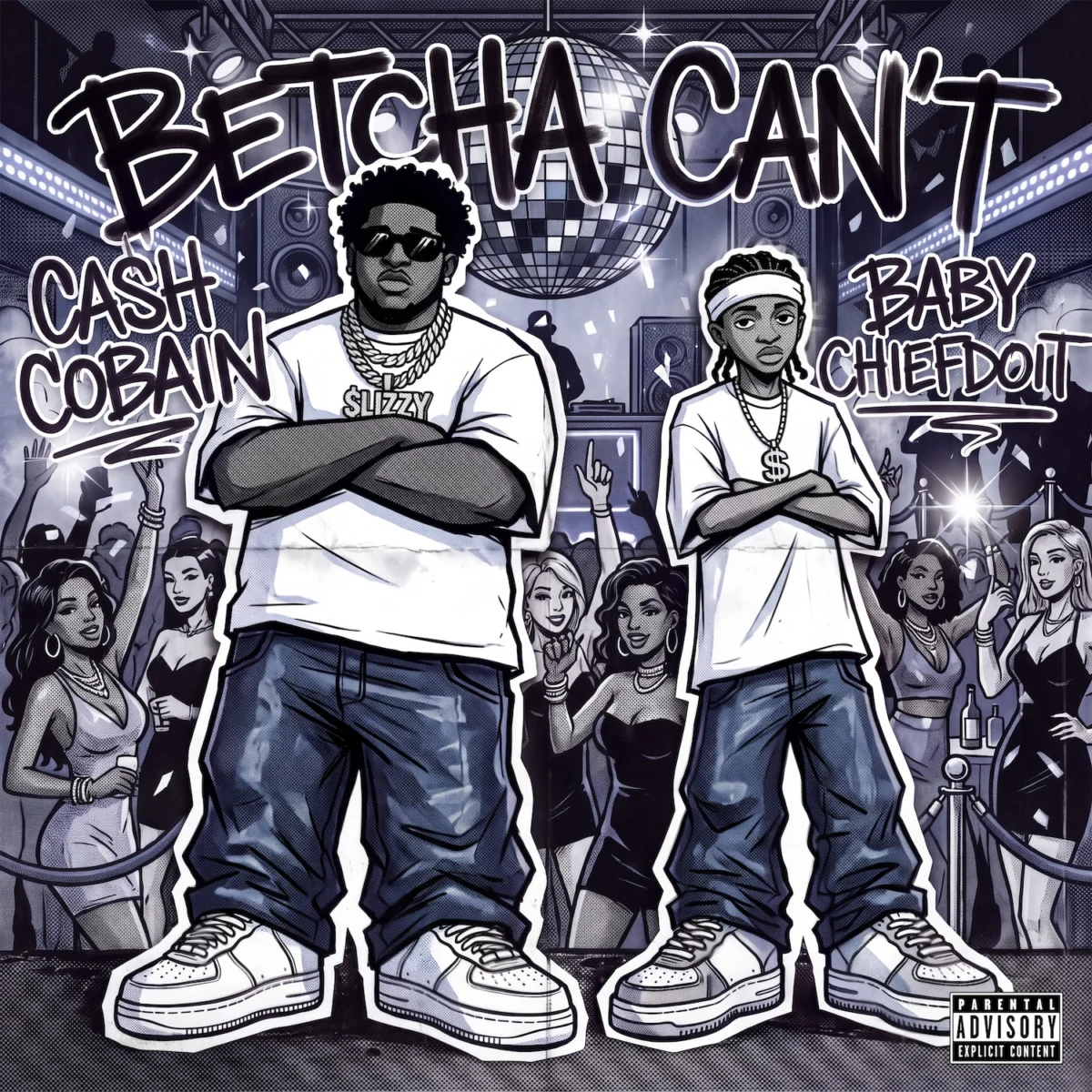
The contemporary hip-hop landscape has once again demonstrated its dynamic capacity for reinvention and homage, as New York rapper and producer Cash Cobain has released his new single, "Betcha Can’t," featuring Chicago’s BabyChiefDoIt. The track provocatively reinterprets D4L’s 2005 hit, "Betcha Can’t Do It Like Me," transforming the iconic ringtone-rap anthem into a distinctive blend of sample-drill. This release arrives shortly after Cobain’s appearance on the 2 Chainz and Young Nudy collaboration "Reign," further solidifying his burgeoning presence in the mainstream hip-hop conversation. The accompanying music video, directed by MOSHPXT, visually reinforces the track’s blend of modern aesthetics with nostalgic nods to the snap music era, showcasing a deliberate connection to the original’s cultural roots.
The Genesis of "Betcha Can’t": A Contemporary Reimagining
Cash Cobain’s "Betcha Can’t" is more than a mere sample; it is a complete recontextualization. The track takes the instantly recognizable vocal hook and skeletal rhythm of D4L’s original and filters it through Cobain’s signature "sample-drill" lens. This style, which Cobain has largely pioneered, involves constructing intricate, often unsettling, yet undeniably catchy soundscapes from "ultra-familiar samples," frequently injecting them with an undercurrent of raw emotion or explicit sensuality. The result, as described by early listeners, is a form of "weird, horny, quietly sad party music"—a paradoxical sonic experience that manages to be both celebratory and introspective.
The collaboration with BabyChiefDoIt, another rising young rapper and producer from Chicago, is central to the track’s multifaceted appeal. Their individual styles, though distinct, coalesce effectively. Cash Cobain’s production often features sparse, haunting melodies punctuated by hard-hitting drill drums and vocal chops, while BabyChiefDoIt brings a complementary lyrical flow and perhaps a different rhythmic sensibility, creating a dynamic interplay that prevents the track from becoming monolithic. This fusion of regional styles—New York drill production with Chicago rap elements—adds another layer of complexity, reflecting the increasingly interconnected nature of hip-hop subgenres across the United States. The track’s lyrical content, while retaining the braggadocious and challenge-oriented spirit of the original, likely infuses it with Cobain’s characteristic blend of street narratives and often explicit, yet introspective, themes, giving the familiar refrain a fresh, contemporary resonance.
The Ringtone Rap Phenomenon and D4L’s Enduring Legacy
To fully appreciate the significance of Cash Cobain’s "Betcha Can’t," one must first understand the cultural epoch from which D4L’s original track emerged: the ringtone rap era. Spanning roughly the mid-2000s, this period was characterized by simplified, catchy, often dance-oriented hip-hop tracks designed to be easily digestible and, crucially, highly marketable as mobile phone ringtones. It was a time when personalized ringtones were a significant cultural marker and a lucrative revenue stream for the music industry, with global ringtone sales reportedly reaching billions of dollars annually. For instance, in 2007, ringtone sales alone generated an estimated $1.1 billion in the United States, demonstrating the profound economic impact of this niche market. Artists and labels actively crafted songs with infectious hooks and minimalist beats that translated well to the monophonic and polyphonic capabilities of early cell phones.
Atlanta, Georgia, was the undeniable epicenter of this movement, giving rise to "snap music," a subgenre defined by its sparse 808 beats, finger snaps, and call-and-response chants. D4L, an Atlanta-based quartet consisting of Fabo, Mook-B, Stuntman, and Shawty Lo (who tragically passed away in 2020), were pioneers of this sound. Their most commercially successful single, "Laffy Taffy," released in 2005, became a massive crossover hit, topping the Billboard Hot 100 chart for one week in January 2006 and epitomizing the genre’s appeal. Its simple, suggestive lyrics and infectious beat made it a ubiquitous presence on radio waves and, more importantly, on countless mobile devices, selling over two million digital downloads.
While "Betcha Can’t Do It Like Me," also released in 2005, did not achieve the same colossal crossover success as "Laffy Taffy," it nonetheless holds a significant place within the ringtone rap canon. It maintained the characteristic simplicity and playful swagger of snap music, centered around a confident, almost taunting challenge to listeners: "Betcha can’t do it like me." The track’s enduring, albeit cult, appeal lies in its quintessential representation of that era’s sound and attitude. For many, it remains a nostalgic touchstone, a track that, despite its relative lack of mainstream chart dominance compared to its predecessor, often "randomly gets stuck in my head way more often than it should," as one observer noted, highlighting its deep-seated, if subconscious, cultural imprint. The song’s structure and repetitive nature were perfectly aligned with the then-nascent viral potential of mobile content, making it a precursor to today’s short-form, loopable media and demonstrating the early monetization of micro-content.
Cash Cobain: Architect of Sample Drill’s New Wave
Cash Cobain has rapidly ascended as a pivotal figure in the contemporary hip-hop scene, particularly within the burgeoning "sample drill" subgenre. Originating primarily from New York City’s vibrant and often gritty drill scene, sample drill distinguishes itself from its grittier predecessors by incorporating melodic, often melancholic, and sometimes unexpected samples into the aggressive, percussive framework of traditional drill music. While drill music itself is known for its dark, ominous soundscapes and lyrical focus on street life, violence, and nihilism, sample drill introduces a layer of ironic juxtaposition or emotional complexity by weaving in familiar, sometimes even pop-oriented, samples. This approach shifts the emphasis from raw aggression to a more nuanced, often emotionally complex, sonic narrative.
Cobain’s artistry lies in his ability to take these "ultra-familiar samples"—which can range from R&B classics to obscure internet memes—and twist them into "strange, horny new shapes." His production often features warped vocal snippets, hazy synth pads, and a distinct rhythmic bounce that, while retaining drill’s intensity, feels more atmospheric and introspective. This unique sound has earned him a reputation as an innovator, someone capable of crafting tracks that are simultaneously menacing and alluring, explicit and emotionally resonant. His lyrical themes often complement his production, delving into modern relationships, street experiences, and a nuanced exploration of desire and vulnerability, offering a refreshing departure from some of drill’s more conventional narratives.
His recent activity underscores his growing influence. Just days prior to the release of "Betcha Can’t," Cobain was featured on "Reign," a track alongside established heavyweights 2 Chainz and Young Nudy. This collaboration not only exposed him to a broader audience but also validated his distinctive sound within the mainstream, demonstrating his versatility and appeal across different facets of hip-hop. His production credits for other artists, alongside his own releases such as the critically acclaimed "Slizzyville" series and EPs like "Pretty Girls Love Slizzy," have cemented his status as a tastemaker and a key contributor to the evolution of New York’s sound, pushing the boundaries of what drill music can be and expanding its emotional and sonic palette.
A Collision of Eras: Bridging Generational Gaps in Hip-Hop
The decision to sample D4L’s "Betcha Can’t Do It Like Me" is a deliberate artistic choice that speaks volumes about the cyclical nature of popular culture and the continuous dialogue between hip-hop’s past and present. For Cash Cobain, a producer rooted in the modern, often aggressive sound of drill, to reach back to a seemingly disparate genre like ringtone rap demonstrates a keen understanding of cultural memory and sonic transformation. This act of sampling serves multiple purposes:
- Nostalgia and Accessibility: The original track’s enduring presence in collective memory provides an instant point of recognition for listeners who grew up in the mid-2000s, drawing them into Cobain’s contemporary sound. It leverages nostalgia not merely for sentimental reasons, but as a hook for engagement, creating an immediate emotional connection.
- Artistic Transformation: Cobain doesn’t just loop the sample; he reinterprets it. By applying the "sample-drill treatment," he showcases his ability to take a lighthearted, dance-oriented track and imbue it with new textures, rhythms, and thematic undertones, demonstrating the versatility and transformative power of sampling as an art form. The "weird, horny, quietly sad" descriptor suggests he’s extracting a hidden emotionality from the original’s simple bravado, revealing layers that were perhaps not overtly present in the initial context.
- Genre Blending and Evolution: This collaboration represents a fascinating fusion of two distinct hip-hop subgenres—the minimalist, catchy snap music of the mid-2000s and the percussive, often darker sound of 2020s sample drill. It highlights how hip-hop constantly evolves by absorbing and repurposing elements from its own history and other genres, creating new sonic identities. This cross-pollination ensures the genre remains dynamic and prevents stagnation.
- Generational Dialogue: The track effectively bridges a generational gap, introducing a classic from the 2000s to a younger audience who might be unfamiliar with ringtone rap, while simultaneously offering a fresh perspective for those who remember D4L. It fosters a conversation between different eras of hip-hop listeners, encouraging discovery and appreciation across generational divides.
This strategic sampling is a testament to Cobain’s innovative spirit, demonstrating how he continues to push the boundaries of his craft by selectively drawing from the vast archive of popular music. It underscores the notion that in hip-hop, "nothing is new under the sun" in terms of source material, but everything is new in terms of interpretation and delivery, showcasing the genre’s perpetual cycle of innovation through tradition.
The Visual Narrative: MOSHPXT’s Homage to Snap Culture
The MOSHPXT-directed music video for "Betcha Can’t" is integral to the song’s identity, serving as a visual bridge between the sampled past and the present. Described as "heavy on butts and snap music nostalgia," the video appears to embrace and recontextualize the visual aesthetics that often accompanied ringtone rap and snap music videos of the mid-2000s.
During the snap music era, music videos were characterized by vibrant, often low-budget, yet high-energy productions featuring distinctive dance moves (like the ‘snap dance’), celebratory party scenes, and an emphasis on urban fashion and lifestyle. Female dancers were a prominent fixture, often portrayed in a way that amplified the songs’ playful and often suggestive lyrical themes, contributing to the overall celebratory and sometimes provocative atmosphere. The "heavy on butts" description suggests a continuation of this visual trope, but likely presented through a contemporary lens, perhaps with a more stylized or even ironic gaze that reflects modern sensibilities while acknowledging the original’s aesthetic.
The "snap music nostalgia" element could manifest in various ways: visual cues like specific color palettes reminiscent of digital video from that era, grainy filters, fashion choices that echo mid-2000s trends (e.g., baggy jeans, oversized t-shirts, specific accessories, or popular streetwear brands of the time), or even subtle nods to iconic dance moves from the era. By incorporating these elements, the video doesn’t just accompany the music; it actively participates in the reinterpretation of the D4L track, adding a layer of visual storytelling that deepens the nostalgic connection while firmly planting the new track in the present. This visual strategy enhances the listener’s experience, providing a complete audio-visual package that celebrates the past while confidently stepping into the future. It’s a deliberate choice to ground the innovative sound in a familiar visual language, making the new interpretation more accessible and relatable to a diverse audience and ensuring that the visual narrative complements the sonic transformation.
Industry Implications and Cultural Resonance
The release of "Betcha Can’t" holds several implications for the broader music industry and cultural landscape. Firstly, it underscores the enduring power and relevance of sampling as a foundational element of hip-hop. In an era dominated by digital production and often complex legal frameworks surrounding intellectual property, artists like Cash Cobain demonstrate that creative sampling remains a vital tool for innovation, allowing for continuous artistic dialogue across generations and genres. This practice not only keeps older tracks alive for new audiences but also challenges artists to find novel ways to transform existing material, ensuring the perpetual dynamism of the genre.
Secondly, the track highlights the fluid and dynamic evolution of hip-hop subgenres. The successful fusion of snap music’s laid-back groove with drill’s aggressive rhythms and Cobain’s unique production signature showcases hip-hop’s unparalleled ability to absorb, adapt, and reinvent itself. This continuous genre-bending ensures that the genre remains fresh, relevant, and capable of generating unexpected and compelling sounds. It also suggests a growing appreciation for the diverse sonic tapestry that makes up hip-hop’s rich history, moving beyond rigid genre definitions and fostering a more inclusive understanding of the genre’s vast potential.
Furthermore, Cash Cobain’s rising profile, propelled by both critical acclaim for his distinct sound and strategic collaborations, points to the continued importance of unique artistic voices in a crowded music market. His ability to craft niche sounds that resonate widely demonstrates that authenticity and innovation can still cut through the noise of an increasingly saturated industry. This release, following his appearance with major artists like 2 Chainz, solidifies his trajectory from an underground innovator to a significant force influencing the direction of contemporary hip-hop, positioning him as a tastemaker for future trends.
Ultimately, "Betcha Can’t" is more than just a new single; it’s a cultural artifact that encapsulates the intricate relationship between memory, technology, and artistic creation in the 21st century. It’s a testament to the fact that while musical trends come and go, the essence of a catchy hook and the power of a creative reimagining can transcend time, ensuring that the spirit of "Betcha Can’t Do It Like Me" continues to resonate, albeit in a strikingly different, yet equally compelling, sonic form. The track invites listeners to reflect on how music shapes and is shaped by its cultural context, providing a fascinating case study in the ongoing dialogue between past and present in popular music.
