

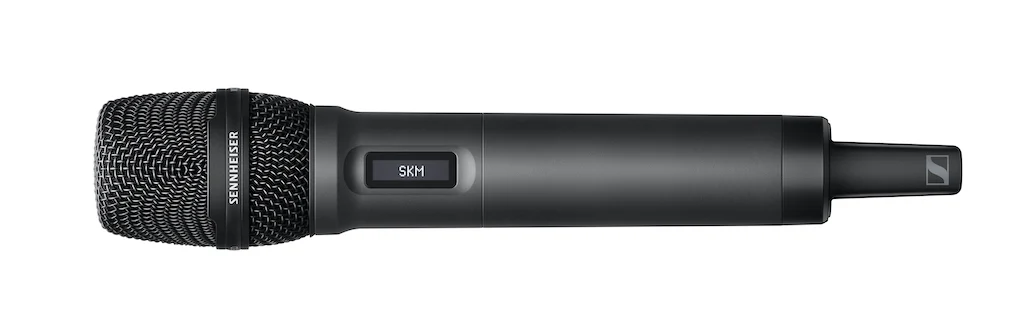
The global pro-audio industry has reached a significant milestone with Sennheiser’s announcement that it has officially commenced shipping the Spectera SKM handheld transmitter, effectively completing the core components of its groundbreaking bidirectional wireless broadband system. This release marks the culmination of years of intensive research and development into Wireless Multi-channel Audio Systems (WMAS), a technology designed to fundamentally alter how high-density wireless environments are managed. By integrating the SKM handheld transmitter into the Spectera ecosystem, Sennheiser provides production teams with a fully realized bidirectional workflow that combines high-fidelity audio transmission with unprecedented remote control and monitoring capabilities, all contained within a single wideband radio frequency (RF) channel.
The Spectera SKM is not merely a microphone; it represents a shift in the philosophy of wireless audio. Traditionally, wireless systems have relied on narrowband technology, where each individual microphone or in-ear monitor (IEM) requires its own dedicated frequency and a corresponding receiver or transmitter unit. This approach often leads to complex frequency coordination, intermodulation issues, and a massive footprint of rack-mounted hardware. The Spectera system, bolstered by the arrival of the SKM, utilizes a wideband approach that allows up to 128 audio links—including both microphone inputs and IEM outputs—to operate within a single 6 MHz or 8 MHz RF channel. This technological leap is designed to address the increasing "spectrum crunch" faced by broadcasters and touring professionals as available RF bandwidth continues to be auctioned off to telecommunications providers.
Technical Architecture and Bidirectional Capabilities
At the heart of the Spectera SKM is the implementation of Multicarrier, Time Division Multiple Access (TDMA), and Time Division Duplexing (TDD) technologies. This combination allows for a truly bidirectional data flow between the handheld transmitter and the base station. Unlike conventional systems where control data is often handled via a separate 2.4 GHz network or infrared sync, the SKM transmits its audio data and receives control information over the same RF broadband link. This integration ensures that the connection remains robust and that engineers have a constant, real-time window into the device’s performance.
The bidirectional nature of the system enables sound engineers to monitor critical parameters such as battery life, RF signal strength, and link quality without needing the performer to be nearby or the device to be physically accessed. Furthermore, the SKM allows for the remote adjustment of essential settings. From the front-of-house or monitor console, an engineer can modify the microphone’s gain, engage a low-cut filter, or adjust the transmitter’s power output. This level of control is particularly transformative for live broadcast and large-scale theatrical productions where "on-the-fly" adjustments are often necessary but physically impossible once the talent is on stage.
Security is also a paramount feature of the Spectera SKM. As digital wireless systems become the standard for corporate boardrooms and government facilities, the need for secure transmission is higher than ever. The SKM employs AES 256 encryption, providing a military-grade level of security that ensures audio feeds remain private and protected from unauthorized interception.
Design, Ergonomics, and Power Management
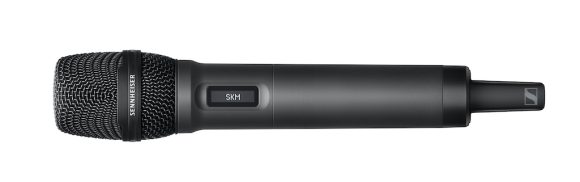
The SKM handheld transmitter is housed in a rugged metal chassis designed to withstand the rigors of global touring and daily broadcast use. Despite its robust construction, the unit is remarkably lightweight, weighing approximately 196 grams without the capsule and battery. Its ergonomic design is complemented by a high-contrast OLED display that provides clear visibility of the device’s status even in low-light environments or under direct stage lighting.
Power management in the Spectera ecosystem has been streamlined for efficiency. The SKM utilizes the same BA 70 and BA 70 2.2 rechargeable battery packs as the Spectera SEK bodypack. This commonality simplifies the logistics for production crews, who can maintain a single type of charging infrastructure and battery pool for all wireless components. In "Live Mode," the SKM offers a battery life of over six hours, ensuring it can cover the duration of most standard performances, sporting events, or broadcast shifts. The transmitter also supports ultra-low latency, reaching as low as 1.0 millisecond, which is critical for performers who rely on instantaneous feedback in their IEMs.
Capsule Compatibility and the Neumann Partnership
A significant draw for the Spectera SKM is its compatibility with a wide array of microphone capsules. Sennheiser has ensured that the SKM can be paired with the company’s extensive catalog of high-end heads, as well as those from Neumann. This includes the recently introduced Neumann KK 104 A (cardioid) and KK 105 A (supercardioid) condenser capsules. These capsules are based on the acclaimed KMS series of wired stage microphones, bringing a "studio sound" to the wireless stage.
The ability to swap capsules allows the SKM to be tailored to the specific vocal characteristics of a performer or the acoustic requirements of a venue. Whether a production requires the warmth of a dynamic capsule for a rock vocalist or the precision of a condenser for a broadcast presenter, the SKM acts as a versatile platform. This modularity ensures that the investment in the Spectera system remains future-proof, as new capsule technologies can be integrated as they are developed.
Frequency Flexibility and Global Compliance
The Spectera SKM is available in multiple frequency variants to comply with varying international regulations. These include UHF versions covering 470–608 MHz and 630–698 MHz, as well as 1.4 GHz variants covering 1350–1400 MHz and 1435–1525 MHz. This wide range of supported frequencies allows global touring acts to move between regions with greater ease, knowing their equipment can be configured to operate within local legal frameworks.
The RF output power is adjustable up to 50 mW, though this is subject to regional regulatory limits. The use of wideband technology also makes the system inherently more resilient to RF fading. In traditional narrowband systems, a "null" in the RF environment can cause a total signal dropout. However, because the Spectera system spreads its signal across a wider frequency block, it is much less likely that the entire signal will be lost due to localized interference or physical obstructions.
Chronology of Development and Market Context
The shipping of the SKM is the latest chapter in a timeline that began with Sennheiser’s early advocacy for WMAS technology. For years, the company worked alongside regulatory bodies like the FCC in the United States and ETSI in Europe to demonstrate that wideband wireless systems could coexist with existing users without causing interference.
- 2023: Sennheiser showcases early prototypes of the WMAS technology at major industry trade shows, garnering significant interest from the touring and broadcast sectors.
- Early 2024: The Spectera base station and SEK bodypacks are introduced, providing the foundation for the ecosystem.
- Mid-2024: Extensive field testing is conducted at high-profile events, including major music festivals and sporting championships, to refine the bidirectional control software.
- September 2026: The official shipping of the SKM handheld transmitter commences, completing the initial core hardware lineup.
Bernd Neubauer, Sennheiser’s Product Manager, emphasized that the completion of the core ecosystem is just the beginning. "We are delighted to have completed the core elements of our Spectera system with the start of delivery of the SKM handheld transmitter," Neubauer stated. "The ecosystem is being continuously developed based on feedback and ideas from the market—both in terms of new software features and new devices and services."

Industry Implications and Analysis
The shift from narrowband to wideband, as exemplified by the Spectera system, represents a paradigm shift for frequency coordinators. In the past, coordinating 50 or 100 channels of wireless audio was a labor-intensive process requiring sophisticated software and a deep understanding of intermodulation distortion (IMD). Because Spectera utilizes a single wideband carrier, the risk of IMD between devices within that carrier is virtually eliminated. This simplifies the planning process and allows for much higher device density in crowded RF environments like Broadway, Las Vegas, or major political conventions.
Furthermore, the "All-in-One" nature of the Spectera base station reduces the physical footprint of the wireless rack. A single 19-inch rack unit can now handle the equivalent of dozens of traditional receivers and IEM transmitters. This leads to significant savings in transport costs, power consumption, and setup time—factors that are increasingly important in the modern production landscape.
The introduction of the SKM also reinforces Sennheiser’s position in the high-end professional market. While other manufacturers have focused on refining digital narrowband, Sennheiser has bet on the wideband future. The success of this system could dictate the direction of the industry for the next decade, particularly as 5G and other mobile technologies continue to encroach on traditional UHF space.
Conclusion and Future Outlook
With the Spectera SKM now in the hands of users, the pro-audio community will begin to see the full potential of bidirectional WMAS technology in real-world applications. The system’s ability to handle high-density audio links with low latency and total remote control addresses the most pressing challenges of modern wireless production.
As Sennheiser continues to showcase the system at events like LEAT Con in Hamburg, the focus will likely shift toward software expansions. The Spectera platform is designed to be "software-defined," meaning that future updates could unlock even more links, improved battery efficiency, or new monitoring metrics without requiring hardware changes. For now, the delivery of the SKM completes a powerful toolkit for audio professionals, signaling a new era where the constraints of traditional RF management are a thing of the past.
