

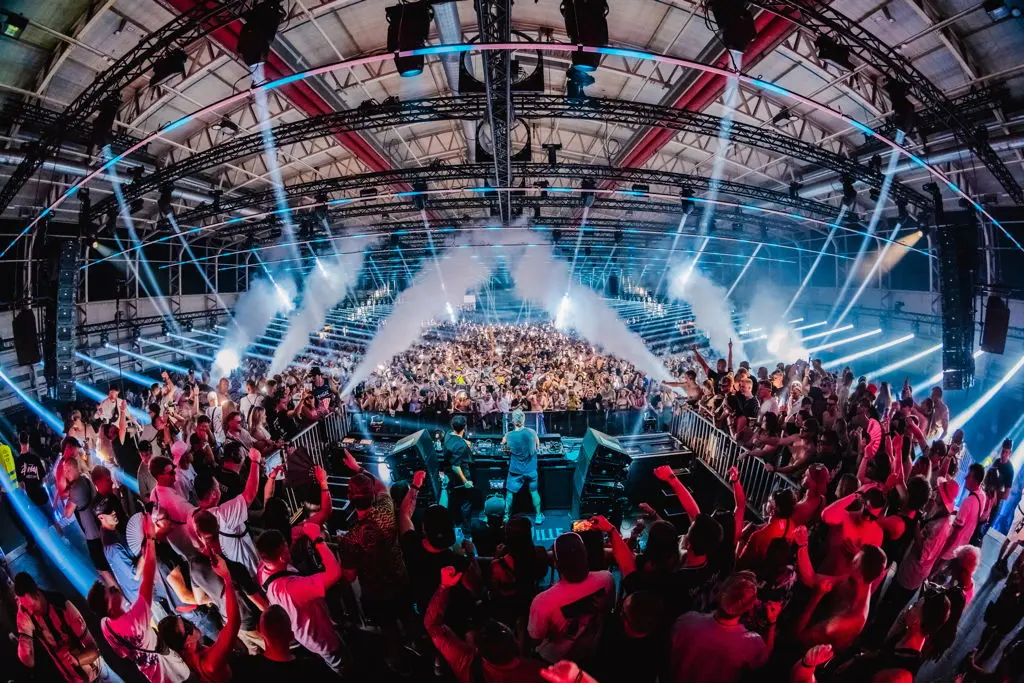
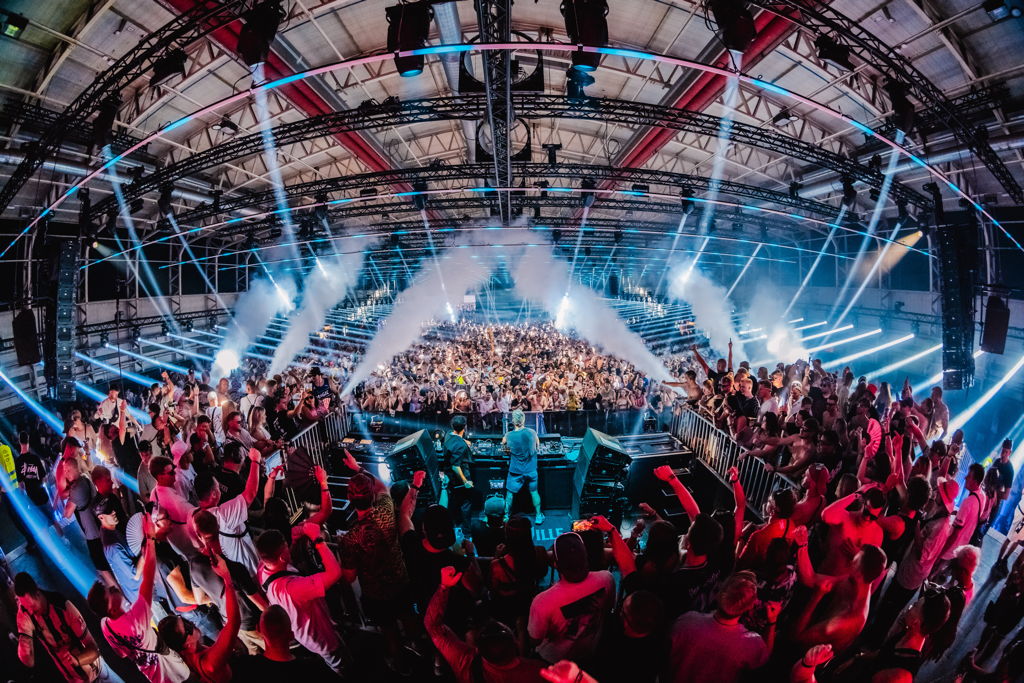
The eleventh edition of Parookaville, Germany’s largest electronic dance music (EDM) festival, once again transformed the grounds of Weeze Airport into a sprawling, temporary metropolis known as the "City of Dreams" from July 17 to 19, 2026. This year’s event marked a significant milestone in the festival’s history, welcoming approximately 225,000 "citizens" who gathered to witness performances by more than 300 international acts. Beyond the sheer scale of the attendance, the 2026 edition was defined by a sophisticated technical execution that pushed the boundaries of outdoor acoustic engineering. Central to this achievement was the continued partnership between the festival and the POOLgroup, which deployed an extensive Meyer Sound Panther system across the site’s most prominent stages to ensure a club-like audio experience on a massive scale.
Since its inception in 2015, Parookaville has distinguished itself from other festivals through its unique conceptual framework. It is not merely a series of concerts but a simulated city complete with its own laws, a town hall where visitors receive "passports," and a post office. This immersive environment requires a production design that is both functional and aesthetically seamless. For the 2026 edition, the lineup featured a prestigious roster of headliners including Armin van Buuren, Hardwell, W&W, The Chainsmokers, and Timmy Trumpet. Delivering the high-energy, bass-heavy performances of these artists to a crowd of 70,000 at the Mainstage alone required a sound reinforcement strategy that could provide both immense power and surgical precision.
Technical Leadership and Production Design
The responsibility for the technical realization of Parookaville 2026 fell to the POOLgroup, a long-term production partner of the festival. Production Manager Robert Sommer led the overarching production design and technical management, while the complex task of audio planning was spearheaded by Technical Directors Jan Flerlage and Simon Jermer. Their team comprised approximately 40 specialized sound engineers and technicians, tasked with the installation, calibration, and live operation of systems across five major stages: the Mainstage, Bill’s Factory, Cloud Factory, Power Plant, and Time Lab.
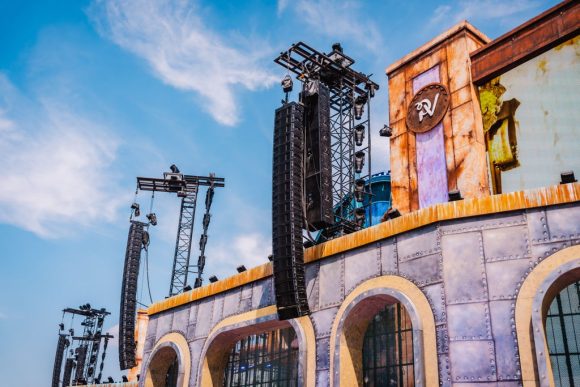
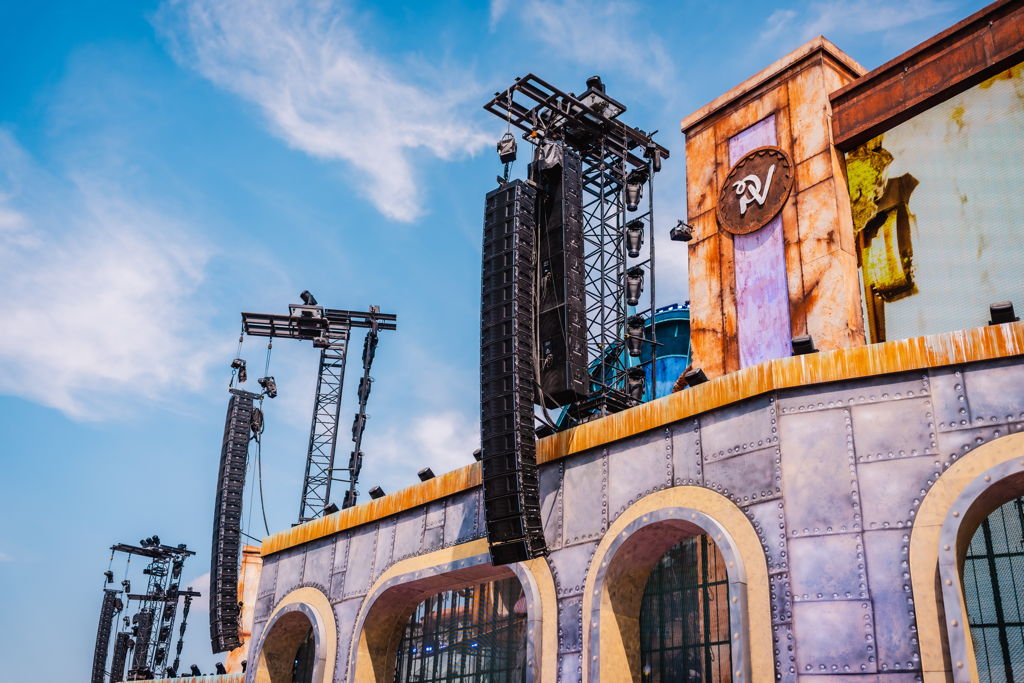
The primary challenge identified by the audio team was the integration of high-performance sound systems into the festival’s increasingly elaborate stage designs. Each year, Parookaville debuts entirely new stage structures that incorporate massive LED screens, pyrotechnics, and architectural facades. Jan Flerlage noted that the aesthetic requirements of the stage often conflict with traditional loudspeaker placement. A standard speaker tower can obstruct sightlines or break the visual immersion of the "City of Dreams." Consequently, the selection of the Meyer Sound Panther line array was a strategic decision based on its high output-to-size ratio. The Panther system’s slim profile allowed it to be integrated into the stage architecture without compromising the visual experience for the audience.
The Mainstage: A Benchmark in Large-Scale Sound Reinforcement
The Mainstage served as the acoustic centerpiece of the festival. To cover an area capable of holding 70,000 people, the POOLgroup deployed a massive configuration of Meyer Sound components. The setup included 180 Panther line array loudspeakers, supported by a robust low-frequency foundation consisting of 30 2100-LFC and 66 1100-LFC Low-Frequency Control elements. For front-fill and near-field coverage, 16 Leopard line array loudspeakers and six UPQ point-source loudspeakers were utilized.
The goal for the Mainstage was to replicate the "direct" and "punchy" sound characteristic of a high-end indoor club, despite the vast open-air environment of the airport tarmac. Flerlage emphasized that the objective was to ensure every visitor, regardless of their distance from the stage, felt physically connected to the music. To achieve this, the system design was developed in close collaboration with Merlijn van Veen, Meyer Sound’s Senior Technical Support and Education Specialist. System Engineer Matthias Pelz was responsible for the final tuning and alignment, ensuring that the transition between the main arrays and the delay towers was imperceptible.
The use of the Panther system for the fourth consecutive year at Parookaville highlighted its evolution as a tool for festival production. The system’s lightweight nature not only aided in stage integration but also reduced the structural load on the rigging points, allowing for more creative freedom in the stage’s physical design.
Distributed Excellence Across Multiple Stages
While the Mainstage garnered much of the attention, the technical standards remained equally high across the festival’s secondary venues. The Cloud Factory, Power Plant, and Time Lab stages also utilized Panther systems, benefiting from the same linear response and high-frequency clarity found at the Mainstage. This consistency across stages ensured that as attendees moved through the "City of Dreams," they experienced a uniform audio quality.
In contrast, Bill’s Factory—a stage known for its industrial aesthetic and eclectic lineup—was equipped with Meyer Sound’s Leo and Lyon line array loudspeakers. These systems, while from a different product family, provided the necessary headroom and throw required for the stage’s specific layout. The diversity of the equipment used across the site demonstrated the POOLgroup’s ability to tailor acoustic solutions to the unique environmental and musical requirements of each stage.
Iterative Optimization and Data-Driven Results
A key takeaway from the 2026 edition was the POOLgroup’s commitment to "continuous improvement" rather than radical redesign. Instead of starting from scratch each year, the technical team utilized historical data from previous Parookaville editions to refine their approach. This included analyzing noise emission patterns to ensure compliance with local regulations while maximizing the internal sound pressure levels for the audience.
The 2026 setup saw specific optimizations in the arrangement of the subwoofer arrays and the placement of delay systems. By fine-tuning the phase alignment and spatial distribution of the LFC elements, the engineers were able to create a more uniform bass response across the entire audience area, eliminating "hot spots" or "dead zones." This meticulous attention to detail was noted by the visiting engineers of the headlining acts. Feedback from guest technicians highlighted the exceptional coverage and the significant amount of headroom available, which allowed them to deliver their artists’ signature sounds without distortion or fatigue.
Logistical Feats and Environmental Considerations
The logistical undertaking of Parookaville cannot be overstated. Weeze Airport, an active regional airport, presents a unique set of challenges, including flat, reflective surfaces and the need for temporary infrastructure that can withstand the elements. The POOLgroup’s 40-person audio team worked within a tight setup window to transform the tarmac into a high-fidelity acoustic environment.
Furthermore, noise control is a critical factor for a festival of this magnitude. The use of Meyer Sound’s MAPP 3D modeling software allowed the team to predict sound coverage with high accuracy, ensuring that the acoustic energy was concentrated on the audience and did not bleed excessively into the surrounding communities. The 2100-LFC and 1100-LFC elements were configured in gradient arrays to provide directional control over the low frequencies, a technique that is essential for maintaining good relations with local authorities and ensuring the festival’s long-term sustainability at the Weeze location.
Broader Industry Implications and Future Outlook
The success of Parookaville 2026 serves as a case study for the future of large-scale event production. The trend toward more immersive, "themed" festival experiences is placing new demands on technical departments. As stages become more like cinematic sets, the audio equipment must become more discreet yet more powerful. The 2026 edition proved that the Meyer Sound Panther system is currently at the forefront of meeting these dual demands.
Moreover, the partnership between Parookaville and the POOLgroup illustrates the importance of long-term collaboration in the live entertainment industry. The deep familiarity with the venue and the specific needs of the festival allowed the technical team to focus on subtle optimizations that elevated the attendee experience from good to world-class.
As the "City of Dreams" closed its gates on July 19, the 225,000 attendees left with the memory of a festival that sounded as good as it looked. For the professional audio community, the event reinforced the value of data-driven system design and the capabilities of modern line array technology. Parookaville continues to set a high bar for the European festival circuit, proving that even at a scale of nearly a quarter-million people, the intimacy and impact of a club sound system can be successfully replicated under the open sky. The 11th edition was not just a celebration of electronic music, but a triumph of modern touring technology and production expertise.
