

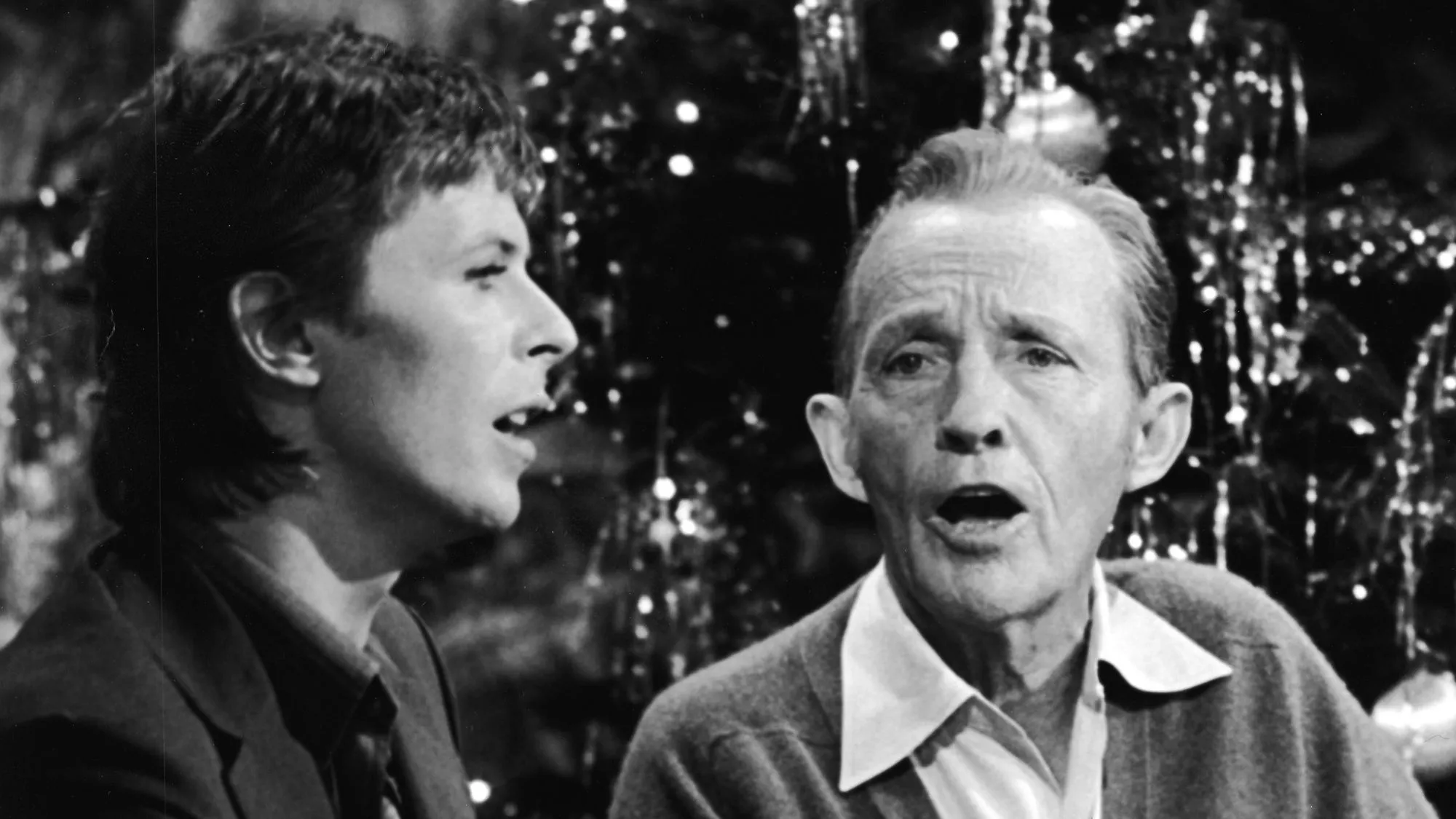
The intersection of avant-garde rock and traditional pop standards rarely produces a lasting cultural artifact, yet on September 11, 1977, at ATV Elstree Studios in Borehamwood, England, two disparate worlds converged to create one of the most enduring holiday recordings in music history. David Bowie, the chameleon of rock who had recently completed his experimental album Heroes, stood alongside Bing Crosby, the quintessential American crooner whose voice had defined the Christmas season for decades. The resulting duet, a medley of "The Little Drummer Boy" and the newly composed "Peace on Earth," remains a staple of holiday broadcasting, representing a unique moment of intergenerational bridge-building in the late 20th century.
Historical Context and the Collision of Two Eras
To understand the gravity of this collaboration, one must consider the cultural positions of both men in 1977. David Bowie was 30 years old and in the midst of his "Berlin Trilogy" period, a time characterized by intellectual detachment, electronic experimentation, and a rejection of the flamboyant "Ziggy Stardust" persona. He was a symbol of the counterculture and the future of music. Conversely, Bing Crosby, then 74, was an elder statesman of the entertainment industry. With a career spanning half a century, Crosby had sold hundreds of millions of records and was synonymous with the mid-century American establishment.
The pairing was orchestrated for Crosby’s final television special, Bing Crosby’s Merrie Olde Christmas. The program was designed around a loose narrative of Crosby visiting his fictional English relatives. Given Bowie’s residence in London and his status as a major international star, producers viewed him as the ideal guest to appeal to a younger demographic, despite the apparent aesthetic gulf between the two performers.
The Recording Session and Creative Conflict
The filming on September 11 was nearly derailed by a fundamental creative disagreement. The original plan for the segment involved Bowie and Crosby performing a straightforward rendition of "The Little Drummer Boy," a 1941 classic. However, upon arriving at the studio, Bowie expressed a profound distaste for the song. According to accounts from the production team, Bowie found the track repetitive and ill-suited to his vocal range and artistic sensibilities.
Ian Fraser, who served as the musical director for the special, recalled that Bowie’s refusal put the production in a difficult position. Bowie reportedly stated that he would only participate in the show because his mother was a devoted fan of Crosby. Facing the potential loss of their star guest, Fraser, along with co-writers Buz Kohan and Larry Grossman, sought an immediate solution.
The trio retreated to a piano in the basement of the Elstree Studios. In a remarkable display of professional efficiency, they composed "Peace on Earth" in approximately 75 minutes. The new song was designed as a counterpoint to "The Little Drummer Boy," allowing Crosby to sing the traditional melody while Bowie performed the new lyrics and melody over the top. This structural choice allowed for a harmonious blend that satisfied Bowie’s desire for original material while maintaining the holiday spirit required for Crosby’s special.
Visual Contrast and Personal Dynamics
The visual presentation of the duet was as striking as the musical composition. When Bowie arrived for the taping, he was accompanied by his wife, Angie, both of whom were reportedly wearing full makeup and matching mink coats with bright red hair. This appearance caused immediate concern among the production staff, who were aiming for a traditional, family-friendly holiday atmosphere.
Nathaniel Crosby, Bing’s son, later noted that producers requested Bowie tone down his appearance for the segment. Bowie complied, removing his makeup and earrings and appearing in a more conventional suit. Despite the initial stylistic friction, the personal rapport between the two men improved once the music began. Mary Crosby, Bing’s daughter, observed that both artists initially appeared nervous, but their mutual respect for each other’s professionalism led to a relaxed and productive atmosphere. The final performance was captured in just a few takes, totaling less than an hour of studio time.
Chronology of Events
The timeline surrounding the recording is marked by a poignant coincidence. While the performance was filmed in September, the general public would not see it for several months.
- September 11, 1977: The duet is filmed and recorded at ATV Elstree Studios.
- October 14, 1977: Just five weeks after the recording, Bing Crosby died of a heart attack after a round of golf at the La Moraleja Golf Course in Spain.
- November 30, 1977: Bing Crosby’s Merrie Olde Christmas aired posthumously on CBS in the United States and on ITV in the United Kingdom.
- 1982: RCA Records released the performance as a commercial single, five years after the original recording.
Crosby’s death transformed the television special from a standard holiday program into a memorial tribute. The duet with Bowie became the focal point of the broadcast, serving as a symbolic passing of the torch from one generation of musical excellence to the next.
Commercial Success and Chart Performance
Although the performance was a highlight of the 1977 television season, it was not immediately available for purchase. For years, the song existed only in the form of bootlegs and television recordings. It was not until November 1982 that RCA Records, recognizing the enduring popularity of the clip, officially released "Peace on Earth/Little Drummer Boy" as a single.
The release proved to be a significant commercial success. In the United Kingdom, the single climbed to number three on the UK Singles Chart, becoming one of Bowie’s most successful commercial releases and Crosby’s final posthumous hit. In the United States, while it did not reach the same heights on the Billboard Hot 100, it became a perennial favorite on adult contemporary and holiday radio stations. The song has since been certified Silver by the British Phonographic Industry (BPI) and remains a consistent seller during the December months.
Analysis of Musical and Cultural Implications
The success of "Peace on Earth/Little Drummer Boy" can be attributed to its sophisticated musical arrangement. The use of counterpoint—where two independent melodic lines are played simultaneously—creates a texture that is more complex than a standard duet. The lyrics of "Peace on Earth" added a layer of contemporary relevance to the performance, with Bowie singing about a world where "every child must be made aware" and "every care must be confessed." This contrasted with the simple, rhythmic storytelling of "The Little Drummer Boy," providing a depth that appealed to both traditionalists and fans of modern rock.
From a cultural perspective, the duet served to humanize David Bowie at a time when he was viewed by many as an inaccessible, avant-garde figure. By appearing with Crosby, Bowie signaled a respect for the foundations of popular music, even as he continued to push its boundaries. For Crosby, the collaboration demonstrated a willingness to adapt and remain relevant in a rapidly changing musical landscape.
Statements and Legacy
Reflecting on the session years later, David Bowie remained humble about the experience, often noting that he did it primarily for his mother’s enjoyment. However, the impact on the Crosby family was profound. In various interviews, the Crosby children have praised Bowie’s grace and professionalism, noting that he treated their father with immense respect during what would be his final professional engagement.
Ian Fraser, the musical director, frequently cited the session as a career highlight, marveling at how a last-minute creative pivot resulted in a "miracle" of a recording. The song has since been covered by numerous artists, but the original 1977 version remains the definitive rendition.
Today, "Peace on Earth/Little Drummer Boy" is regarded as more than just a holiday novelty. It is studied as a masterclass in professional collaboration and creative problem-solving. The recording stands as a testament to the idea that artistic differences, when managed with mutual respect and technical skill, can result in a work that transcends its original context. As a staple of holiday playlists, it continues to introduce new generations to the legacies of both Bing Crosby and David Bowie, ensuring that their unexpected meeting in a London studio continues to resonate decades later.
