

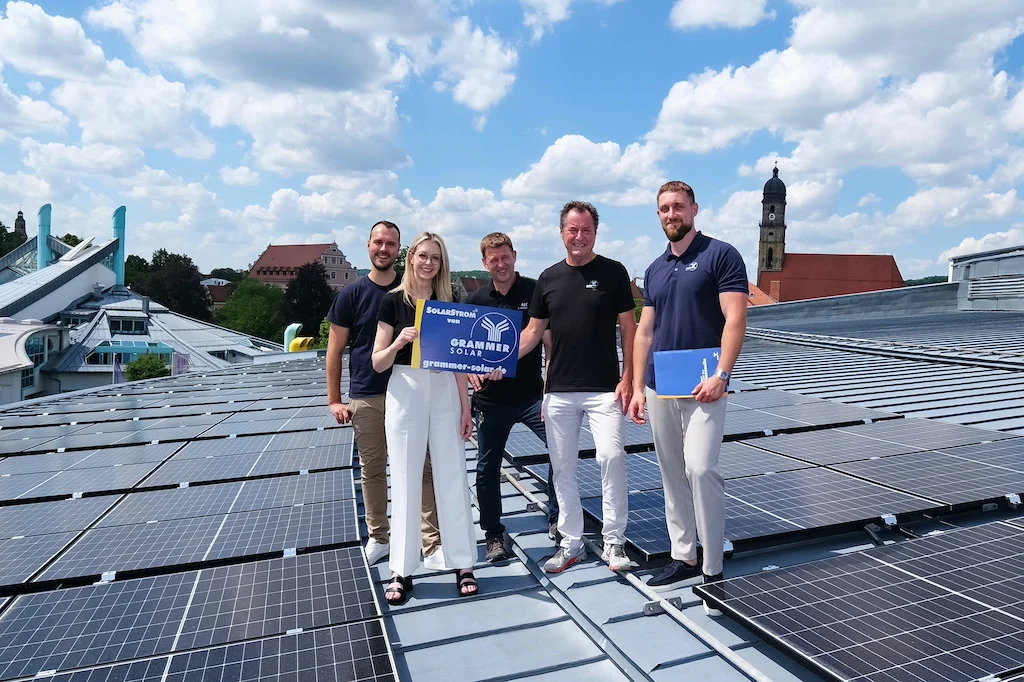
The Amberger Congress Centrum (ACC), a cornerstone of the cultural and corporate landscape in the Upper Palatinate region, has officially transitioned into a new era of environmental stewardship with the commissioning of a sophisticated rooftop photovoltaic (PV) system. This strategic move, finalized in the late summer of 2026, represents a significant milestone in the facility’s ongoing commitment to the "Green Meetings" movement and the broader German Energiewende (energy transition). By integrating renewable energy production directly into its infrastructure, the ACC is not only reducing its carbon footprint but also setting a benchmark for municipal event venues across Bavaria.
Technical Specifications and Energy Projections
The newly installed system, which began formal operations on August 11, 2026, boasts a total capacity of 85 kilowatt-peak (kWp). This installation is the result of a collaborative effort between the ACC management, the municipal utility provider Stadtwerke Amberg, and the local engineering specialists at Grammer Solar GmbH. According to technical data released by the facility, the solar array is projected to generate an annual yield of approximately 85,000 kilowatt-hours (kWh) of clean electricity.
To put this figure into perspective, the average German four-person household consumes roughly 4,000 kWh per year. Thus, the ACC’s new installation produces enough energy to power over 20 residential homes annually. However, the primary objective of this project is localized consumption. Of the total 85,000 kWh generated, the ACC plans to utilize nearly 60,000 kWh directly on-site. This represents approximately 25 percent of the building’s total annual energy requirement, effectively insulating the venue from a quarter of the volatility inherent in external energy markets.
The remaining surplus energy—roughly 25,000 kWh—will be fed back into the public grid, contributing to the green energy mix of the city of Amberg and supporting the municipal goal of achieving climate neutrality in the coming decades.
Architectural Integration and Engineering Challenges
One of the most noteworthy aspects of the project is the seamless integration of the solar panels into the ACC’s distinct architectural profile. The building is renowned for its semi-circular roof geometry, a design feature that presented unique challenges for the installation team at Grammer Solar. Unlike standard flat-roof industrial installations, the curved surface of the ACC required a bespoke mounting solution to ensure optimal sun exposure throughout the day while maintaining the structural integrity and aesthetic appeal of the venue.
"The planning phase was particularly intensive," noted representatives from Grammer Solar during the commissioning ceremony. "From the initial site survey to the final commissioning, our focus was on maximizing yield while respecting the iconic shape of the building. The half-round roof geometry meant that the orientation of the modules had to be meticulously calculated to capture solar radiation at varying angles."
This attention to detail ensures that the 85 kWp system operates at peak efficiency, even during the shoulder seasons of spring and autumn when the sun sits lower on the horizon. The project serves as a case study for how modern renewable technology can be retrofitted onto architecturally significant public buildings without compromising their visual identity.
Operational Optimization: Synchronizing Demand with Supply
The installation of the hardware is only one half of the ACC’s sustainability equation. Under the leadership of Technical Director Christian Greiner, the facility has embarked on a comprehensive "operational reconfiguration" to maximize the benefits of the new PV system. The goal is to align the building’s peak energy demand with the peak hours of solar production, typically between 10:00 AM and 4:00 PM.
"Currently, we are fine-tuning our operations to further increase our internal consumption of PV-generated power," Greiner explained. "Historically, many of our high-consumption systems, such as certain ventilation units and maintenance protocols, were operated during the night or early morning hours. We are now systematically reconfiguring these consumers to operate during daylight hours. By doing so, we ensure that the electricity we produce is used immediately, reducing our reliance on the grid and maximizing the economic return on our investment."
This shift in operational philosophy is critical for large-scale event venues, which are notoriously energy-intensive. From high-powered stage lighting and audiovisual systems to industrial-scale climate control for thousands of guests, the energy demands of a congress center are immense. By shifting the "load profile" of the building, the ACC is demonstrating a sophisticated approach to energy management that goes beyond simple generation.
Strategic Leadership and Regional Impact
Erika Sauerwein, the Managing Director of the Amberger Congress Centrum, views the solar project as a core component of the venue’s long-term corporate identity. As a hub for approximately 65,000 visitors annually—attending everything from high-level scientific congresses and regional trade fairs to cultural performances and galas—the ACC serves as a high-visibility ambassador for the city of Amberg.
"As a modern event and congress center, we have a profound responsibility to continuously reduce our ecological footprint," Sauerwein stated. "This photovoltaic system is not just a piece of infrastructure; it is a vital building block of our overarching sustainability strategy. It is a clear commitment to a future-proof energy supply and a signal to our clients and guests that responsible event management is at the heart of what we do."
The move toward solar energy is also a response to changing market demands. In the modern MICE (Meetings, Incentives, Conferences, and Exhibitions) industry, corporate clients and public institutions are increasingly prioritizing venues that can demonstrate verified sustainability credentials. The ability to host a "carbon-neutral" or "low-impact" event has become a competitive advantage. By generating 25 percent of its own power, the ACC is positioning itself as a premier destination for environmentally conscious organizers.
Economic Sustainability in an Uncertain Market
Beyond the environmental benefits, the project is underpinned by a robust economic rationale. The energy crisis that gripped Europe in the mid-2020s highlighted the vulnerability of large institutions to fluctuations in fossil fuel prices. By investing in self-generation, the ACC is effectively "locking in" a portion of its energy costs for the next 20 to 25 years—the typical lifespan of a modern PV system.
The collaboration with Stadtwerke Amberg was essential in this regard. As the local utility provider, Stadtwerke assisted in the grid integration and provided the necessary regulatory framework to ensure the project’s financial viability. This partnership between a municipal venue, a local utility, and a regional engineering firm underscores the "circular" nature of the project, where investment stays within the community and strengthens the local economy.

A Timeline of Transformation
The journey toward the August 11 commissioning was several years in the making. The project began with a feasibility study in 2024, which evaluated the structural capacity of the roof and the potential solar yield. Following the approval from the city council and the procurement of funding, the contract was awarded to Grammer Solar in late 2025.
Construction took place in several phases during the first half of 2026, carefully scheduled to avoid disrupting the ACC’s busy event calendar. The final installation of the 85 kWp array was completed in July, followed by a month of rigorous testing and synchronization with the building’s internal power grid. The official launch on September 17, 2026, marked the public unveiling of the system and the start of a new chapter in the venue’s history.
Broader Implications for the Industry
The Amberger Congress Centrum’s initiative reflects a broader trend in the German event industry. As the federal government pushes for "Net Zero" targets by 2045, public buildings are under increasing pressure to lead by example. The ACC’s success demonstrates that even buildings with complex architectural requirements can contribute significantly to renewable energy goals.
Furthermore, the project highlights the importance of "Sector Coupling"—the integration of energy production with building management systems. By using smart technology to shift energy loads, the ACC is providing a blueprint for how other public halls, sports arenas, and cultural centers can optimize their energy use.
In the long term, the ACC plans to expand its sustainability efforts further. Discussions are already underway regarding the potential installation of battery storage systems to capture excess solar energy for use during evening events, as well as the expansion of e-charging stations for visitors in the facility’s parking areas.
Conclusion
The commissioning of the photovoltaic system at the Amberger Congress Centrum is more than just a technical upgrade; it is a statement of intent. In an era where climate change and energy security are at the forefront of public discourse, the ACC has taken a proactive step to ensure its continued relevance and resilience. By harnessing the power of the sun to meet a significant portion of its energy needs, the venue is proving that high-quality event management and environmental responsibility are not mutually exclusive, but rather two sides of the same coin. As the 85,000 kWh begin to flow from the roof into the halls of the ACC, the city of Amberg moves one step closer to a sustainable future, powered by innovation and a commitment to the common good.
