

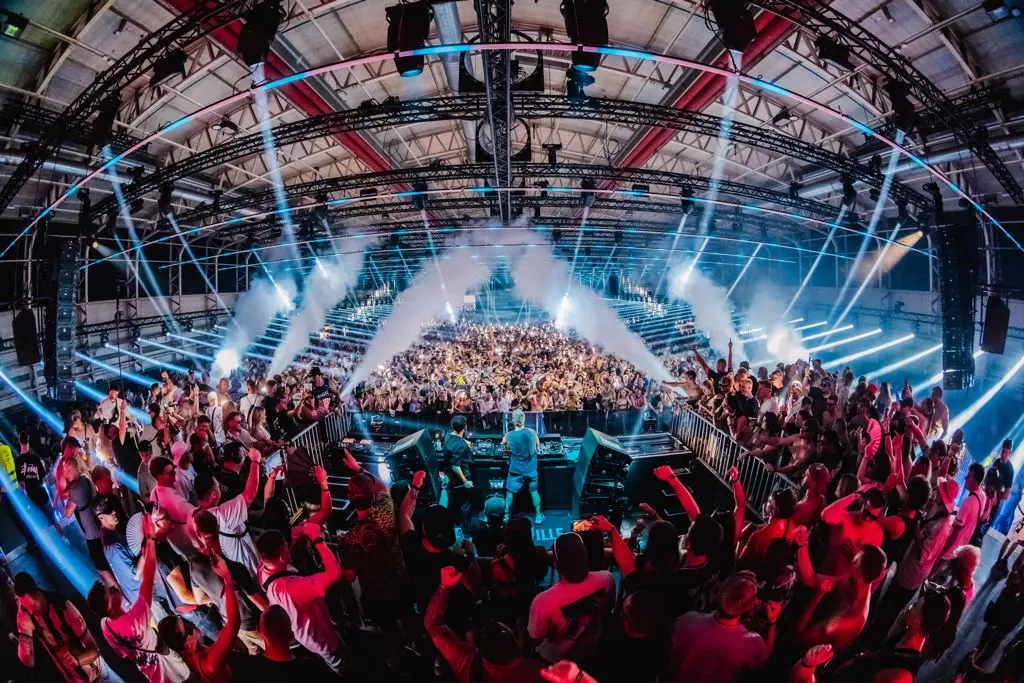
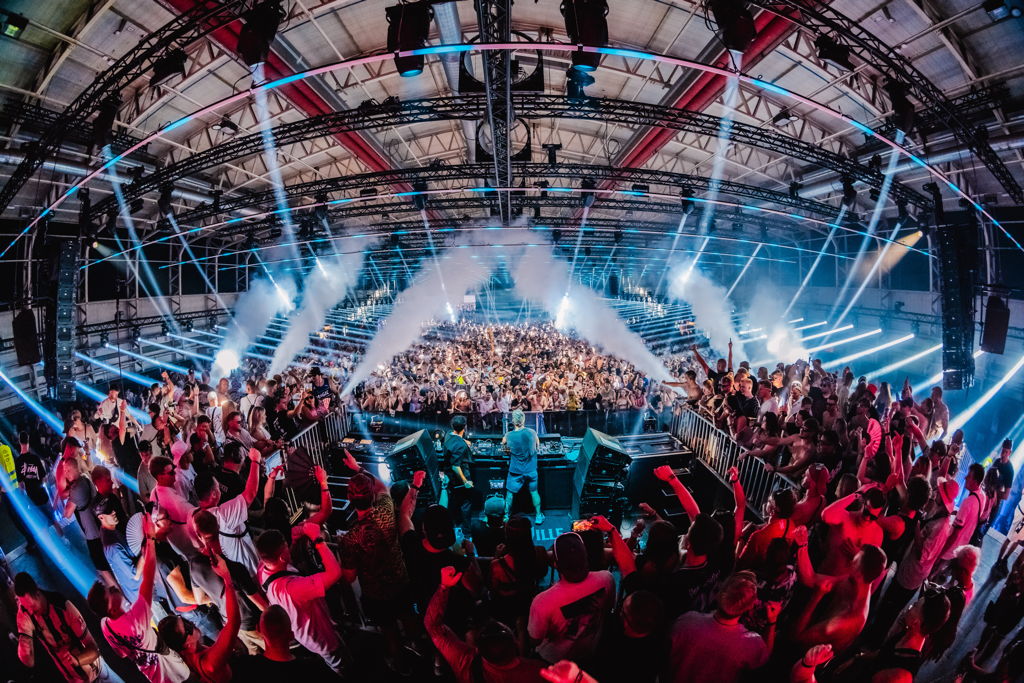
The eleventh edition of Parookaville, Germany’s largest electronic dance music (EDM) festival, successfully concluded its three-day residency at Weeze Airport from July 17 to 19, 2026, marking a significant milestone in the event’s history. Hosting approximately 225,000 "citizens"—the thematic term for its attendees—the festival transformed the former military airbase into the meticulously detailed "City of Dreams." This year’s production was characterized by an unprecedented level of technical sophistication, headlined by a massive deployment of Meyer Sound’s Panther line array systems across five major stages. The complete technical realization and production design were managed by the POOLgroup, a long-standing partner that has been instrumental in the festival’s growth from a boutique event into a global powerhouse of the electronic music circuit.
The 2026 lineup featured a prestigious roster of over 300 acts, including global icons such as Armin van Buuren, Hardwell, W&W, The Chainsmokers, and Timmy Trumpet. For the production team, the primary objective was to ensure that the sonic experience matched the visual grandeur of the festival’s immersive architecture. This task fell under the leadership of Production Manager Robert Sommer, who oversaw the overarching design and technical execution, while the intricate audio planning was spearheaded by Technical Directors Jan Flerlage and Simon Jermer. Their efforts were supported by a specialized team of 40 sound engineers and technicians, tasked with managing the acoustic challenges of an open-air airfield environment.
The Architectural Evolution of the City of Dreams
Since its inception in 2015, Parookaville has distinguished itself through its narrative-driven concept. Unlike traditional festivals that rely on standard scaffolding and banners, Parookaville is constructed as a functional city, complete with a town hall where "citizens" receive passports, a church for "weddings," a post office, and various themed districts. This commitment to world-building creates a unique set of constraints for the audio production team. Each year, the stage designs are entirely reimagined, requiring the technical crew to integrate high-performance sound systems into complex facades without compromising the aesthetic vision.
Jan Flerlage, Technical Director for Audio, emphasized that the integration of sound into the stage scenery is one of the most delicate aspects of the pre-production phase. According to Flerlage, the goal is to prevent the audio hardware from obstructing the sightlines or the thematic elements of the "City of Dreams." On the Mainstage, which accommodates a capacity of 70,000 people at any given time, the challenge is twofold: maintaining the visual integrity of the massive, rotating stage themes while delivering the high-pressure, "in-your-face" sound signature that is essential for EDM.
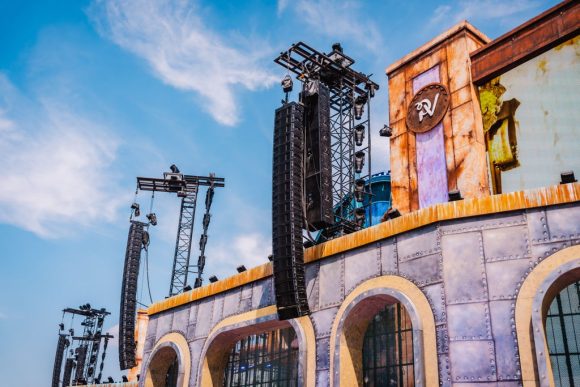
The 2026 Mainstage design featured expansive LED surfaces and intricate physical structures that left limited space for traditional speaker hangs. To address this, the POOLgroup leveraged the compact footprint of the Meyer Sound Panther system. The system’s high output-to-size ratio allowed the team to achieve the necessary Sound Pressure Levels (SPL) without the need for the massive, heavy arrays that would have traditionally obscured the stage’s artistic features.
Technical Specifications: The Panther’s Dominance
For the fourth consecutive year, the Panther line array served as the backbone of the Mainstage audio design. The deployment was one of the largest of its kind in Europe, consisting of 180 Panther loudspeakers. These were complemented by a formidable low-frequency array designed to provide the physical impact required for modern dance music. The sub-bass configuration included 30 2100-LFC and 66 1100-LFC Low-Frequency Control elements. The 2100-LFC, Meyer Sound’s latest high-output subwoofer, was utilized specifically for its ability to extend the frequency response downward while maintaining phase linearity.
To ensure comprehensive coverage across the vast audience area, which stretches hundreds of meters from the stage, the system also incorporated 16 Leopard line array loudspeakers for near-fill and side-fill duties, along with six UPQ point-source speakers for localized reinforcement. The system’s architecture was designed in close collaboration with Merlijn van Veen, Meyer Sound’s Senior Technical Support and Education Specialist. The final calibration and tuning of the Mainstage were handled by System Engineer Matthias Pelz, who utilized advanced acoustic modeling to account for the atmospheric conditions of the Weeze airfield, such as wind gradients and temperature inversions that often affect sound propagation at night.
Flerlage noted that the Panther system provides a level of flexibility that was previously unavailable. The lightweight nature of the cabinets—weighing significantly less than its predecessor, the LEO—allows for more creative rigging options. Furthermore, the slender profile of the Panther arrays makes them easier to "hide" within the stage’s scaffolding, ensuring that the audience’s focus remains on the performance and the visual spectacle.
A Multistage Sonic Environment
Beyond the Mainstage, the POOLgroup implemented high-end audio solutions across several other major venues within the festival grounds. Each stage at Parookaville serves a different sub-genre of electronic music, requiring tailored acoustic signatures:
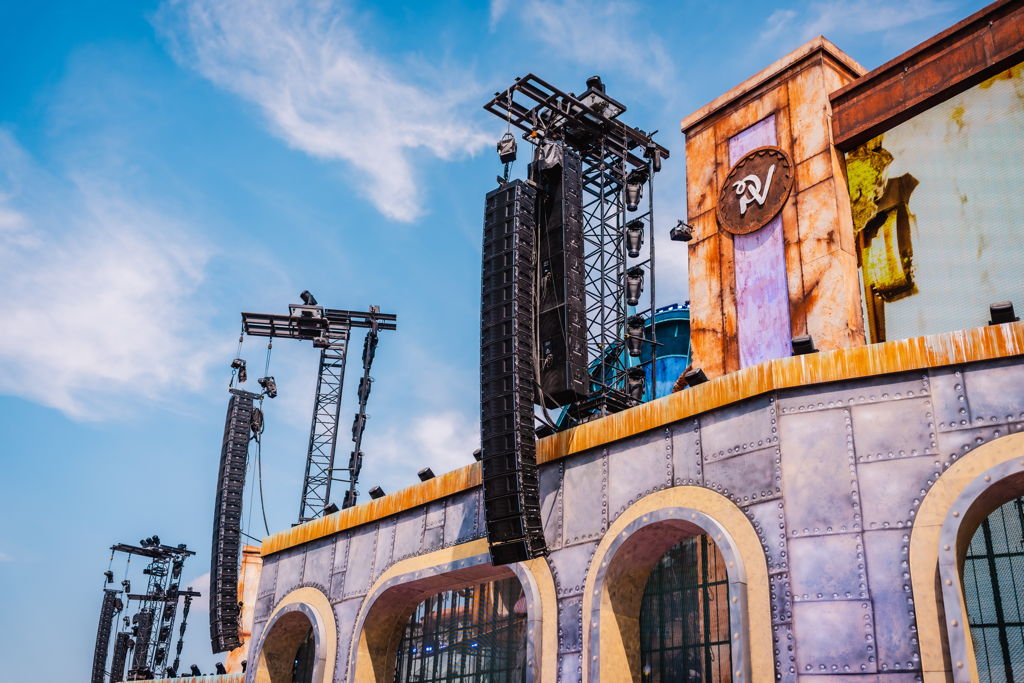
- Bill’s Factory: As the second-largest stage, this venue hosted a mix of live acts and DJs. It was equipped with Meyer Sound LEO and LYON line array speakers, systems known for their long-throw capabilities and headroom.
- Cloud Factory and Power Plant: These stages utilized Panther systems to maintain a consistent sonic character across the festival’s primary "districts."
- Time Lab: A venue dedicated to more experimental and underground sounds, the Time Lab also benefited from a Panther-based setup, ensuring that even the more intricate textures of techno and house were rendered with club-like clarity.
The feedback from visiting engineers—many of whom travel with the world’s top DJs—was overwhelmingly positive. A common point of praise was the "uniformity" of the sound. In large-scale festival environments, it is common for the audio quality to degrade as one moves away from the "sweet spot" in front of the sound booth. However, through the use of sophisticated delay towers and the linear response of the Meyer Sound systems, the POOLgroup was able to achieve a consistent frequency response from the front rail to the very back of the audience area.
Continuous Optimization and Data-Driven Planning
The success of Parookaville 2026 was not merely the result of high-end equipment but also a process of "continuous optimization." The POOLgroup does not treat each festival as a standalone event; instead, they use data collected from previous years to refine their approach. This involves analyzing SPL maps, noise leakage reports, and feedback from the local authorities in Weeze.
The 2026 edition saw specific improvements in the management of "off-site" noise. Given the festival’s proximity to residential areas and the operational requirements of the active airport, controlling the sound energy outside the intended audience zones is a critical logistical hurdle. By utilizing gradient sub-arrays and precision steering of the line arrays, the audio team was able to maximize the energy on the dance floor while significantly reducing the noise footprint in the surrounding community.
"We have been working with the Panther system for several years now, and we know its behavior intimately," Flerlage explained. "But every year, we find small areas where we can squeeze out a bit more headroom or improve the coverage by a few degrees. The goal is that every citizen, regardless of where they are standing in the City of Dreams, feels like they are in the middle of the action."
Broader Implications for the Festival Industry
The scale and technical execution of Parookaville 2026 serve as a benchmark for the global festival industry. As audience expectations for immersive experiences continue to rise, the pressure on production companies to deliver flawless technical environments increases. The partnership between Parookaville and the POOLgroup demonstrates the importance of long-term collaboration in achieving these goals.
From an economic perspective, the festival continues to be a vital driver for the Lower Rhine region. With 225,000 visitors, the event generates significant revenue for local hospitality, transport, and logistics sectors. Furthermore, the festival’s commitment to high-production values ensures its competitiveness against other major European events like Tomorrowland or Ultra Europe.
The integration of Meyer Sound’s Panther system at Parookaville also highlights a shift in the industry toward more efficient, sustainable production. The reduced weight and power consumption of modern line arrays like Panther not only lower transportation costs and carbon footprints but also allow for faster load-in and load-out times—a crucial factor when managing a "city" that must be built and dismantled within a matter of weeks.
Conclusion
As the final beats faded over the Weeze Airport on the night of July 19, the 11th edition of Parookaville was declared a resounding success. Through the strategic application of cutting-edge audio technology and a deep understanding of the festival’s unique "City of Dreams" DNA, the POOLgroup and Meyer Sound provided a sonic landscape that matched the ambition of the event’s founders. For the 225,000 citizens who attended, the festival was more than just a series of concerts; it was a high-fidelity immersion into a world where the boundary between architecture and audio was seamlessly blurred. The lessons learned and the data gathered in 2026 will undoubtedly serve as the foundation for the 12th edition, as Parookaville continues to redefine what is possible in the realm of large-scale event production.
