

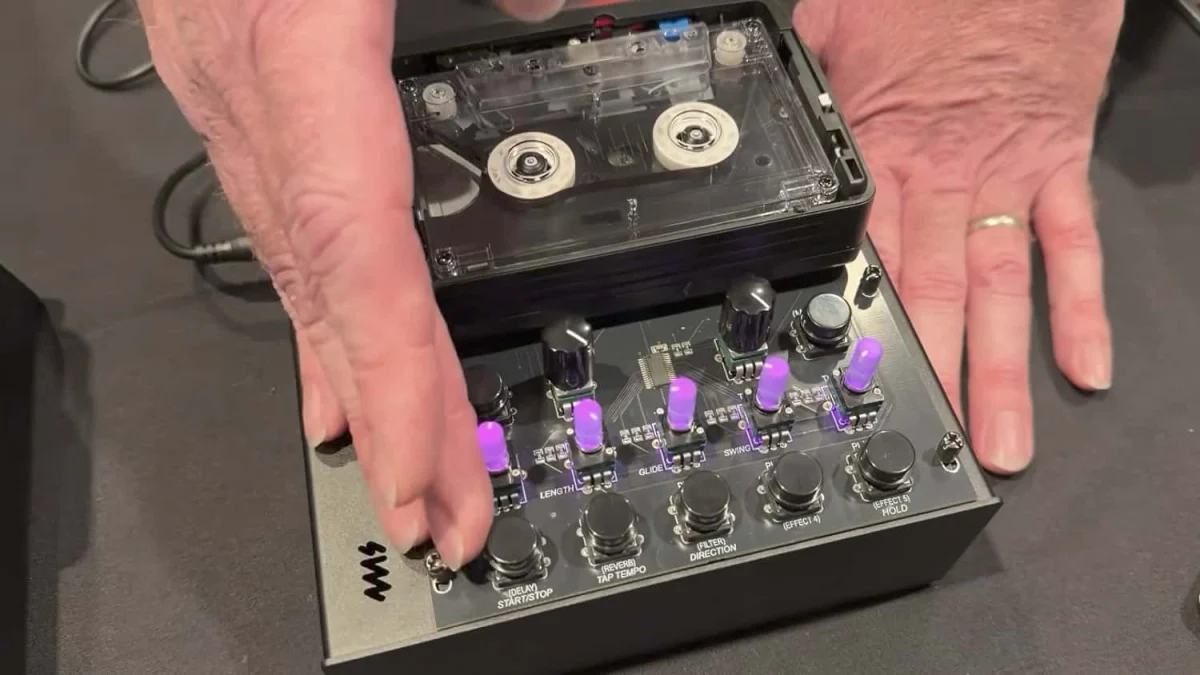
The landscape of boutique music hardware saw a significant expansion at Knobcon 2026 as SISKworks, a developer known for specialized tape-based instruments, unveiled its latest innovations: the Cassettone and a sophisticated Modified Tape Player Prototype. These devices, showcased by company founder Mike, represent a fusion of vintage analog playback technology and modern digital signal processing. The presentation highlighted a growing industry trend toward "lo-fi" tactile interfaces that prioritize physical interaction over software-based emulation. By integrating traditional cassette mechanisms with advanced microprocessors, SISKworks aims to bridge the gap between mid-century experimentalism and contemporary electronic music production.
The Cassettone: A Contemporary Reimagining of the Mellotron
The Cassettone has been affectionately dubbed a "poor man’s Mellotron" by its creator, a nod to the legendary 1960s keyboard that used magnetic tape strips to play back recorded sounds. However, unlike the complex and often temperamental mechanical assemblies of the original Mellotron, the Cassettone utilizes standard cassette technology to achieve a similar polyphonic effect.
The instrument’s interface is centered around five dedicated trigger buttons. Each button corresponds to a specific playback head or tape segment, allowing the user to fire off sounds rhythmically or melodically. The defining feature of the Cassettone is the independent motor speed control assigned to each of the five buttons. By adjusting individual knobs, users can tune the pitch of the tape playback for each key, effectively turning a single recorded drone or note into a five-note harmonic scale. This manual control over voltage-regulated motors provides a unique "wow and flutter" characteristic that digital samplers often struggle to replicate authentically.
Technical Evolution: The Modified Tape Player Prototype
While the Cassettone focuses on the fundamental mechanics of tape playback, the new Modified Tape Player Prototype introduces a high degree of computational power into the signal path. This unit retains the core five-key playback architecture but integrates a Daisy microprocessor—an increasingly popular embedded platform for high-fidelity audio processing.
The inclusion of the Daisy chip allows SISKworks to implement a comprehensive suite of digital effects directly into the hardware. During the Knobcon demonstration, the prototype was shown to handle complex algorithms including delay, reverb, a multi-mode filter, a harmonizer, and reverse grain effects. The grain effect, in particular, represents a sophisticated marriage of technologies, as it takes the analog signal from the tape head and subjects it to granular synthesis, a method of playback that splits the sound into tiny "grains" to be rearranged or stretched in real-time.
The control scheme for these effects is designed for performance. A set of dedicated knobs adjusts the parameters of the most recently engaged effect, allowing for "live" manipulation of the soundscape. Furthermore, the onboard filter is capable of self-oscillation, providing a secondary source of sound generation or aggressive tonal shaping that can cut through a mix.
Sequencing and Control Logic
One of the most significant upgrades found in the prototype is the internal step sequencer. This feature transforms the device from a manual performance tool into a self-contained rhythmic engine. The sequencer supports several playback modes:
- Normal: Standard forward progression through the steps.
- Reverse: Backward playback of the sequence.
- Bounce: A pendulum-style movement that plays forward and then backward.
- Random: A stochastic approach to step selection, ideal for generative music.
Users have granular control over the sequencer’s behavior, with adjustable parameters for tempo, sequence length, glide (portamento), and swing. The ability to toggle individual steps on or off allows for complex rhythmic patterns to be constructed on the fly. Additionally, a "hold" mode was demonstrated, which latches the last triggered key. This function is particularly useful for ambient musicians who wish to create continuous tape-saturated drones without manual intervention.
Integration with Modern Synthesizer Ecosystems
Recognizing the needs of the modular synthesis community, SISKworks has equipped the prototype with a variety of connectivity options. The unit features Gate and Clock inputs, allowing it to be synchronized with external drum machines or sequencers. More importantly, the developer confirmed plans to implement 1V/octave (one volt per octave) tuning. This is a critical technical specification that will allow the tape player to be played as a standard pitched instrument from an external CV (Control Voltage) keyboard or sequencer, effectively turning the cassette motor into a voltage-controlled oscillator.
Despite the prototype’s compatibility with modular signals, the final production version is expected to be a desktop unit rather than a Eurorack module. This decision reflects a broader market shift where producers prefer standalone "pedal-style" or desktop instruments that can be easily integrated into a home studio setup without the need for a dedicated modular rack and power supply.
The Resurgence of Tape in the Digital Age
The development of the Cassettone and its successor comes at a time of renewed interest in magnetic media. While the late 20th century saw a rush toward the cleanliness of digital recording, the 21st-century music scene has embraced the imperfections of analog tape. This "cassette culture" is driven by a desire for the warmth, saturation, and unpredictable pitch fluctuations inherent in physical media.
Instruments like those from SISKworks cater to a niche but vocal demographic of "tape loop" artists and lo-fi hip-hop producers. By providing a stable, playable platform for tape loops and full-length cassettes, SISKworks eliminates much of the technical frustration associated with DIY tape modifications. The prototype’s inability to record directly to tape is a conscious design choice, positioning it as a playback and manipulation instrument rather than a recording deck. This encourages users to curate their own "sound libraries" on cassette before using the SISKworks hardware to perform and transform those sounds.
Historical Context and Industry Implications
The use of the Daisy microprocessor in this context is emblematic of the "maker" movement’s influence on the music industry. Platforms like the Daisy Seed provide small-scale developers with the processing power required for high-end DSP (Digital Signal Processing) without the overhead of developing proprietary silicon. This has leveled the playing field, allowing boutique brands like SISKworks to compete with larger manufacturers in terms of feature density.
Historically, tape-based instruments have been either prohibitively expensive or extremely fragile. The original Mellotrons required constant maintenance, and later attempts at tape-based synths, such as the Birotron, faced similar mechanical hurdles. By utilizing the relatively robust and standardized parts of consumer cassette players and augmenting them with modern electronics, SISKworks is offering a more reliable and accessible entry point into the world of magnetic synthesis.
Market Reception and Availability
While pricing for the final version of the Modified Tape Player Prototype has not yet been established, the response from the Knobcon community has been positive. Attendees noted the tactile nature of the interface and the organic quality of the integrated effects. SISKworks currently maintains a presence on platforms like Etsy, where they have previously sold modified tape gear and smaller-scale instruments. The transition to a more complex, microprocessor-driven device suggests an upward trajectory for the brand.
Industry analysts suggest that the "desktop" format of the final unit will likely appeal to a broader demographic than a Eurorack-only module. As the prototype moves toward its final production phase, the focus will likely remain on refining the 1V/octave tracking and ensuring the durability of the motor control system under heavy use.
Conclusion: A New Era for Magnetic Media
The unveiling of the SISKworks Cassettone and the Modified Tape Player Prototype at Knobcon 2026 marks a significant moment for enthusiasts of experimental music hardware. By marrying the nostalgic, tactile world of cassette tapes with the precision of modern sequencing and digital effects, SISKworks has created a tool that is both a tribute to the past and a functional instrument for the future. As the developer moves toward a final release, the music community remains watchful of how this "poor man’s Mellotron" will influence the soundscapes of tomorrow.
