

The North American Electronic Sound Expo, a comprehensive new gathering dedicated to the intersection of audio technology and musical performance, has officially been announced for April 2027. Scheduled to take place from April 9 to April 11, the event will transform the Huntington Convention Center of Cleveland into a centralized hub for hardware manufacturers, software developers, musicians, and audio enthusiasts. Known by the acronym NAESE, the expo represents a significant addition to the global circuit of electronic music conferences, aiming to bridge the gap between industrial innovation and creative application within the North American market.
The selection of Cleveland as the host city marks a strategic move by the organizers to leverage the region’s historical ties to music and its burgeoning reputation as a center for technological growth in the Great Lakes area. By utilizing the Huntington Convention Center, a facility renowned for its modern infrastructure and subterranean design, NAESE v1.0 intends to provide a specialized environment conducive to the high-fidelity requirements of electronic sound demonstration. The event is structured to serve a diverse demographic, ranging from professional sound designers and engineers to hobbyists and educators interested in the evolving landscape of digital and analog synthesis.
Core Pillars of the NAESE Experience
The North American Electronic Sound Expo is organized around four primary functional areas designed to facilitate interaction, education, and artistic expression. These pillars—the interactive expo floor, educational sessions and workshops, live performances, and open jam spaces—form the backbone of the three-day itinerary.
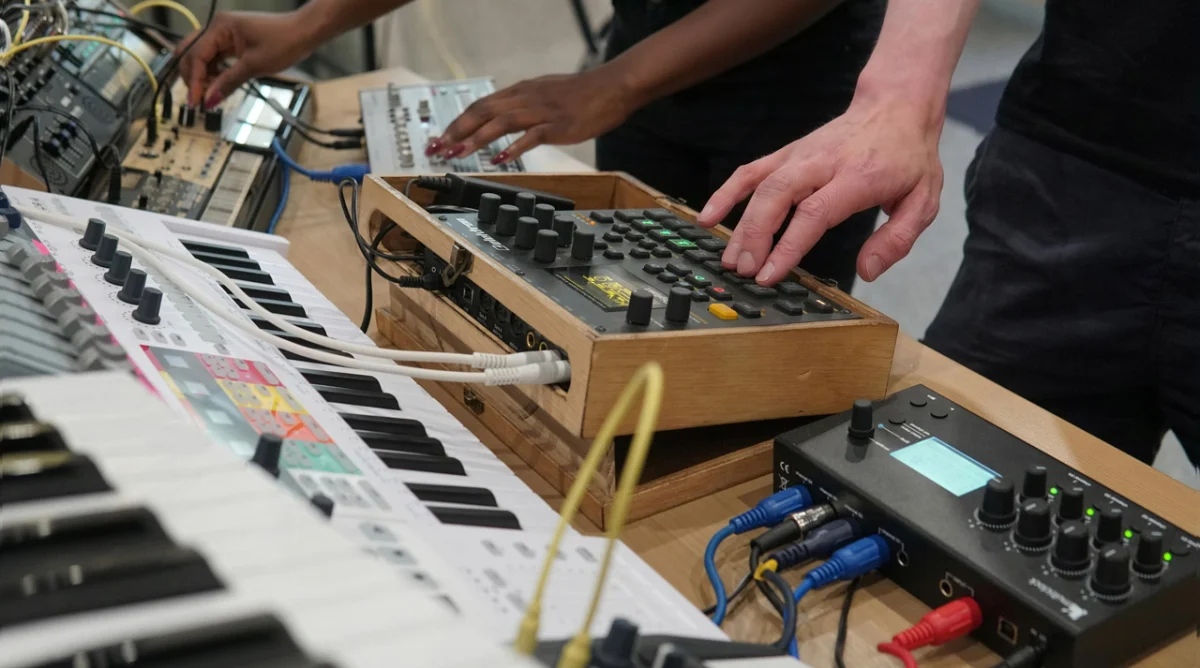
The interactive expo floor is expected to be the centerpiece of the event. Unlike traditional retail-oriented trade shows, the NAESE floor is designed for hands-on engagement. Exhibitors will span a wide array of categories, including manufacturers of analog and digital synthesizers, modular Eurorack components, software-based instruments (VST/AU), MIDI controllers, and outboard signal processors. Additionally, the floor will feature developers of sample libraries and DIY instrument kits, reflecting the growing trend of "maker culture" within the electronic music community.
Complementing the trade floor, the sessions and workshops will offer a structured curriculum for attendees looking to deepen their technical proficiency. These segments are planned to cover a spectrum of topics, such as advanced synthesis techniques, the integration of Artificial Intelligence in music production, spatial audio mixing, and the business of independent sound design. By inviting industry veterans and innovative newcomers to lead these discussions, NAESE aims to foster a culture of mentorship and knowledge sharing.
Performance and Collaborative Spaces
Recognizing that technology is ultimately a tool for artistic output, the expo will integrate a series of live performances throughout the weekend. These showcases are intended to highlight the capabilities of the gear featured on the expo floor, providing a real-world context for the hardware and software on display. Performances will likely range from experimental ambient sets to high-energy electronic dance music, showcasing the versatility of modern sound tools.
The fourth pillar, the open jam spaces, addresses the community-driven nature of the electronic music scene. These areas will be equipped with various hardware configurations, allowing attendees to collaborate spontaneously. This "democratization of the stage" is a deliberate design choice by the organizers to encourage networking and creative cross-pollination among participants who might otherwise only interact in digital forums.
Strategic Timing and the 2027 Horizon
The decision to schedule the inaugural NAESE for April 2027 suggests a long-term planning cycle aimed at ensuring industrial stability and technological relevance. By setting the date several years in advance, the organizers allow manufacturers to align their product release cycles with the event. This lead time also provides the opportunity for the expo to establish partnerships with educational institutions and local government bodies in Cleveland.
From a technological standpoint, 2027 is projected to be a pivotal year for the audio industry. Current trends suggest that by the late 2020s, MIDI 2.0 will have reached widespread adoption, and the integration of machine learning into real-time sound synthesis will have matured significantly. NAESE v1.0 is positioned to be one of the first major North American platforms to showcase these advancements in a consolidated, dedicated environment.
Contextualizing the Electronic Sound Market
The launch of NAESE comes at a time of sustained growth for the electronic musical instrument market. According to industry data, the global market for synthesizers and audio software has seen a steady upward trajectory over the last decade, fueled in part by the accessibility of home recording technology and the resurgence of modular synthesis. While established events like NAMM in California and Superbooth in Berlin serve their respective regions, a gap has been identified for a large-scale, dedicated electronic sound expo in the central and eastern United States.
Cleveland’s Huntington Convention Center provides over 225,000 square feet of exhibit space, offering ample room for the specialized acoustics required for electronic music demonstrations. The city’s infrastructure, including its proximity to major transit hubs and a robust hospitality sector, makes it a logical choice for an event expecting a national and international draw. Furthermore, the presence of the Rock and Roll Hall of Fame and various conservatories in the region provides a cultural backdrop that aligns with the expo’s mission to celebrate musical evolution.
Economic and Industrial Implications
The introduction of NAESE v1.0 is expected to have a tangible economic impact on the city of Cleveland. Large-scale conventions typically generate significant revenue for local businesses, including hotels, restaurants, and transportation services. For the music industry specifically, the expo serves as a vital point of contact for business-to-business (B2B) interactions. Small-scale boutique manufacturers, who often struggle to gain visibility in larger, generalized music trade shows, will have a focused platform to reach their target audience.
Industry analysts suggest that the "boutique" segment of the synthesizer market is particularly reliant on such events. "The tactile nature of electronic instruments—the feel of a knob, the resistance of a slider—cannot be replicated in an online storefront," notes one industry observer. "Events like NAESE are essential for the survival of hardware manufacturers who rely on the physical experience to justify the premium cost of their gear."
Attendee Access and Participation
In a departure from the ticketing models of some larger trade shows, NAESE has opted for a simplified badge structure. For the 2027 event, the organizers have announced that only three-day attendee badges will be offered, emphasizing the importance of a full-immersion experience. Early Bird badges are currently priced at $70, with regular admission set at $85.
This pricing strategy appears designed to maximize accessibility while ensuring a committed audience. By excluding single-day passes, the organizers aim to build a cohesive community atmosphere where attendees and exhibitors can develop relationships over the course of the entire weekend. This model mirrors successful European festivals and tech conferences that prioritize depth of engagement over sheer foot traffic volume.
Technological Trends on Display
While the specific exhibitor list for 2027 remains under development, the expo is expected to reflect several key shifts in audio technology. One major area of focus will likely be the convergence of hardware and software. Hybrid systems that combine the tactile interface of analog gear with the processing power of modern computers are becoming the industry standard.
Furthermore, the DIY (Do-It-Yourself) movement in electronic music is expected to have a significant presence. The rise of open-source hardware and 3D printing has allowed a new generation of inventors to create unique sound-making devices. NAESE’s inclusion of DIY instruments as a core category suggests that the event will provide a platform for these independent creators to showcase their work alongside established corporate entities.
Anticipated Industry Reactions
Early indicators from the electronic music community suggest a positive reception to the announcement of NAESE. Musicians and producers have frequently voiced the need for a dedicated space in North America that focuses specifically on the "electronic" aspect of sound, rather than being a subset of a larger musical instrument show.
Manufacturers are also expected to view the Cleveland location as an advantage. The city’s central location makes it more accessible for East Coast and Midwest-based developers who may find the logistics of West Coast shows prohibitive. The 2027 timeline also allows for the stabilization of global supply chains, which have faced challenges in the semiconductor and electronics sectors in recent years.
Conclusion and Future Outlook
The North American Electronic Sound Expo v1.0 represents a forward-looking investment in the future of audio technology. By combining a trade show, a classroom, a concert hall, and a laboratory, NAESE seeks to create an ecosystem that supports every facet of the electronic sound world.
As April 2027 approaches, the industry will be watching closely to see how this ambitious project takes shape. If successful, NAESE could become a permanent fixture on the international calendar, positioning Cleveland as a key node in the global network of electronic music innovation. For now, the announcement serves as a clear signal that the North American electronic sound community is entering a new era of organization and professionalization.
