

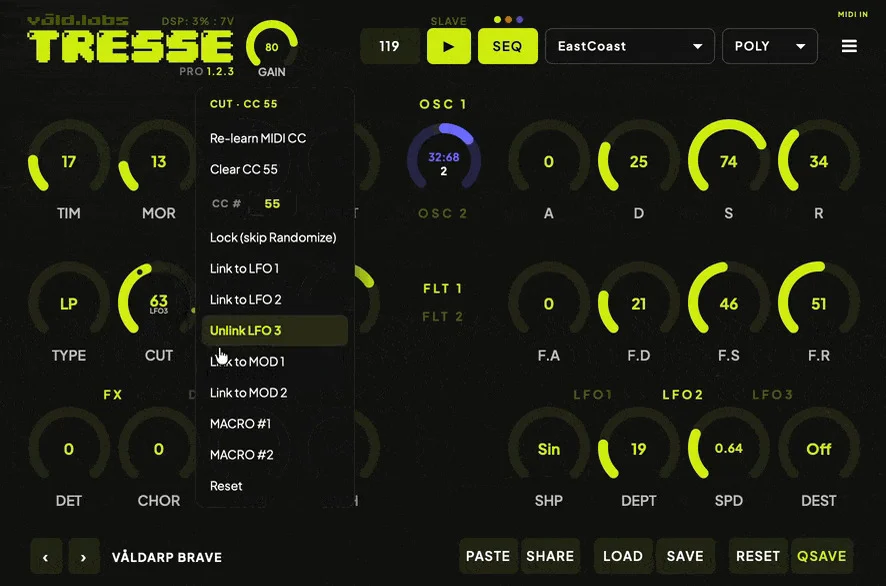
Våld Labs has officially announced the release of TRESSE, a sophisticated two-layer software synthesizer designed to bridge the gap between complex modular synthesis and intuitive digital production. By integrating a vast library of 39 distinct sound engines with a powerful generative sequencer, TRESSE positions itself as a versatile tool for sound designers and electronic music producers. The instrument is built upon a dual-layer architecture, where each layer functions independently, offering eight voices of polyphony and access to a diverse array of synthesis methods. This release marks a significant expansion of the Våld Labs ecosystem, bringing high-end generative capabilities to the macOS and Windows platforms at a highly competitive price point.
Architectural Overview of TRESSE
The core of TRESSE’s power lies in its dual-layer structure. Unlike traditional synthesizers that rely on a single signal path, TRESSE allows users to stack or split two entirely different synthesis environments. Each of these two layers is equipped with its own dedicated sound engine selection, filter section, and envelope generators. With eight voices per layer, the synthesizer can produce complex, 16-voice multi-timbral textures, ranging from thick, evolving pads to intricate rhythmic structures.
The internal routing of the instrument is designed for maximum flexibility. Users can process layers separately or combine them to create hybrid sounds that blend different synthesis paradigms. This architecture is particularly beneficial for genres like techno, ambient, and cinematic scoring, where the interplay between shifting harmonic content and rhythmic stability is paramount. The inclusion of 39 engines ensures that the sonic palette is expansive, covering everything from classic subtractive synthesis to modern physical modeling and speech synthesis.
The Convergence of Open-Source Heritage and Proprietary Innovation
A defining feature of TRESSE is its extensive library of sound engines, which is split between established open-source technology and new, proprietary developments. Out of the 39 available engines, 24 are based on the "Classic Plaits" algorithms. Originally developed by Emilie Gillet for Mutable Instruments, the Plaits module became a cornerstone of the Eurorack modular world due to its "macro-oscillator" approach, which distills complex synthesis techniques into a few highly musical parameters.
By incorporating these 24 engines, TRESSE provides users with access to:
- Virtual Analog modeling for classic waveforms.
- Frequency Modulation (FM) for metallic and percussive tones.
- Additive synthesis for organ-like and harmonic textures.
- Granular and formant synthesis for vocal-like qualities.
- Physical modeling of strings, pipes, and bells.
Supplementing these established algorithms are 15 original engines developed internally by Våld Labs. These proprietary engines are designed to complement the Plaits-based oscillators, offering unique textures and modern digital synthesis techniques that expand the instrument’s range beyond traditional modular emulations. The synergy between these two sets of engines allows TRESSE to function as a comprehensive "museum" of synthesis, housed within a single software interface.
Advanced Generative Sequencing via the VEKTE Engine
TRESSE distinguishes itself from standard VST instruments through the inclusion of the VEKTE sequencer. Rather than relying solely on static MIDI input, TRESSE utilizes a generative approach to pattern creation. Each of the two layers possesses its own independent pattern lane within the VEKTE sequencer, allowing for polyrhythmic interactions and complex rhythmic counterpoint.
The sequencer features seven distinct generative algorithms. These algorithms can be used to create evolving melodies and drum patterns that change over time based on user-defined constraints. To ensure musicality, the sequencer includes:
- Scale and Chord Constraints: Users can lock the generative output to specific musical scales or harmonic structures, ensuring that even the most chaotic algorithmic outputs remain in key.
- Probability Controls: This allows for "conditional" notes, where a step only triggers based on a percentage chance, adding a layer of unpredictability common in high-end modular systems.
- Swing and Humanization: These parameters move the sequencer away from the rigid "on-the-grid" feel of digital production, introducing micro-timing offsets that mimic the imperfections of a human performer.
The VEKTE engine effectively turns TRESSE into a self-contained composition tool. A producer can set the parameters, choose an algorithm, and allow the synthesizer to "perform" while they focus on real-time modulation and filter sweeps.
Modulation and Humanization Parameters
To breathe life into its 39 sound engines, TRESSE features an extensive modulation matrix. The instrument includes three independent Low-Frequency Oscillators (LFOs) per layer, which can be mapped to almost any parameter within the synth engine. These LFOs provide the necessary movement for evolving textures, ranging from subtle pitch vibrato to drastic timbral shifts.
In addition to the LFOs, TRESSE introduces two "Generative MOD" lanes. These lanes function similarly to the sequencer but produce modulation data instead of note data. By applying generative logic to parameters such as filter cutoff, engine "morphed" states, or FM depth, the synthesizer can produce sounds that never repeat exactly the same way twice. This level of movement is a hallmark of "West Coast" synthesis philosophy, emphasizing organic, shifting timbres over static presets.
The humanization controls extend beyond the sequencer and into the synthesis engine itself. By introducing slight variations in oscillator start times, envelope stages, and filter tracking, TRESSE avoids the "machine-gun effect" often associated with digital plugins, providing a more "analog" and lived-in sonic character.
Market Context and the Evolution of the Software Synthesizer
The release of TRESSE comes at a time when the software synthesizer market is increasingly divided between high-priced flagship workstations and specialized boutique tools. By offering 39 engines and a generative sequencer for €19.99, Våld Labs is challenging the traditional pricing models of the industry.
Historically, accessing 24 engines based on Plaits hardware would require a significant investment in modular gear or the use of free, open-source software like VCV Rack. However, VCV Rack requires a specific workflow that may not suit every producer. TRESSE provides these engines in a streamlined, "fixed-architecture" format that fits directly into a standard Digital Audio Workstation (DAW) as a VST3 or Audio Unit (AU) plugin.
Industry analysts suggest that the trend of porting Eurorack concepts to the DAW is accelerating. As computer processing power increases, the ability to run multiple instances of complex oscillators—which were once hardware-intensive—has become feasible for the average bedroom producer. TRESSE represents a peak in this democratization, offering professional-grade synthesis tools at a price point accessible to hobbyists and professionals alike.
Pricing, Availability, and Future Development Roadmap
TRESSE is currently available for purchase through the official Våld Labs website. The desktop version, compatible with both macOS and Windows, is offered as a one-time purchase of €19.99. This "no-subscription" model has been praised by the user community, as it provides lifetime access to all 39 engines and all future 1.x version updates without recurring fees.
Furthermore, Våld Labs has confirmed that an iPhone and iPad version of TRESSE is currently in active development. This move into the iOS music production space (often referred to as the "Mobile Music" or "AUv3" scene) is a strategic step for the company. The mobile platform has seen a surge in generative music apps, and TRESSE’s touch-friendly potential and efficient coding make it an ideal candidate for mobile production.
The developer has stated that the desktop version includes the full suite of features from day one, ensuring that early adopters have access to the complete synthesis and sequencing power of the instrument immediately upon installation.
Technical Impact on Modern Electronic Music Production
The broader implications of TRESSE’s entry into the market revolve around the concept of "generative workflow." In traditional electronic music production, the artist manually draws notes into a piano roll. With TRESSE, the artist acts more as a "curator" or "conductor," setting the rules of the system and then capturing the most interesting results.
This shift in methodology is particularly relevant in the techno and experimental scenes, where the complexity of the sound is often more important than a traditional melodic hook. The ability to run two independent generative layers allows for the creation of "self-playing" patches that can serve as the foundation for entire tracks.
From a technical standpoint, the inclusion of the Plaits engines ensures that TRESSE is highly CPU-efficient. The original hardware was designed to run on relatively modest ARM processors, meaning that even when running multiple voices and layers in a DAW, TRESSE maintains a low processing footprint. This efficiency, combined with its deep modulation capabilities and aggressive pricing, establishes TRESSE as a significant new contender in the competitive landscape of digital synthesis.
