

The independent music sector, which now accounts for a significant and growing portion of the global recorded music market, is currently facing a period of unprecedented saturation. With over 100,000 tracks uploaded to digital streaming platforms daily, the challenge for the modern independent artist has shifted from mere production to the more complex necessity of professional networking and strategic collaboration. Industry experts suggest that while digital tools have democratized the ability to record music, the "human element" of networking remains the primary differentiator for artists seeking sustainable career growth. Networking, often viewed by emerging creators as an intimidating hurdle, is increasingly being redefined as a multifaceted community-building exercise that extends far beyond the traditional confines of the recording studio or the concert stage.
The Macroeconomic Context of Independent Music Networking
To understand the necessity of these networking strategies, one must examine the current state of the music industry. According to data from MIDiA Research, the independent artist segment is the fastest-growing part of the global music business, generating over $1.2 billion in revenue in recent years. However, as the barrier to entry has lowered, the competition for listener attention and professional opportunities has intensified. In this environment, an artist’s "social capital"—the value derived from their professional relationships—often dictates their access to festivals, distribution deals, and high-level collaborative projects. The shift toward a "creator economy" means that musicians can no longer afford to operate in isolation; they must instead function as entrepreneurs who actively curate a professional ecosystem.
Integration with Local Multi-Disciplinary Arts Scenes
One of the most effective, yet frequently overlooked, avenues for networking is the integration into local, non-musical arts communities. While musicians often focus their efforts on venues and recording studios, the broader arts scene—encompassing visual arts, theater, and performance poetry—offers a fertile ground for unique collaborations. Historical data suggests that many of the most successful musical movements, from the New York punk scene of the 1970s to the modern "indie-sleaze" revival, were born out of cross-disciplinary interaction.

By attending gallery openings or theater workshops, musicians position themselves as potential solution-providers for other creatives. A sculptor may require a bespoke soundscape for a public installation, or a local theater company may lack the budget for licensed music and seek an original score. These interactions do more than just provide immediate work; they diversify an artist’s portfolio and introduce their sound to audiences that may not frequent traditional music venues. Furthermore, these collaborations often lead to "synch" opportunities—placing music in visual media—which remains one of the most lucrative revenue streams for independent artists.
The Rise of Facilitated Interaction: Workshops and Jam Sessions
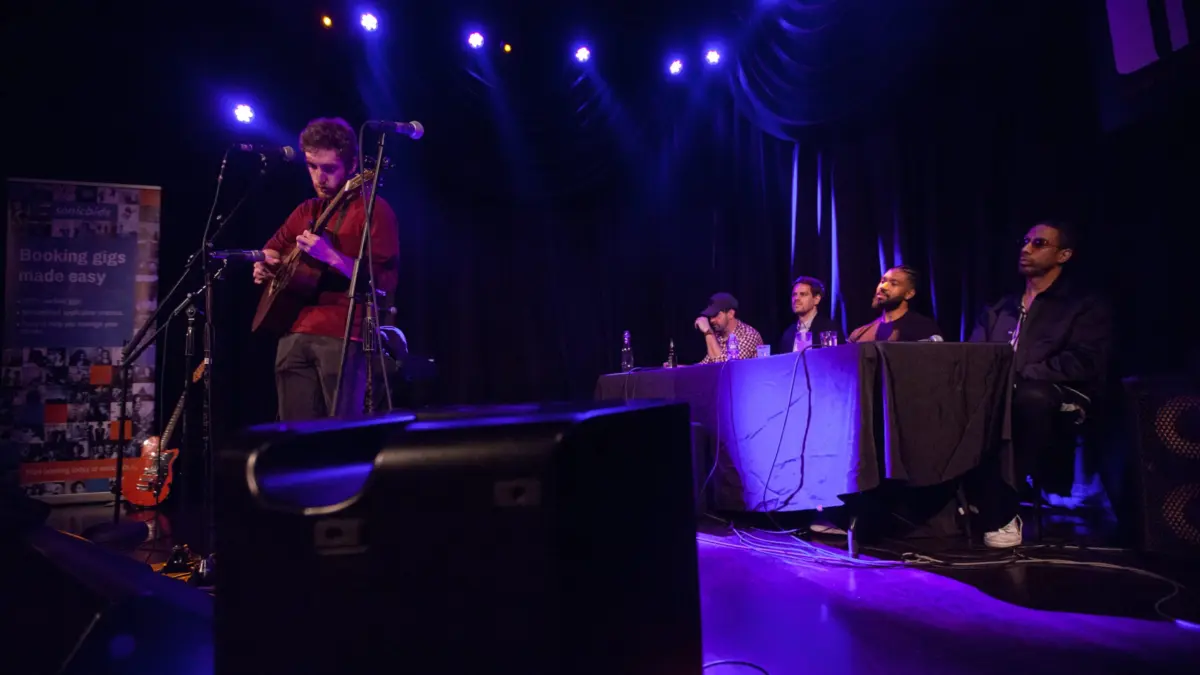
As the industry moves away from the traditional A&R (Artists and Repertoire) model, the responsibility for talent discovery has shifted to community-led initiatives. Events such as the Feedback Collective Panel Discussion or songwriting workshops, often hosted by organizations like Sonicbids, serve as critical touchpoints for professional development. These structured environments remove the awkwardness of "cold" networking by providing a shared objective: the refinement of the craft.
Hosting a jam session or a technical workshop allows an artist to transition from a seeker of opportunities to a facilitator of them. This shift in positioning is significant. By creating a space for other musicians to gather, an artist establishes themselves as a "node" in their local network. Data indicates that musicians who engage in regular collaborative sessions are 40% more likely to be referred for session work or touring positions. These sessions also serve as informal R&D (Research and Development) labs, where the blending of disparate genres—such as the fusion of jazz improvisation with rock structures—can lead to the development of a unique "sonic signature" that stands out in a crowded digital marketplace.
Digital Collaboration Beyond Mainstream Social Media
While platforms like Instagram and TikTok are essential for fan engagement, they are often less effective for deep professional networking. The industry is seeing a move toward specialized platforms designed specifically for creative collaboration, such as BandLab, SoundCloud, and Discord. These platforms allow for a "version control" style of music creation, where artists from different geographical locations can contribute stems and layers to a single project.

The impact of remote collaboration became particularly evident during the global lockdowns of 2020-2021, which saw a 70% increase in the use of cloud-based digital audio workstations (DAWs). For the independent musician, this means that their network is no longer limited by their physical location. By engaging thoughtfully with other artists’ work—offering constructive feedback rather than generic praise—musicians can build "digital rapport." This often leads to "split releases" or collaborative EPs, which allow two or more artists to pool their fanbases, effectively doubling their reach with a single release.
The Festival Ecosystem and the Value of Professional Volunteering
Music festivals represent the pinnacle of industry networking, yet the cost of attendance or the difficulty of securing a performance slot can be prohibitive for emerging artists. Professional volunteering offers a strategic workaround. By working within the infrastructure of a festival—whether in artist relations, stage management, or technical support—musicians gain "behind-the-scenes" access to industry decision-makers.
The chronology of many successful careers includes a period of "paying dues" through such roles. Volunteering provides a firsthand look at the logistics of large-scale music production and allows artists to observe the professional conduct of established acts. From a networking perspective, the "green room" or the production office is where the real business of music happens. An artist who is seen as reliable, hardworking, and professional in a volunteer capacity is far more likely to be remembered by a festival booker when a last-minute opening appears on a secondary stage.
Leveraging Fanbase as a Networking Resource
The modern music industry has seen a shift toward the "Direct-to-Consumer" (D2C) model, where the relationship between the artist and the fan is more interactive than ever before. Independent musicians are increasingly utilizing their existing fanbases not just for financial support through platforms like Patreon or Kickstarter, but as a networking engine.

By involving fans in the creative process—through polls, surveys, or Q&A sessions—artists can tap into the professional networks of their listeners. A fan may have a connection to a local venue, a graphic designer, or another musician. This "crowdsourced networking" fosters a sense of community ownership over the artist’s career. When fans feel like they are part of the journey, they become "brand ambassadors," actively seeking out opportunities to promote the artist within their own circles. This strategy aligns with the "1,000 True Fans" theory, which posits that an artist does not need mainstream stardom to be successful, but rather a dedicated core of supporters who facilitate both financial and professional growth.
Analysis of Implications: The Long-Term Impact of Collaborative Networking
The transition from a solitary creative process to a networked, collaborative one has profound implications for the longevity of an independent music career. Firstly, it mitigates the risk of creative burnout. By sharing the burden of promotion, production, and performance with a network of peers, artists can maintain a higher level of output over a longer period.
Secondly, a robust network provides a "safety net" in a volatile economy. When one revenue stream—such as live performance—is disrupted, an artist with a diverse network can pivot to session work, teaching, or digital collaboration. Finally, the "cross-pollination" of audiences through collaboration is the most organic and cost-effective way to grow a brand. In an era where paid social media advertising is seeing diminishing returns, the "warm lead" of a collaborative recommendation remains the most powerful tool for artist discovery.
Conclusion: Navigating the Future of the Music Industry
The strategies outlined—cross-disciplinary engagement, facilitated workshops, specialized digital tools, professional volunteering, and fan-based networking—represent a holistic approach to career development in the 21st century. The evidence suggests that the most successful independent musicians are those who view themselves as part of a larger ecosystem.

As the industry continues to evolve, the ability to build and maintain professional relationships will likely remain more important than any single technological innovation. For the independent musician, the message is clear: the path to professional success is rarely traveled alone. By embracing the complexity of networking and seeking out unexpected partnerships, artists can amplify their voices and secure their place in the future of the global music landscape. The shift from "DIY" (Do It Yourself) to "DIT" (Do It Together) is not just a trend; it is the new standard for professional survival in the music world.
