

The global music industry is currently experiencing a profound shift in power dynamics, characterized by the rapid expansion of the independent sector. According to data from MIDiA Research, independent artists are the fastest-growing segment of the music business, generating over $1.2 billion in annual revenue as of the early 2020s. However, this democratization of music production and distribution has led to a highly saturated marketplace. For the independent musician, the ability to produce high-quality audio is no longer the sole determinant of success; rather, the cultivation of professional networks and strategic collaborations has emerged as a critical pillar for career sustainability. Networking, once viewed as a daunting administrative hurdle, is now recognized by industry analysts as a fundamental creative catalyst that drives innovation and expands market reach.
The Evolution of the Independent Music Ecosystem
In previous decades, the trajectory of a musical career was largely dictated by a centralized gatekeeper system, where record labels provided the infrastructure for networking, promotion, and collaboration. The modern "creator economy" has dismantled these traditional barriers, placing the onus of business development directly on the artist. This shift requires a transition from a solitary creative mindset to a community-oriented professional model. Industry experts suggest that the most successful independent artists operate as "micro-enterprises," where networking serves as the primary engine for research, development, and market penetration.
The following analysis explores five strategic frameworks for networking that transcend traditional industry mixers, offering independent musicians a roadmap to build social capital and creative resilience in a competitive landscape.
1. Cross-Disciplinary Engagement within Local Art Ecosystems
The concept of a "local scene" has traditionally focused on genre-specific venues, such as rock clubs or jazz lounges. However, modern industry trends indicate that the most innovative collaborations often occur at the intersection of different artistic disciplines. By engaging with local art galleries, theater troupes, and performance poetry collectives, musicians can access untapped audiences and unique creative opportunities.

The Synergy of Visual and Auditory Arts
Visual artists and sculptors frequently require atmospheric soundscapes for gallery openings or permanent installations. These partnerships offer musicians a platform to showcase their work in a high-prestige environment that is not typically saturated with musical competition. Furthermore, the synchronization of music with visual art can lead to commissions for multimedia projects, a sector that has seen increased demand as digital art and NFTs continue to integrate with traditional gallery spaces.
Theatrical and Cinematic Integration
Local theater companies and independent filmmakers represent a significant market for original scores and sound design. Unlike traditional live performances, these collaborations result in "sync" opportunities—synchronizing music with visual media—which is one of the most lucrative revenue streams for independent artists. Networking within these circles allows musicians to diversify their portfolios and build credits that are highly valued by music supervisors and talent scouts.
2. Institutionalizing Peer Review: The Sonicbids Case Study
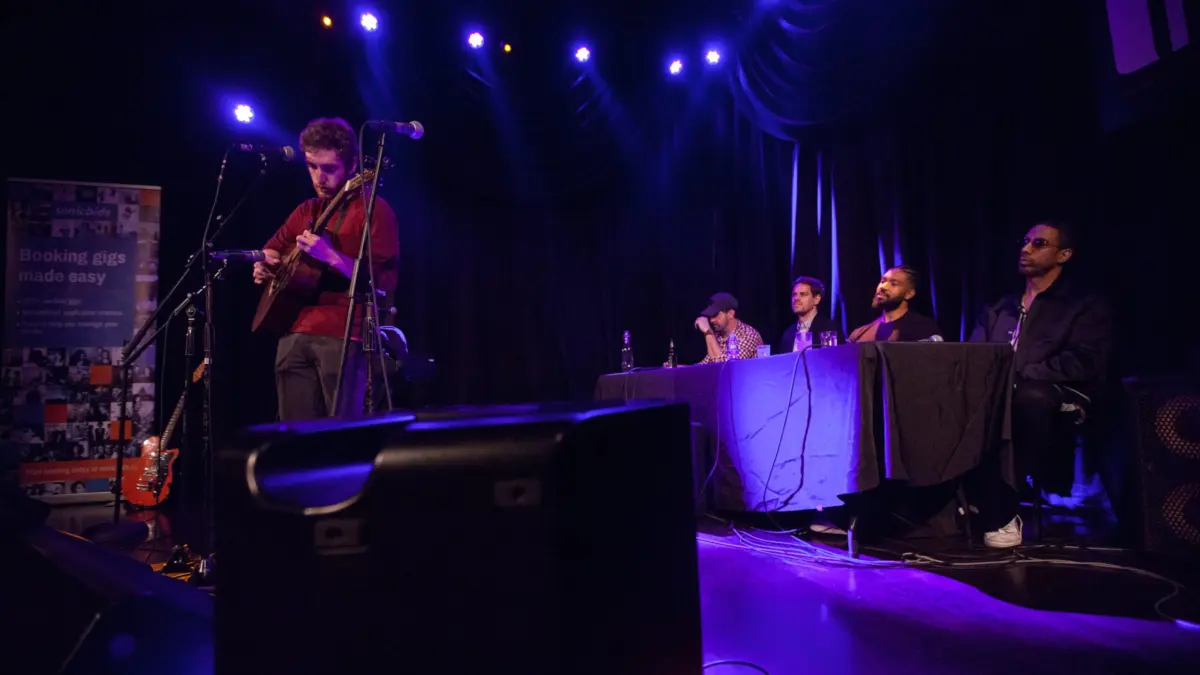
The transition from informal socialization to structured professional development is exemplified by initiatives such as the "Feedback Collective," hosted by Sonicbids. These events, which include panel discussions and songwriting workshops, provide a formalized environment for musicians to interact with peers and industry veterans.
The Role of Feedback Loops in Career Longevity
Data suggests that artists who participate in structured peer-review environments see a measurable improvement in production quality and market readiness. The Feedback Collective Panel Discussion model allows artists to receive objective critiques of their work, moving beyond the "echo chamber" of friends and family. This process mimics the A&R (Artists and Repertoire) function of major labels, providing independent artists with the professional rigor necessary to compete at a high level.
Workshops as Networking Hubs
Hosting or attending jam sessions and workshops serves a dual purpose: skill acquisition and social bonding. When a rock guitarist collaborates with a jazz saxophonist in a workshop setting, the resulting "genre-bending" often leads to the creation of a unique sonic identity. This cross-pollination of styles is a key driver of contemporary music trends, where hybrid genres frequently dominate streaming charts.

3. The Digital Frontier: Beyond Mainstream Social Media
While platforms like Instagram and TikTok are essential for fan engagement, they are often less effective for deep professional collaboration. Industry analysts point to a second tier of "creator-centric" platforms, such as BandLab, SoundCloud, and Discord, as the true engines of digital networking.
Remote Collaboration and the Global Home Studio
The rise of high-speed internet and sophisticated Digital Audio Workstations (DAWs) has made remote collaboration a standard industry practice. Platforms like BandLab allow musicians to share stems and track layers in real-time across different time zones. This "global home studio" model enables an independent artist in London to collaborate with a producer in Tokyo, effectively merging their respective fanbases and expanding their international footprint.
Strategic Engagement with Peer Content
Meaningful digital networking requires a shift from passive consumption to active engagement. Professional musicians utilize these platforms to leave thoughtful, technical feedback on the work of their peers. This approach fosters a culture of reciprocity; an artist who provides value to others is more likely to receive collaborative proposals in return. This method of "bottom-up" networking has been cited as the origin story for several platinum-selling independent projects in the electronic and hip-hop genres.
4. Strategic Volunteering and Industry Integration
Music festivals and large-scale industry events represent the apex of networking opportunities, yet the barrier to entry for performing can be high. Strategic volunteering offers a "backdoor" into these professional circles, providing access to areas that are typically off-limits to the general public.
The Value of "Backstage" Social Capital
Volunteering in logistical or technical roles at festivals allows musicians to observe the inner workings of the industry. It provides direct proximity to event organizers, stage managers, and touring professionals. Analysts note that the "soft skills" developed during these shifts—reliability, communication, and problem-solving—are often more impressive to industry veterans than a cold-call demo submission.

Timeline of Industry Integration
Professional development through volunteering often follows a predictable chronology:
- Phase 1 (Observation): Gaining an understanding of professional standards and technical requirements.
- Phase 2 (Interaction): Building rapport with industry staff and fellow artists through shared labor.
- Phase 3 (Conversion): Leveraging established relationships to secure future performance slots or collaborative projects.
5. Fanbase Activation and Direct-to-Fan (D2F) Networking
The final frontier of networking involves a paradigm shift in how artists view their audience. Rather than treating fans as passive consumers, modern independent artists are increasingly viewing them as active stakeholders and networking agents.
The "Superfan" as a Networking Catalyst
Data from platforms like Patreon and Discord show that "superfans"—those who contribute a disproportionate amount of engagement and revenue—often have professional connections that can benefit the artist. By utilizing surveys, polls, and direct Q&A sessions, artists can tap into the collective intelligence of their community. A fan might be a graphic designer, a venue owner, or a connection to another artist, providing a warm introduction that would otherwise be impossible to obtain.
The Impact of Collaborative Transparency
Involving fans in the creative process—such as asking for input on potential collaborators—increases the "emotional investment" of the audience. This transparency not only strengthens the artist-fan bond but also serves as a market research tool, ensuring that future collaborations align with the interests of the core demographic.
Broader Impact and Industry Implications
The implications of these networking strategies extend beyond individual career growth. On a macro level, the rise of independent collaborative networks is fostering a more resilient and diverse music economy. By bypassing traditional gatekeepers and building horizontal support structures, independent musicians are creating a sustainable alternative to the major label model.

Economic Benefits of Collaboration
Collaboration serves as a powerful tool for cost mitigation. By sharing production costs, marketing budgets, and touring expenses, independent artists can achieve a level of scale that would be financially impossible to sustain alone. Furthermore, "split" agreements on streaming royalties provide a form of passive income that diversifies an artist’s revenue stream.
The Future of the Independent Musician
As the industry continues to evolve, the distinction between "musician" and "entrepreneur" will continue to blur. The ability to navigate complex social and professional landscapes will remain as vital as the ability to write a compelling melody. The strategies outlined—cross-disciplinary engagement, institutional workshops, digital collaboration, strategic volunteering, and fanbase activation—constitute a comprehensive framework for the modern artist to thrive.
In conclusion, networking is not merely an adjunct to a music career; it is the infrastructure upon which successful careers are built. For the independent musician, every interaction is a potential catalyst for creative breakthrough. By adopting a professional, strategic approach to community building, artists can amplify their voices in an increasingly crowded global stage, ensuring that their music reaches the audiences it deserves. The shift from a solitary creator to a collaborative professional is the defining transition for the 21st-century musician, and those who master this art will be the ones to lead the next era of musical innovation.
