

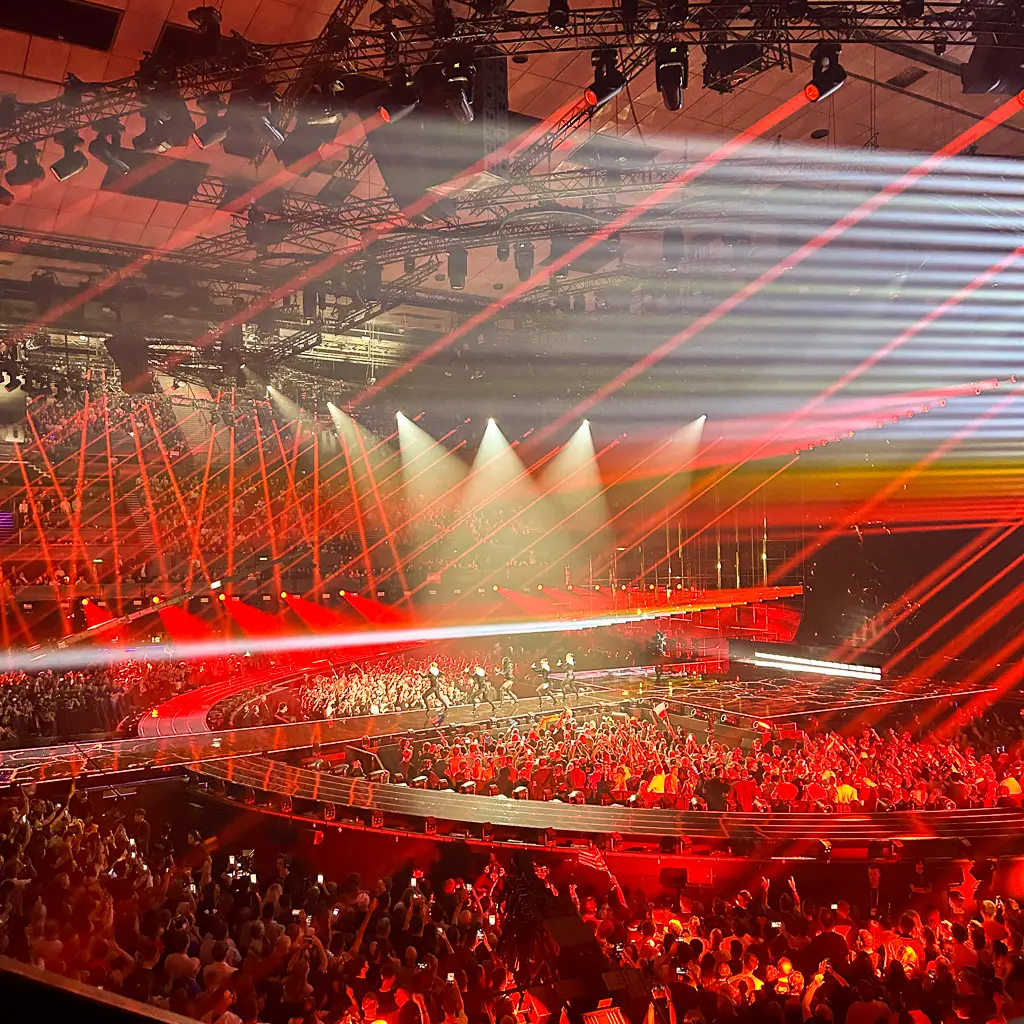
The rapid evolution of lighting technology in the entertainment industry has brought unprecedented creative possibilities to stage and television production, yet it has also introduced complex safety challenges that remain largely misunderstood by end-users and manufacturers alike. At the leat con 2026 conference, a series of lectures and panel discussions highlighted a growing concern regarding high-intensity radiation densities and the specific dangers posed by "blue light" exposure. Central to this debate is the work of Fabian Oving, a research associate at the Lighting Laboratory of the Hamburg University of Applied Sciences (HAW Hamburg), whose recent findings suggest that current industry standards for assessing ocular risk may be insufficient for real-world applications. As the industry shifts toward increasingly powerful LED and laser-based fixtures, the distinction between Risk Group 2 (RG2) and Risk Group 3 (RG3) has become a critical focal point for occupational safety.
The Biological Mechanism of Blue Light Hazard
To understand the urgency of the discussions at leat con, one must first distinguish between the two primary types of light-induced ocular damage: photochemical and photothermal. Photothermal damage occurs when high-intensity light, typically from infrared or visible spectrums, causes a rapid increase in temperature in the retinal tissue, leading to immediate thermal protein denaturation. In contrast, the "blue light hazard" is primarily a photochemical process. It involves shorter wavelengths, typically between 400 and 500 nanometers, which possess enough energy to cause chemical changes in the retinal pigment epithelium and photoreceptors.
Over time, cumulative exposure to these wavelengths can lead to the formation of reactive oxygen species, causing oxidative stress that may result in permanent vision loss or the acceleration of macular degeneration. The Federal Institute for Occupational Safety and Health (BAUA) in Germany has developed simplified formulas to help technicians estimate these risks, but as Oving pointed out during his presentation, these theoretical models often fail to account for the dynamic nature of stage environments.
The 18-Second Threshold and the HAW Hamburg Eye-Tracking Study
A significant portion of the current safety guidelines revolves around maximum permissible exposure (MPE) times. Under certain conditions, the BAUA formula might suggest a maximum exposure limit of just 18 seconds within a single workday for a specific light source. However, the practical application of this number is fraught with difficulty. An 18-second limit implies that the same specific receptor on the retina is illuminated by the same light source from the same angle for that total duration.
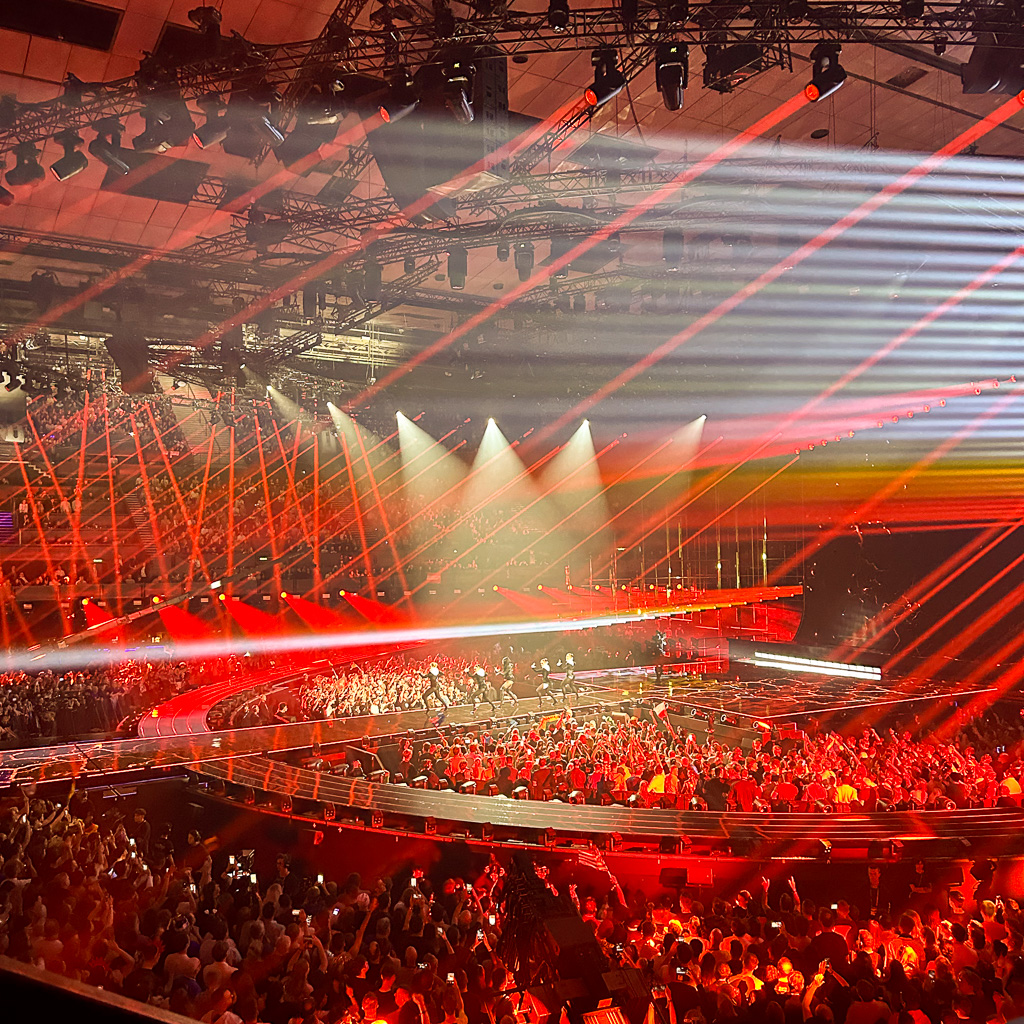
To bridge the gap between laboratory theory and stage reality, HAW Hamburg’s Lighting Laboratory has implemented an advanced eye-tracking system. This research aims to quantify exactly how long performers, speakers, and technicians actually look at high-intensity light sources or maintain a fixed gaze in a direction where a peripheral light source might be impacting the retina.
"The goal is to obtain tangible numbers," Oving explained during the conference. "It is not enough to know the theoretical limit is 18 seconds if we do not know how long a performer actually fixes their gaze on a specific point, such as a conductor or a teleprompter, while being hit by a side-light or a front-of-house spot."
The research has identified specific high-risk scenarios, such as musical theater, where performers often fixate on a conductor’s monitor or the conductor themselves for extended periods. In these instances, the actor’s position and gaze remain static, significantly increasing the risk of exceeding the cumulative 18-second photochemical threshold. Conversely, in traditional drama or "living" stage performances, the constant movement of the actors and the shifting of their gaze may naturally mitigate the risk, as the light does not hit the same retinal receptors for a sustained period.
The Complexity of Risk Group Categorization
The classification of lighting fixtures into Risk Groups (RG) is governed by international standards, specifically EN 62471. However, the transition between categories is often opaque to the end-user.
- Risk Group 0 (Exempt): No hazard.
- Risk Group 1 (Low Risk): Safe for most applications; the natural aversion response (blinking) limits exposure.
- Risk Group 2 (Moderate Risk): Hazard depends on the duration of exposure.
- Risk Group 3 (High Risk): Hazardous even for short or momentary exposure.
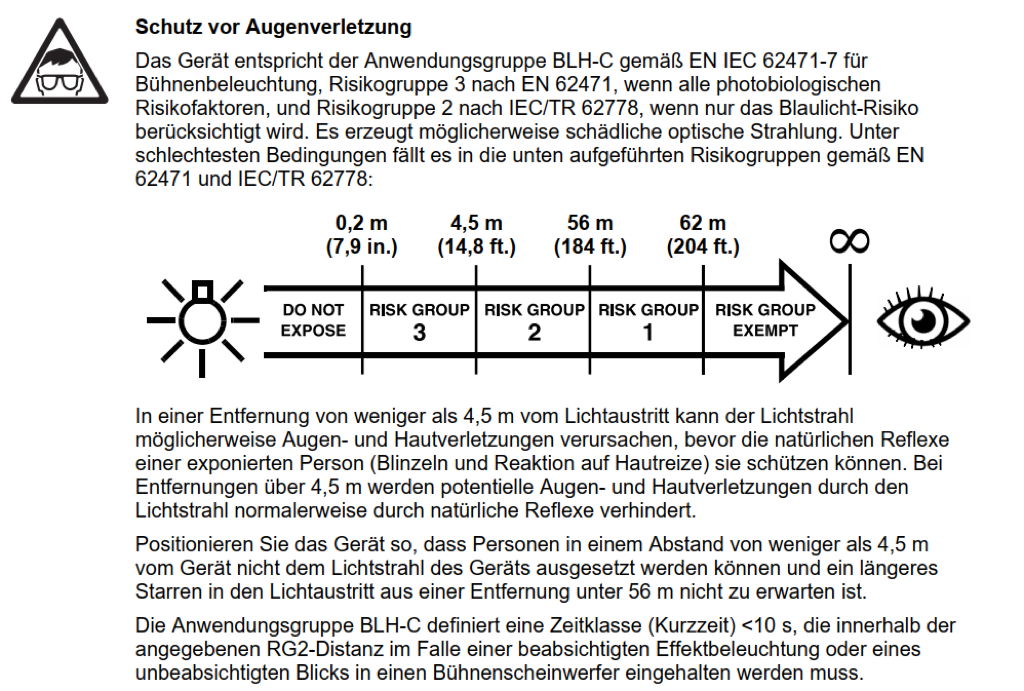
A primary criticism raised at leat con is the massive scaling within Risk Group 2. A fixture can be classified as RG2 whether its safe exposure limit is 100 seconds or a mere 0.25 seconds. For a lighting technician, this lack of granularity makes it nearly impossible to conduct an accurate risk assessment without detailed supplemental data from the manufacturer. Furthermore, some manufacturers measure their fixtures at a distance of one meter, as suggested by the general standard, while others use "realistic" distances of 10 or 12 meters, citing the DIN-Spec 62778 for stage lighting. This inconsistency leads to situations where two fixtures with similar outputs are labeled with different risk groups simply because the testing methodology differed.

Industry Transparency and the Call for a Roundtable
The discussions in Hamburg revealed a significant level of frustration among users regarding manufacturer documentation. While some companies, such as Martin Professional, have been praised for providing clear "distance plots" that show exactly where a fixture transitions from RG3 to RG2 and RG0, many others provide only the bare minimum of information. In some cases, manufacturers have reportedly refused to release detailed R&D safety data, citing proprietary concerns.
This lack of transparency has led to a call for an industry-wide "Roundtable" to standardize how light-source hazards are communicated. The objective would be to ensure that every fixture includes a standardized label and a manual that specifies:
- The distance at which the fixture enters each Risk Group.
- Whether the classification is based on photochemical or photothermal risks.
- The specific measurement distance and standards used during testing.
Without this information, the "safety instructions" in many manuals remain functionally useless for professional risk assessments. For instance, a manual stating a device is "Risk Group 3" without specifying distance provides no actionable guidance for a technician hanging that light 20 meters above a stage.
Technological Solutions: The "Sensor Sphere" Project
Looking toward the future, Oving and his team at HAW Hamburg are exploring the development of a "Sensor Sphere"—a specialized measurement tool designed for use during the setup and "focusing" phase of a production. This device would be placed on stage at the performer’s head height and would feature sensors capable of measuring intensity, color temperature, and radiation density from all directions.
The device would interpret the data and provide a simple "traffic light" (red-orange-green) feedback system to the lighting designer. For example, if a specific front-light at a 45-degree angle exceeds safe photochemical limits for a 20-minute scene, the sphere would alert the technician to either reduce the intensity, change the color temperature (as cooler, bluer light is more hazardous), or adjust the angle. This would move safety from a theoretical calculation to a real-time, site-specific verification process.
Analysis of Implications for the Entertainment Sector
The findings presented by HAW Hamburg have broad implications for the legal and insurance landscapes of the entertainment industry. If a performer or technician were to suffer retinal damage, the adequacy of the employer’s "Gefährdungsbeurteilung" (risk assessment) would be under intense scrutiny. Relying on vague manufacturer labels that do not account for actual throw distances may no longer be legally defensible.
Furthermore, there is a growing aesthetic and environmental argument for reducing light intensities. As Oving noted, the trend in modern concerts is toward "more and brighter," yet high-quality lighting design is fundamentally about contrast, not raw output. By utilizing smaller, lower-wattage fixtures or operating high-power LEDs at lower percentages, designers can achieve the same visual impact while significantly lowering the ocular risk to everyone in the venue.
Practical Recommendations for Lighting Professionals
Until a unified industry standard is reached, HAW Hamburg and the BAUA suggest several practical steps for those in the field:
- Request Distance Plots: Before purchasing or renting equipment, technicians should demand data showing the risk group transitions relative to distance.
- Utilize the BAUA Simplified Method: For those without expensive monochromators, the BAUA offers a method to estimate blue light hazard using a standard Lux meter and the light’s color temperature. High-Kelvin (cool white) sources require much more caution than warm-white or amber sources.
- Implement "Safe Zones": Designers should avoid placing high-intensity fixtures at eye level or in positions where performers must fixate on a specific point near the light source for long durations.
- Prioritize Education: Lighting departments should invest in training to understand the difference between photothermal and photochemical hazards, ensuring that safety is integrated into the creative process rather than treated as an afterthought.
As the industry moves toward 2027 and beyond, the intersection of high-power optical technology and human biology will remain a critical frontier. The work being done in Hamburg serves as a vital reminder that while the "show must go on," it should not come at the cost of the eyesight of those who make it possible. The transition from "Risk Group 2" to "Risk Group 3" is not merely a technicality; it is a boundary that defines the safety of the modern workplace.
