

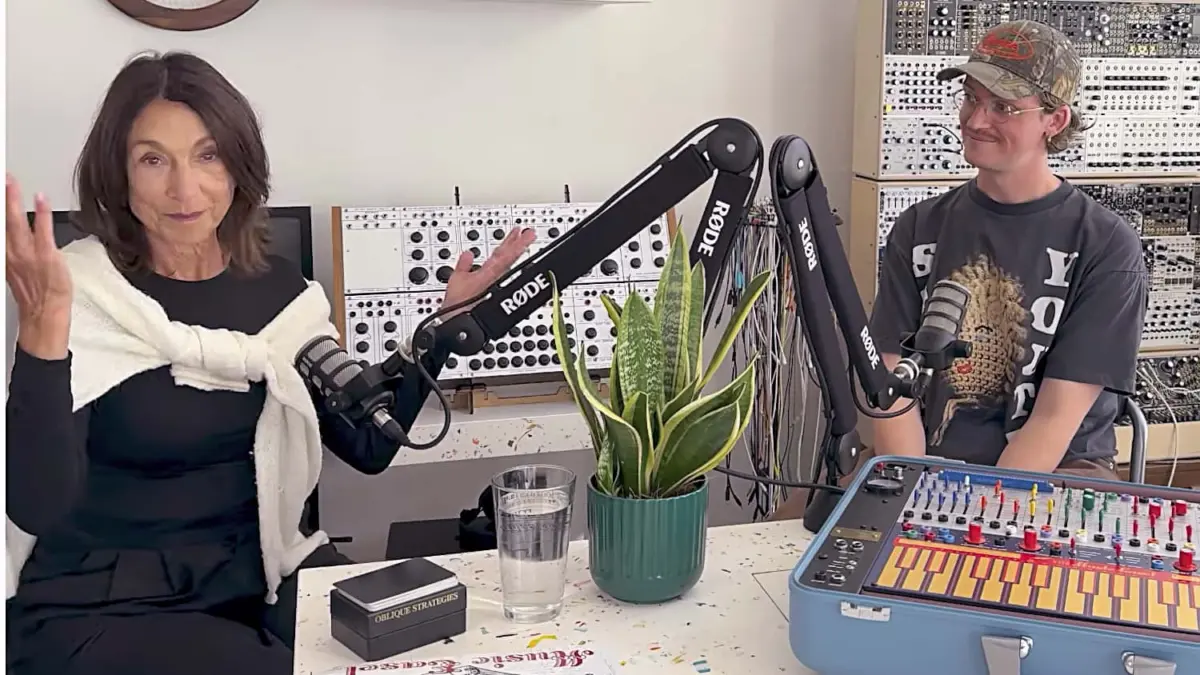
The legendary electronic music pioneer Suzanne Ciani recently visited the Signal Sounds showroom in Glasgow to provide an in-depth exploration of her career, her technical philosophy, and her enduring relationship with the Buchla modular synthesizer. This rare interview, conducted ahead of her scheduled performance at the Sonica festival, offers a comprehensive look at a career that has spanned more than five decades, moving from the avant-garde circles of 1960s California to the forefront of modern electronic composition. Ciani, often referred to as the "Diva of the Diode," remains one of the most significant figures in the history of synthesis, and her dialogue with Luke and Tom of Signal Sounds serves as both a historical record and a masterclass in the aesthetics of sound design.
The Buchla Philosophy and the Rejection of the Keyboard
Central to Ciani’s identity as an artist is her synonymous relationship with the Buchla synthesizer, a system designed by Don Buchla that stands in stark contrast to the more commercially ubiquitous Moog systems. During the interview, Ciani elaborated on her history with these instruments, which began at the San Francisco Tape Music Center in the late 1960s. Unlike Robert Moog, who sought to make the synthesizer accessible to traditional musicians by adding a piano-style keyboard, Don Buchla designed his instruments to be "electronic music boxes" that prioritized voltage control and experimental interfaces.
Ciani’s commitment to the Buchla 200 series is not merely a preference for a specific brand but an adherence to a specific philosophy of music. She noted that the Buchla encourages a non-linear approach to composition, where the performer interacts with the machine in a feedback loop of discovery. This "West Coast" style of synthesis focuses on complex wave shaping and frequency modulation rather than the "East Coast" method of filtering saw waves through a traditional ADSR (Attack, Decay, Sustain, Release) envelope. For Ciani, the Buchla is an instrument of infinite possibility, one that allows for the creation of organic, evolving textures that a standard keyboard-based synthesizer cannot easily replicate.
The Quadraphonic Soundstage and Spatial Composition
A significant portion of the discussion focused on Ciani’s dedication to quadraphonic sound. For Ciani, music is not a flat, two-dimensional experience intended for stereo speakers; it is a physical entity that should move through space. Working in quadraphonic sound involves using four independent audio channels to surround the audience, allowing the composer to "place" sounds in specific locations or move them dynamically around the room.
Ciani explained that quadraphonic performance is essential to giving "life" to sound. In her live sets, she uses the Buchla’s spatial voltage processors to swirl sequences around the audience, creating a sense of immersion that mirrors natural environments. This dedication to spatial audio dates back to her earliest performances in the 1970s, though she noted that for many years, the technology of the time—such as vinyl and standard radio—was unable to translate her quadraphonic vision to the home listener. The recent resurgence of interest in immersive audio, driven by technologies like Dolby Atmos and advanced spatial processing, has finally allowed the broader public to catch up with the sonic concepts Ciani has been championing for forty years.
Historical Context: From the 1960s Avant-Garde to Commercial Success
To understand Ciani’s impact, one must view her career through a chronological lens. After studying under Don Buchla and working at his Berkeley studio, Ciani moved to New York City in the 1970s. At the time, the classical music world was heavily male-dominated, and electronic music was often dismissed as a gimmick. Ciani’s reaction against this environment was twofold: she founded her own production company, Ciani-Musica, and she utilized the synthesizer to break into the world of commercial sound design.
Ciani-Musica became one of the most successful sound design firms in the United States. Ciani is the creator of the iconic "pop-and-pour" sound used in Coca-Cola advertisements, a feat achieved entirely through Buchla synthesis. She also provided the electronic soundscapes for companies like Atari, General Electric, and Energizer. This commercial success was not a diversion from her art but a means of funding it. It allowed her to maintain her independence and continue her private research into the expressive capabilities of the Buchla system.
By the early 1980s, Ciani transitioned into recording her own albums. Her debut, Seven Waves (1982), and the follow-up, The Velocity of Love (1986), became landmarks in the "New Age" genre, though Ciani herself often felt the label was reductive. These albums demonstrated that the Buchla could be used to create melodic, emotionally resonant music that appealed to a wide audience, further cementing her status as a pioneer.
The Evolution of the Audience and the Buchla Renaissance
One of the most poignant moments of the Signal Sounds interview involved Ciani reflecting on how audiences have changed. For decades, Ciani performed for crowds that were often confused by her lack of a traditional keyboard. She recalled times when listeners would ask where the "real" instruments were. Today, however, the global explosion of interest in modular synthesis has created a highly informed and appreciative audience.
The "Buchla Renaissance" of the 21st century has seen a new generation of musicians—ranging from techno producers to experimental composers—embracing the hardware and techniques Ciani perfected decades ago. This shift has allowed her to return to pure, improvisational Buchla performances. In her current touring schedule, she uses a modern Buchla 200e system, which retains the core philosophy of the original 200 series while adding the stability and memory functions required for international travel.
Collaborative Efforts and Modern Influence
Ciani’s influence extends into the contemporary electronic scene through high-profile collaborations. The interview highlighted her work with Actress (the alias of British electronic musician Darren J. Cunningham). This collaboration, part of the FRKWYS series by RVNG Intl., brought together two different generations and philosophies of electronic music. Ciani noted that working with younger artists provides a fresh perspective on her own tools, as they often approach the Buchla without the historical baggage of the 20th-century avant-garde.
The discussion also touched upon the technical distinctions between the Buchla and the Serge system, another legendary modular format designed by Serge Tcherepnin. While both systems originated in the California experimental scene, Ciani remains a Buchla loyalist, citing the specific "voice" and ergonomic flow of the Buchla as being central to her creative process. She described the Serge as a brilliant but different animal, emphasizing that in the world of high-end synthesis, the instrument is as much a partner in the composition as the musician.
Technical Specifications of the Live Performance Setup
For her upcoming performances, including the Sonica appearance in Glasgow, Ciani’s setup is a marvel of focused engineering. She utilizes the Buchla 200e, which includes modules like the 259e Twisted Waveform Generator and the 266e Source of Uncertainty. The "Source of Uncertainty" is particularly vital to her work, as it introduces controlled randomness into the system, allowing for the organic "breathing" quality that defines her sound.
In addition to the Buchla, Ciani uses an Eventide H9000 effects processor to handle the complex routing required for quadraphonic output. This setup allows her to maintain a fully analog-style performance workflow while leveraging modern digital processing for spatialization and reverberation. Her ability to balance legacy hardware with cutting-edge digital tools is a testament to her adaptability as a technologist.
Implications for the Future of Electronic Music
The longevity of Suzanne Ciani’s career serves as a powerful case study in the evolution of electronic music from a niche academic pursuit to a dominant cultural force. Her interview with Signal Sounds underscores several key implications for the future of the genre:
- The Persistence of Physicality: Despite the rise of software-based synthesis, Ciani’s career proves that the physical interface of an instrument—knobs, patch cables, and touch plates—remains essential for expressive performance.
- The Spatial Frontier: As virtual reality and immersive audio become more prevalent, Ciani’s work in quadraphonics provides a historical blueprint for how to compose with space as a primary musical parameter.
- Gender Equity in Music Tech: Ciani’s success in a historically male-dominated field continues to inspire a more diverse generation of synthesists. Her presence at festivals like Sonica highlights the ongoing importance of female perspectives in the development of music technology.
- The Value of Artistic Integrity: By refusing to compromise on her use of the Buchla, even when it was commercially unfashionable, Ciani eventually saw the world return to her aesthetic. This serves as a reminder that deep specialization and artistic consistency can lead to long-term cultural relevance.
As Ciani continues to tour and share her knowledge, she remains a bridge between the foundational era of electronic music and its limitless future. Her visit to Glasgow and the resulting dialogue with Signal Sounds offer a vital reminder that the synthesizer is not just a tool for making noise, but a sophisticated medium for human expression. Her performance at Sonica is expected to be a highlight of the festival, showcasing the enduring power of a woman and her machine, moving sound through space with the same curiosity and vigor she possessed when she first encountered a Buchla in 1968.
