

The independent music sector has undergone a seismic shift over the last decade, transitioning from a peripheral segment of the entertainment world to a dominant economic force. According to recent industry reports from MIDiA Research, independent artists are the fastest-growing segment of the global music business, generating billions in annual revenue. However, as the marketplace becomes increasingly saturated with over 100,000 tracks uploaded to streaming services daily, the traditional "lone wolf" approach to artistry is proving insufficient. Modern success for the independent musician is now predicated on the strength of their professional network and the depth of their collaborative efforts. Networking, once viewed as a daunting administrative task, is being redefined as a creative necessity that thrives within localized and digital communities. By moving beyond conventional industry mixers and embracing unconventional avenues for connection, musicians are finding new ways to elevate their craft and expand their market reach.
The Evolution of the Independent Music Ecosystem
Historically, the path for an independent artist was linear: record a demo, seek a label, and hope for distribution. The digital revolution of the 2000s dismantled these gatekeepers but replaced them with a new challenge—the "discovery deficit." In an era where production tools are democratized, the primary barrier to entry is no longer technology, but visibility. This shift has necessitated a move toward "Do-It-Together" (DIT) culture rather than "Do-It-Yourself" (DIY).
The timeline of this evolution shows a clear trajectory. The early 2010s focused on social media as a megaphone for individual broadcasting. By the late 2010s, the rise of collaborative platforms signaled a shift toward communal growth. Post-2020, the industry has seen a resurgence in physical, hyper-local networking as a reaction to digital fatigue. Today’s most successful independent artists are those who integrate themselves into multi-disciplinary art scenes, utilizing five specific strategies to build a sustainable career infrastructure.

1. Cross-Disciplinary Integration Through Local Art Scenes
The modern music industry does not exist in a vacuum; it is deeply intertwined with visual arts, digital media, and performance theater. One of the most effective, yet frequently overlooked, networking strategies involves engaging with the broader local arts community. By attending gallery openings, independent film screenings, and poetry slams, musicians can tap into a pool of creatives who require sonic components for their work.
Industry analysts note that multimedia collaborations often result in a "halo effect," where the audience of a visual artist is introduced to the music of the collaborator, and vice versa. For example, a sculptor preparing a gallery installation may require an ambient soundtrack to define the atmosphere of the space. Similarly, independent filmmakers and local theater troupes are constantly in search of original scores and sound design that do not carry the prohibitive licensing costs of major-label catalogs. These interactions facilitate a "warm" networking environment where the connection is based on shared creative goals rather than a transactional exchange of business cards.
2. Institutionalized Collaboration: The Role of Workshops and Jam Sessions
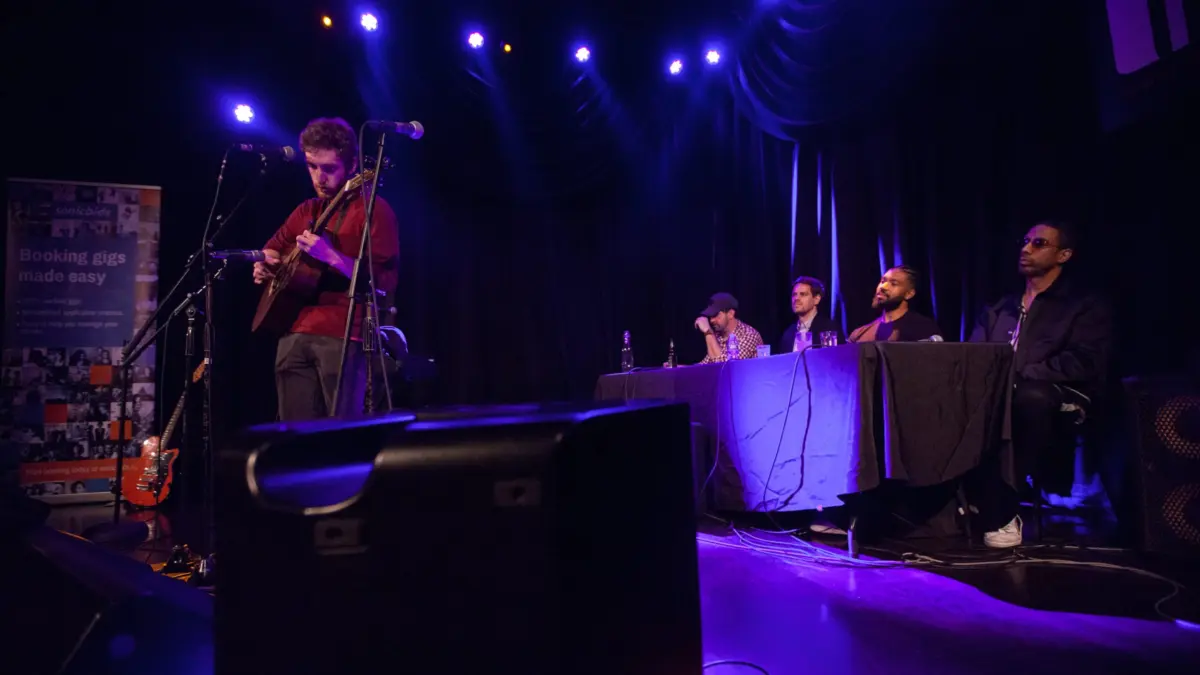
While spontaneous interaction is valuable, the rise of structured collaboration—such as those hosted by organizations like Sonicbids—has provided a more reliable framework for networking. The "Feedback Collective" model, which includes panel discussions and songwriting workshops, serves as a prime example of how institutionalized support can catalyze professional relationships. These events provide a neutral ground where artists can receive constructive criticism and meet peers who complement their skill sets.
Data suggests that physical proximity remains a powerful driver of innovation. A study on creative clusters indicates that musicians who participate in regular jam sessions or workshops are 40% more likely to secure performance bookings through peer referrals. By hosting these sessions, an artist transitions from a passive participant to a community leader. This shift in status often leads to higher visibility within the local scene. For instance, a rock guitarist who organizes a cross-genre workshop featuring jazz or electronic musicians creates a unique "sonic laboratory" that can lead to the development of entirely new genres, further distinguishing their brand in a crowded market.

3. Beyond Social Media: Specialized Digital Collaboration Platforms
While mainstream social media platforms like Instagram and TikTok are essential for fan engagement, they are often less effective for deep professional networking due to their algorithmic focus on viral content. In contrast, specialized platforms such as BandLab, SoundCloud, and Discord have emerged as vital hubs for technical and creative collaboration. These sites allow musicians to share stems, offer feedback, and co-author tracks across different geographical boundaries.
The growth of remote collaboration has seen a significant uptick since 2020, with platforms reporting millions of new users engaged in "forking" tracks—a process where one artist builds upon the work of another. Journalistic analysis of these platforms reveals that they function as a digital version of the traditional "writer’s room." By leaving thoughtful, technical comments on the work of others rather than generic praise, musicians can establish themselves as serious professionals. This often leads to "split-release" projects or digital collectives that pool their resources for marketing and distribution, significantly lowering the individual cost of promotion.
4. Strategic Volunteering and Industry Immersion
For many independent musicians, the "inner circle" of the industry feels inaccessible. However, volunteering at music festivals and large-scale industry events offers a direct route to the backstage environment where key decisions are made. This strategy provides a dual benefit: it offers a behind-the-scenes look at event logistics and creates natural opportunities to interact with sound engineers, stage managers, and festival curators.
Chronologically, many established artists and industry executives began their careers in these auxiliary roles. By working as a festival liaison or a stagehand, a musician gains "social currency." They are no longer an outsider asking for a favor; they are a colleague contributing to the success of the event. Statements from festival organizers often highlight that they are more likely to book an artist who has demonstrated reliability and a positive work ethic in a support role. This "ground-up" networking builds a reputation for professionalism that is just as important as musical talent in the long-term sustainability of a career.

5. Fanbase Utilization as a Networking Tool
The final, and perhaps most modern, networking strategy involves the democratization of A&R through the artist’s own fanbase. The "1,000 True Fans" theory, popularized by Kevin Kelly, suggests that a dedicated core audience is more valuable than a million casual listeners. These fans are often deeply embedded in their own local subcultures and possess connections that the artist may not have considered.
By utilizing polls, surveys, and direct engagement on platforms like Patreon or Discord, musicians can ask their fans for collaborative suggestions. This often uncovers hidden opportunities, such as a fan who works for a lifestyle brand looking for music for a campaign, or a fan who is connected to a prominent local venue. Involving the audience in the networking process creates a sense of "psychological ownership" among fans, making them more likely to promote the resulting collaborations. This feedback loop not only strengthens the artist-fan relationship but also serves as a decentralized scouting network.
Broader Impact and Industry Implications
The shift toward these diversified networking strategies has profound implications for the music industry’s economic structure. As independent musicians become more adept at building their own ecosystems, the reliance on traditional record labels continues to diminish. This autonomy allows for a more equitable distribution of royalties and greater creative control.
Furthermore, a fact-based analysis of the industry suggests that "networked" artists are more resilient to market fluctuations. During periods of economic downturn or shifts in streaming algorithms, artists with strong local and digital communities can rely on direct-to-consumer sales, crowdfunding, and collaborative tours to maintain their income. The mental health aspect of this trend should not be overlooked; the isolation of the "solo-preneur" is mitigated by the support of a creative collective, reducing burnout and fostering long-term artistic growth.

In conclusion, the path to a successful music career is no longer found through a single door. It is built through a web of interconnected relationships spanning various disciplines and platforms. By embracing local art scenes, participating in structured workshops, leveraging specialized digital tools, volunteering at the industry’s front lines, and engaging their fanbase, independent musicians can transform their career trajectory. The transition from a solitary artist to a networked professional is not merely a tactical move—it is an essential adaptation to the realities of the 21st-century creative economy. As the industry continues to evolve, the ability to collaborate will remain the most valuable instrument in any musician’s repertoire.
