

The global music industry is currently witnessing a paradigm shift as the "independent" or "artist-direct" sector continues to outpace the growth of major record labels, necessitating a sophisticated approach to professional networking and community building. According to recent market analysis from MIDiA Research, independent artists now represent the fastest-growing segment of the music business, generating over $1.2 billion in annual revenue and claiming a significant share of the global streaming market. However, as the barriers to entry lower, the resulting saturation—with over 100,000 tracks uploaded to streaming platforms daily—has transformed networking from a peripheral activity into a core survival strategy for the modern musician. Industry experts argue that the ability to forge cross-disciplinary partnerships and leverage local communities is now as critical as technical proficiency in songwriting or production.
The Historical Context of Music Industry Connectivity
To understand the current necessity of grassroots networking, it is essential to examine the historical trajectory of how musicians have traditionally accessed the market. Throughout the late 20th century, the "gatekeeper" model predominated, where Artists and Repertoire (A&R) executives served as the primary conduits for career advancement. In this era, networking was often centralized in hubs like New York, Los Angeles, and London, focusing heavily on securing a recording contract.
The digital revolution of the early 2000s, spearheaded by the advent of peer-to-peer file sharing and later the rise of social media, decentralized this power structure. The emergence of platforms like MySpace in 2003 and the subsequent dominance of Spotify and Apple Music created a "DIY" (Do-It-Yourself) culture. While this democratized distribution, it also removed the promotional infrastructure previously provided by labels. Consequently, the burden of brand building and professional outreach shifted entirely to the artist. Today’s networking landscape is defined by "DIT" (Do-It-Together) rather than DIY, emphasizing the importance of creative collectives and strategic alliances over solitary production.

Cross-Disciplinary Integration and Local Art Ecosystems
One of the most effective, yet frequently overlooked, avenues for professional expansion is the integration of music into broader local art scenes. Journalistic observations of thriving creative hubs indicate that musicians who limit their interactions to other musicians often experience "echo chamber" effects, where creative output becomes derivative and audience growth plateaus. By engaging with visual artists, theater troupes, and performance poets, musicians can tap into pre-existing audiences and find unique applications for their work.
For example, the rise of immersive art installations—typified by organizations such as Meow Wolf or local gallery openings—has created a high demand for bespoke soundscapes and atmospheric soundtracks. A musician collaborating with a sculptor or a digital artist not only diversifies their portfolio but also gains exposure to art collectors and patrons who may not frequent traditional music venues. This cross-pollination of fanbases serves as a force multiplier for visibility. Furthermore, regional theater companies often operate on budgets that preclude hiring full orchestras but are increasingly seeking original, contemporary compositions for independent productions, offering musicians both a steady commission and a platform for public performance.
The Role of Community-Led Educational Initiatives
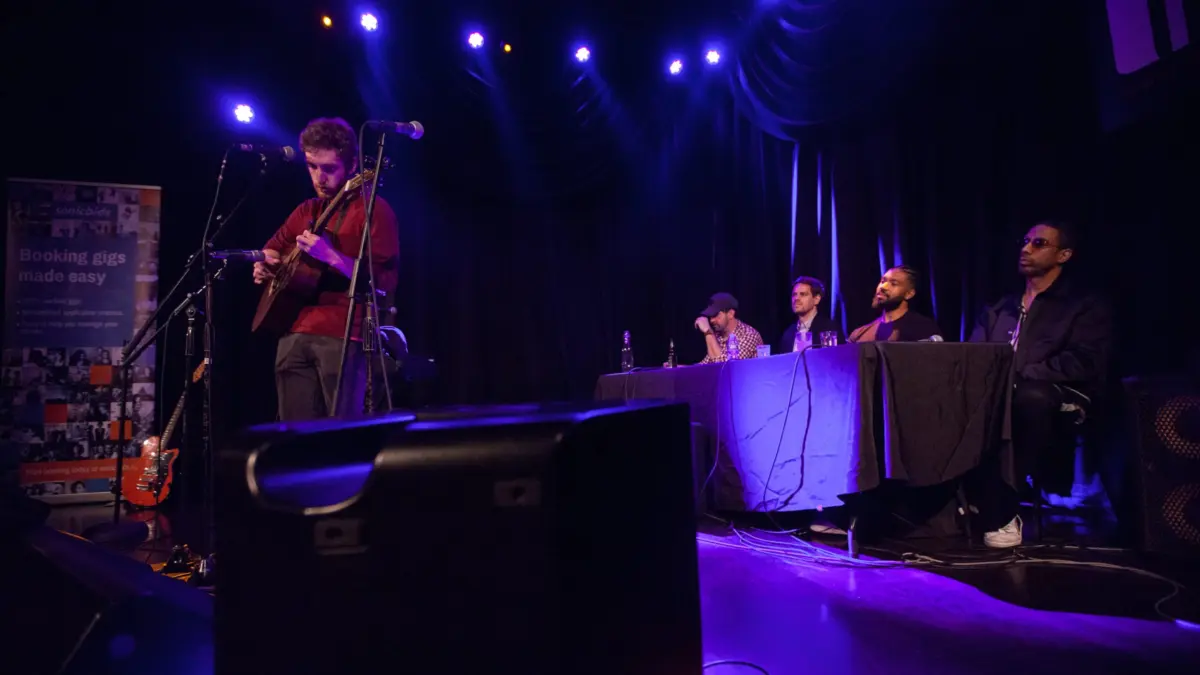
The emergence of professional development programs, such as the Feedback Collective Panel Discussions and Songwriting Workshops hosted by Sonicbids, highlights a growing trend toward structured peer-to-peer learning. These events serve a dual purpose: they provide technical skill enhancement while simultaneously acting as high-density networking environments. Unlike traditional "mixer" events, which can feel transactional, workshops foster organic rapport through shared problem-solving and creative critique.
Data suggests that musicians who participate in regular "jam sessions" or collaborative workshops report higher levels of career satisfaction and a more robust professional safety net. By hosting these sessions, an artist transitions from a passive participant to a community leader, a move that enhances their professional reputation. When a rock guitarist collaborates with a jazz saxophonist in a low-stakes, educational environment, the resulting "genre-bending" often leads to the creation of innovative sounds that are highly marketable in a streaming landscape that rewards uniqueness. These interactions often serve as the genesis for new bands, touring partnerships, and co-writing agreements.

Digital Infrastructure and the Decentralization of Collaboration
While physical proximity remains valuable, the technological infrastructure of 2024 has made remote collaboration a cornerstone of the independent music economy. Platforms such as BandLab, SoundCloud, and specialized Discord servers have replaced the traditional demo tape. BandLab, in particular, has reported a massive surge in users, with millions of creators utilizing its cloud-based Digital Audio Workstation (DAW) to collaborate in real-time across different continents.
Journalistic analysis of successful independent releases shows an increasing number of "split credits," where a producer in one country may provide the beat for a vocalist in another. This digital networking allows artists to bypass geographical limitations and find the specific talent required for a project. However, the shift to digital also requires a new etiquette. Professionalism in online spaces—characterized by thoughtful engagement with others’ work and clear communication regarding rights and royalties—is now a prerequisite for successful networking. Artists are increasingly encouraged to use these platforms not just as distribution channels, but as social ecosystems where they can provide value to others before seeking it for themselves.
The Strategic Utility of Event Volunteerism
The logistical backbone of the music industry—festivals, conferences, and large-scale tours—offers a unique entry point for emerging artists through volunteerism. Working behind the scenes at events like South by Southwest (SXSW), Glastonbury, or local jazz festivals provides an "insider" perspective that is impossible to gain from the outside. Volunteers often find themselves in close proximity to event organizers, stage managers, and established artists, providing opportunities for organic introductions.
Case studies of independent artists frequently reveal that early-career breakthroughs occurred not through cold-calling, but through relationships forged while working at festival gates or assisting with artist hospitality. This "backstage economy" operates on trust and reliability; a musician who proves themselves as a hardworking and professional volunteer is often the first person considered when a local opening slot becomes available or when a festival needs a last-minute replacement. This form of networking is particularly effective for understanding the technical and business requirements of high-level performance, from soundcheck protocols to contract fulfillment.

Fanbase Engagement as a Networking Tool
In the modern era, the boundary between the "artist" and the "audience" has become increasingly porous. The "1,000 True Fans" theory, popularized by Kevin Kelly, posits that an artist does not need mainstream stardom to be financially viable; they only need a dedicated core of supporters. Networking, therefore, must extend to the fanbase itself. Independent musicians are increasingly utilizing direct-to-fan communication tools, such as surveys, Discord communities, and Patreon, to involve their audience in the creative process.
By asking fans for input on potential collaborators, musicians can tap into a decentralized network of connections. It is not uncommon for a fan to have professional links to venues, graphic designers, or other musicians. This "crowdsourced networking" not only strengthens the bond between the artist and the audience but also uncovers opportunities that would be invisible through traditional industry channels. Furthermore, involving fans in the journey creates a sense of "ownership" among the supporters, making them more likely to act as organic brand ambassadors.
Economic Implications and Professional Analysis
The impact of effective networking on an independent musician’s bottom line is measurable. According to data from the American Federation of Musicians, artists who maintain diverse professional networks are 40% more likely to secure multiple revenue streams, including synchronization licenses, session work, and private teaching, compared to those who rely solely on performance fees. In an era where streaming royalties remain low for all but the top 1% of artists, these diversified income sources are vital.
Moreover, the psychological benefits of community cannot be overstated. The independent music career is often characterized by high levels of isolation and financial instability. A robust network provides emotional support and shared resources, which are essential for long-term career sustainability. Industry analysts suggest that the "lone wolf" model of musicianship is becoming obsolete, replaced by a "node-based" model where success is determined by the strength and number of an artist’s professional connections.

Future Outlook and Broader Industry Impact
Looking ahead, the integration of Artificial Intelligence (AI) in music production and the potential of Web3 technologies are expected to further transform networking. AI tools may soon assist artists in finding compatible collaborators based on sonic profiles, while blockchain technology could automate the royalty-sharing process in collaborative projects. However, despite these technological advancements, the fundamental human element of networking remains constant.
The broader implication for the music industry is a shift toward a more equitable and resilient ecosystem. As independent musicians become more adept at networking and collaboration, the reliance on traditional corporate structures diminishes. This leads to a more diverse musical landscape, where niche genres can thrive and artists can maintain greater creative and financial control. The "middle class" of musicians—those who may not be household names but who earn a respectable living through their art—is set to expand as these networking strategies become standardized practices.
In conclusion, for the independent musician, networking is no longer an optional task but a foundational professional requirement. By embracing local art scenes, participating in educational workshops, leveraging digital platforms, volunteering at industry events, and engaging deeply with their fanbase, artists can navigate the complexities of the modern market. These strategies do more than just "expand a contact list"; they build a sustainable community that fosters innovation, ensures economic resilience, and ultimately allows the music to reach its intended audience in an increasingly crowded global stage. The future of music is inherently collaborative, and those who master the art of the connection are the most likely to define the next era of the industry.
