

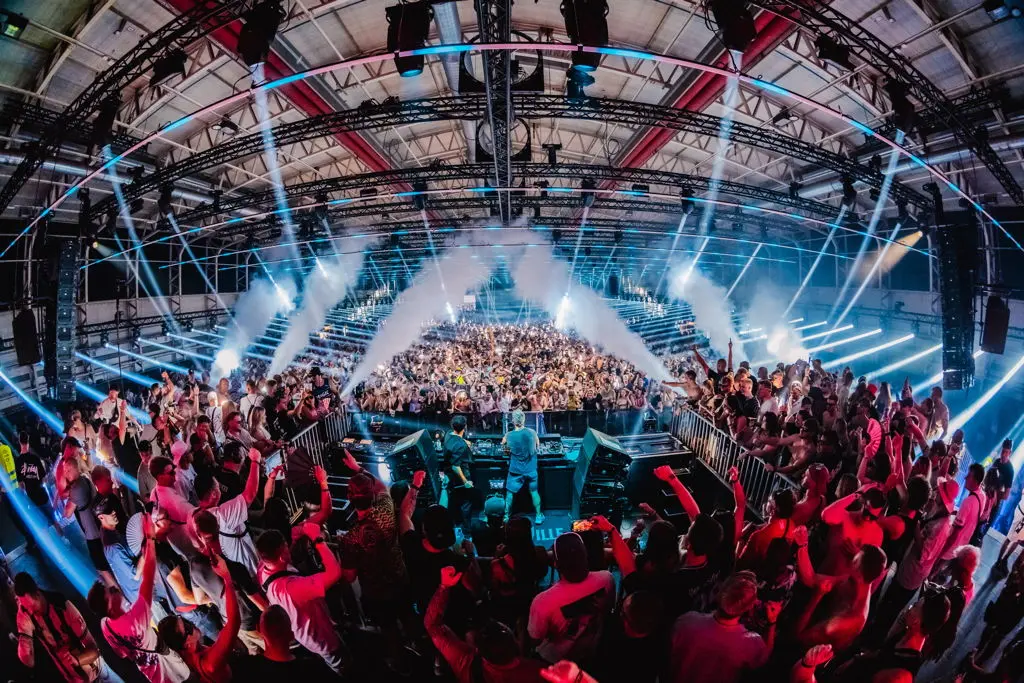
The eleventh edition of Parookaville, Germany’s premier electronic music festival, transformed the grounds of Weeze Airport into a sprawling metropolis of sound and light from July 17 to 19, 2026. Attracting a staggering 225,000 attendees over three days, the event solidified its reputation as a global leader in the festival circuit, featuring a lineup of more than 300 international acts. Headliners including Armin van Buuren, Hardwell, W&W, The Chainsmokers, and Timmy Trumpet commanded the attention of the massive crowds, but the true silent partner in the festival’s success was the intricate technical infrastructure. Entrusted to long-term production partner POOLgroup, the event utilized state-of-the-art Meyer Sound systems across five major stages, setting a new standard for acoustic precision in an outdoor festival environment.
The Evolution of the City of Dreams
Since its inception in 2015, Parookaville has distinguished itself through its unique "City of Dreams" concept. Unlike traditional music festivals that focus solely on stage performances, Parookaville is designed as a fictional town complete with its own town hall, post office, church, and currency. This immersive storytelling approach requires a level of production design that transcends standard event planning. For the 2026 edition, the scale of the "city" necessitated a logistical operation of unprecedented proportions.
Production Manager Robert Sommer led the overarching production design and technical management, overseeing the complex interplay between the festival’s aesthetic requirements and the functional needs of a world-class audio-visual experience. The audio planning and execution were spearheaded by Technical Directors Jan Flerlage and Simon Jermer, who managed a specialized team of approximately 40 sound engineers and technicians. Their objective was to ensure that the sonic experience matched the visual grandeur of the festival’s elaborate facades and thematic installations.
Architectural Audio: Integrating Sound into the Visual Landscape
One of the primary challenges facing the technical team at Parookaville is the annual redesign of the festival’s stages. Each year, the Mainstage—the centerpiece of the City of Dreams—undergoes a complete aesthetic overhaul. These designs often feature complex geometries, massive video walls, and intricate scenic elements that can obstruct traditional loudspeaker placements.
"The stage design is completely new every year," explained Jan Flerlage. "One of our primary tasks is to integrate an audio system that we know works into a brand-new architectural design. Simply placing a loudspeaker tower in a convenient spot is not an option, as it could compromise the visual integrity of the stage."
For the 2026 Mainstage, which accommodated up to 70,000 visitors at peak times, the team had to deliver a "club-like" audio experience—characterized by directness and high pressure—across a vast outdoor area. The goal was to maintain an intimate connection between the DJ and the audience, regardless of whether a visitor was in the front row or at the far reaches of the spectator zone.
The Technical Backbone: Meyer Sound PANTHER and the Mainstage Configuration
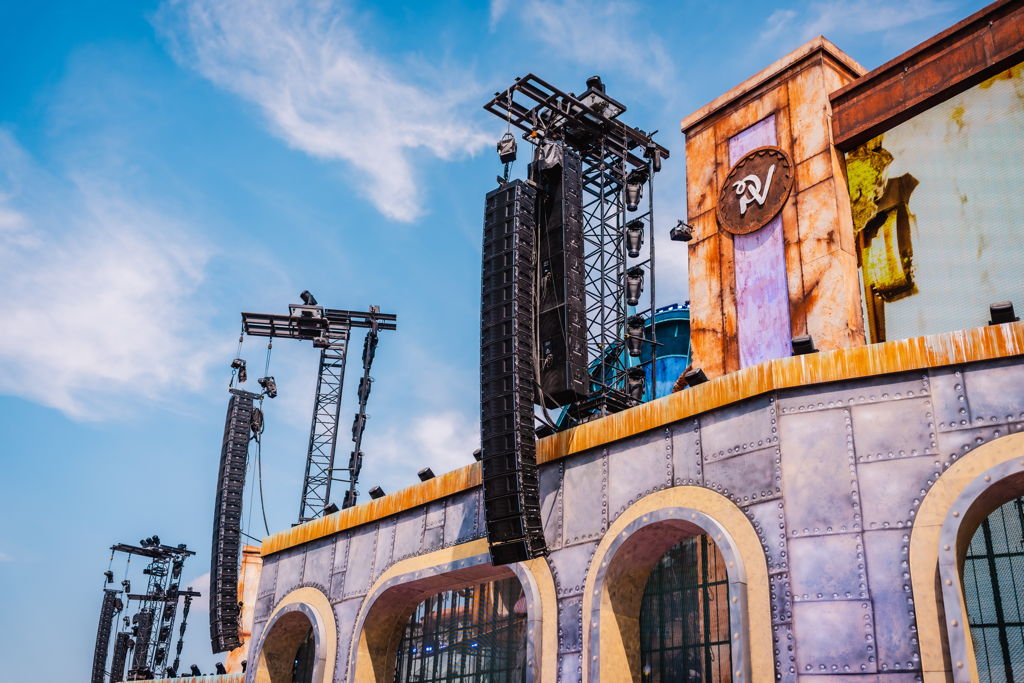
For the fourth consecutive year, POOLgroup deployed Meyer Sound’s PANTHER large-format linear line array system as the primary audio solution for the Mainstage. The decision to use PANTHER was driven by its specific performance-to-weight ratio and its compact footprint, which allows for easier integration into scenic designs without sacrificing output.
The 2026 Mainstage deployment featured a comprehensive array of Meyer Sound components:
- 180 PANTHER loudspeakers: These served as the primary line arrays, providing the high-frequency clarity and mid-range punch required for electronic dance music (EDM).
- 30 2100-LFC Low-Frequency Control Elements: These units provided the deep, visceral sub-bass necessary for the genre’s signature sound.
- 66 1100-LFC Low-Frequency Control Elements: Used in conjunction with the 2100s to manage the low-end distribution across the wide audience area.
- 16 LEOPARD line array loudspeakers: Utilized for near-field coverage and fill.
- 6 UPQ point-source loudspeakers: Deployed for targeted fill in specific areas of the stage architecture.
The system planning was conducted in close collaboration with Merlijn van Veen, Meyer Sound’s Senior Technical Support and Education Specialist. This partnership ensured that the theoretical acoustic models were perfectly translated into the physical environment. System Engineer Matthias Pelz was responsible for the final calibration and tuning of the Mainstage, ensuring that the phase response and frequency distribution were uniform across the entire site.
Flerlage noted that the PANTHER system’s slim profile was a significant advantage: "With PANTHER, we have a tool that offers additional options for solving many challenges. The system is light, compact, and significantly slimmer when viewed from the front. This is a major benefit for stage design, as it minimizes the visual impact of the audio hangs."
Data-Driven Optimization: The POOLgroup Methodology
Rather than reinventing the wheel with each edition, POOLgroup employs an iterative approach to festival production. By analyzing data from previous years—including noise maps, spectator density charts, and atmospheric data—the team makes incremental improvements to the system’s configuration.
The 2026 edition saw specific optimizations in sound distribution and the management of "spill" (audio energy leaking outside the intended audience areas). This is particularly critical at Weeze Airport, where the flat terrain and potential for wind can carry sound toward neighboring communities.
"We have been working with PANTHER for several years now and know the system very well," Flerlage said. "Despite this, there are always small adjustments to be made. You consistently discover areas where you can realize a bit more headroom or achieve better coverage."
The optimizations also focused on the arrangement of the subwoofer arrays and the timing of the delay systems. By using sophisticated beam-steering techniques and precise digital signal processing, the engineering team was able to create a "power alley" of bass that remained consistent throughout the venue while minimizing destructive interference at the edges of the coverage zone.
Beyond the Mainstage: A Multi-Venue Technical Achievement
While the Mainstage often garners the most attention, the technical requirements for Parookaville’s other stages are equally demanding. Each venue within the city has its own acoustic identity and technical challenges.
- Bill’s Factory: This stage, known for its eclectic mix of live acts and DJs, was equipped with Meyer Sound LEO and LYON line array loudspeakers. These systems provided the high-output power needed for the diverse performances hosted there.
- Cloud Factory, Power Plant, and Time Lab: These stages all benefited from the deployment of PANTHER systems. The use of a consistent loudspeaker family across multiple stages allowed for a unified sonic signature throughout the festival and streamlined the logistics of spare parts and technician training.
The uniform deployment of high-end audio technology meant that guest engineers for the 300+ acts could arrive with their show files and expect a consistent, high-performance environment. This reliability is a key factor in attracting top-tier international talent to the festival.
Industry Standards and the Impact of Precise Coverage
The feedback from visiting sound engineers and artist management was overwhelmingly positive. A common point of praise was the "evenness" of the coverage. In many large-scale festivals, there is a noticeable drop-off in high-frequency clarity or a loss of low-end impact as one moves away from the stage. At Parookaville 2026, the combination of PANTHER’s precise horizontal control and the engineering team’s meticulous alignment minimized these issues.
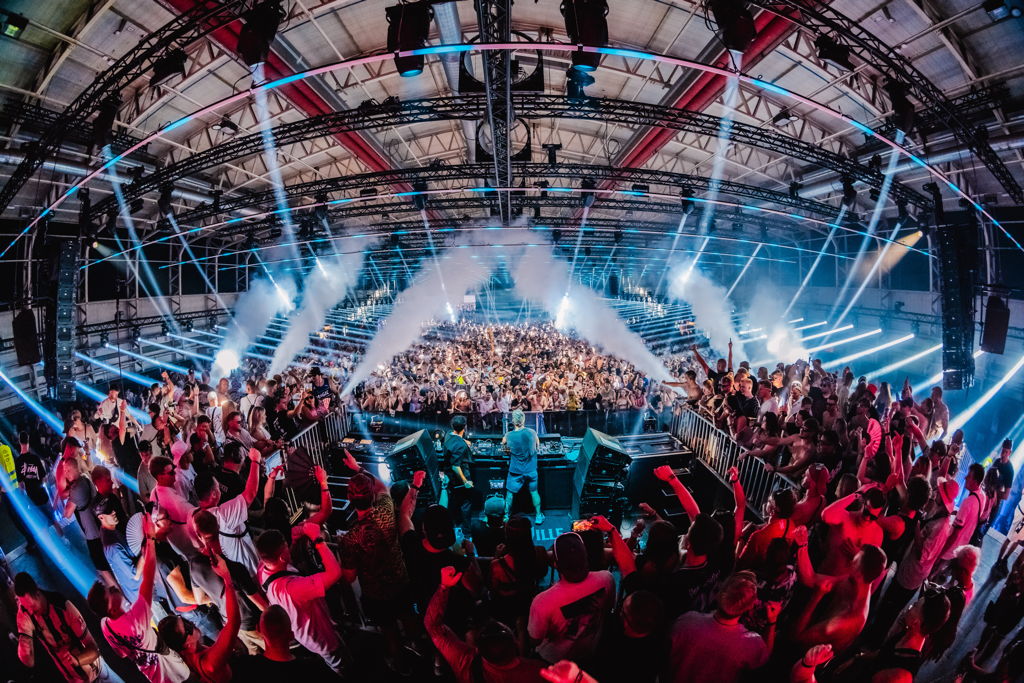
"The feedback was consistently positive," Flerlage reported. "Many highlighted the uniform coverage of almost all audience areas. That is exactly one of the greatest challenges on such a large site: offering the same sound experience to every visitor. Everyone who comes to Parookaville knows they can expect a high-quality and reliably working sound reinforcement system."
This consistency has broader implications for the festival industry. As audience expectations for production quality continue to rise, the technical successfulness of Parookaville serves as a case study in how to balance massive scale with acoustic intimacy. The 2026 edition demonstrated that with the right combination of advanced hardware and expert engineering, it is possible to provide a "front-row" experience to 225,000 people.
Logistical Excellence in the Heart of the Lower Rhine
The successful execution of an event the size of Parookaville is a feat of logistical engineering. Moving hundreds of tons of equipment onto an active airfield requires precise coordination with local authorities and airport management. The POOLgroup’s ability to manage the technical lifecycle—from initial CAD designs to the final load-out—highlights the importance of long-term partnerships in the event industry.
The 11th edition of Parookaville was not just a celebration of electronic music, but a showcase of modern event technology. By integrating cutting-edge audio solutions like Meyer Sound’s PANTHER into the highly thematic "City of Dreams," POOLgroup and the festival organizers proved that technical excellence and creative vision are not mutually exclusive. As the festival looks toward its 12th year, the data gathered and the techniques refined in 2026 will undoubtedly serve as the foundation for the next evolution of this extraordinary auditory and visual experience.
