

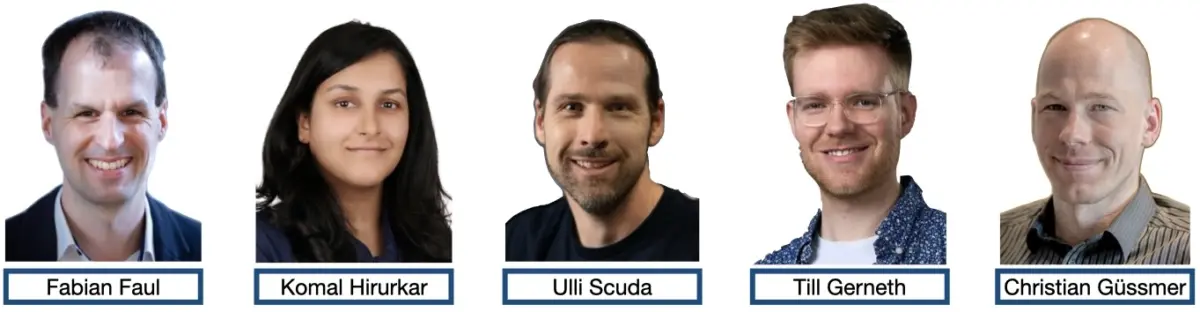
The German section of the Audio Engineering Society (AES) has officially concluded its latest leadership election, marking a pivotal transition for the organization as it enters a new phase of professional advocacy and technical development. In an unprecedented move reflecting the high caliber of this year’s applicants, the newly elected body has voted to expand the executive board from its traditional four-seat structure to a five-seat configuration. This decision, announced on October 13, 2026, aims to leverage a broader spectrum of expertise as the professional audio industry faces rapid technological shifts, including the integration of artificial intelligence, the expansion of immersive audio formats, and the ongoing evolution of networked audio protocols.
The newly formed leadership team consists of Ulli Scuda, Komal Hirurkar, Till Gerneth, Fabian Faul, and Christian Güssmer. This cohort represents a strategic blend of seasoned industry veterans and emerging specialists, ensuring that the German section remains at the forefront of both academic research and practical application. The expansion to five seats is not merely a quantitative change but a qualitative strategic adjustment designed to distribute the increasing administrative and organizational responsibilities that come with managing one of the most active national sections of the global AES.
Organizational Context and the Role of AES Germany
The Audio Engineering Society remains the only professional society devoted exclusively to audio technology. Founded in the United States in 1948, the organization has grown to encompass approximately 6,000 members worldwide, with a network spanning more than 75 countries. The German section serves as a critical hub within this international framework, representing a nation with a storied history in acoustic engineering and hardware manufacturing. Germany is home to some of the world’s most influential audio brands and research institutions, making the leadership of the AES German section a position of significant influence within the global audio community.
AES Germany operates as a bridge between the theoretical world of acoustic science and the practical demands of the professional audio industry. Its membership includes a diverse array of professionals, from recording engineers and live sound technicians to hardware designers, software developers, and academic researchers. By facilitating the exchange of knowledge through workshops, technical tours, and standardized protocols, the section ensures that German engineering continues to contribute to international standards such as AES3 for digital audio transmission and AES67 for high-performance streaming audio-over-IP interoperability.
The Transition of Leadership and Legacy of the Outgoing Board
The election of the new board also marks the conclusion of the terms of the previous leadership members, identified as Anna, Ralph, and Cornelius. During their tenure, the outgoing board was instrumental in maintaining the section’s relevance during a period of significant global disruption, ensuring that digital networking and remote collaboration tools were utilized to keep the professional community connected. Their efforts in modernizing the section’s outreach and stabilizing its financial and membership foundations have been cited as key factors in the current strength of the organization.
In a move that emphasizes the collaborative nature of the society, all three outgoing members have offered to remain available in an advisory capacity. This continuity is expected to provide the new board with a "knowledge bridge," allowing them to build upon established initiatives while introducing fresh perspectives. The willingness of past leaders to serve as consultants underscores a culture of mentorship that is central to the AES mission of advancing the science and craft of audio engineering.
Analysis of the Board Expansion and Candidate Strength
The decision to expand the board to five seats is a direct response to what the organization described as an exceptionally strong field of candidates. In typical election cycles, a fixed number of seats often results in the exclusion of highly qualified individuals whose specific niche expertise might be beneficial to the collective. By expanding the board, AES Germany has opted for a more inclusive leadership model that can better address the multifaceted nature of modern audio.
From a strategic standpoint, a five-person board allows for a more granular division of labor. The professional audio landscape in 2026 is no longer confined to traditional recording and reproduction. It now encompasses:
- Spatial and Immersive Audio: The rise of Atmos, MPEG-H, and VR/AR applications requires deep technical understanding of multi-channel systems.
- Artificial Intelligence and Machine Learning: The integration of AI in signal processing, automated mixing, and restorative audio is a primary area of growth.
- Sustainability in Manufacturing: European regulations and global environmental concerns are forcing a re-evaluation of hardware production and lifecycle management.
- Educational Outreach: Bridging the gap between aging industry veterans and the "digital native" generation of audio students.
The new board members—Scuda, Hirurkar, Gerneth, Faul, and Güssmer—bring competencies that touch upon each of these pillars. While specific roles within the board (such as Chair, Vice-Chair, Treasurer, and Secretary) are typically designated following the election, the collective expertise of this group suggests a holistic approach to the section’s future roadmap.
Chronology of the Election and Future Initiatives
The election process for the AES Germany board is a structured procedure designed to ensure democratic representation of the membership. Following the call for nominations earlier this year, the pool of candidates underwent a review process where their contributions to the society and the broader industry were evaluated. The voting period allowed members from across Germany to cast their ballots, culminating in the final selection in early October.
Looking forward, the new board will oversee several flagship initiatives that define the AES Germany calendar. Central to these is the Research Colloquium, an event that has gained international recognition for its role in connecting audio research with industrial application. The colloquium provides a platform for doctoral students and independent researchers to present findings to manufacturers and practitioners, often leading to the development of new products or the refinement of existing technologies.
In addition to the Research Colloquium, the board is expected to prioritize:
- Regional Workshops: Expanding the geographical reach of AES events beyond major hubs like Berlin and Munich to support professionals in all federal states.
- Student Section Support: Strengthening ties with universities offering specialized audio engineering degrees to ensure a steady pipeline of new talent into the society.
- Standards Participation: Encouraging German members to participate in international AES standards committees, ensuring that German technical requirements are represented in global protocols.
Supporting Data: The Economic and Technical Impact of Audio Engineering in Germany
The significance of this leadership change is highlighted by the economic weight of the audio industry in the DACH region (Germany, Austria, Switzerland). Germany remains a dominant force in the professional audio market, which globally is projected to continue its growth trajectory as demand for high-quality content across streaming, gaming, and live events increases.

Data from industry analysts suggest that the professional audio hardware market alone is worth several billion euros, with German companies holding significant market shares in microphones, headphones, and high-end mixing consoles. Furthermore, the shift toward software-defined audio solutions has seen a surge in German-based startups focusing on digital signal processing (DSP) and virtual instruments. By providing a professional framework through AES Germany, the board helps maintain the high standards of quality and reliability that have become synonymous with German audio engineering.
Broader Implications for the Global Audio Community
The expansion of the AES Germany board serves as a potential blueprint for other national sections. As the technical requirements of the industry become more complex, the traditional small-board model may struggle to keep pace with the necessary speed of decision-making and the breadth of required knowledge. A larger, more diverse board can more effectively engage with specialized sub-sectors of the industry, from acoustic consultancy to software architecture.
Furthermore, the inclusion of members such as Komal Hirurkar reflects a continuing trend toward greater diversity within the engineering disciplines. This shift is vital for the AES as it seeks to remain relevant to a global and increasingly diverse workforce. Fresh perspectives often lead to innovative approaches to long-standing problems, such as how to better integrate audio education into broader STEM (Science, Technology, Engineering, and Mathematics) curricula.
Official Responses and Industry Outlook
While official statements from the individual new board members are expected to follow in the coming weeks as they formalize their internal roles, the initial reaction from the professional community has been overwhelmingly positive. Industry observers note that the combination of "new blood" and the advisory support of the outgoing members creates a stable environment for growth.
The professional audio industry is currently at a crossroads. The transition from hardware-centric workflows to cloud-based and AI-driven systems is accelerating. In this environment, the role of a professional society like the AES becomes even more critical. It provides a neutral ground where competitors can collaborate on standards that benefit the entire industry, and where professionals can find unbiased technical information.
As AES Germany embarks on this new chapter with its expanded five-member board, the focus remains clear: to foster excellence in audio engineering through education, standardization, and professional networking. The next two years will be a definitive period for the new leadership as they work to implement their vision and ensure that Germany remains a cornerstone of the global audio engineering landscape. The society’s ability to adapt its leadership structure to the strength of its members is a testament to its health and its commitment to the future of sound.
