

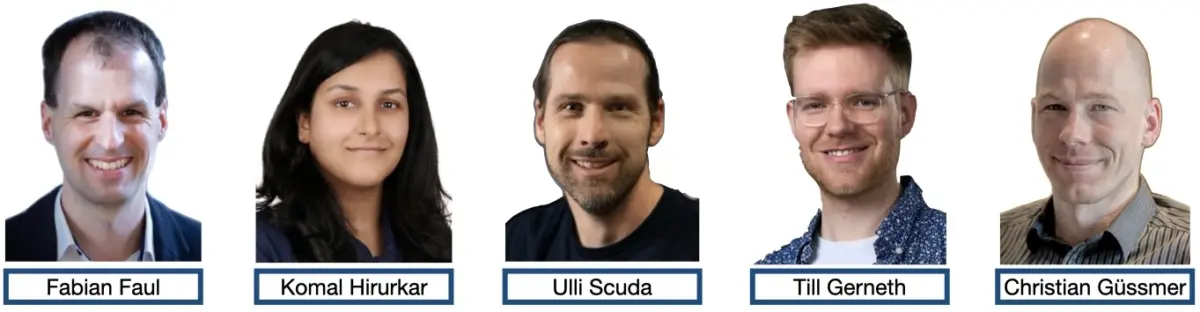
The German section of the Audio Engineering Society (AES) has officially announced the election of its new Executive Board, marking a significant transition in the leadership of one of the world’s most prominent professional organizations for audio technology. In a move that reflects the growing complexity of the audio industry and the high caliber of this year’s nominees, the newly elected leadership team has collectively decided to expand the board’s structure from four to five seats. This strategic expansion is designed to better accommodate the diverse range of expertise required to steer the section through a period of rapid technological evolution in the fields of acoustics, digital signal processing, and immersive sound.
The newly formed leadership team consists of Ulli Scuda, Komal Hirurkar, Till Gerneth, Fabian Faul, and Christian Güssmer. According to the official announcement released on October 13, 2026, this cohort brings a multifaceted array of fresh perspectives and specialized technical competencies to the German section. The inclusion of a fifth board member is a direct response to the "strength of the candidate field," signaling a robust interest in professional advocacy and scientific advancement within the German-speaking audio community.
Organizational Context and Global Footprint
The Audio Engineering Society remains the only professional society devoted exclusively to audio technology. Founded in 1948 and headquartered in the United States, the AES has grown into a global powerhouse with approximately 6,000 members distributed across more than 75 countries. The organization serves as the primary forum for the exchange of technical information, the development of industry standards, and the promotion of education in the audio arts and sciences.
AES Germany serves as a vital regional hub within this global network. As the primary German-speaking section, it bridges the gap between international research and local application. The German audio industry—encompassing legendary hardware manufacturers, world-class broadcast institutions, and pioneering research facilities like the Fraunhofer Institute—represents a significant portion of the global audio market. Consequently, the leadership of AES Germany holds substantial influence over how technical standards and professional practices are disseminated throughout Europe.
The decision to expand the board to five members reflects a broader trend within professional associations to decentralize responsibility and incorporate a wider variety of industry niches. By distributing leadership across five individuals, the section can more effectively manage its diverse portfolio of activities, which includes academic outreach, industrial partnerships, and the organization of high-level technical symposia.
Transition of Leadership and Institutional Continuity
As the new board takes office, the organization has extended its gratitude to the outgoing leadership. The departing board members—identified as Anna, Ralph, and Cornelius—have been instrumental in navigating the section through the challenges of the mid-2020s. Their tenure was characterized by a concerted effort to modernize the section’s digital presence and maintain a sense of community during a period of shifting professional paradigms.
In a move that ensures institutional continuity, all three outgoing members have offered to remain available to the new board in a consultative capacity. This advisory role is crucial for a volunteer-led organization, as it allows for the seamless transfer of "institutional memory" and ensures that long-term projects—such as multi-year research initiatives and recurring industry partnerships—do not lose momentum during the leadership change.
The transition comes at a time when the audio industry is grappling with several transformative shifts, including the integration of Artificial Intelligence in production workflows, the standardization of Audio over IP (AoIP), and the increasing demand for sophisticated spatial audio solutions in consumer electronics and automotive sectors. The new board is expected to address these themes as part of their upcoming mandate.
Core Activities and the Research Colloquium
AES Germany is perhaps best known for its role in fostering the "Research Colloquium," a flagship initiative that serves as a nexus between theoretical audio research and practical engineering applications. This colloquium provides a platform for doctoral students, independent researchers, and industry scientists to present peer-reviewed findings in an environment that encourages critical feedback and collaborative problem-solving.
Beyond the colloquium, the section maintains a rigorous schedule of:
- Technical Workshops: Hands-on sessions focusing on specific tools or methodologies, such as microphone placement for immersive recording or the calibration of large-scale sound reinforcement systems.
- Site Visits: Behind-the-scenes tours of leading manufacturing plants, broadcast studios, and research laboratories, providing members with insights into the practical realities of high-end audio production.
- Webinars and Lectures: Online and hybrid events featuring international experts discussing the latest developments in psychoacoustics, transducer design, and digital audio networking.
The association caters to a broad demographic, including research scientists, hardware and software engineers, studio practitioners, and students. By maintaining a balance between academic rigor and practical utility, AES Germany ensures that its output remains relevant to both the veteran engineer and the aspiring student member.
Implications for the German Audio Landscape
The expansion of the board is likely to have several positive implications for the German audio landscape. First, the increased manpower at the executive level allows for a more granular focus on different regions within Germany. Given the geographic distribution of audio hubs—ranging from the automotive-heavy south to the broadcast-centric centers in the west and north—a five-person board can more effectively maintain local presence and engagement.
Furthermore, the "fresh perspectives" cited in the announcement suggest a push toward greater inclusivity and interdisciplinary collaboration. In recent years, the boundaries between traditional audio engineering and fields such as software development, user experience (UX) design, and data science have become increasingly blurred. The new board members are expected to reflect this reality, bringing expertise that spans the spectrum from classical electroacoustics to modern algorithmic sound design.

Industry analysts suggest that the new board will also need to prioritize the "next generation" of audio professionals. With the rise of the "prosumer" market and the democratization of high-quality recording tools, the role of a professional society like the AES is evolving. The new leadership will likely focus on defining the value of professional certification and membership in an era where information is freely available but often lacks the peer-reviewed validation that the AES provides.
Technical Standards and Future Objectives
One of the most critical, though often invisible, functions of the AES is the development of technical standards. Standards such as AES3 (for digital audio transmission) and AES67 (for high-performance streaming audio-over-IP interoperability) have become the backbone of modern media infrastructure. AES Germany plays a significant role in this process by providing a localized feedback loop for the international Standards Committee.
The new board will be tasked with representing German interests in these global discussions. As the industry moves toward more complex networked environments, the need for robust, interoperable standards becomes paramount. The expertise of the new board members in areas such as digital networking and system integration will be vital in ensuring that German engineering continues to lead in the global marketplace.
Looking ahead, the 2026-2028 term for the new board will likely be defined by several key objectives:
- Enhancing the Research-to-Industry Pipeline: Strengthening the ties between German universities and the manufacturing sector to ensure that cutting-edge research finds its way into commercial products.
- Promoting Sustainability: Addressing the environmental impact of audio hardware manufacturing and the energy consumption of large-scale data centers used in cloud-based audio processing.
- Diversity and Inclusion: Continuing the effort to bring a wider range of voices into the audio engineering field, ensuring that the society reflects the global and diverse nature of the modern workforce.
- Digital Transformation: Further refining the delivery of technical content through high-quality digital platforms, making the society’s resources more accessible to members who cannot attend physical events.
Conclusion
The election of Ulli Scuda, Komal Hirurkar, Till Gerneth, Fabian Faul, and Christian Güssmer marks a new chapter for AES Germany. By expanding the board to five seats, the section has demonstrated a proactive approach to organizational management, recognizing that the challenges of the modern audio industry require a broader base of leadership.
With the continued support of the outgoing board members and a clear mandate to bridge the gap between science and practice, the new leadership is well-positioned to maintain Germany’s status as a global leader in audio engineering. As the section moves forward, its focus on technical excellence, professional education, and community building will remain the cornerstone of its mission, serving as a beacon for audio professionals across the German-speaking world and beyond. The industry now looks toward the first initiatives of this expanded board, which are expected to be unveiled in the coming months as they begin their formal term of service.
