

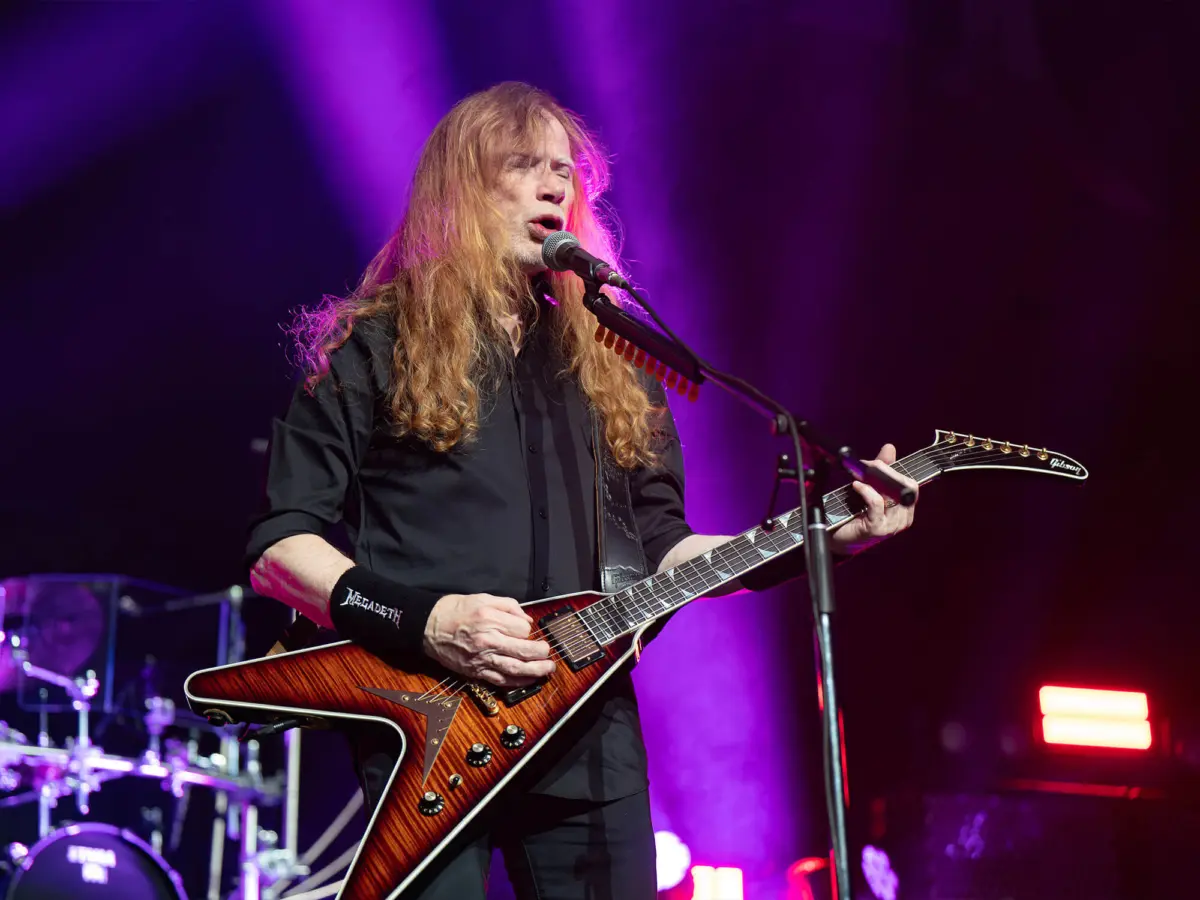
Megadeth frontman Dave Mustaine, a titan of thrash metal, has once again stirred the pot in the ongoing discourse surrounding musical authenticity, particularly within the rock and metal genres. Mustaine recently observed a burgeoning trend at Megadeth’s current extensive tours: a notable influx of younger fans eager to experience the raw power and intricate musicianship of "old school metal." This observation prompted the legendary guitarist and vocalist to articulate his belief that contemporary music has become less "genuine," pointing to the blurring of genre lines and the introduction of non-traditional elements as key culprits.
The Quest for Authenticity in Modern Music
Mustaine’s comments, made during a recent interview with Chris Jericho, resonate with a broader cultural yearning for the perceived magic of yesteryear’s rock and roll, a sentiment exemplified by the rise of bands like Greta Van Fleet, who consciously evoke the sound and style of classic rock pioneers. For Mustaine, the industry’s trajectory shifted significantly when the distinct boundaries between genres began to erode, leading to what he considers a dilution of metal’s core essence. He explicitly targeted the nu-metal movement of the late 1990s and early 2000s, citing the "Linkin Park era" as a pivotal moment where metal began incorporating elements such as keyboards, which he views as fundamentally at odds with the genre’s traditional instrumentation and ethos. "Our generation of metal… I think that the music was more genuine," Mustaine stated, drawing a clear demarcation between his era and subsequent developments.
This perspective taps into a perennial debate within music circles: what constitutes "genuine" art, and how do technological advancements and cross-genre experimentation impact that definition? Historically, rock and metal have always evolved, often by incorporating diverse influences, yet a strong undercurrent of purism has persisted, particularly within subgenres like thrash, which prided itself on speed, technicality, and a raw, aggressive sound. Mustaine’s stance echoes a sentiment held by many long-time fans and artists who lament what they perceive as a departure from the foundational principles of heavy music.
Nu-Metal: A Point of Contention for Mustaine
Mustaine’s critique of nu-metal is neither new nor subtle. He has consistently voiced his disdain for the genre over the years, and his latest remarks reiterate his core objections. According to Mustaine, the primary issue with many nu-metal acts was a perceived lack of instrumental prowess, particularly regarding guitar solos. "They didn’t do any solos because they couldn’t do any solos," he asserted in a previous interview with LifeMinute, suggesting that the reliance on keyboards, rapping, and other non-traditional metal elements served as a means to mask a deficiency in conventional musicianship. "Thank God that genre went away – people started to learn how to do solos!" he added with characteristic bluntness.
The nu-metal genre, which exploded in popularity in the late 1990s and early 2000s, was characterized by its fusion of heavy metal with elements of hip-hop, industrial music, funk, and alternative rock. Bands like Korn, Limp Bizkit, Deftones, and Linkin Park pioneered a sound that often featured down-tuned guitars, syncopated rhythms, rap-like vocals, and a strong emphasis on groove and raw emotion over intricate melodic solos. Linkin Park, in particular, achieved massive commercial success with albums like Hybrid Theory (2000) and Meteora (2003), selling millions of copies and becoming crossover sensations. Their blend of Chester Bennington’s soaring vocals, Mike Shinoda’s rapping, and prominent electronic elements alienated some traditional metal fans while attracting a vast new audience.
Mustaine’s condemnation extends beyond just the musical style, touching upon what he views as a lack of artistic integrity. He hinted at a deeper concern regarding the authenticity of music production itself, stating, "When people do things for their own art, that’s great, but when you start seeing these manufactured records that band members didn’t play on, that’s fraud!" This criticism, while specifically aimed at nu-metal in context, touches on a broader industry issue concerning the use of session musicians, ghostwriters, and extensive digital manipulation that can obscure the true contributions of band members. For a musician like Mustaine, who came up in an era where live performance and instrumental skill were paramount, this perceived "cheating" represents a fundamental betrayal of artistic principles.
The Impact of Chart Mechanics and Shifting Metrics
Adding another layer to his critique of modern music, Mustaine drew a parallel between the "Linkin Park era’s" influence on the charts and how changes in Billboard’s sales calculation methods in the 1990s "ruined the charts." This reference points to a significant shift in the music industry’s measurement of success. Prior to 1991, Billboard’s charts were primarily compiled based on reports from record stores and radio stations, a system prone to inaccuracies and potential manipulation.
The introduction of SoundScan in 1991 revolutionized chart compilation by tracking actual point-of-sale data from retailers across the United States. This move, while making the charts significantly more accurate, had profound and often unexpected consequences. Suddenly, genres like country, hip-hop, and heavy metal, which had large, dedicated fanbases but less mainstream radio airplay, saw their true commercial power revealed. Albums that might have been overlooked under the old system began to dominate, challenging the traditional hierarchy of popular music.
For artists and fans rooted in mainstream rock and pop, the SoundScan era indeed seemed to "ruin" the familiar landscape of the charts, as their preferred genres no longer held undisputed dominance. Mustaine’s comment suggests that the rise of nu-metal and its commercial success, much like the SoundScan revolution, represented a disruption of the established order, ushering in a period where traditional metal’s influence on mainstream charts waned, replaced by more genre-blending sounds. This confluence of evolving musical tastes and new metrics created an environment where "genuine" metal, as defined by purists, struggled for mainstream visibility against these newer, more eclectic forms.
Clash of Generations: The Nu-Metal Backlash
Mustaine’s long-standing animosity towards nu-metal wasn’t merely expressed in interviews; it manifested in palpable tension during live performances and tours. Jonathan Davis, frontman of nu-metal pioneers Korn, vividly recalled the challenging experience of touring with Megadeth in the past. "It was hard touring with Megadeth because at that time Dave Mustaine was really mean and just had attitude," Davis recounted to ExploreMusic in 2011, as reported by Blabbermouth. "It was scary being on there… I respected him and everything, but I kind of got my feelings hurt, because he was mean at times."
This anecdote highlights the generational and stylistic friction that often arises when new genres challenge established ones. For many veteran metal acts, nu-metal represented a departure from the genre’s core tenets, seen as a watered-down or less "serious" form of heavy music. The perceived lack of guitar solos, the incorporation of hip-hop elements, and the commercial appeal to a broader, younger audience were all points of contention. This dynamic created a palpable "old guard vs. new guard" atmosphere, where mutual respect could be strained by differing artistic philosophies.
Korn, alongside bands like Deftones and Slipknot, were crucial in defining the sound and aesthetic of nu-metal. Their raw, aggressive, and often introspective approach resonated with a generation grappling with angst and alienation. However, their stylistic innovations, particularly their rejection of traditional guitar solos and embrace of new textures, placed them directly in the crosshairs of metal purists like Mustaine, who saw these elements as a dilution of the genre’s integrity rather than an evolution. The emotional impact of such criticism from a respected figure like Mustaine underscores the deep-seated convictions held by artists regarding their craft and the genre they represent.
Beyond the Purist Stance: Mustaine’s Eclectic Influences
Despite his vocal advocacy for "pure" metal and his disdain for genre-blending, Mustaine himself reveals a surprisingly eclectic musical palate. In a testament to the complexity of artistic inspiration, he shared with Chris Jericho his deep appreciation for German electro-synth pioneers, Kraftwerk. This admission might seem paradoxical coming from a thrash metal icon, but for Mustaine, Kraftwerk’s innovative approach to sound and structure profoundly influenced his own creative process.
Kraftwerk, formed in 1970, revolutionized electronic music with their minimalist yet futuristic soundscapes, often built on repetitive melodic phrases and synthesized rhythms. Their influence spans across hip-hop, techno, pop, and even rock, demonstrating how groundbreaking artists can transcend genre boundaries. Mustaine explained that "listening to that kind of music gave me a lot of ‘tangled creation’ in my head when it comes down to music." This "tangled creation" allowed him to move beyond conventional song structures – the typical "verse, chorus, bridge, outro" format – enabling a more experimental and unpredictable approach to songwriting that has become a hallmark of Megadeth’s complex compositions.
This revelation offers a nuanced perspective on Mustaine’s artistic philosophy. While he may critique external genre blending, he clearly values internal artistic freedom and the integration of diverse influences into his own work, so long as the core integrity of the output remains. It suggests that his criticism of nu-metal isn’t a blanket rejection of all innovation or cross-pollination, but rather a specific disapproval of what he perceives as a compromise of instrumental skill and a manufactured approach to metal. His embrace of Kraftwerk underscores that true innovation, for Mustaine, might lie in intellectual musical exploration rather than stylistic concessions.
A Glimpse into Metallica’s Genesis: Cliff Burton’s Influence
Mustaine further illustrated the role of unexpected influences in shaping seminal metal, recalling an anecdote from his early days with Metallica, particularly involving the late bassist Cliff Burton. Burton, who tragically passed away in a tour bus crash in 1986, was known for his idiosyncratic personality and eclectic musical tastes, which extended far beyond the realm of heavy metal.
Mustaine fondly remembered Burton as a "very, very, very sweet man," despite one particular habit that tested his patience: Burton’s incessant listening to Lynyrd Skynyrd. The Southern rock band, famous for anthems like "Sweet Home Alabama" and "Free Bird," represented a stark contrast to the burgeoning thrash sound Metallica was pioneering. Yet, this constant exposure eventually seeped into their creative process. Mustaine recounted a rehearsal where, after repeated listens to "Sweet Home Alabama," drummer Lars Ulrich requested a "slow part" for their 1983 track, "The Four Horsemen." Mustaine, perhaps subconsciously influenced by Burton’s persistent soundtrack, picked up his guitar and spontaneously played a riff unmistakably inspired by the Lynyrd Skynyrd classic.
This moment, a legendary piece of Metallica lore, showcases how even within the foundational acts of thrash metal, diverse musical threads were woven into the fabric of their sound. Burton’s unwavering devotion to Southern rock, despite its stylistic distance from thrash, inadvertently contributed a memorable passage to one of Metallica’s most iconic early tracks. It serves as a powerful reminder that while artists may fiercely guard the perceived purity of their genre, the creative process is often a messy, unpredictable amalgamation of myriad influences, both embraced and endured. This anecdote, coming from Mustaine himself, adds a layer of irony to his "pure metal" stance, demonstrating that even the most rigid purists often have complex and diverse musical roots.
The Enduring Debate on Musical Integrity
Dave Mustaine’s latest comments contribute to an enduring and often passionate debate about musical integrity, authenticity, and the ever-evolving landscape of rock and metal. His observations about young fans seeking "genuine" metal suggest a cyclical nature to musical tastes, where new generations, perhaps overwhelmed by the sheer volume and stylistic diversity of modern music, often look back to foundational genres for a sense of rootedness and craftsmanship.
The definition of "authenticity" in music remains fluid. For some, it lies in adherence to traditional instrumentalism and genre conventions; for others, it’s about emotional honesty, raw expression, or groundbreaking innovation, regardless of stylistic boundaries. Mustaine’s position, while seemingly rigid, is nuanced by his own admission of eclectic influences like Kraftwerk, demonstrating that his critique is not a blanket rejection of all non-traditional sounds, but rather a specific concern about what he perceives as a decline in instrumental skill and a manufactured approach within certain subgenres of metal.
In an age dominated by digital production, genre-bending collaborations, and algorithm-driven music discovery, the question of what makes music "genuine" becomes increasingly complex. Mustaine, as a veteran artist who has witnessed decades of musical evolution and revolution, serves as a powerful voice for a particular strain of metal purism. His comments not only reflect a personal artistic philosophy but also resonate with a significant segment of the metal community that values technical proficiency, raw energy, and an uncompromised commitment to the genre’s foundational aesthetics.
Megadeth continues to tour extensively, delivering their signature brand of thrash metal to audiences worldwide. The presence of younger fans at these shows, as observed by Mustaine, underscores the enduring appeal of the genre and the continued relevance of its pioneers. Ultimately, Mustaine’s reflections spark a vital conversation about the past, present, and future of metal, prompting listeners and musicians alike to consider what truly defines the music they love and how its integrity can be preserved amidst constant change. His complex perspective—a purist at heart, yet influenced by diverse sounds—continues to contribute to an essential dialogue about metal’s identity in an ever-evolving musical world. For more information on Megadeth’s ongoing tours, fans can visit Megadeth’s official website.
