

The contemporary music landscape has undergone a seismic shift, transitioning from a centralized industry controlled by major labels to a decentralized "creator economy" where independent artists now command a significant share of the market. According to recent industry reports, independent artists are the fastest-growing segment of the global music business, generating billions in annual revenue. However, this democratization of music production and distribution has led to an unprecedented saturation of the marketplace, with over 100,000 tracks uploaded to streaming platforms every day. In this hyper-competitive environment, the traditional "lone wolf" approach to artistry is increasingly being replaced by sophisticated networking and collaborative frameworks. For the independent musician, professional success is no longer solely a product of individual talent but is heavily predicated on the strength and diversity of their professional network.
The Evolution of Independent Networking
Historically, the networking process for musicians was confined to localized geographic hubs—primarily cities like Nashville, London, Los Angeles, and New York. Artists relied on physical proximity to studios and venues to build relationships with promoters and fellow performers. The digital revolution of the early 2000s, pioneered by platforms like MySpace, began to dismantle these barriers, but it also created a new form of isolation as artists moved toward home-studio production.
By 2024, the pendulum has swung back toward a hybrid model. While digital tools facilitate global reach, the "human element" has reclaimed its status as a primary driver of career longevity. Industry analysts note that the most successful independent artists are those who treat networking as a core business function rather than an intimidating social obligation. This paradigm shift emphasizes that creativity thrives within a community, where the cross-pollination of ideas leads to innovative sounds and expanded audience reach.
Cross-Disciplinary Synergy: The Role of Local Arts Scenes
One of the most effective, yet frequently overlooked, avenues for professional growth is the integration of music into the broader local arts ecosystem. While musicians often gravitate toward other musicians, significant opportunities exist within the spheres of visual arts, theater, and performance poetry. Data from urban development studies suggests that "creative clusters"—neighborhoods where various types of artists congregate—experience higher rates of economic and artistic innovation.

Engaging with local galleries and art festivals provides a unique platform for synchronization opportunities. For example, visual artists and sculptors frequently seek immersive soundtracks for their installations, while theater companies require original scores for avant-garde productions. These collaborations do more than just provide a paycheck; they place the musician’s work in front of a curated audience that may not frequent traditional music venues. This cross-pollination often results in "accidental" discovery by patrons of the arts who possess the social or financial capital to further an artist’s career.
Structured Collaboration: The Rise of Workshops and Jam Sessions
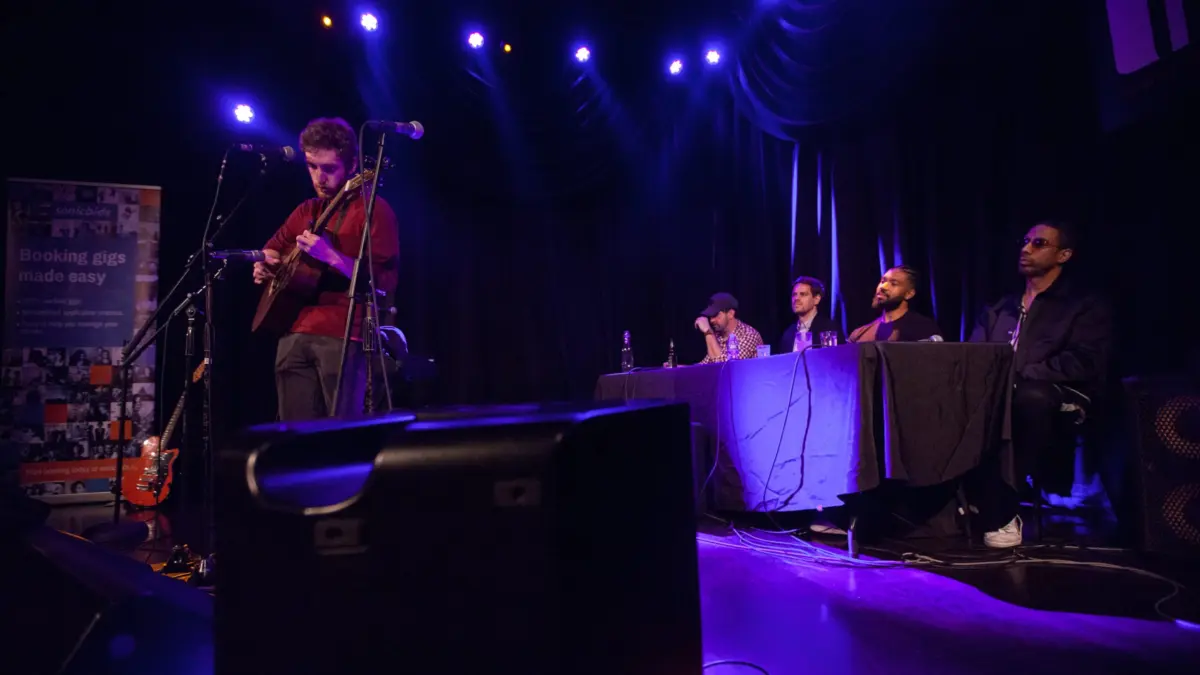
As the industry becomes more digitized, the demand for structured, in-person professional development has surged. Initiatives like the Feedback Collective Panel Discussion and various songwriting workshops, such as those hosted by Sonicbids, have become critical touchpoints for the independent community. These events serve a dual purpose: they provide high-level industry education and create a "neutral ground" for networking.
The hosting of jam sessions or workshops by the artists themselves represents a shift from a passive to a proactive business stance. By organizing a session at a community center or a local venue, an artist establishes themselves as a "connector" within their scene. This leadership role naturally attracts talent from diverse genres. For instance, the fusion of a rock guitarist with a jazz saxophonist in a controlled, collaborative environment can lead to the development of a "hybrid genre," which is currently a high-performing category on streaming algorithms.
Furthermore, these sessions act as an informal vetting process. In a professional capacity, musicians are more likely to recommend or hire individuals they have personally played with in a low-pressure environment. The rapport built during a three-hour jam session often outweighs the impact of a digital press kit (DPK) sent via email.
Digital Platforms as Collaborative Ecosystems
While mainstream social media platforms like Instagram and TikTok are essential for fan engagement, they are often less effective for peer-to-peer professional networking due to their algorithmic focus on viral content. In response, specialized platforms like BandLab and SoundCloud have evolved into collaborative ecosystems.

BandLab, which reported over 60 million users globally, allows artists to share stems and collaborate on tracks in real-time across different time zones. This asynchronous collaboration model has lowered the barrier to entry for international projects, allowing a producer in Berlin to work seamlessly with a vocalist in Tokyo. SoundCloud’s "creator-first" features, such as direct messaging and detailed track commenting, enable artists to engage with their peers on a technical level.
Journalistic analysis of streaming trends indicates that "collab tracks" frequently outperform solo releases. This is attributed to the "audience merging" effect, where the followers of both artists are notified of the release, effectively doubling the initial reach without additional marketing spend.
The Volunteer Pipeline: Accessing Industry Gatekeepers
For many independent musicians, the "gatekeepers" of the industry—festival bookers, talent buyers, and veteran engineers—remain inaccessible. However, volunteering at music festivals and industry conferences provides a legitimate "backstage pass" to these networks.
The chronology of a major music festival involves months of planning and a high reliance on a skilled volunteer workforce. By working in production, artist relations, or even logistics, musicians gain a firsthand look at the operational side of the industry. More importantly, they are placed in the same physical space as decision-makers.
Statements from festival organizers at events like SXSW (South by Southwest) suggest that a significant percentage of their seasonal staff and future performers are drawn from their volunteer pools. The key to successful networking in this context is professionalism; a volunteer who is reliable and hardworking is far more likely to have their music heard by a promoter than one who simply hands out business cards. The goal is to build a reputation as a professional peer before identifying as a performer.

Leveraging the Fanbase as a Networking Resource
A common oversight among independent artists is the failure to recognize their existing fanbase as a networking asset. The "1,000 True Fans" theory, proposed by Kevin Kelly, posits that an artist only needs a modest, dedicated following to be financially viable. In the modern era, this theory has been expanded to include the fan’s role as a collaborator and connector.
By utilizing surveys, polls, and direct engagement on platforms like Discord or Patreon, artists can involve their fans in the creative process. This often leads to unexpected professional connections. A fan who works in graphic design may offer to create album art, or a fan with connections to a local radio station might facilitate an interview.
Furthermore, "fan-sourced" collaboration—where fans suggest artists they would like to see their favorite musician work with—can provide valuable data for an artist’s outreach strategy. If a significant portion of the audience also listens to a specific peer artist, it serves as a data-backed justification for a collaborative proposal.
Analysis of Implications and Future Trends
The movement toward community-centric networking has profound implications for the sustainability of the independent music sector. Firstly, it mitigates the "burnout" associated with the isolated nature of digital content creation. By building a support network of peers, artists can share resources, such as equipment, touring vans, and industry contacts, thereby reducing the overhead costs of their business.
Secondly, the rise of "micro-scenes"—highly localized or niche-specific communities—is challenging the dominance of mainstream pop culture. These scenes are often self-sustaining, with their own internal economies and distribution networks. As the industry continues to fragment, the ability to navigate and contribute to these communities will be the defining characteristic of a successful career.

In conclusion, the path to success for the independent musician is no longer a solitary climb but a collective effort. By embracing local arts, utilizing specialized digital tools, volunteering for industry access, and engaging their fanbase, musicians can build a robust professional infrastructure. Networking is not merely a means to an end; it is the foundation upon which a resilient and creative career is built. As the global music economy continues to evolve, those who prioritize community and collaboration will be the ones who not only survive but redefine the future of the art form.
