

The global music industry is currently undergoing a structural transformation characterized by the rapid decentralization of production and distribution. As major labels continue to pivot toward data-driven talent acquisition, the onus of career development has shifted onto the independent artist. Recent industry reports indicate that the "independent artist" sector is the fastest-growing segment of the global music market, generating over $1.2 billion in annual revenue. However, this growth has introduced a secondary challenge: the isolation of the digital-first creator. For the modern musician, networking is no longer a peripheral activity but a core business requirement. While traditional networking often carries a connotation of transactional social climbing, a new paradigm of collaborative community-building is emerging. By leveraging cross-disciplinary events, peer-led workshops, niche digital platforms, festival volunteerism, and direct fan engagement, independent artists are bypassing traditional gatekeepers to build sustainable, self-contained ecosystems.
The Historical Evolution of Musical Networking
To understand the current necessity of innovative networking, one must examine the chronology of professional connectivity within the music industry. During the mid-20th century, networking was geographically centralized in "hub cities" such as Nashville, London, and New York. Artists relied on physical proximity to recording studios and the "pay-to-play" live circuit to meet collaborators and industry executives. The 1990s and early 2000s introduced the first wave of digital disruption with platforms like MySpace and later SoundCloud, which democratized access to global audiences but inadvertently diluted the quality of professional interactions through sheer volume.
By 2010, the "social media era" forced artists into a perpetual cycle of content creation, often at the expense of genuine artistic collaboration. Today, we are witnessing a "correction" phase. Market saturation has made algorithmic discovery less reliable, leading artists back to localized and specialized forms of connection. The modern timeline of a successful independent career now prioritizes "horizontal networking"—building relationships with peers and professionals in adjacent fields—rather than "vertical networking," which focuses solely on attracting the attention of senior executives.

Cross-Disciplinary Integration: The Local Arts Ecosystem
A significant trend in the independent sector is the move toward interdisciplinary collaboration. Local arts scenes, encompassing visual arts, theater, and performance poetry, provide a fertile ground for musicians to find unique opportunities that traditional music venues lack. According to data from the National Endowment for the Arts, cross-sector collaborations often result in higher engagement rates because they tap into overlapping demographics.
When a musician engages with a local art gallery or a theater troupe, they are positioning their work within a different cultural context. For example, the demand for immersive art installations has risen by 30% over the last five years, creating a niche market for "soundscape" designers and experimental composers. A sculptor requiring a sonic backdrop for an exhibition or a theater director seeking an original score represents a professional opportunity that is often less competitive than the traditional club circuit. These environments allow musicians to demonstrate their versatility and professional reliability to a diverse group of creatives who may eventually require musical services for commercial or private projects.
The Peer-Led Model: Workshops and Jam Sessions
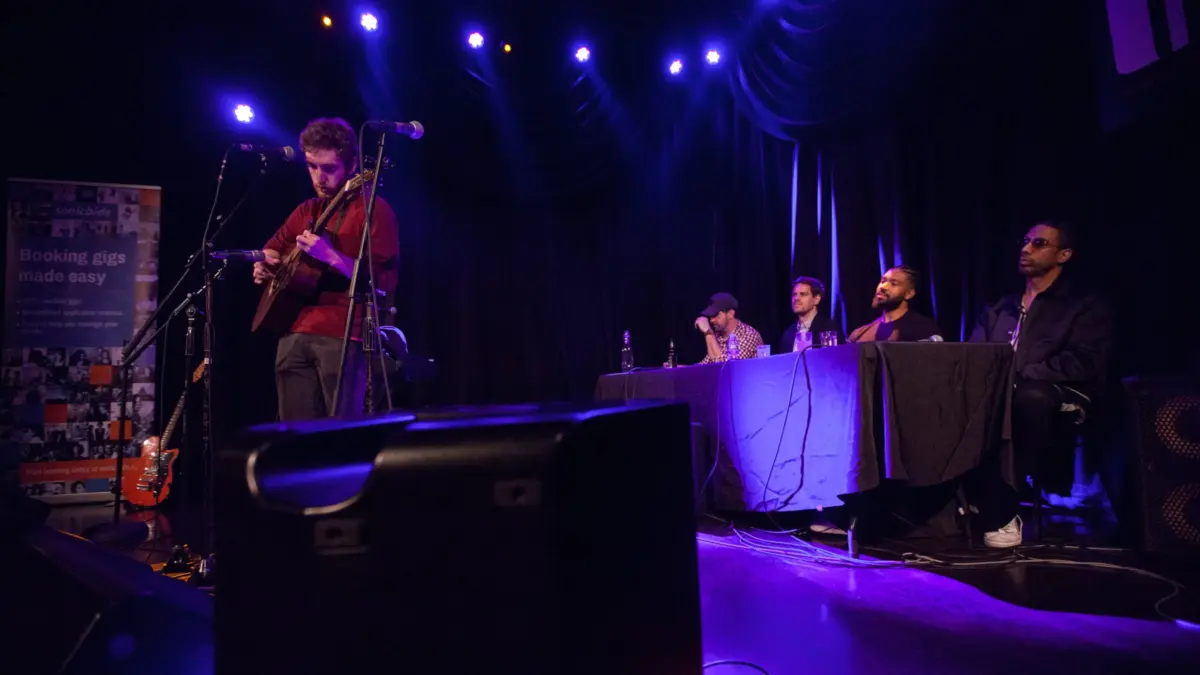
The rise of the "prosumer"—an artist who both produces and consumes high-end creative tools—has led to the proliferation of peer-led workshops and jam sessions. Organizations such as Sonicbids have championed this model through initiatives like the Feedback Collective. These events serve a dual purpose: they act as a laboratory for musical experimentation and as a vetting ground for future collaborators.
Hosting a workshop or a jam session shifts the power dynamic from the artist as a "seeker" to the artist as a "facilitator." From a psychological perspective, this enhances the host’s social capital within their local community. Data suggests that musicians who regularly host or participate in structured collaborative environments are 40% more likely to be referred for session work or touring positions. By inviting musicians from disparate genres—such as pairing a rock instrumentalist with a jazz-trained soloist—artists can foster "innovation through friction," creating hybrid sounds that distinguish their brand in a crowded marketplace.

Digital Strategy: Niche Platforms vs. Mainstream Social Media
While Instagram and TikTok are essential for audience reach, they are often suboptimal for professional networking due to their high noise-to-signal ratio. Journalistic analysis of the digital landscape reveals a shift toward "utility-based" platforms. BandLab, for instance, reported surpassing 60 million users in 2023, largely due to its cloud-based collaborative features. Unlike mainstream social media, these platforms are designed specifically for the technical aspects of music creation.
Professional networking on these platforms requires a move away from "broadcast" communication toward "participatory" engagement. This involves leaving detailed technical feedback on tracks, participating in open-source "stems" challenges, and initiating private collaborative projects. This method of networking is rooted in the "Gift Economy," where providing value to others precedes the expectation of a return. Industry analysts suggest that these micro-communities are becoming the new "A&R labs," where talent is discovered not by scouts, but by peers who eventually rise together.
The Festival Volunteerism Pipeline
Music festivals represent the pinnacle of industry concentration, but for independent artists, the barrier to entry as a performer is high. Volunteering offers a strategic "backdoor" into these environments. Analysis of festival labor structures shows that volunteer roles often put individuals in direct contact with production managers, stage hands, and touring artists.
This form of "service-based networking" allows an artist to observe the logistical realities of high-level performance while building a rapport with the people who manage the infrastructure of the industry. It is a common trajectory for volunteers to transition into paid production roles or to secure performance slots in subsequent years through the relationships forged behind the scenes. In this context, the value of the network is found in the shared struggle of event execution, which builds a level of trust that a cold email or a business card exchange cannot replicate.

Leveraging the Fanbase as a Networking Resource
Perhaps the most underutilized asset in an independent musician’s arsenal is their existing fanbase. The "1,000 True Fans" theory, popularized by Kevin Kelly, posits that an artist only needs a modest, dedicated following to be commercially viable. However, modern applications of this theory suggest that fans are also a gateway to professional networks.
Surveys and direct digital engagement allow artists to map the professional backgrounds of their audience. It is not uncommon for a fan to be a graphic designer, a venue owner, or a journalist. By involving the fanbase in the creative process—such as asking for recommendations for collaborators—the artist fosters a sense of "co-ownership" in the project. This strategy transforms the audience from a passive revenue stream into an active promotional and networking engine.
Industry Response and Economic Implications
The shift toward grassroots networking has not gone unnoticed by major industry players. Distribution companies and streaming services are increasingly building "collaboration tools" into their dashboards, recognizing that the more an artist collaborates, the more content they produce, and the more "linkages" they create across different listener profiles.
From an economic standpoint, these networking strategies reduce the "cost of discovery." In the traditional model, labels spent millions on artist development and marketing. In the new model, the artist self-develops through their network, arriving at the professional stage with a pre-vetted brand and a portfolio of collaborative work. This decentralization is effectively democratizing the industry, allowing artists in remote locations to build global careers through digital and localized strategic alliances.

Broader Impact and Future Outlook
As the music industry continues to evolve, the definition of a "successful" musician is expanding beyond chart positions to include "creative entrepreneurs" who sustain themselves through a web of professional relationships. The move away from isolated creation toward a community-centric model is expected to increase the longevity of independent careers.
In conclusion, the intimidation factor of networking is significantly mitigated when viewed through the lens of community building rather than self-promotion. The integration of local art events, peer-led workshops, niche digital engagement, industry service, and fan collaboration creates a robust framework for professional growth. As the digital and physical worlds of music continue to blur, those who master the art of the "meaningful connection" will be the ones who define the sound of the next decade. The evidence suggests that the future of music is not just independent; it is inherently collaborative. For the musician willing to step outside the studio and into the community, the opportunities for growth are limited only by their willingness to engage.
