

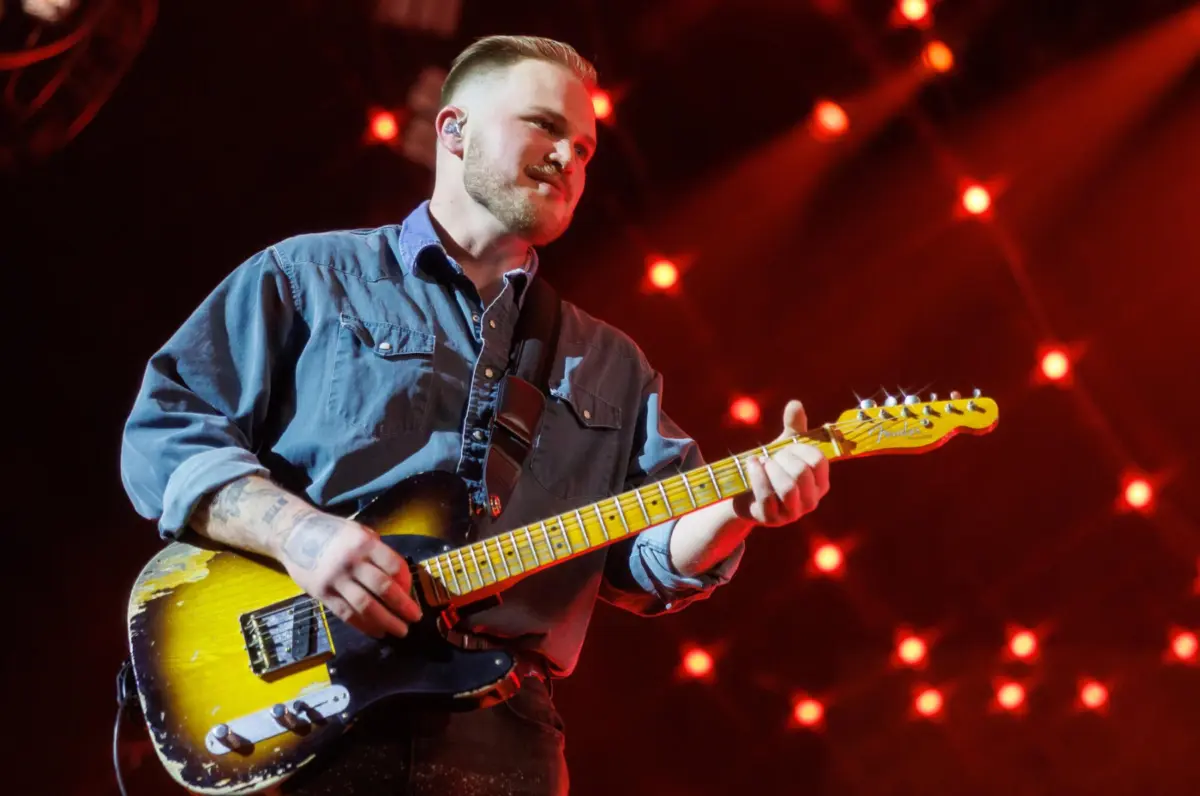
Country music sensation Zach Bryan has shared a deeply personal and revealing account of his journey to sobriety in an extensive two-hour interview with Academy Award-winning actor Matthew McConaughey, uploaded to Bryan’s official YouTube channel on October 16. The intimate discussion, which quickly garnered significant attention, delves into Bryan’s past relationship with alcohol, his initial skepticism about sobriety, and the pivotal experience that ultimately led him to quit drinking, marking a significant moment of vulnerability for the 30-year-old artist. This candid revelation arrives concurrently with the release of Bryan’s latest eight-song EP, Young Manhood and Other Donatable Organs, which dropped on Friday, October 16, through Warner Records, adding a profound personal layer to his ongoing artistic output.
A Deep Dive with Matthew McConaughey
The conversation, hosted by McConaughey, known for his philosophical insights and empathetic interviewing style, provided a unique platform for Bryan to explore the complexities of his past struggles. McConaughey’s reputation for fostering environments of authentic self-reflection proved instrumental in drawing out Bryan’s raw and honest narrative. The choice of McConaughey as interviewer is particularly noteworthy; the actor often engages in discussions about life’s profound questions, personal growth, and the pursuit of meaning, aligning perfectly with the introspective nature of Bryan’s story. His presence likely encouraged Bryan to delve deeper into the emotional landscape of his experience, offering fans an unparalleled glimpse into the private world of an artist who has rapidly become a voice for a generation.
Bryan initiated the discussion by recalling his prior misconceptions about sobriety, stating, “I always thought sobriety was a joke because it’s people who couldn’t control themselves celebrating not being able to control themselves. When I was drinking a lot, I thought, ‘Why can’t you control yourself?’ I never realized I had a problem.” This initial sentiment highlights a common barrier to recognizing and addressing alcohol dependency – a perceived stigma and a lack of self-awareness regarding one’s own habits. His journey from this dismissive viewpoint to embracing sobriety underscores a significant personal transformation, one that resonates with many individuals navigating similar paths. The interview format, allowing for an unhurried exploration of these thoughts, provided the necessary space for Bryan to articulate the nuanced evolution of his perspective.
The Rising Star: Zach Bryan’s Trajectory
Zach Bryan’s ascent in the country music landscape has been nothing short of meteoric. Emerging from the independent scene with a raw, authentic sound that defies mainstream country conventions, Bryan quickly captivated audiences with his deeply personal lyrics, gravelly voice, and a genuine connection to his roots. His breakthrough came with viral success on social media platforms, leading to a major label deal and a string of critically acclaimed releases. His 2022 album, American Heartbreak, garnered widespread praise, and his 2023 self-titled album debuted at No. 1 on the Billboard 200, cementing his status as a formidable force in contemporary music.
Bryan’s music often explores themes of heartbreak, existential questioning, the struggles of the working class, and the search for meaning amidst life’s chaos. This lyrical authenticity has cultivated an exceptionally loyal fanbase, who often see their own struggles and triumphs reflected in his songs. Given the introspective nature of his artistry, his decision to openly discuss his sobriety journey aligns perfectly with the transparent and vulnerable persona he has cultivated. This willingness to share his personal battles only deepens the profound bond he shares with his listeners, offering not just music, but a shared human experience. His public persona, marked by a down-to-earth demeanor and a powerful connection to his audience, makes his personal revelations particularly impactful within the country music community and beyond.
The Road to Self-Discovery: A Motorcycle Trip’s Unforeseen Turning Point
The catalyst for Bryan’s sobriety was a month-long solo motorcycle trip he embarked on, originally planned with friends from New York City to Los Angeles. When his companions were unable to join, Bryan decided to undertake the extensive journey alone, seeking what he initially perceived as a "soul journey." This solitary adventure, intended for introspection and exploration of America’s vast landscapes, ironically became a mirror reflecting his deepening reliance on alcohol.
Bryan recounted the early stages of the trip, beginning with a night of drinking at a bar in the West Village, New York City, before setting off. "I wake up, get on my motorcycle and I stayed at all these national parks," he described. The journey was punctuated by memorable experiences: breathtaking natural scenery across multiple states, dining with veterans encountered along the way, and even skydiving from vintage planes – moments that should have been profoundly enriching. However, beneath these seemingly profound activities, a pattern of heavy drinking persisted, shadowing the intended purpose of his quest. Bryan candidly admitted, "I was stopping at all these bars and drinking myself to sleep. Waking up every morning, getting on my motorcycle thinking I was on some sort of soul journey." This stark contrast between the external pursuit of adventure and the internal struggle with alcohol paints a poignant picture of how addiction can shadow even the most profound personal endeavors, blurring the lines between genuine exploration and self-medication. The romanticized notion of a "soul journey" was, in reality, underpinned by a coping mechanism that prevented true self-reflection. The freedom of the open road, meant to inspire, instead became a backdrop for a deepening dependence.
The turning point arrived weeks into the trip, as Bryan found himself in Seattle. It was there, outside a nondescript Pilot truck stop, that the weight of his actions and the emptiness they had wrought became undeniable. "After all this beautiful scenery, all these nights, all these bars I’ve been to, all this s*** that I’ve done, I was at this Pilot truck stop right outside of Seattle. I’ll never forget this for as long as I live," he shared. He purchased a 40-ounce Budweiser and sat on the curb, his motorcycle before him, confronting the stark reality of his situation. The moment was devoid of the grandiosity he had sought; it was raw, unadorned, and deeply personal. The cacophony of passing trucks and the fluorescent glow of the truck stop lights contrasted sharply with the internal quietude of his revelation.
Initial Skepticism and Profound Realization
In that desolate truck stop parking lot, Bryan experienced a profound epiphany. The cumulative effect of weeks spent chasing a spiritual awakening while simultaneously numbing himself with alcohol culminated in a piercing question: "What the hell was all that worth? Why did I do any of that? I feel emptier than when I left." This stark realization shattered the illusion of his "soul journey," revealing it as an escape rather than an exploration. He felt he had "wasted 30 days" in a cycle of drinking and transient experiences, never truly connecting with himself or the moments he was living. The picturesque landscapes and adventurous feats had become mere backdrops to his ongoing internal battle, never truly penetrating the fog of his consumption.
This moment of clarity forced him to critically examine his drinking habits. "It was just me in a fing truck stop parking lot. And that’s when I said, ‘Why am I drinking right now? What am I celebrating?’ That’s when I kind of looked in the mirror," Bryan recounted. The raw honesty of this self-confrontation underscores the often-unglamorous reality of recovery – it rarely occurs in a grand, cinematic fashion but often in quiet, unexpected moments of despair and truth. He also reiterated his prior self-perception, saying, "I’m not the fing sober type either," illustrating the ingrained belief systems he had to dismantle to accept his need for change. This confession makes his subsequent success in sobriety all the more impactful, demonstrating that personal transformation is possible even for those who believe it’s beyond their reach. The struggle to reconcile his self-image with the reality of his situation was a critical step in his path to recovery.

The Broader Context: Addiction and Recovery in the Public Eye
Bryan’s candid sharing contributes to a growing public discourse surrounding addiction and mental health, particularly within the entertainment industry. According to the National Institute on Alcohol Abuse and Alcoholism (NIAAA), an estimated 14.5 million people aged 12 and older had alcohol use disorder (AUD) in 2019 in the United States, a figure that highlights the widespread nature of the challenge. The music industry, often characterized by its demanding lifestyle, constant touring pressures, late-night schedules, and easy access to substances, has historically seen a high incidence of addiction among its artists. Bryan’s story serves as a powerful reminder that substance abuse transcends social status, profession, or perceived success, affecting individuals from all walks of life.
In recent years, there has been a noticeable shift in how public figures discuss their struggles. Once shrouded in secrecy and shame, addiction narratives are increasingly being shared openly, contributing to the destigmatization of mental health and substance use disorders. Artists like Demi Lovato, Elton John, and Bruce Springsteen have openly discussed their battles with addiction, using their platforms to raise awareness and offer hope. Zach Bryan’s interview with Matthew McConaughey adds a significant voice to this chorus, especially within the country music genre, which has a complex relationship with alcohol in its cultural imagery and lyrical themes. His willingness to speak plainly about his experience provides an invaluable resource for fans who may be grappling with similar issues, reinforcing the message that help is available and recovery is achievable. The authenticity that defines Bryan’s music is now extending to his personal narrative, forging an even deeper bond with his audience and potentially inspiring many to seek their own paths to recovery.
Creative Rejuvenation and Personal Fulfillment
Despite his earlier belief that sobriety was not for him, Bryan now speaks with profound conviction about the positive changes it has brought to his life. "Quitting drinking has been really great. I’ve had a lot of fun," he affirmed. Beyond mere abstinence, Bryan describes a holistic rejuvenation, particularly in his creative endeavors. "I enjoy writing again, I haven’t felt [like this] since I was 17. I feel like a kid again. I wake up and I’m ready to go, I want to jump in the pond. I want to play with the dog. I want to do everything." This resurgence of childlike enthusiasm and creative vitality is a testament to the transformative power of sobriety, illustrating how shedding the weight of addiction can unlock dormant joy and inspiration. For a songwriter whose craft relies heavily on emotional depth and observational acuity, this newfound clarity promises to enrich his future artistic output significantly.
His ability to connect with his craft on a deeper, more uninhibited level suggests that his music may evolve further, potentially exploring themes of resilience, gratitude, and the complexities of sustained recovery with even greater nuance. Fans, who have always appreciated his raw honesty, are likely to embrace this new chapter, recognizing the courage it takes to confront personal demons and emerge stronger. The vibrancy he describes in his daily life – wanting to "jump in the pond" or "play with the dog" – speaks to a return to simple pleasures and an appreciation for life that alcohol once obscured. This rekindled zest for life is not merely a cessation of drinking but a profound reclamation of self, a journey from emptiness to a renewed sense of purpose and boundless energy.
The New EP: Young Manhood and Other Donatable Organs
The timing of this deeply personal interview is particularly significant, coinciding with the release of Bryan’s new eight-song EP, Young Manhood and Other Donatable Organs. This strategic release suggests a deliberate connection between his personal narrative of growth and the themes explored in his latest music. The EP features notable collaborations, including "Lies" with acclaimed artist Lana Del Rey and "Plainsman" with the respected band Turnpike Troubadours. Other tracks, such as "Robot Killed the Working Man" and "Backwards," hint at the introspective and often socially conscious songwriting for which Bryan is known, perhaps now imbued with a fresh perspective informed by his sobriety.
Young Manhood and Other Donatable Organs marks Bryan’s first new music since his critically acclaimed sixth studio album, With Heaven On Top, which debuted at No. 1 on the Billboard 200 in January. The title itself, Young Manhood and Other Donatable Organs, carries a weight of maturity and reflection, possibly alluding to the shedding of old habits and the offering of one’s truest self. This thematic resonance between his public confession and his artistic release reinforces Bryan’s reputation as an artist who weaves his lived experiences directly into his creative work, offering a coherent and authentic narrative to his audience. The collaborations on the EP also demonstrate his continued artistic growth and willingness to experiment, expanding his musical landscape while maintaining his core identity and profound lyrical depth. The release serves as a tangible manifestation of his ongoing personal evolution, allowing fans to witness his journey unfold both through his words and his melodies.
Implications for Bryan’s Career and Public Discourse
Zach Bryan’s willingness to share such an intimate struggle is likely to have far-reaching implications, both for his career and for the broader conversation around addiction. For his fans, who are deeply loyal and appreciative of his authenticity, this interview will undoubtedly deepen their connection to him. It humanizes an artist who has rapidly ascended to stardom, reminding them of the shared vulnerabilities that connect us all. This level of honesty can inspire countless individuals who are silently battling similar issues, demonstrating that seeking help and achieving sobriety is a path worth pursuing, regardless of one’s public stature. The outpouring of support and shared stories from his fanbase following the interview underscores its immediate impact.
From a professional standpoint, this candidness can further solidify Bryan’s position as an artist of integrity and substance. In an industry often criticized for its superficiality, his raw honesty stands out, reinforcing his image as a genuine storyteller whose art is inextricably linked to his life experiences. It may also open new avenues for his music, allowing him to explore even more profound and complex themes in his future songwriting, drawing directly from his journey of recovery and self-discovery. This new chapter could lead to a more nuanced and hopeful lyrical landscape, while still retaining the raw edge that defines his sound.
The interview also serves as a powerful reminder of the importance of mental health support and resources within the demanding music industry. As more artists bravely share their stories, it encourages a culture of openness and support, potentially leading to better infrastructure for artist well-being, including accessible mental health services and addiction recovery programs. Zach Bryan, through this conversation with Matthew McConaughey, has not only shared his personal triumph but has also contributed significantly to a vital public dialogue, reinforcing the idea that vulnerability can be a profound source of strength and inspiration. His story is not just one of overcoming addiction, but of rediscovering joy, purpose, and creative freedom, offering a compelling narrative of hope and transformation that will resonate far beyond the music charts.
The full interview is available for public viewing on Zach Bryan’s YouTube channel, allowing his global fanbase to witness this powerful and transformative conversation firsthand. It stands as a testament to the power of self-reflection and the courage to change, echoing themes that have long resonated within the heart of country music and human experience itself.
