

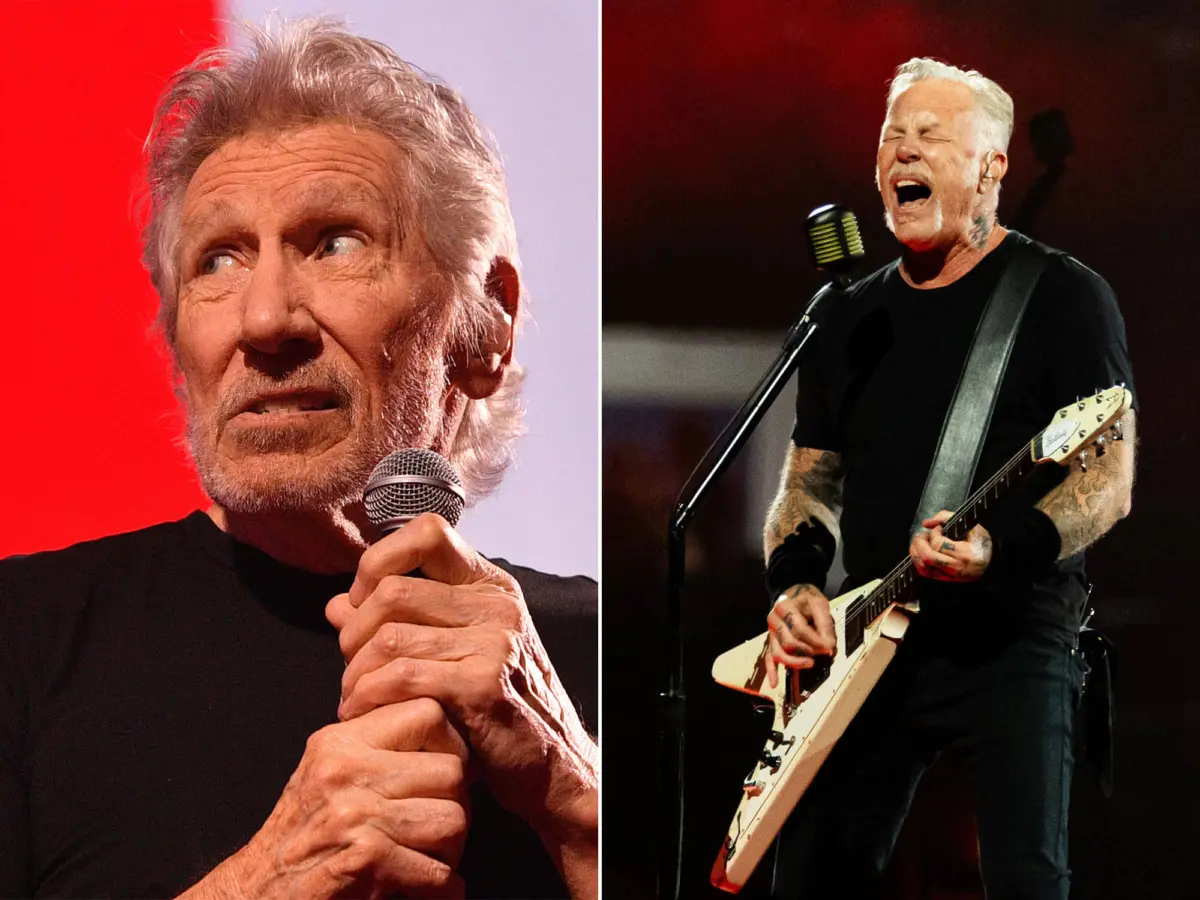
A significant rift has emerged in the rock music landscape, as legendary former Pink Floyd bassist Roger Waters has launched a vitriolic attack on Metallica frontman James Hetfield. The criticism follows Hetfield’s recent comments at a performance at the Las Vegas Sphere, where he declared Metallica’s intention to remain "apolitical," stating the band was "not here to influence you with any bullshit." Waters, a long-standing and often controversial figure known for his fervent political activism, did not mince words in his subsequent podcast appearance, leveling deeply personal and professional insults against Hetfield. This public spat has reignited the perennial debate about the role of artists in political discourse, drawing lines between those who believe music should be an escape and those who see it as a powerful platform for social commentary.
Hetfield’s "No Bullshit" Declaration at the Sphere
The genesis of this controversy lies in James Hetfield’s statements made during Metallica’s "M72 World Tour" stop at the innovative Sphere in Las Vegas. Addressing the sold-out crowd, Hetfield articulated a clear philosophy regarding the band’s stage presence and purpose. "Metallica is not here, like some other entertainers, to influence you with their bullshit," Hetfield asserted to the audience. He continued, emphasizing a desire for pure musical engagement: "Okay? We are here… no bullshit… we’re here to forget about all the outside shit, okay? Metallica’s agenda is love, energy and heavy music, baby." His comments were widely interpreted as a direct reference to a growing trend among contemporary artists who have used their live performances and public platforms to advocate for various political and social causes. Recent examples include Hayley Williams of Paramore and Macklemore, the latter reportedly being dropped from an Ed Sheeran tour for making political statements, highlighting a palpable tension within the industry regarding such expressions.
Hetfield’s declaration, while seemingly intended to foster a sense of unity and escapism through music, immediately drew a mixed response. While some fans undoubtedly appreciated the focus on pure entertainment, many others, particularly on social media, quickly pointed out a perceived inconsistency with Metallica’s own extensive history. The band, a titan of heavy metal with a career spanning over four decades, has frequently woven complex socio-political themes into their lyrics and music, often providing incisive critiques of war, injustice, and societal failings.
Metallica’s Historically Charged Lyrical Landscape
The notion of Metallica as an "apolitical" entity, as articulated by Hetfield, stands in stark contrast to a significant portion of their critically acclaimed discography. Since their inception in the early 1980s, the band has consistently explored themes that are inherently political, challenging listeners to confront difficult realities.
One of their most iconic and undeniably political tracks is "One" from the 1988 album …And Justice for All. Inspired by Dalton Trumbo’s novel Johnny Got His Gun, the song graphically depicts the horrors of war through the eyes of a severely wounded soldier. Its stark anti-war message resonated deeply, earning Metallica their first Grammy Award for Best Metal Performance. The album …And Justice for All itself is a concept album largely dedicated to themes of political corruption, legal injustice, and environmental degradation, with tracks like the title track and "Harvester of Sorrow" painting bleak pictures of societal decay.
Further examples abound. "Disposable Heroes," from their 1986 masterpiece Master of Puppets, offers a blistering critique of soldiers being used as pawns by governments in endless conflicts. The track’s raw power amplifies its message against the dehumanization inherent in warfare. Even "Don’t Tread on Me," from the commercially successful 1991 "Black Album," while sometimes interpreted in different political contexts, draws directly from American revolutionary symbolism, embodying a spirit of fierce independence and resistance against perceived overreach, a theme often associated with political movements.
Beyond these prominent examples, Metallica’s discography is replete with songs that touch upon various social commentaries, from the critique of media manipulation in "Damage, Inc." to broader themes of individual freedom versus societal control. This rich lyrical tapestry underscores a consistent engagement with the world’s complexities, making Hetfield’s recent "apolitical" stance a point of contention for many long-time followers and music critics alike. The band’s artistic output has, for decades, influenced listeners not just with its musical prowess but also with its thought-provoking narratives, often challenging the status quo.
Roger Waters’ Incendiary Retort
It was against this backdrop of Metallica’s intricate history and Hetfield’s recent declaration that Roger Waters, a musician whose career is virtually synonymous with political and social commentary, weighed in. Appearing on a podcast, Waters delivered a scathing, highly personal denunciation of Hetfield, leaving little room for ambiguity regarding his disdain.
"Can we stop talking about this prick? I’m so bored with him," Waters began, immediately setting an aggressive tone. He continued, escalating his critique into a series of direct insults: "He’s just showing that he’s a complete prick. He’s got an IQ of about three, and why we’re talking about him, I honestly don’t know because he’s a nobody and he’ll always be. He may have a few hundred million dollars or whatever, but he’s a prick." The intensity of Waters’ language underscored not just a disagreement with Hetfield’s philosophy but a deep-seated personal contempt.
Waters further extended his critique to Hetfield’s musical capabilities, questioning his artistry. "He’s no musician," Waters asserted, challenging the core identity of a frontman for one of the world’s most successful heavy metal bands. He elaborated on this point with a specific anecdote, stating, "I heard them playing acoustic instruments and they couldn’t. It was appalling." This particular claim, however, has been met with skepticism by many who are familiar with Metallica’s extensive repertoire and live performances. James Hetfield, alongside lead guitarist Kirk Hammett, has frequently showcased adept acoustic playing, particularly in songs like the intros to "Fade to Black" and "The Unforgiven," as well as during various "Symphony & Metallica" and acoustic benefit concerts. These performances are generally regarded as solid and capable, making Waters’ dismissal of Hetfield’s musicianship appear to be an exaggeration, potentially driven more by personal animosity than objective assessment.

Roger Waters: A History of Activism and Controversy
Roger Waters’ furious reaction to Hetfield’s "apolitical" stance is hardly surprising given his own deeply ingrained identity as an artist-activist. Throughout his illustrious career, both with Pink Floyd and as a solo artist, Waters has consistently used his platform to champion political causes, often with uncompromising fervor, and frequently drawing both fervent support and severe criticism.
With Pink Floyd, Waters was the primary lyricist and conceptual architect behind some of rock’s most politically charged albums. The Dark Side of the Moon (1973) explored themes of greed, mental illness, and the pressures of modern life, implicitly critiquing societal structures. Animals (1977) was a direct, searing allegory inspired by George Orwell’s Animal Farm, categorizing people into sheep, dogs, and pigs to critique capitalism and class struggle. The Wall (1979), a seminal work, delved into themes of war, fascism, alienation, and the oppressive nature of authority figures, culminating in iconic imagery and a powerful anti-establishment message. These albums sold millions worldwide – The Dark Side of the Moon alone has spent over 900 weeks on the Billboard 200 chart and sold over 45 million copies globally – demonstrating the immense reach of Waters’ politically infused art.
In his solo career, Waters has continued this trajectory, becoming an even more outspoken advocate for human rights, particularly focusing on the Israeli-Palestinian conflict. His activism has led to boycotts, canceled concerts, and accusations of antisemitism, which he vehemently denies, maintaining his criticism is directed at the policies of the Israeli government, not the Jewish people. A notable incident occurred in 2023 when, during a concert in Berlin, Waters appeared on stage dressed in a trench coat with a red armband, reminiscent of Nazi SS uniforms, during a segment from The Wall where a fictional fascist character named Pink descends into madness. This imagery, a theatrical depiction of fascism from the album’s narrative, led to an investigation by German police for incitement and drew condemnation from the US State Department, which labeled his actions as "antisemitic." Waters defended his performance, stating it was a continuation of a character he had portrayed since 1980 and a clear critique of fascism, not an endorsement.
This history underscores Waters’ unwavering belief that artists have a moral obligation to engage with political issues and use their platform for social change. For him, the idea of an "apolitical" stance is not merely a preference but a form of intellectual and moral abdication, especially in a world grappling with myriad crises. His sharp condemnation of Hetfield thus stems from a deeply held philosophical conviction that art, particularly rock music, has a responsibility to confront, rather than ignore, the outside world.
The Broader Implications: Art, Authenticity, and the "Shut Up and Sing" Debate
The public exchange between Roger Waters and James Hetfield transcends a mere personal feud between two rock titans; it illuminates a persistent and often heated debate within the music industry and society at large: what is the role of the artist? Should musicians serve as entertainers providing an escape, or as cultural commentators and activists?
Hetfield’s desire for "love, energy and heavy music" and to "forget about all the outside shit" resonates with a segment of the audience that seeks solace and escapism in art. For these fans, music is a refuge from the often-overwhelming complexities of politics and social strife. The "shut up and sing" sentiment, a common refrain directed at politically vocal celebrities, reflects this desire for artists to remain in their perceived lane of entertainment.
Conversely, Waters’ perspective embodies the belief that art is inherently political, whether intentionally or not. He, along with many other artists and critics, argues that to be silent on pressing social and political issues is itself a political statement – one of tacit endorsement or indifference. This viewpoint holds that artists, by virtue of their influence and platform, have a unique opportunity, if not an obligation, to speak truth to power and inspire critical thought.
The inconsistency noted by many regarding Hetfield’s stance versus Metallica’s lyrical history further complicates the discussion of authenticity. Can an artist claim to be "apolitical" when their most celebrated works are deeply steeped in political commentary? This question challenges the integrity of an artist’s public persona versus their artistic output.
Moreover, the financial realities of the music industry play a role. While Waters has maintained his uncompromising stance throughout his career, often at the cost of commercial opportunities or public goodwill, other artists may feel pressure to appeal to a broader audience or avoid alienating certain fan bases, especially in an era where political polarization is intensely high. Metallica, a global touring phenomenon with billions in album sales and concert revenue, operates within a massive commercial ecosystem where "brand" perception can be paramount.
This incident also highlights the generational and stylistic divides within rock music. Waters, a progressive rock pioneer, hails from an era where challenging authority and advocating for change were hallmarks of the genre. Metallica, while politically conscious in its formative years, now operates within a different cultural and commercial landscape.
Ultimately, the Waters-Hetfield dispute serves as a potent reminder that the intersection of music and politics remains a contentious and fluid space. It forces both artists and audiences to reflect on the purpose of art in a fractured world, asking whether it should merely entertain, or if it carries a deeper responsibility to provoke, challenge, and inspire change. As long as artists hold microphones and command stages, this debate is unlikely to find a definitive resolution, ensuring that such passionate clashes will continue to punctuate the cultural landscape.
