

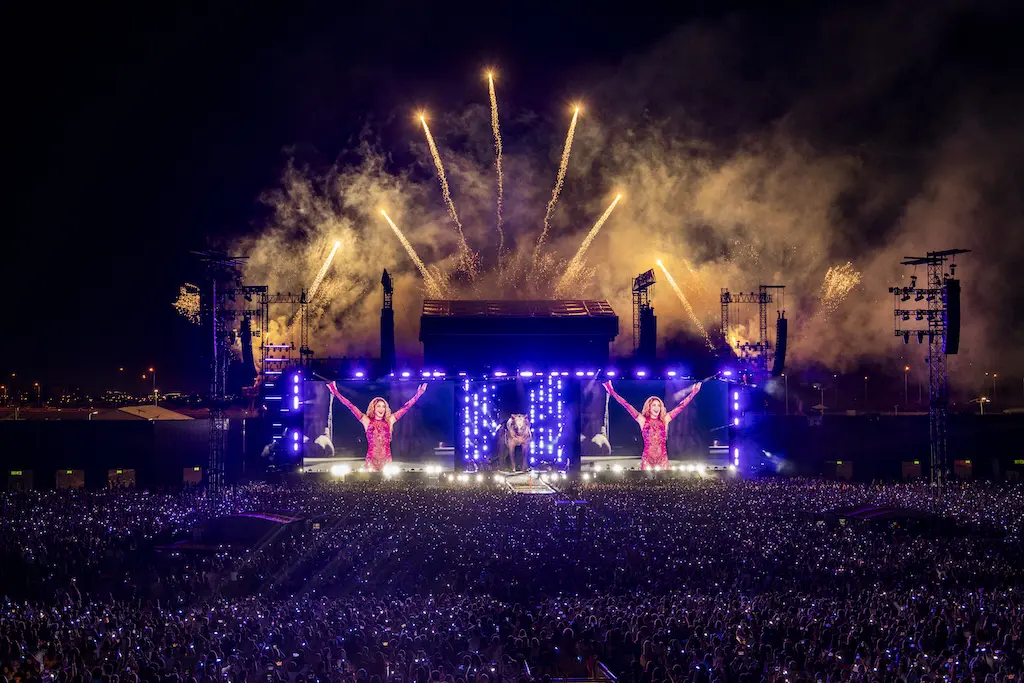
The global music landscape witnessed a historic milestone during the autumn of 2026 as Shakira concluded her record-breaking residency in Madrid. As a cornerstone of her "Las Mujeres Ya No Lloran World Tour," the residency spanned from September to mid-October, transforming the Spanish capital into the epicenter of the international touring industry. Over the course of 13 sold-out performances, the Colombian superstar drew more than 700,000 attendees to a custom-built venue known as the "Shakira Stadium," located on the expansive Iberdrola Music grounds. This massive undertaking was not only a triumph of performance and choreography but also a masterclass in modern live sound reinforcement, utilizing cutting-edge technology from d&b audiotechnik and the logistical expertise of Clair Global.
The "Las Mujeres Ya No Lloran World Tour" marks Shakira’s first major global outing in several years, following the massive commercial success of her twelfth studio album. The decision to host a residency of this magnitude in Madrid reflects a growing trend in the live entertainment industry toward "hub-and-spoke" touring models, where artists remain in a single metropolitan area for an extended period rather than moving daily between cities. This approach allows for higher production values, reduced logistical carbon footprints, and the creation of bespoke environments tailored to the artist’s specific creative vision.
A Custom Venue for a Global Icon
The centerpiece of the Madrid residency was the Shakira Stadium, a temporary yet architecturally sophisticated structure erected specifically for these 13 dates. Situated on the Iberdrola Music site—a venue already famous for hosting the Mad Cool Festival—the temporary stadium was designed to provide optimal sightlines and acoustics for over 50,000 fans per night.
Building a temporary stadium of this scale presented significant engineering hurdles. Unlike permanent arenas, which have fixed acoustic treatments and established power infrastructures, the Shakira Stadium required a ground-up approach to sound design. The project demanded a sound system that could deliver high-impact, studio-quality audio to every corner of the venue while adhering to the strict structural limits of a temporary build. This necessitated the involvement of Clair Global, one of the world’s leading providers of professional sound reinforcement services, to deploy a system capable of meeting the rigorous demands of a world-class pop production.
Technical Specifications: The d&b SL-Series
To achieve the desired audio clarity and power, the technical team selected the SL-Series from d&b audiotechnik. The system architecture was centered around GSL loudspeakers for the main PA and side arrays. The GSL, the flagship of the SL-Series, is renowned for its full-bandwidth directivity control, which minimizes sound spill to the rear and sides of the cabinets—a feature that proved critical for the Madrid residency.
Complementing the GSL mains were KSL-series loudspeakers, utilized as delay systems distributed across the vast grounds to ensure consistent coverage for the furthest reaches of the audience. The low-end reinforcement was managed through a combination of flown and ground-stacked SL-SUB arrays. These subwoofers utilize a cardioid dispersion pattern that significantly reduces the amount of low-frequency energy bleeding back onto the stage, providing a cleaner environment for the performers.
The entire system was powered by d&b D90 amplifiers, the latest generation of high-power processing units. These amplifiers were integrated with d&b’s proprietary ArrayProcessing software. ArrayProcessing allows system technicians to optimize the frequency response and level distribution over the entire audience area, compensating for air absorption and environmental factors to ensure that a fan in the front row and a fan in the highest tier of the stadium experience the same tonal balance.
Overcoming Acoustic and Environmental Challenges
One of the primary challenges of the Madrid residency was the unique stage design. Shakira, known for her high-energy performances and close interaction with her fans, spent a significant portion of the show on a large thrust stage and a circular "B-stage" located well in front of the main PA system. In traditional sound designs, having a vocalist perform in front of the speakers increases the risk of feedback and can muddy the monitors, making it difficult for the artist to hear themselves.
The SL-Series’ ability to control sound dispersion was the solution to this problem. By ensuring that the energy from the main arrays was directed precisely at the audience and not back toward the stage, the audio team was able to maintain high levels of vocal clarity and gain-before-feedback. This isolation allowed Shakira to move freely across the various stage platforms without compromising the audio quality for the broadcast or the live audience.

Beyond the internal acoustics of the stadium, the production had to navigate external environmental constraints. The Iberdrola Music site is located in proximity to residential areas and a prominent hotel. Madrid’s local noise ordinances are notoriously strict, requiring productions to minimize "noise pollution" outside the venue boundaries. The directivity of the d&b GSL and KSL systems, enhanced by ArrayProcessing, allowed the engineers to "hard-cut" the sound at the stadium’s perimeter. This ensured that while the 700,000 fans enjoyed a high-intensity experience, the impact on the surrounding community remained within legal limits.
Insights from the Front of House
The success of the audio production was spearheaded by veteran Front of House (FOH) Engineer Bill Sheppell and System Technician Matt "Slag" Fradley. Sheppell, who has managed sound for some of the world’s largest tours, expressed his admiration for the system’s performance during the residency.
"When I walked the upper tiers of the stadium during soundchecks, I often found myself stopping just to take it in," Sheppell remarked. "The coverage and the sheer impact are exactly what a production of this scale requires. The GSL provides a level of detail that makes mixing a complex show like Shakira’s—which blends Latin rhythms, rock elements, and electronic textures—an absolute pleasure."
Matt Fradley emphasized the importance of the technology behind the speakers. "The GSL and KSL have a fantastic reach," Fradley noted. "They deliver a transparent and musical sound over huge distances. To achieve uniform coverage across a venue of this size, especially a temporary one with its own unique acoustic quirks, ArrayProcessing is simply indispensable. It gives us the tools to manage the sound with surgical precision."
Economic and Cultural Impact of the Residency
The 13-show run in Madrid represents more than just a musical success; it is a significant economic driver for the region. With over 700,000 tickets sold, the residency is estimated to have generated hundreds of millions of euros in revenue, including ticket sales, hospitality, tourism, and local employment. The construction of the Shakira Stadium alone employed hundreds of local contractors, while the nightly operations required a massive workforce of security, catering, and technical staff.
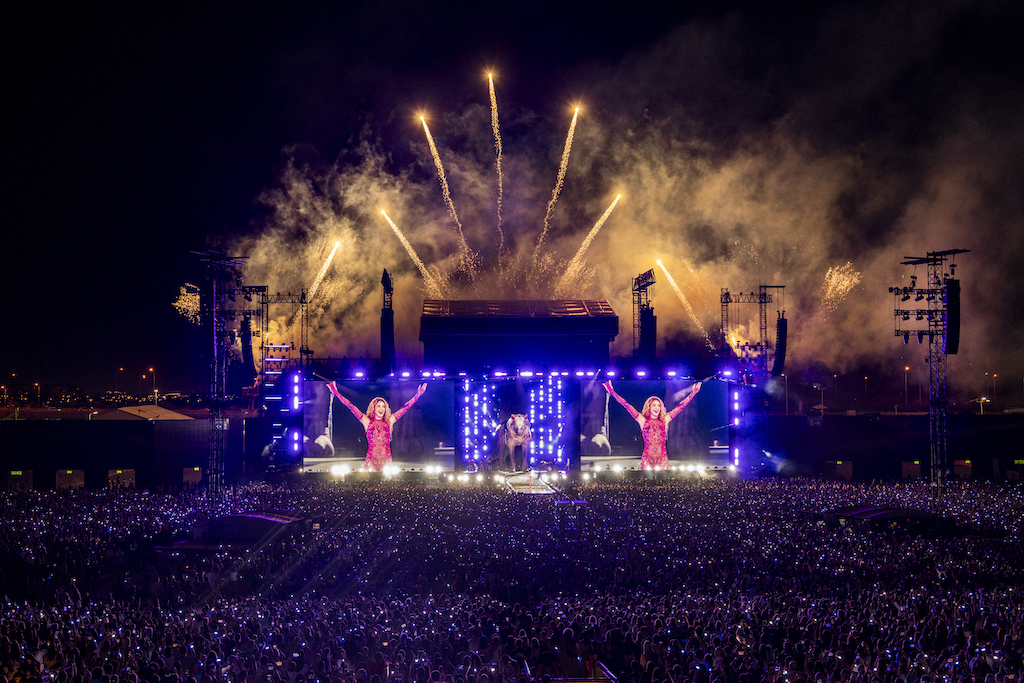
Furthermore, the success of this residency solidifies Madrid’s reputation as a premier destination for global touring acts. By demonstrating that a temporary stadium can successfully host a multi-week residency with world-class production values, the "Las Mujeres Ya No Lloran World Tour" has provided a blueprint for future artists. The ability to draw nearly three-quarters of a million people to a single site over six weeks suggests that the "residency model" previously associated with cities like Las Vegas or London is now a viable strategy for major European capitals.
Broader Industry Implications
The technical achievements of the Shakira residency highlight the ongoing evolution of live sound technology. As audiences demand more immersive and high-quality experiences, the pressure on audio manufacturers and engineers to deliver studio-grade sound in outdoor environments continues to grow. The use of cardioid technology and sophisticated software processing is no longer a luxury but a necessity for large-scale productions.
The collaboration between d&b audiotechnik and Clair Global for this residency also underscores the importance of partnership in the touring industry. Delivering a consistent experience over 13 nights requires not only the best hardware but also a team of experts who can adapt to changing weather conditions, humidity, and the physical wear and tear of a month-long run.
As the "Las Mujeres Ya No Lloran World Tour" continues its journey across other continents, the Madrid residency will be remembered as the point where technology and artistry converged to create an unparalleled spectacle. The 700,000 fans who walked through the gates of the Shakira Stadium witnessed a defining moment in 21st-century pop culture, supported by a sonic foundation that was as powerful and nuanced as the artist herself.
With the conclusion of the Madrid dates, the production moves forward, but the legacy of the Shakira Stadium remains a topic of discussion among industry professionals. The residency proved that with the right combination of visionary artistry, logistical precision, and advanced audio engineering, the boundaries of what is possible in live entertainment can be pushed further than ever before. For Shakira, the "Las Mujeres Ya No Lloran" era is not just a comeback; it is a declaration of her enduring influence and a testament to the team that brings her music to life on the world stage.
