

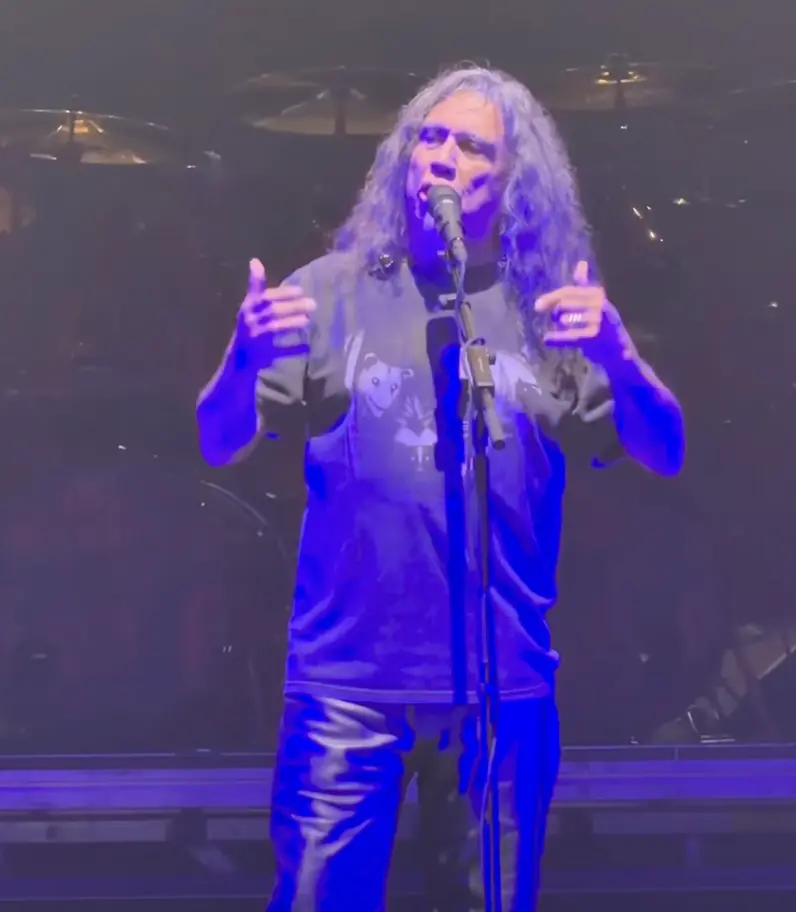
The iconic thrash metal band Slayer delivered a performance at Los Angeles’ Kia Forum last night as part of their highly anticipated "Reign in Blood" anniversary tour, a concert that ultimately transcended a typical live music event due to an unexpected mid-show intervention. The evening, marked by the inclusion of several live rarities, was temporarily paused by safety concerns, leading to a direct and unequivocal lecture from frontman Tom Araya to the fervent crowd. His address, delivered with palpable seriousness, underscored the critical balance between fan enthusiasm and venue safety regulations, highlighting a persistent challenge within the live music industry.
Concert Highlights and Setlist Rarities
The performance commenced with the band’s signature intensity, igniting the packed Kia Forum with tracks from their extensive discography. Fans were treated to an exceptionally rare setlist, demonstrating Slayer’s willingness to delve into deeper cuts for this special tour. Among the most notable inclusions were "God Send Death" and "Bloodline," both originating from their 2001 album God Hates Us All. For "God Send Death," this marked its first live appearance since 2016, while "Bloodline" had not been performed since 2017, making their return particularly significant for long-time enthusiasts. Adding another layer of historical depth, the band also resurrected "The Antichrist" from their seminal 1983 debut album, Show No Mercy, a track that had similarly been absent from live sets since 2017. These selections not only showcased the band’s enduring power but also offered a rare glimpse into their evolving musical journey, spanning decades of influential heavy metal. The strategic integration of these less frequently played tracks amplified the sense of occasion for the "Reign in Blood" anniversary celebration, which itself pays homage to one of the most critically acclaimed and impactful albums in metal history.
The Incident: Araya’s Public Safety Announcement
The concert’s momentum was abruptly interrupted as the band prepared to launch into "Seasons In The Abyss," the title track from their 1990 album. A discernible delay settled over the arena, prompting initial confusion among the audience. It was then that Tom Araya stepped forward, taking the microphone to address the crowd directly. His tone was firm, his message unambiguous: the performance had been temporarily halted due to safety concerns articulated by the venue’s fire marshal.
Araya conveyed the gravity of the situation, stating, "I don’t know how many times I’ve had this conversation when we first started playing in huge places. I kept telling everyone, man you got to maintain yourself. You can’t start destroying shit because they’ll shut this shit down." His words indicated a frustration rooted in past experiences and a clear understanding of the operational limitations and liabilities associated with large-scale live events. As segments of the crowd responded with boos, seemingly in defiance or frustration, Araya directly mocked their reaction, emphasizing the reasonable nature of the safety request. He continued, outlining specific guidelines for safe crowd behavior: "Listen if you guys want to have fun, you have to come right here in front of us in the middle area where there’s nothing to destroy – except each other. If you start doing shit on the outside of that line right there, they’re gonna shut the place down. They don’t want anyone to get hurt." He further elaborated on the necessity of respectful conduct, particularly towards individuals seated in designated areas, underscoring the broader responsibility of attendees in maintaining a safe environment for all. This direct communication from the stage served as a stark reminder of the non-negotiable imperative of crowd safety at high-energy musical performances.
Background Context: Slayer’s Legacy and Crowd Dynamics
Slayer, formed in Huntington Park, California, in 1981, is one of the "Big Four" thrash metal bands, alongside Metallica, Megadeth, and Anthrax. Their music, characterized by lightning-fast guitar riffs, aggressive drumming, and dark lyrical themes, has consistently pushed the boundaries of extreme metal. The 1986 album Reign in Blood, in particular, is widely regarded as a genre-defining masterpiece, known for its unrelenting pace and raw aggression. Its anniversary tour naturally draws a passionate and often physically expressive fanbase, accustomed to moshing, crowd surfing, and other high-energy activities.
The Kia Forum, with a capacity exceeding 17,500 for concerts, is a premier venue capable of hosting large-scale events. However, managing crowd dynamics at high-intensity rock and metal concerts presents unique challenges. Historically, incidents involving crowd surges, mosh pit related injuries, and property damage have prompted venues and regulatory bodies to implement stringent safety protocols. Fire marshals, empowered by local ordinances, hold the authority to halt or cancel events if they deem conditions unsafe, prioritizing public welfare above all else. This authority is not arbitrary but rooted in lessons learned from past tragedies and the constant assessment of potential risks in dynamic crowd environments. Araya’s reference to previous conversations about crowd control highlights a recurring tension between the spontaneous energy inherent in thrash metal performances and the structured requirements of modern event safety.
Chronology of a Pivotal Evening
The evening began with palpable anticipation, as fans, many clad in Slayer merchandise, converged upon the Kia Forum. Doors opened punctually, facilitating a steady flow into the arena, which quickly filled to a significant capacity. The initial sets from supporting acts built the energy, setting the stage for Slayer’s appearance.
Slayer took the stage with their characteristic explosive entrance, launching into a setlist designed to thrill their dedicated fanbase. The early part of the show proceeded without incident, marked by enthusiastic crowd participation, including mosh pits and headbanging, all seemingly within manageable parameters. The inclusion of rarities like "God Send Death" and "Bloodline" garnered significant cheers, demonstrating the band’s commitment to a unique tour experience. "The Antichrist" further electrified the audience, showcasing the band’s foundational material.
As the band neared the midpoint of their set, specifically before the planned performance of "Seasons In The Abyss," a noticeable pause occurred. Stage lights dimmed slightly, and the usual transition music or banter ceased. This momentary lull extended beyond typical inter-song breaks, signaling an unforeseen issue. It was at this juncture that Tom Araya, an unexpected figure for such a public address, stepped forward to the microphone. His subsequent speech, delivered with an uncharacteristic solemnity for a thrash metal concert, laid bare the safety concerns. He articulated the fire marshal’s directive and admonished the crowd for behavior that could jeopardize the entire event. The booing from a segment of the audience, swiftly met with Araya’s dismissive response, underscored the immediate conflict between fan desire for unbridled expression and the regulatory demands for safety.
Following Araya’s clear directive and the brief, tense interlude, the show resumed. The band proceeded to perform "Seasons In The Abyss" and the remainder of their set, which included numerous fan favorites and, presumably, the full Reign in Blood album played in its entirety, as is characteristic of anniversary tours. The incident, though brief, left a distinct impression on the concert experience, serving as a powerful reminder of the underlying responsibilities governing live entertainment. The band concluded their performance to rapturous applause, leaving the audience with not just the memory of a powerful thrash metal concert, but also a memorable lesson in crowd etiquette from one of metal’s most respected figures.
Supporting Data and Industry Context
The concerns raised by the fire marshal at the Kia Forum are not isolated incidents but reflect broader industry trends and increased scrutiny on crowd safety. Data from various live event safety organizations consistently shows that crowd-related incidents, ranging from minor injuries to severe emergencies, remain a significant risk factor, particularly at high-energy concerts. Venue capacities, like the Kia Forum’s 17,500, necessitate robust emergency plans and proactive crowd management strategies. Fire marshals operate under state and local fire codes, which mandate clear aisles, unobstructed exits, and controlled crowd densities. Violations can lead to substantial fines, temporary venue closures, or even permanent revocation of operating licenses.
Slayer’s Reign in Blood album, certified Gold by the RIAA, has sold over 500,000 copies in the United States alone, a testament to its enduring popularity. God Hates Us All, while not reaching the same commercial peaks, still debuted at number 28 on the Billboard 200 chart. The consistent demand for their music and live performances underscores the dedicated fanbase, a demographic known for its vigorous participation. This enthusiasm, while vital to the concert experience, requires careful management to prevent unsafe conditions. The band’s longevity, spanning over four decades, has seen them perform in countless venues worldwide, giving Araya a unique perspective on the evolution of crowd control and safety protocols. His comments suggest a long-standing understanding, and perhaps frustration, with the balance required.
Official Responses and Broader Implications
While no immediate official statements from the Kia Forum management or the Los Angeles County Fire Department were released specifically addressing this incident, their operational guidelines universally prioritize public safety. Venue management typically works in close collaboration with local emergency services, including fire marshals, to ensure compliance with all safety regulations. Any directive from a fire marshal to pause an event due to safety concerns would be immediately heeded and supported by venue staff. The band’s management would also be expected to align with these safety directives, as the welfare of their audience and the continuation of their tour depend on adherence to venue rules.
The incident at the Kia Forum carries several broader implications for the live music industry. Firstly, it serves as a public reminder to concertgoers about their collective responsibility in maintaining a safe environment. The actions of a few can impact the experience of many, and potentially lead to event cancellations. Secondly, it reinforces the authority and critical role of venue safety personnel and regulatory bodies like the fire department. Their decisions are based on professional assessments of risk, not on audience preference. Thirdly, it highlights the evolving dynamic between artists and their audiences. While performers often encourage energetic crowd participation, there is an increasing trend for artists to directly intervene when safety is compromised, fostering a culture of shared responsibility. This direct communication, as exemplified by Araya, can be more impactful than standard pre-show announcements.
In an era where crowd safety at large gatherings is under constant scrutiny, such interventions from prominent artists contribute to a broader conversation about fan behavior, venue liability, and the future of live event experiences. The incident at the Kia Forum, while a brief interruption, underscored the non-negotiable imperative of safety, ensuring that the legacy of Slayer’s powerful music can continue to be celebrated in secure environments.
