

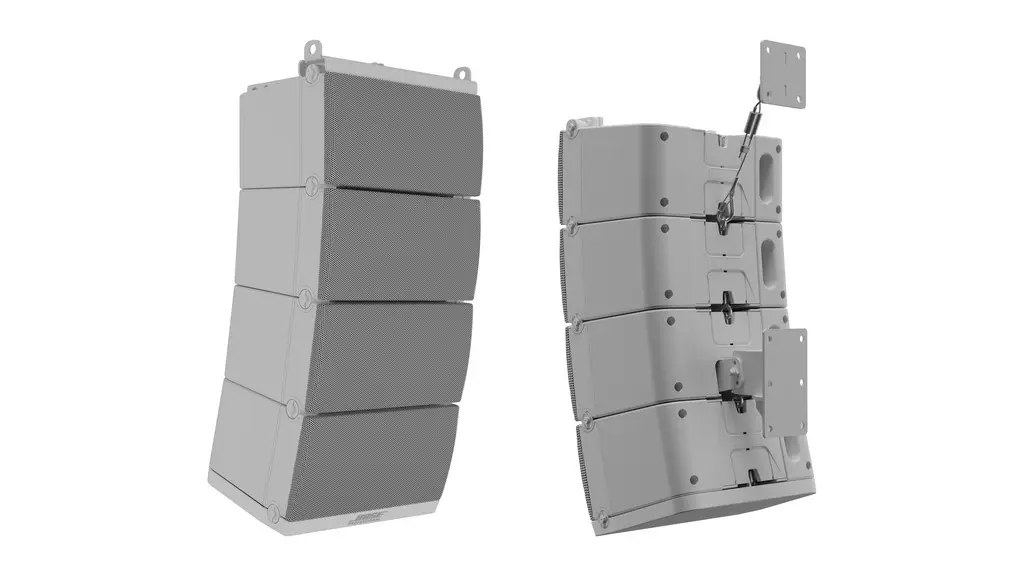
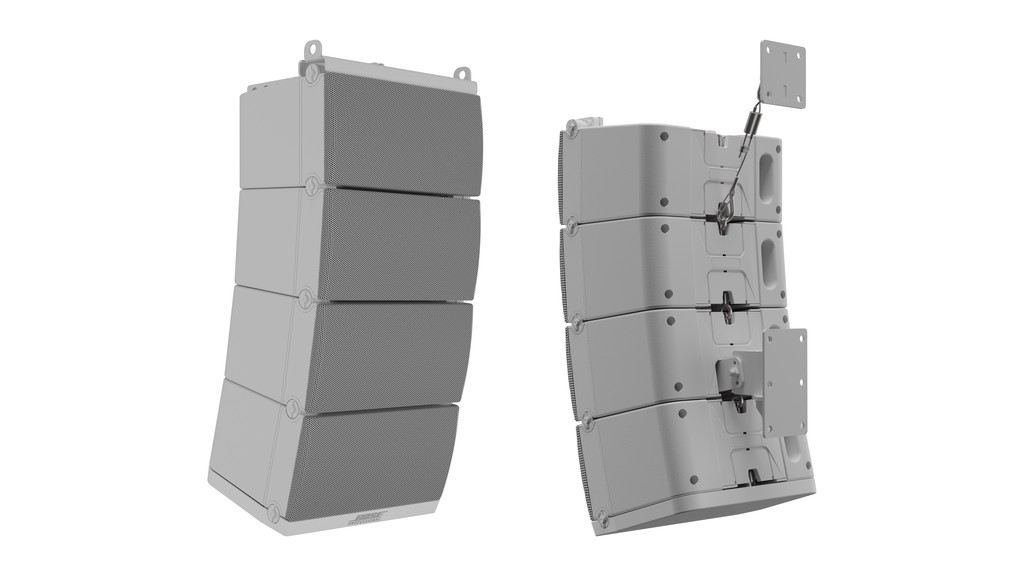
Bose Professional has officially introduced the MA3 Micro Array, a compact, modular passive line-array system engineered specifically for system integrators facing the dual challenges of complex room acoustics and stringent architectural requirements. Announced on November 12, 2026, the MA3 Micro Array represents a significant shift in the company’s approach to high-fidelity sound reinforcement, moving away from bulky traditional enclosures toward a modular, "micro" form factor that prioritizes visual discretion without compromising on the clear speech intelligibility and musical reproduction for which the brand is known. This new system allows for a highly customizable vertical dispersion pattern, enabling installers to tailor the audio coverage to the specific dimensions and reflective surfaces of a room, ensuring that sound is directed toward the audience and away from problematic ceilings and upper-wall surfaces.
Technical Specifications and Engineering Philosophy
At the core of the MA3 Micro Array is a sophisticated driver configuration designed to maximize output from a minimal footprint. Each individual MA3 module houses a single 1-inch compression driver paired with four 2.25-inch high-excursion woofers. This specific arrangement allows the module to function as a point source when used individually or as a cohesive line-array element when stacked. The integration of a high-frequency compression driver is a notable inclusion in a module of this size, as it ensures that high-frequency energy remains coherent even over longer distances, a common requirement in corporate atriums or house of worship settings.
The modules are built within a sleek, durable white enclosure, designed to blend into modern interior aesthetics. From a technical standpoint, the MA3 utilizes an internal passive crossover network, which simplifies the amplification requirements for the system. This allows integrators to drive multiple modules from a single amplifier channel, reducing the overall cost and complexity of the rack-room infrastructure. The inclusion of a pluggable terminal block further streamlines the wiring process, allowing for pre-wiring on-site before the final modules are snapped into place.
Bridging the Gap in Modular Array Technology
For years, the professional audio industry has viewed modular line-array technology as a luxury solution, often reserved for high-budget concert halls or massive stadium installations. The primary barriers to entry for smaller-scale commercial projects have historically been the high cost of components, the physical weight of the arrays, and the specialized labor required for calibration and rigging. Shawn Watts, Vice President of Sales, Americas at Bose Professional, noted during the product launch that these hurdles have often forced integrators to settle for less effective point-source solutions in rooms that truly required the pattern control of a line array.
"The MA3 Micro Array changes that dynamic entirely," Watts stated. "We have engineered a system that is not only compact and cost-effective but can be commissioned and installed by a single technician. By lowering the barrier to entry for array technology, we are empowering system integrators to solve acoustic challenges in everyday spaces—like conference rooms and retail environments—where a large-scale system would be visually and financially unfeasible."
The MA3’s modular nature is its primary innovation. It allows for "flush-array" configurations where the modules sit tight against one another, creating a continuous line of sound. This configuration is essential for maintaining the cylindrical wavefront characteristics of a line array, which results in a slower drop-off in sound pressure level (SPL) over distance compared to the spherical wavefront of a standard speaker.
Installation Versatility: Suspension and Wall Mounting
Recognizing that every architectural space presents unique mounting challenges, Bose Professional has launched the MA3 alongside two specialized mounting kits: the MA3SB (Suspension Bracket) and the MA3WB (Wall Bracket).
The MA3SB is designed for "flown" or suspended applications. In environments with high ceilings or open-grid designs, such as modern industrial-style offices or transportation hubs, the suspension bracket allows the array to be hung at the optimal height. The bracket system supports the creation of curved arrays, which is vital for providing even coverage from the front of a room to the back. By adjusting the splay angles between modules, an integrator can ensure that the "throw" of the audio is perfectly aligned with the seating area.
Conversely, the MA3WB Wall Bracket addresses projects where the architecture or ceiling height makes suspension impossible. This kit includes a heavy-duty articulating joint, a mounting plate, and a safety cable. The wall-mount solution is particularly relevant for historic buildings or houses of worship where drilling into ceilings is prohibited or where the aesthetic goal is to have the speakers "disappear" against the perimeter walls. The bracket allows for both tilt and swivel adjustments, providing the flexibility needed to aim the sound precisely, even when the mounting point is off-axis from the listening area.

Strategic Implications for the Commercial AV Market
The release of the MA3 Micro Array comes at a pivotal time for the commercial AV industry. As corporate environments transition toward more flexible, "hybrid-ready" spaces, the demand for high-quality audio that supports video conferencing has skyrocketed. In these spaces, poor acoustics—often caused by glass walls and hard flooring—can render speech unintelligible for remote participants. The MA3’s ability to provide narrow vertical coverage helps minimize the amount of sound reflecting off the floor and ceiling, which in turn reduces the "room bloom" that microphones often pick up during calls.
Furthermore, the purchasing model for the MA3 reflects a shift toward more granular inventory management for integrators. By offering the modules both individually and in sets of four, Bose Professional allows firms to order exactly what is required for a specific design. This prevents the "over-specifying" of systems and helps keep project budgets lean, a critical factor in the competitive bidding process for commercial contracts.
Chronology of Development and Market Context
The development of the MA3 is part of a broader trajectory for Bose Professional following its transition to an independent entity. In early 2023, Bose Corporation sold its professional division to Transom Capital Group. Since then, the newly independent Bose Professional has accelerated its research and development cycle, focusing heavily on the "installed sound" sector.
The MA3 follows in the footsteps of the successful Panaray and DesignMax lines but carves out a new niche by shrinking the physical profile of the line array further than ever before. Historically, Bose pioneered the use of small-driver arrays with the original Panaray 802 and later the MA12 column speakers. The MA3 can be seen as the spiritual successor to these products, utilizing modern driver materials and advanced computer modeling to achieve higher output and better frequency response from an even smaller enclosure.
Analysis of Broader Industry Trends
The MA3 Micro Array sits at the intersection of several major trends in the professional audio-visual market:
- Aesthetic Integration: Modern architects are increasingly demanding that AV technology be invisible. The MA3’s slim profile and white finish are direct responses to this "stealth audio" trend.
- Labor Efficiency: With a global shortage of skilled AV technicians, products that offer "one-person installation" and simplified wiring (like the MA3’s pluggable terminals) provide a significant competitive advantage for integration firms.
- Spatial Audio and Clarity: As digital signal processing (DSP) becomes more advanced, the physical "front end" of the system—the speakers—must be capable of high-resolution reproduction to take full advantage of the software. The use of a compression driver in the MA3 ensures that the high-frequency detail necessary for modern high-definition audio formats is preserved.
Conclusion and Future Outlook
The introduction of the Bose Professional MA3 Micro Array is likely to set a new benchmark for compact installation speakers. By combining the physics of a line array with the footprint of a micro-speaker, Bose has provided a tool that addresses the most common complaints of both architects and acousticians.
Initial reactions from the integration community suggest that the MA3 will find a home in a wide variety of "premium" spaces. Luxury retail outlets, which require high-fidelity background music that doesn’t distract from the merchandise, and corporate boardrooms, which require impeccable speech clarity for global communication, are expected to be the primary early adopters. As the system becomes more widely available through global distribution channels in late 2026, it is anticipated that the MA3 will become a staple in the toolkit of designers working in acoustically "live" or reverberant environments.
With the MA3, Bose Professional reinforces its commitment to the pro-audio installation market, signaling that even as an independent company, its focus remains on high-level engineering and solving the practical, real-world problems of sound reinforcement. The modularity, ease of installation, and sophisticated driver design of the MA3 Micro Array represent a thoughtful evolution in the pursuit of the "perfect" balance between form and function in the world of professional audio.
