

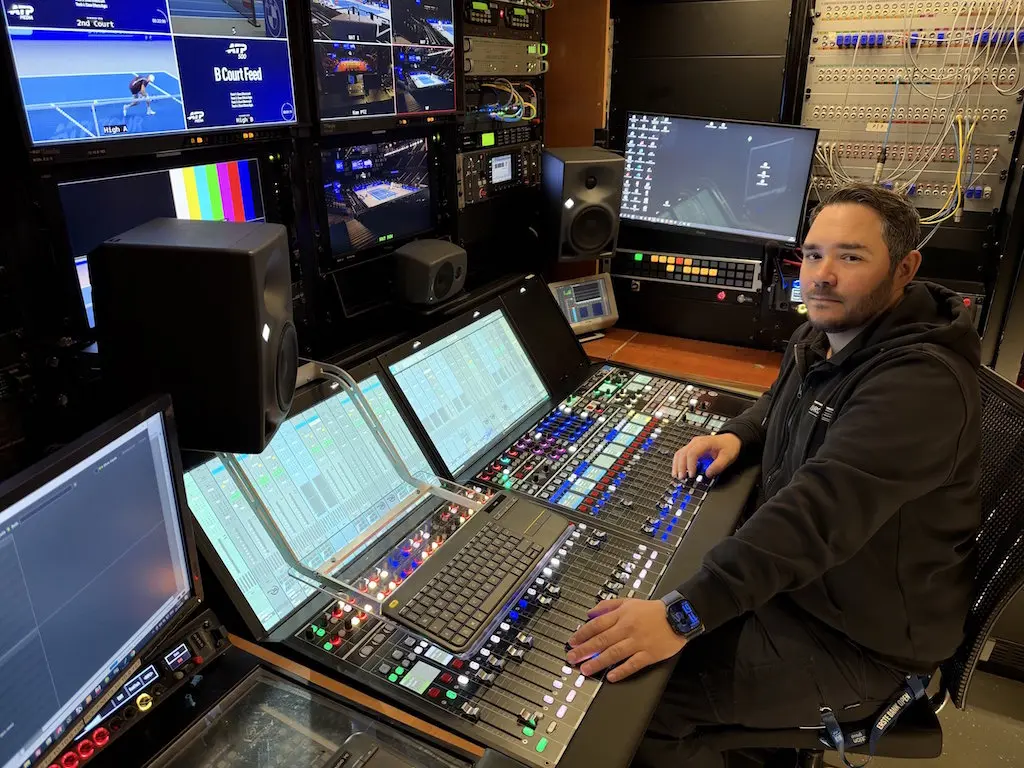
The Austrian broadcast landscape is undergoing a significant technological transformation as production houses transition from traditional baseband infrastructures to flexible, scalable IP-based workflows. At the forefront of this evolution is Euro TV Production GmbH, a prominent player in the European live production sector, which recently announced a comprehensive modernization of its flagship outside broadcast (OB) van. By integrating the latest generation of Lawo technology, specifically the mc²36 MkII all-in-one production console and the HOME Gate Server, Euro TV is reinforcing its commitment to high-end sports and cultural broadcasting. This upgrade represents a strategic shift toward the SMPTE ST 2110 standard, ensuring that the company remains competitive in an era defined by Ultra-High-Definition (UHD) video and immersive audio requirements.
A Strategic Evolution in Outside Broadcasting
Euro TV Production GmbH has built a reputation for excellence in the demanding fields of international sports and large-scale event production. Their portfolio includes high-stakes assignments such as the FIS Alpine Ski World Cup, international football matches, and high-octane events like the Red Bull Air Race and the Wings for Life World Run. These productions share a common requirement: the need for absolute reliability under extreme conditions, where there is no room for equipment failure or signal latency.
The decision to modernize their OB van was driven by the increasing complexity of modern broadcast signals and the industry-wide move toward IP (Internet Protocol) networking. Since 2019, Euro TV had successfully utilized the Lawo mc²36 Classic. While that console served as a workhorse for five years, the emergence of the mc²36 MkII provided an opportunity to leapfrog into the next generation of processing power and network management. The transition was not merely a replacement of hardware but a systemic upgrade that enhances the entire production ecosystem of the vehicle.
Technical Specifications and the A__UHD-Core Advantage
The centerpiece of the upgrade is the Lawo mc²36 MkII, a console designed specifically for the rigors of OB van environments where space is at a premium but processing requirements are immense. Unlike traditional consoles that require external processing engines, the mc²36 MkII is an "all-in-one" solution, meaning the processing core is integrated directly into the desk.
At the heart of the MkII is Lawo’s proprietary A__UHD-Core technology. This software-defined IP DSP engine provides a staggering 384 processing channels. For a production company like Euro TV, this means they can manage complex audio mixes for international feeds—where multiple languages, ambient crowd noises, and specialized commentary tracks must be balanced simultaneously—without hitting a processing ceiling. The console supports sampling rates of both 48 kHz and 96 kHz, ensuring that high-fidelity audio can be maintained throughout the signal chain.
Furthermore, the console offers up to 864 input and output (I/O) capacities. In the context of a live football broadcast, this allows for a massive array of pitch-side microphones, internal communications (intercom), and redundant signal paths. The native support for SMPTE ST 2110, AES67, and Ravenna means that the console can communicate seamlessly with other IP-native devices on the network, eliminating the need for cumbersome and heavy SDI-to-IP gateways or analog converters.
Streamlining Network Management with HOME and VSM
A critical challenge in modern IP broadcasting is the management of the network itself. As devices are added to a system, discovering them, registering them, and ensuring they are secure becomes a complex IT task. To address this, Euro TV’s upgrade includes the integrated HOME Gate Server.
Lawo’s HOME is a management platform for IP-based media infrastructures. It acts as a central registry for all IP devices, allowing engineers to "plug and play" new hardware into the network. For Euro TV, the HOME Gate Server simplifies the management of the IP multicast streams, ensuring that the mc²36 MkII can easily access resources from across the entire OB van network.
Complementing this is the Virtual Studio Manager (VSM), which remains the central control system for Euro TV’s operations. VSM is an independent broadcast control system that provides a unified interface for routing audio and video, managing tally lights, and controlling third-party equipment. By maintaining VSM as the overarching control layer, Euro TV ensures that their operators do not have to learn a new workflow; instead, they benefit from a more powerful engine running underneath a familiar interface. One of the standout features of VSM is the ability to save "salvos"—pre-configured routing states that can be recalled with a single button press. This is particularly valuable during multi-sport events where the setup might need to change rapidly between different segments of a broadcast.
Enhanced Connectivity via A__mic8 IP Stageboxes
To extend the reach of the OB van’s audio capabilities, Euro TV has added three new Lawo A__mic8-IP stageboxes to their inventory. These compact units are designed to be placed exactly where the audio sources are—whether that is at the finish line of a ski race or in a commentator’s booth.
The Amic8 units feature high-quality microphone preamplifiers and connect directly to the IP network via standard Ethernet cables. This decentralization of I/O resources is one of the primary benefits of the IP transition. In traditional setups, thick, heavy multi-core analog cables would have to be run from the field back to the van, often resulting in signal degradation over long distances. With the Amic8 and IP connectivity, the signal is digitized at the source, ensuring pristine audio quality and significantly reducing the physical labor and time required for setup and strike.
Sustainability and Investment Protection
A notable aspect of Euro TV’s modernization strategy is its approach to sustainability and investment protection. Rather than decommissioning the mc²36 Classic that was installed in 2019, Euro TV has opted to repurpose it for other production duties. This highlights the longevity of the Lawo hardware platform.
Florian Polder, Project Manager at Euro TV, emphasized this point in a statement regarding the upgrade. "The mc²36 Classic has proven itself to be an extremely reliable production tool over many years. The fact that we can now continue to use the console elsewhere shows how sustainable and investment-secure the Lawo platform is," Polder remarked. He further noted that the move to the MkII allows the company to benefit from "more processing power while simultaneously expanding IP possibilities and achieving even closer integration into our production environment."

This strategy reflects a growing trend in the industry where broadcasters seek modular and software-upgradable solutions to avoid the "planned obsolescence" that often plagued older generations of hardware. By staying within the Lawo ecosystem, Euro TV was able to migrate their existing configuration data and infrastructure settings to the new console with minimal downtime, a crucial factor for a company with a packed production schedule.
Chronology of the Modernization Project
The path to this upgrade began in 2019 when Euro TV first moved to a Lawo-based audio infrastructure. Over the subsequent four years, the company utilized the mc²36 Classic for hundreds of live broadcasts, including high-profile Red Bull events that require non-traditional production setups.
By late 2023, the decision was made to future-proof the OB van for the next decade. The planning phase involved ensuring that the new MkII hardware would fit into the existing physical footprint of the van while providing the necessary headroom for 4K/UHD productions. The actual installation and commissioning of the mc²36 MkII and the A__mic8 stageboxes took place in 2024, followed by rigorous testing during live sports events in the Austrian Alps. The transition was facilitated by the fact that the VSM control layer could be seamlessly mapped to the new hardware, allowing for a "soft landing" for the technical staff.
Broader Industry Implications
The modernization of Euro TV’s OB van is a microcosm of a larger shift in the global media industry. As viewers demand higher quality video (4K/8K) and more immersive audio (Dolby Atmos/MPEG-H), the bandwidth and processing requirements for live production have skyrocketed. Traditional SDI (Serial Digital Interface) cabling is reaching its physical limits, making the move to 100GbE and 400GbE IP networks a necessity.
Furthermore, the adoption of open standards like ST 2110 allows for greater interoperability between different manufacturers. By choosing a Lawo-centric IP core, Euro TV is not locking itself into a proprietary silo but is instead building a foundation that can integrate with various cameras, video switchers, and replay servers from other vendors, provided they adhere to the same IP standards.
This upgrade also positions Euro TV as a leader in the Austrian and broader European rental and production market. As rights holders for major sports leagues increasingly mandate IP-native delivery, having a modernized, IP-capable OB van becomes a significant competitive advantage. It allows Euro TV to offer "Remote Production" (REMI) capabilities, where audio and video signals can be sent back to a central hub for mixing, reducing the number of personnel required on-site.
Conclusion
The integration of the Lawo mc²36 MkII and the HOME Gate Server into Euro TV Production GmbH’s OB van marks a pivotal moment in the company’s history. By combining high-density processing power with the flexibility of IP networking and the stability of the VSM control system, Euro TV has created a production environment capable of meeting the most strenuous demands of modern broadcasting. As the industry continues its march toward a fully networked future, the strategic decisions made by Euro TV today will likely serve as a blueprint for other production houses looking to balance technological innovation with long-term investment security. The successful repurposing of their older hardware further underscores a commitment to operational efficiency that is essential in today’s fast-paced media economy.
