

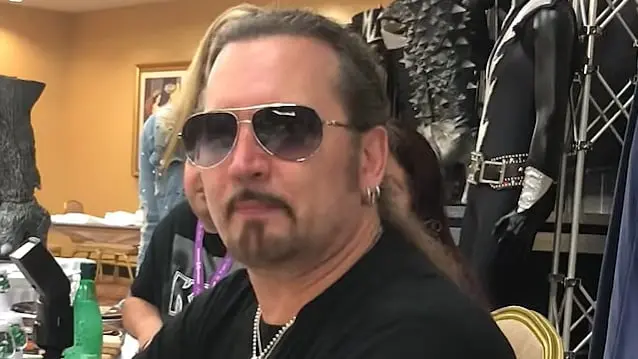
The glittering entertainment landscape of Las Vegas served as the backdrop for a candid exchange with KISS drummer Eric Singer on Saturday, November 14, 2026, during the second annual "KISS Kruise: Land-Locked In Vegas." Held at the Virgin Hotels Las Vegas, the event featured a question-and-answer session where Singer, a veteran of the rock and roll world, shared his pragmatic insights on navigating the contemporary music industry, particularly for aspiring drummers. His remarks underscored a significant shift in the business landscape compared to his early career, emphasizing passion, resilience, and a healthy skepticism towards online "gurus."
The Shifting Sands of the Music Industry
Singer’s most pointed advice was a direct admonishment of individuals who leverage online platforms to offer paid coaching and career guidance to budding musicians. "No matter what any guys online – ’cause there’s people… I’m not gonna name names, but there’s guys that are online trying to tell you to sign up for them to coach you," Singer stated, as transcribed by Blabbermouth.net. He elaborated on this sentiment, asserting, "They’re gonna tell you how to make money and how to get paid and how to make it. That’s not how it works. ‘Cause anyone that wants to help you will not charge you for advice and information. They’ll freely give it to you ’cause they wanna help you. I always say pave the road smooth behind you for the next guy. You should always help other people."
This stance highlights a growing concern within the music community regarding the proliferation of online courses and mentorship programs that promise quick success but may offer little tangible value. The music industry, historically built on mentorship and shared knowledge within established networks, has seen a rise in digital platforms where individuals can present themselves as experts, often for a fee. Singer’s experience, spanning decades and encompassing collaborations with some of rock’s most iconic figures, lends significant weight to his cautionary words.
The veteran drummer further articulated his concerns about the current state of the music business, expressing a degree of relief that he is not a young artist attempting to break in today. "But the way the music industry is now, I’m glad I’m not a young guy trying to start off in this business because it’s not the same business," Singer admitted. He contrasted his early career experiences with the present reality, recalling his move to Los Angeles: "When I first moved to L.A., I felt, like, ‘Oh, I’m in L.A., I’m in California. This is the music scene where it’s happening.’ You really felt like you had an opportunity and that you really stood a chance to maybe do something."
Singer’s recollection of the perceived opportunities in early career L.A. resonates with the historical narrative of musicians flocking to the city in pursuit of their dreams. The 1970s and 1980s, in particular, are often viewed as a golden era for aspiring rock musicians, with a more robust live music scene, accessible record labels, and a burgeoning MTV culture that propelled artists to stardom. The subsequent digital revolution and the widespread adoption of streaming services have fundamentally altered revenue streams and the pathways to success.
The primary driver of this change, according to Singer, is the public’s diminished willingness to financially support music. "I don’t know if that feeling still exists in a lot of music cities anymore because nobody wants to pay for music. Everybody wants it for free," he stated. This observation is supported by data indicating a significant decline in physical music sales over the past two decades, alongside the rise of free or low-cost streaming models. While streaming has increased overall music consumption, the per-stream royalty rates for artists and songwriters have been a subject of considerable debate and often fall far short of previous revenue models. For instance, studies have shown that it can take millions of streams to generate a living wage for an independent artist.
The Core Tenet: Unwavering Passion
In light of these industry challenges, Singer’s ultimate advice to aspiring drummers revolved around the fundamental necessity of genuine passion for the craft. "So I would just say… Here’s what I would say. You better love playing drums. You better love music if you’re gonna go through all these ups and downs, ’cause it’s a very, very difficult business to be in," Singer added. He underscored the demanding nature of the profession, warning that it is "not for the weak or faint of heart, as they say."
Singer’s emphasis on passion as the primary driving force is a recurring theme among seasoned musicians who have weathered the industry’s cyclical nature. This intrinsic motivation, he suggests, is the only reliable fuel for enduring the inevitable setbacks and rejections that are part and parcel of a music career. "You better really love music and have passion for it, ’cause that can be the driving force for yourself. Find the inspiration within yourself," he concluded. This internal locus of control, fostering self-reliance and a deep connection to the art form, is presented as the most sustainable strategy for aspiring musicians in a landscape that offers fewer external guarantees of success.
A Legacy Forged in Rock
Eric Singer’s career is a testament to perseverance and adaptability within the demanding world of professional music. The now 68-year-old drummer has a rich history with the iconic rock band KISS, marked by multiple tenures. He first joined the band in December 1991, stepping into the formidable role of drummer following the tragic death of Eric Carr. During this period, Singer contributed to two of KISS’s studio albums: "Revenge" (1992) and "Carnival Of Souls: The Final Sessions" (1997), and participated in several extensive tours, solidifying his place within the band’s evolving lineup.
However, the landscape of KISS was fluid. In 1996, a significant reunion saw the band’s founding drummer, Peter Criss, rejoin his original bandmates for the highly successful "Alive/Worldwide" tour. This led to Singer’s temporary departure. His connection to KISS proved enduring, as he rejoined the band in 2001. After another brief hiatus in 2002, Singer returned permanently in 2004, a position he has held ever since, becoming an integral part of the band’s final decades.
Beyond his foundational role in KISS, Singer’s musical versatility is evident in his extensive work with other prominent artists. He has toured and performed with an impressive roster of rock royalty, including Queen’s Brian May, Alice Cooper, and Black Sabbath. This breadth of experience showcases his adaptability and respected standing within the global music community. Furthermore, Singer is also a dedicated member of "Soul Station," the R&B side project spearheaded by his KISS bandmate Paul Stanley, demonstrating his proficiency and passion for genres beyond hard rock.
Context of the "KISS Kruise: Land-Locked In Vegas"
The "KISS Kruise: Land-Locked In Vegas" event itself is a unique extension of the band’s long-standing tradition of engaging directly with their dedicated fanbase. While the traditional KISS Kruise sails the high seas, the "Land-Locked" iteration brings the KISS experience to a terrestrial venue, offering fans a more accessible and intimate way to connect with the band and its members. This event in Las Vegas, a city synonymous with entertainment and spectacle, provided a fitting environment for such a discussion. The Virgin Hotels Las Vegas, a contemporary venue known for hosting a variety of musical acts and events, served as an appropriate host for this gathering of KISS aficionados. The fact that the Q&A session was held on November 14th, a Saturday, suggests an effort to maximize fan attendance and engagement during a weekend dedicated to the event.
Broader Implications and Future Outlook
Eric Singer’s candid remarks carry significant implications for the broader music industry and for aspiring artists across all disciplines. His emphasis on authentic passion and self-reliance serves as a crucial counterpoint to the often-hyped promises of online success. In an era where digital saturation can make it difficult to discern genuine opportunity from superficial marketing, Singer’s advice encourages a return to the fundamental drivers of artistic fulfillment: love for the craft and an intrinsic desire to create and perform.
The challenges he outlined – the devaluation of music and the increasingly competitive landscape – are not unique to drumming or rock music. Artists in various genres face similar hurdles in generating sustainable income and gaining visibility. Singer’s perspective, therefore, offers a valuable framework for understanding the contemporary music ecosystem.
While the economic realities of the music business have undeniably shifted, the enduring appeal of artists like KISS, who continue to command significant attention and draw large crowds, suggests that live performance and a powerful artistic identity remain paramount. For new generations of musicians, the path forward may require a more entrepreneurial mindset, a diversified approach to revenue streams, and an unwavering commitment to the art itself, echoing Singer’s central message: "You better love playing drums. You better love music." The continued success of musicians like Eric Singer, who have navigated these evolving dynamics with resilience and dedication, provides a beacon of inspiration and a pragmatic guide for those embarking on their own musical journeys.
