

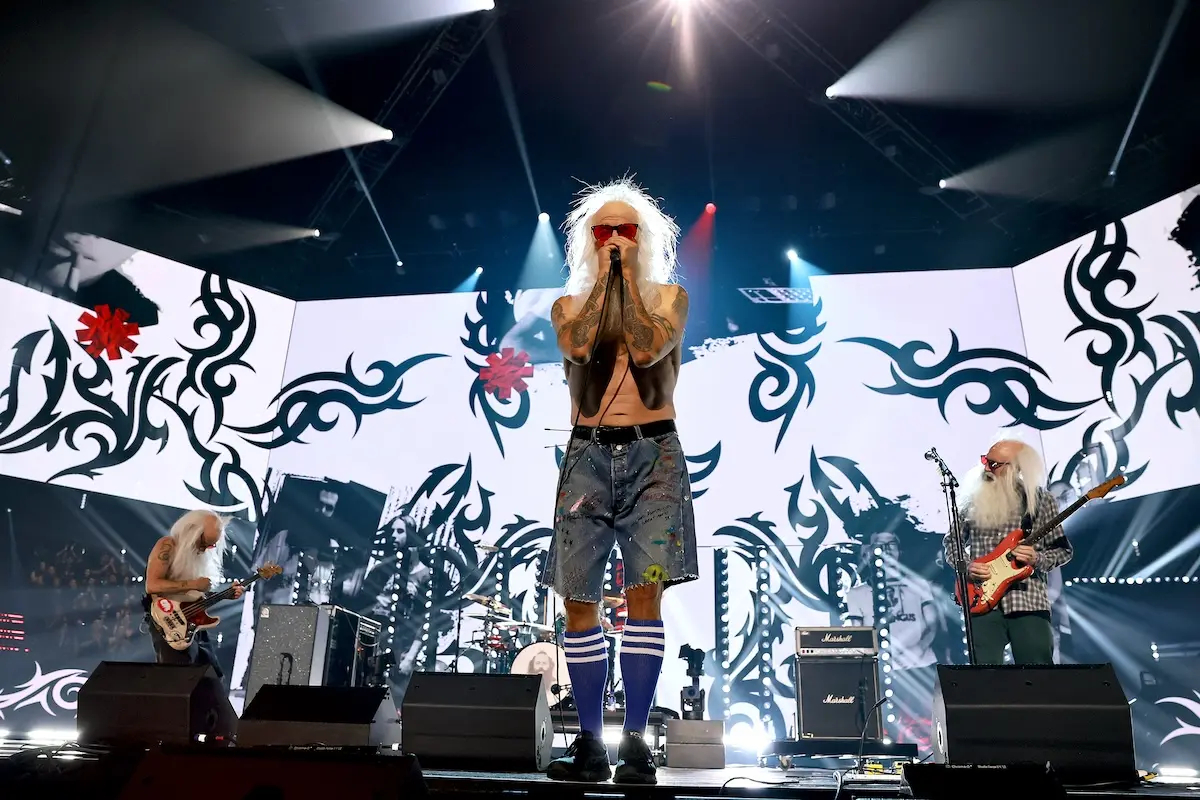
The Rock & Roll Hall of Fame ceremony last night paid a profound and playful homage to one of music’s most enigmatic and transformative figures, producer Rick Rubin, who was inducted into the prestigious institution. The evening was marked by unexpected performances, heartfelt speeches, and a unique tribute from the Red Hot Chili Peppers, underscoring Rubin’s unparalleled influence across genres and generations. His induction recognized a career spanning over four decades, during which he has shaped the soundscapes of countless iconic artists, earning him a place among the legends he helped define.
A Career Defined by Innovation: The Genesis of a Legend
Rick Rubin’s journey to the Rock & Roll Hall of Fame is a testament to the power of a singular artistic vision, even one without a musical instrument in hand. Born Frederick Jay Rubin in Long Beach, New York, in 1963, his early fascination with music transcended mere appreciation; it was an innate understanding of its raw essence. His formative years at New York University’s dorm rooms in the early 1980s became the crucible for a revolution. It was here, in 1984, that he co-founded Def Jam Records with Russell Simmons, a label that would fundamentally alter the trajectory of hip-hop and popular music.
Def Jam, under Rubin’s audacious artistic direction, quickly became synonymous with groundbreaking sound. He produced some of hip-hop’s earliest and most influential records, demonstrating an intuitive grasp of what made a track resonate. Artists like LL Cool J, Public Enemy, and the Beastie Boys found their voices amplified and refined through Rubin’s minimalist yet impactful approach. The Beastie Boys’ debut album, Licensed To Ill, released 40 years ago today, stands as a monumental achievement of this era. Rubin’s production on the album not only propelled the Beastie Boys to superstardom but also became a cultural touchstone, blending rock sensibilities with hip-hop’s nascent energy in a way that was unprecedented. This album alone would secure his legacy, but it was merely the beginning of an expansive and genre-defying career.
Beyond hip-hop, Rubin’s genius lay in his ability to transcend stylistic boundaries, proving that good music was simply good music, regardless of its label. His work with Slayer on Reign in Blood in 1986 redefined thrash metal, stripping away excess to expose a brutal, visceral core. He would go on to work with a staggering array of artists, from Tom Petty and the Heartbreakers to Johnny Cash, whose "American Recordings" series revitalized the country legend’s career in the 1990s, introducing him to a new generation through stark, emotionally resonant acoustic recordings. This period showcased Rubin’s unique talent for stripping an artist down to their essence, allowing their true voice to shine through. He cultivated an almost spiritual connection with the artists he produced, often serving as a guide, an editor, and a confidante, rather than just a technical engineer. His distinct visual presence – the long hair, flowing beard, and often barefoot demeanor – became an iconic part of his mystique, signaling an artist deeply immersed in the creative process.
The Induction Ceremony: A Night of Tributes and Milestones
The induction ceremony itself was a carefully curated event, shrouded in a deliberate air of mystery, with all performers and presenters kept under wraps until the night of the show. This strategy amplified the excitement and focused attention squarely on the honorees.
The task of inducting Rick Rubin fell to Neil Young, an artist with whom Rubin shares a profound musical connection. Young, who recorded his 2022 Crazy Horse album World Record at Rubin’s legendary Shangri-La studios, and has collaborated on other projects there, delivered a "very long speech." This lengthy discourse likely traced Rubin’s career from its audacious Def Jam beginnings to his later, more introspective works, highlighting his unique production philosophy and his uncanny ability to coax career-defining performances from artists across the musical spectrum. Young, known for his own uncompromising artistic integrity, would undoubtedly have celebrated Rubin’s authenticity, his commitment to artistic truth, and his role as a sonic architect who prioritizes emotional impact over fleeting trends. His speech would have underscored how Rubin’s influence extends far beyond mere technical expertise, touching upon his deep understanding of songwriting, arrangement, and the psychology of performance.
Following Young’s extensive and heartfelt tribute, the audience anticipated a reflective and perhaps equally detailed acceptance speech from Rubin himself. However, in a move characteristic of his enigmatic persona, Rubin delivered possibly the shortest acceptance speech in the history of the Rock & Roll Hall of Fame: "You can’t kill rock ‘n’ roll." This succinct declaration, delivered with his signature gravitas, was more than just a statement; it was a manifesto. It encapsulated his lifelong dedication to the raw, untamed spirit of music, a spirit he has consistently championed and helped keep alive, even as musical landscapes have shifted dramatically. It was a defiant affirmation of the enduring power of rock ‘n’ roll, a genre that he, through his diverse productions, has continually reimagined and reinvigorated.
The Red Hot Chili Peppers’ Playful Homage: A Testament to Enduring Collaboration
One of the most anticipated and delightful moments of the evening was the performance by the Red Hot Chili Peppers, who offered a uniquely playful homage to their long-time collaborator. Rubin has produced eight of RHCP’s albums, a partnership that has spanned decades and yielded some of their most iconic work, including Blood Sugar Sex Magik, Californication, By the Way, Stadium Arcadium, Unlimited Love, and Return of the Dream Canteen. This extensive history has forged a deep bond of mutual respect and understanding between the band and the producer.
To honor Rubin, the band – Anthony Kiedis, Flea, Chad Smith, and John Frusciante – took the stage sporting "Rubin-esque wigs and beards," mirroring their guru’s distinctive look. This visual tribute was an immediate hit with the audience, a lighthearted yet deeply affectionate gesture that spoke volumes about their relationship. Their chosen song for the evening was the electrifying "Give It Away," a track from their seminal 1991 album Blood Sugar Sex Magik, which Rubin produced. The song, known for its explosive energy and infectious groove, is a quintessential representation of the creative synergy between the band and Rubin.
The performance, however, hit a minor snag. Due to some technical difficulties, the band had to restart their set. Far from derailing the moment, this momentary pause added an authentic, human element to the live event. The seasoned musicians handled it with professional grace, and the crowd’s energy remained undiminished, if not amplified, by the band’s resilience. When they launched back into "Give It Away," their commitment to rocking out was palpable, delivering a powerful and memorable performance that perfectly encapsulated the spirit of both the band and the man they were honoring. The visual spectacle of four Rick Rubins performing "Give It Away" became an instant highlight, cementing the enduring legacy of their collaborative efforts.
A Historic Finale: "Walk This Way" Unites Generations
The evening reached its crescendo with a historic performance that celebrated another monumental Rubin-orchestrated collaboration: the genre-defining "Walk This Way" by Aerosmith and Run-DMC. This year marks the 40th anniversary of the release of the Beastie Boys’ Licensed To Ill, and also the original release of Aerosmith’s "Walk This Way" in 1975. More significantly, it also marks 37 years since Rubin famously conceived and facilitated the groundbreaking 1986 collaboration between Aerosmith and Run-DMC.
At a time when rock and hip-hop largely existed in separate cultural spheres, Rubin saw the potential for a powerful fusion. He convinced Run-DMC to cover Aerosmith’s "Walk This Way" and, crucially, arranged for Steven Tyler and Joe Perry of Aerosmith to re-record their vocals and guitar parts for the track. The resulting collaboration was not merely a cover; it was a cultural phenomenon. It broke down barriers, introduced hip-hop to a massive mainstream rock audience, and revitalized Aerosmith’s career. The accompanying music video, depicting the two groups literally breaking through a wall to perform together, became an iconic visual representation of this musical bridge-building.
To close the Rock & Roll Hall of Fame ceremony, Aerosmith and Run-DMC reunited on stage to perform this legendary track. The energy of their joint performance was a powerful reminder of the song’s enduring impact and its pivotal role in shaping the sound of popular music for decades to come. It was a fitting finale, a testament to Rubin’s vision as a producer who not only recognizes talent but also understands how to forge unexpected, yet immensely powerful, creative alliances. The roar of the crowd as these two iconic groups shared the stage was a living testament to the indelible mark Rubin has left on music history.
Behind the Scenes: The Element of Surprise and Broadcast Strategy
The decision to keep performers and presenters a surprise and to forgo a live stream was a strategic move by the Rock & Roll Hall of Fame Foundation. In an age of instant gratification, withholding immediate access built anticipation and allowed the focus to remain on the gravitas of the event itself, rather than live social media commentary. It preserved the sanctity of the moment for those in attendance, creating a unique and exclusive experience.
However, recognizing the immense public interest, initial clips and snippets of the key performances and speeches quickly circulated online after the event, generating significant buzz and setting the stage for the broader broadcast. The full ceremony is scheduled to air on ABC on December 8th, offering a prime-time slot for a national audience. Following its television premiere, it will then stream on Disney+, ensuring wide accessibility and allowing for repeat viewing for fans across various demographics. This multi-platform release strategy maximizes reach, bringing the celebration of music’s greatest architects to millions.
The Enduring Legacy of Rick Rubin and the Rock & Roll Hall of Fame
Rick Rubin’s induction into the Rock & Roll Hall of Fame as a non-performing artist is a significant moment, further solidifying the institution’s evolving definition of what constitutes "rock and roll." It acknowledges that the architects behind the console are just as crucial as the artists on stage in shaping the sound, direction, and cultural impact of music. His inclusion alongside other esteemed producers like Quincy Jones and George Martin highlights the indispensable role of the producer as an artist, a visionary, and a catalyst.
Rubin’s legacy is one of fearless exploration, a commitment to authenticity, and an unparalleled ability to unlock the true potential of an artist. He has consistently pushed boundaries, blurred genres, and created records that are not just hits but cultural artifacts. His influence extends beyond the studio, shaping industry practices and inspiring new generations of producers to seek the essence of sound rather than merely polish its surface. This induction is not just a recognition of his past achievements but an affirmation of the enduring power of creative partnership in music. The Rock & Roll Hall of Fame continues to serve as a vital institution, preserving and celebrating the rich tapestry of music history, and in honoring Rick Rubin, it recognizes a truly transformative force who, in his own words, ensures that "you can’t kill rock ‘n’ roll."
