

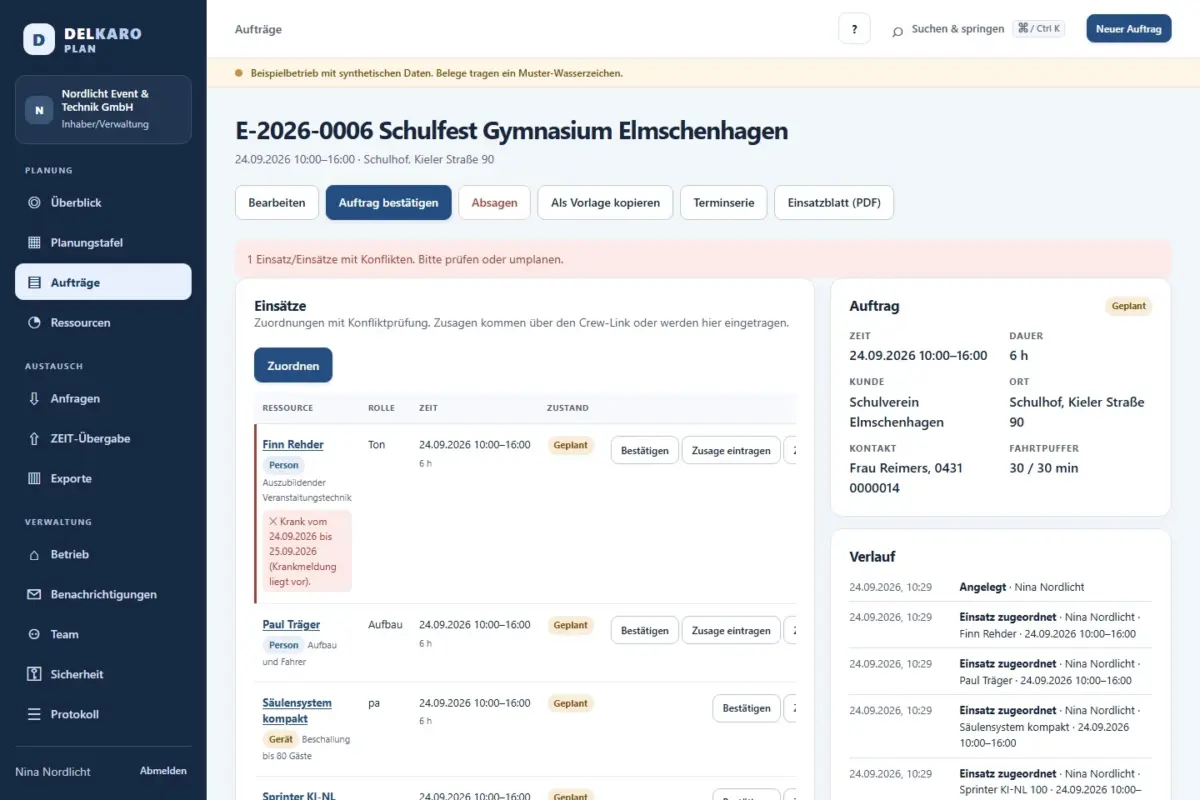
The digital transformation of the event industry has reached a new milestone with the official introduction of Plan, a specialized deployment planning software developed by Delkaro. Designed specifically to meet the logistical and budgetary requirements of smaller event production teams, this German-language web application seeks to bridge the gap between rudimentary spreadsheet-based organization and the overly complex enterprise resource planning (ERP) systems used by global event corporations. By consolidating the three primary pillars of event execution—personnel, technical equipment, and vehicle logistics—into a single, unified interface, Plan aims to reduce the administrative burden on project managers while minimizing the risk of scheduling conflicts.
The Core Functionality of the Integrated Planning Board
At the heart of Delkaro’s new offering is a central planning board that provides a comprehensive visualization of all active and upcoming assignments. Unlike traditional management tools that often isolate human resources from physical assets, Plan presents personnel, technology, and fleet data side-by-side. This holistic approach is designed to reflect the reality of small-scale event production, where a single individual often manages multiple aspects of a project simultaneously.
The software utilizes an automated conflict-checking engine that operates in real-time. As project managers input data, the system cross-references current bookings against existing assignments, scheduled absences, and maintenance windows. A notable feature of this engine is the inclusion of "travel buffers." In the event industry, the transition time between assignments is frequently underestimated, leading to cascading delays. Delkaro Plan addresses this by allowing users to define mandatory transition periods, ensuring that personnel and vehicles are not just theoretically available, but physically capable of reaching the next venue. This proactive detection allows teams to identify and resolve double-bookings or logistical overlaps before formal commitments are issued to clients or staff.
The Cockpit Interface and Decision-Making Oversight
Complementing the planning board is the "Cockpit," a high-level dashboard designed for executive oversight. This module serves as a command center, surfacing critical information that requires immediate attention. It highlights open requirements for upcoming events, pending conflicts that have not yet been resolved, and outstanding confirmations from external crew members or freelancers.
Despite the high level of automation, Delkaro has emphasized that the final decision-making authority remains with the user. The software does not automatically assign resources; instead, it provides the necessary data points to allow project managers to make informed choices. This "human-in-the-loop" philosophy is particularly relevant for small teams where the specific chemistry of a crew or the nuanced requirements of a particular venue may outweigh purely algorithmic scheduling.
Chronology of Development and Market Entry
The development of Plan follows a multi-year trend in the European event sector toward localized, niche SaaS (Software as a Service) solutions. While the broader market is dominated by comprehensive suites that handle everything from CRM to invoicing, Delkaro identified a specific "pain point" among small service providers who found these systems prohibitively expensive and unnecessarily complex.
The roadmap for Plan began in early 2024 with a series of focus groups involving small event agencies and technical service providers in the DACH region (Germany, Austria, and Switzerland). By mid-2025, the software entered a closed beta phase, where it was tested by a select group of production teams to refine the user interface and ensure the conflict-checking logic held up under high-pressure scenarios. The official launch on November 19, 2026, marks the culmination of this iterative process, offering a market-ready version that prioritizes ease of use and rapid deployment.
Supporting Data: The Cost of Inefficiency in Small Teams
The necessity for tools like Delkaro Plan is underscored by recent industry data regarding operational efficiency. According to recent surveys of small-to-medium enterprises (SMEs) in the live entertainment sector, administrative tasks—including scheduling and resource allocation—can consume up to 30% of a project manager’s workweek when handled through non-specialized tools like Excel or generic calendar apps.
Furthermore, the "cost of error" in the event industry is exceptionally high. A single double-booked vehicle or a missing lead technician can result in contractual penalties or the loss of repeat business. Industry analysts suggest that for teams managing between 20 and 50 events per year, the implementation of dedicated planning software can reduce scheduling errors by as much as 40%. By focusing on "planned work" rather than real-time tracking, Delkaro targets the most critical phase of the event lifecycle: the preparation phase, where the foundation for a successful execution is laid.
Operational Workflow and Crew Integration
One of the primary challenges for small event teams is the coordination of freelance labor. Delkaro Plan simplifies this through a streamlined feedback system. Rather than requiring every freelancer to create an account or navigate a complex portal, the software generates personal links for each crew member. These links allow individuals to view their specific assignments and provide immediate "accept" or "decline" responses.
The feedback status is updated in real-time on the central planning board, giving the project manager an instant overview of which roles are secured and which require backfilling. This decentralized communication model reduces the volume of email and messaging traffic, centralizing the flow of information within the application itself. It also provides a digital paper trail of commitments, which is essential for maintaining accountability across a diverse pool of contractors.
Strategic Omissions: Why Plan Excludes Time Tracking and Inventory
In a move that distinguishes Plan from many of its competitors, Delkaro has intentionally omitted certain features, such as the recording of actual hours worked (time tracking) and the physical scanning of equipment (warehouse management). This decision is based on a strategic focus on planning rather than post-event administration.
By excluding these features, the application remains lightweight and focused on a single objective: ensuring that the right resources are in the right place at the right time. For many small teams, physical inventory tracking via barcodes is an unnecessary overhead, as their equipment pools are small enough to be managed visually or through simple lists. Similarly, time tracking for payroll is often handled by separate accounting software or external tax consultants. By not attempting to be an "all-in-one" solution, Plan avoids the "feature creep" that often makes enterprise software difficult for smaller teams to adopt.

Broader Impact and Industry Implications
The launch of Delkaro Plan comes at a time when the event industry is facing significant labor shortages and increased pressure on margins. Efficiency is no longer a luxury but a requirement for survival. Professional tools that were once the exclusive domain of large-scale touring companies are now being democratized for the local AV company, the wedding planner, and the corporate event boutique.
From a broader perspective, the introduction of Plan reflects the maturing of the event technology ecosystem. There is a growing recognition that "small teams" are not just "large teams with fewer people," but entities with distinct workflows and priorities. They require software that can be mastered in hours, not weeks, and pricing models that do not require long-term capital commitments.
Official Responses and Accessibility
Initial feedback from the industry suggests a positive reception for the software’s focused approach. While Delkaro has indicated that specific customer references are currently available upon direct request, the company has positioned the software as a highly accessible tool. The subscription-based model, which allows for monthly cancellations, is specifically designed to accommodate the seasonal nature of the event business, where teams may need to scale their administrative capacity up or down based on the time of year.
The software is currently available as a web application, ensuring compatibility across various operating systems and devices, which is critical for project managers who often work between an office and a venue site. As the event industry continues to navigate a landscape defined by rapid changes and high client expectations, tools like Delkaro Plan provide the structural support necessary for small teams to compete on a professional level.
Future Outlook for Delkaro and Deployment Planning
Looking ahead, the success of Delkaro Plan will likely depend on its ability to integrate with other specialized tools in the event tech stack. While the company has currently prioritized a standalone planning experience, the potential for API integrations with financial or communication platforms could further enhance its value proposition.
As of November 2026, the company remains focused on the German-speaking market, ensuring that the software remains compliant with local data protection regulations and aligned with regional business practices. For small event teams looking to move away from the chaos of manual scheduling, Plan represents a significant step toward a more organized and sustainable future in event production. The emphasis on clarity, conflict prevention, and ease of use suggests that Delkaro has successfully identified the essential requirements of the modern event professional, providing a tool that prioritizes the "plan" in deployment planning.
