

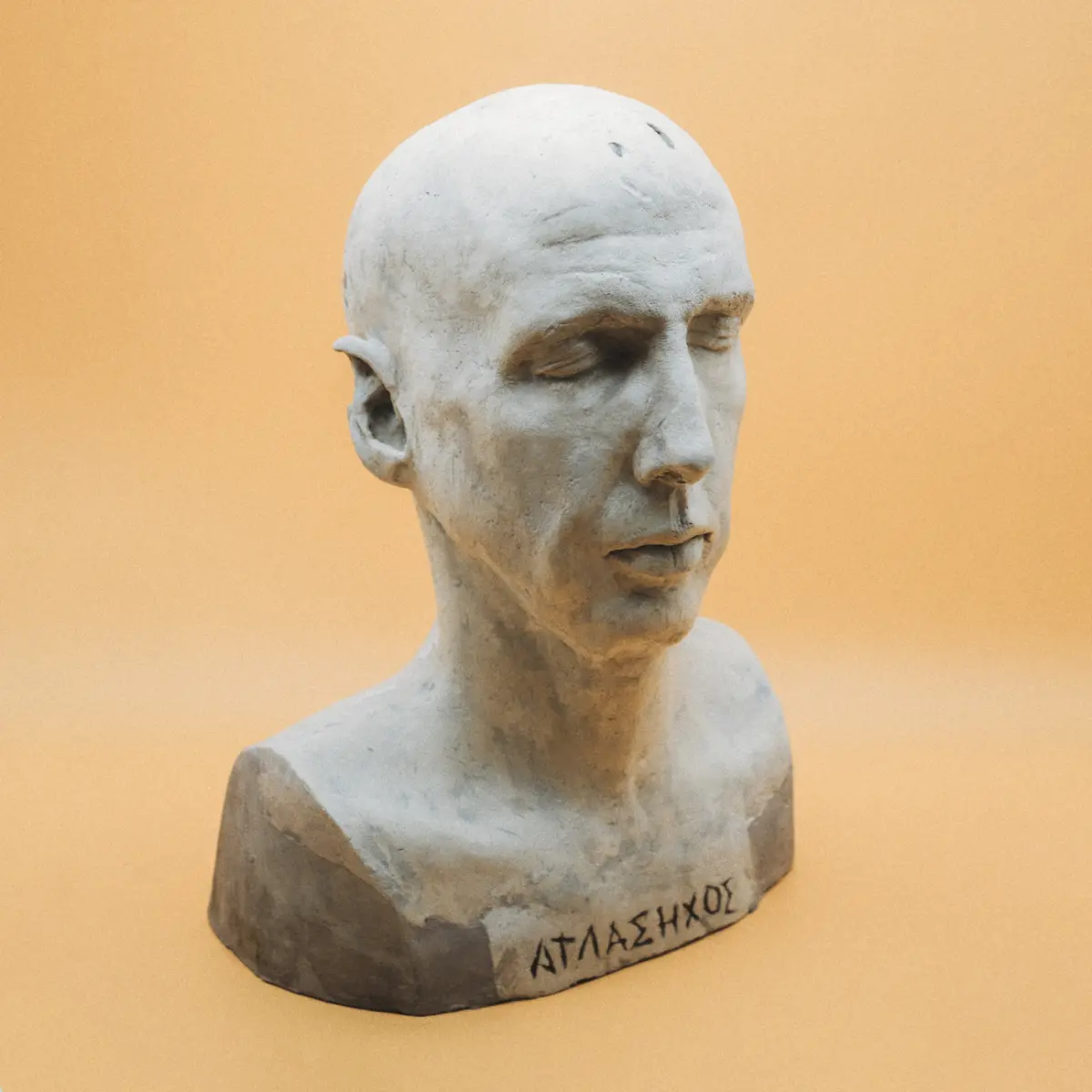
The independent music landscape has been met with an unexpected and significant release: Thanatos, the latest full-length album from Bradford Cox under his long-running solo moniker, Atlas Sound. This sudden unveiling follows a period of renewed activity for the project, culminating in Cox’s first solo album of any kind since Deerhunter’s Why Hasn’t Everything Already Disappeared? in 2019, and the first Atlas Sound album since 2011’s critically acclaimed Parallax. The album’s arrival not only signifies a creative resurgence for Cox but also completes a self-declared trilogy of works that began with 2009’s Logos.
The Return of Atlas Sound: A Chronology of Resurgence
The path to Thanatos has been a carefully orchestrated, yet seemingly spontaneous, re-emergence for Atlas Sound. After a prolonged hiatus from live performances under the Atlas Sound name, Cox made a highly anticipated return to the stage in September at Philadelphia’s Making Time festival. This performance was notable not only for breaking a seven-year silence in the live arena but also for featuring a setlist predominantly composed of new, unreleased material. This initial glimpse into Cox’s latest creative endeavors immediately sparked speculation among fans and critics about a forthcoming album.
This speculation was further fueled a month later, in October, with the release of "Octoberland," a standalone single that served as a potent harbinger of the album to come. "Octoberland" encapsulated much of the atmospheric, introspective, and often melancholic sonic palette that has become synonymous with Atlas Sound, hinting at a mature evolution of Cox’s signature style. The single’s release provided tangible proof that the Making Time performance was not merely a one-off event but part of a broader artistic initiative. The subsequent, and somewhat abrupt, release of Thanatos in November confirms this deliberate, yet understated, reintroduction of Atlas Sound to the forefront. The swift succession of these events—a live debut of new material, a lead single, and then the full album—demonstrates a strategic and confident rollout, allowing the music to speak for itself with minimal pre-release fanfare.
Thanatos: A Deep Dive into the Album’s Genesis
Thanatos comprises ten new songs, many of which listeners first experienced during the Making Time festival performance. The album’s creation is steeped in a particular intimacy and artistic solitude, as Cox recorded the entirety of the project alone in his attic, located in Atlanta’s historic Grant Park neighborhood. This choice of setting is crucial to understanding the album’s sonic character and thematic undercurrents. Far from a professional studio environment, the attic recording space, coupled with the use of a Tascam DP-008 portable 8-track recorder, imbues Thanatos with a distinctive lo-fi aesthetic that has long been a hallmark of independent and experimental music.
The Tascam DP-008 is a compact, battery-powered digital recorder designed for ease of use and portability, offering a limited yet potent palette for musicians. Its selection by Cox for Thanatos is not merely practical but artistic, signaling a deliberate embrace of constraint and an emphasis on raw, unpolished soundscapes. This methodology stands in contrast to the often more elaborate and layered productions found in his work with Deerhunter, highlighting Atlas Sound as the purest conduit for his unmediated solo expression. The self-imposed solitude and the deliberate choice of recording equipment suggest an intentional stripping away of external influences, allowing Cox to burrow deep into his psyche and translate his internal world directly into sound. This process, as described by long-time collaborator Cate Le Bon, facilitates "subconscious nocturnal abandon," leading to music that feels both deeply personal and universally resonant.
A Trilogy Completed, A Legacy Revisited
One of the most significant aspects of Thanatos is its billing as the completion of a trilogy, following 2009’s Logos and 2011’s Parallax. This conceptual framework invites listeners to consider Thanatos not just as a standalone work but as the final chapter in a narrative arc that has spanned over a decade. Logos, meaning "reason" or "word" in Greek, explored themes of logic, structure, and communication through a lens of psychedelic introspection. Parallax, referring to an apparent shift in the position of an object when viewed from different angles, delved into perceptions, distortions, and subjective realities. Thanatos, derived from the Greek word for "death" or "death drive," suggests a thematic exploration of mortality, cessation, and perhaps even rebirth—the ultimate dissolution or transformation.
The deliberate exclusion of 2008’s debut Atlas Sound album, Let The Blind Lead Those Who See But Cannot Feel, from this declared trilogy is also noteworthy. This choice implicitly positions the debut as an exploratory precursor, a foundational work that laid the groundwork but perhaps did not fit the specific thematic or conceptual thread woven through Logos, Parallax, and now Thanatos. This trilogy concept provides a retrospective lens through which to appreciate Cox’s evolving artistic journey under the Atlas Sound moniker, showcasing a sustained engagement with profound philosophical themes through a consistent, yet adapting, sonic vocabulary.
Beyond Atlas Sound, Cox’s prolific career with Deerhunter has also continued. Why Hasn’t Everything Already Disappeared?, released in 2019, was Deerhunter’s eighth studio album and received considerable critical acclaim for its nuanced exploration of environmental themes and existential dread. The gap between that album and Thanatos for Cox’s solo work highlights his dedication to both projects, maintaining distinct creative channels for different artistic impulses. While Deerhunter often channels a more collaborative, band-driven energy, Atlas Sound remains the space for Cox’s most unvarnished, solitary explorations.
Collaborators and Artistic Vision
Despite its intimate, solo creation, Thanatos benefits from the expertise of key collaborators in its final stages. The mastering of the recordings was handled by Heba Kadry, a highly respected engineer known for her work with a diverse roster of influential artists including Björk, Beach House, Alex G, The Mars Volta, and Slowdive. Kadry’s involvement ensures that the album’s raw, lo-fi textures are meticulously preserved and enhanced, delivering sonic clarity and depth without compromising the inherent intimacy of the attic recordings. Her mastery in balancing clarity with atmosphere is critical in translating Cox’s raw recordings into a cohesive, impactful listening experience.
The album’s visual identity also features notable contributions. The striking sculpture adorning the album cover was created by artist Chris Reynolds, while the accompanying photography was captured by Javier Morales. These visual elements are integral to the album’s overall presentation, offering visual metaphors that complement the sonic and thematic content.
In a touch of profound personal poignancy, Cox’s late dog, Faulkner, is credited on Thanatos for "emotional support." This credit is more than a sentimental gesture; it underscores the deeply personal and often solitary nature of Cox’s creative process, where even the quiet companionship of a pet can be a vital source of comfort and inspiration during extended periods of intense introspection and creation. It humanizes the artist’s journey, reminding listeners of the emotional landscape that underpins the abstract art.
Immersive Experience: Beyond the Music
Thanatos arrives not merely as a collection of songs but as a multi-faceted artistic experience, complete with unique accompanying materials that deepen the listener’s engagement. Among these is a hand-scribbled "scent map" that assigns specific smells to each of the album’s ten tracks. This innovative concept challenges traditional listening experiences, inviting a synesthetic appreciation of the music. By associating tracks with olfactory sensations—whether literal or metaphorical—Cox pushes the boundaries of how an album can be perceived and interpreted, transforming the act of listening into a more immersive, sensory journey. This approach reflects his long-standing interest in pushing conceptual boundaries and engaging audiences on multiple sensory levels.
Further enriching the release is a video titled "A Visit With Bradford Cox," offering a rare glimpse into the artist’s world and creative process. Such visual companions are invaluable for fans, providing context and insight into the environment and mindset from which the music emerged. It allows a deeper connection to the artist and the genesis of the work.
Perhaps most compellingly, the album is accompanied by a biography penned by Cox’s longtime friend and collaborator, Cate Le Bon. Le Bon, a highly regarded musician and songwriter in her own right, has previously collaborated with Cox and Deerhunter, notably contributing to Why Hasn’t Everything Already Disappeared?. Her deep understanding of Cox’s artistic temperament and personal philosophy makes her biography an exceptionally insightful and authoritative companion piece to Thanatos.
Cate Le Bon’s Poetic Insight: An Artist’s Deconstruction
Cate Le Bon’s biography is not a conventional factual account but a poetic and profound exploration of Bradford Cox’s artistic essence and the genesis of Thanatos. Her words serve as an intimate window into his creative process, revealing the philosophical underpinnings of the album. Le Bon begins by stating, "Bradford Cox has always existed in extremes. Embracing and transcending the contradictions inherent in an artist reaching for all the corners." This immediately sets the stage for understanding Cox as an artist who navigates paradox, constantly pushing against perceived boundaries.
Le Bon eloquently poses a central question: "Here, is he dissolving the boundary between death and rebirth? Something irreversible is happening. Rupture and renewal." This directly alludes to the album’s title, Thanatos, and frames the work as a transformative journey. She contrasts Virginia Woolf’s external quest for "her enormous eye" with Cox’s internal burrowing: "Bradford Cox finds it by burrowing deeper inside the familiar shell that is his home. Sheltered from all exterior weather fronts. surrounded by objects he has collected and absorbed for decades and held by the warmth of the love of his life." This passage vividly portrays his attic as not just a recording space but a "living burial chamber" where he can "shed the self"—a place of intense introspection and artistic metamorphosis.
The description of his nocturnal work habit—"He works only in the dead of night. Minimal interruptions and ritualistic scene setting allows for subconscious nocturnal abandon that yields this music of growth, destruction, renewal and cessation"—highlights a deliberate, almost ritualistic approach to creation. This focus on the "dead of night" underscores the themes of darkness, subconscious exploration, and the album’s namesake, Thanatos, suggesting a confrontation with the deeper, often unacknowledged aspects of existence.
Le Bon emphasizes the performative nature of Cox’s recording process: "Each vocal take is a performance. Each instrument played like it’s his last night on earth." This awareness of mortality, she argues, is what gives "love, passion and creation" their substance. This perspective infuses the album with an urgency and raw emotional honesty that transcends mere technical execution. The Tascam DP-008 is described not just as a tool but as a means to "distil the process down to the fundamentals of subtraction and addition," creating music that captures "the impermanence of a waterfall without making it concrete." This metaphor beautifully articulates the album’s ability to be both ephemeral and profoundly impactful, capturing fleeting moments and emotions without rigid definition.
Lyrically, Le Bon suggests the album is "led by a disassociated primordial wisdom usually found in the sediment of dreams. A feeling you cannot name but it scratches at the heart and soul. Elusive but knowable." This speaks to the often abstract, stream-of-consciousness quality of Cox’s lyrics, which evoke deep emotional responses through evocative imagery rather than explicit narrative. She concludes by stating, "It is everything I want from him and nothing I expected," a testament to the album’s unique ability to both satisfy and surprise, reaffirming Cox’s singular artistic voice.
The Significance of the Home Studio and Lo-Fi Aesthetic
The decision to record Thanatos alone in an attic with a portable 8-track recorder is not merely a logistical choice but a profound artistic statement. In an era where music production often strives for pristine, high-fidelity sound, Cox deliberately embraces a lo-fi aesthetic. The Tascam DP-008, a modest piece of equipment compared to professional studio gear, naturally introduces sonic characteristics like tape hiss, saturation, and a more compressed dynamic range. These elements, far from being imperfections, become integral to the album’s texture and emotional resonance.
This approach harks back to the roots of independent and DIY music, where artists often created groundbreaking works with limited resources, prioritizing raw expression over polished production. For Cox, it allows for an unfiltered translation of his ideas, bypassing the complexities and potential compromises of a formal studio environment. The attic, a personal and secluded space, becomes a sanctuary for uninhibited creation, fostering an atmosphere of introspection and vulnerability that permeates the album’s sound. This home-recorded intimacy contributes to the feeling that listeners are privy to Cox’s most private thoughts and emotions, directly experiencing the act of creation rather than a meticulously engineered final product. It reinforces the idea of Thanatos as a deeply personal artifact, born from solitude and self-reflection.
Release Strategy and Future Outlook
Thanatos is currently available as a digital-only release, a common strategy in the modern music industry for immediate global accessibility. However, fans of physical media will be pleased to know that a vinyl edition is planned for release next year. This phased approach allows for instant gratification while also catering to collectors and audiophiles who appreciate the tangible experience of vinyl. Updates regarding the vinyl release will be shared via Atlas Sound’s official website, maintaining a direct channel of communication with the dedicated fanbase.
The album’s release is also complemented by a series of announced tour dates, signaling a full return to active touring for Atlas Sound. These include appearances at prestigious festivals such as Big Ears in Knoxville, TN (April 1-4), Kilby Block Party in Salt Lake City, UT (May 14-16), and Primavera Sound in Barcelona, Spain (June 3-5). These festival bookings are significant, indicating the high regard for Atlas Sound within the independent music circuit and offering Cox a platform to present Thanatos to diverse international audiences. Live performances will undoubtedly bring a new dimension to the album’s intricate soundscapes, allowing fans to experience the raw energy and nuanced artistry in person.
Bradford Cox’s Enduring Influence
The release of Thanatos on the esteemed 4AD label, known for its curated roster of innovative and influential artists, further solidifies Atlas Sound’s position within contemporary independent music. Bradford Cox, through both Deerhunter and Atlas Sound, has consistently demonstrated an unwavering commitment to artistic integrity and experimental exploration. His ability to craft compelling narratives and evoke profound emotional states through sound, often challenging conventional song structures and lyrical approaches, has cemented his status as a singular voice in his generation.
Thanatos is more than just another album; it is a testament to the enduring power of solitary creation, a deeply personal statement that resonates with universal themes of life, death, and transformation. By returning to the intimate confines of his solo project and embracing a raw, unvarnished aesthetic, Cox has delivered a work that is both familiar and utterly unexpected, fulfilling Cate Le Bon’s poignant observation. It marks a significant chapter in the Atlas Sound discography, completing a conceptual trilogy and reaffirming Bradford Cox’s irreplaceable contribution to the landscape of contemporary experimental rock and ambient music. The album invites listeners to not just hear but to truly experience the intricate world woven by one of music’s most enigmatic and revered figures.
