

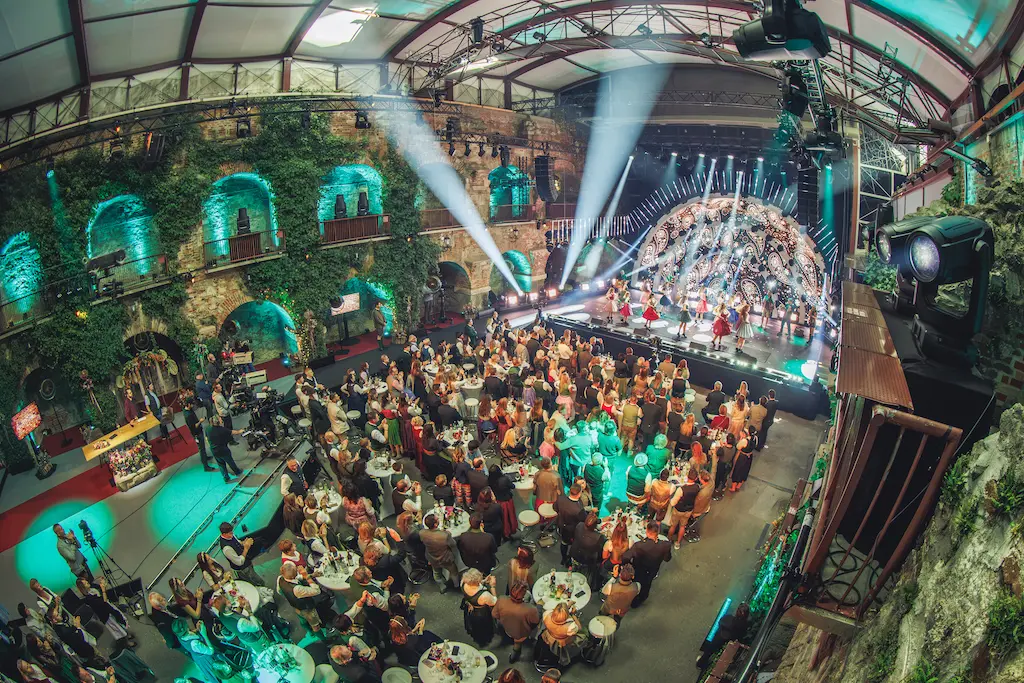
The seventh iteration of "Aufsteirern – Die Show der Volkskultur," a flagship television production celebrating Austrian folk culture, showcased a sophisticated marriage of historical architecture and modern lighting technology. For the 2026 production, acclaimed Production Designer Manfred Nikitser deployed a comprehensive rig featuring 251 fixtures from German Light Products (GLP). The recording, which took place on October 1, 2026, transformed the historic Kasematten at the Graz Schloßberg into a high-tech broadcast studio for ORF 2. The program subsequently aired during prime time on October 24, capturing a significant segment of the national viewing audience.
The production, a joint venture between the Graz-based Ivents Kulturagentur and the ORF Styria regional studio, has established itself as a cornerstone of Austrian cultural programming. With an average reach of approximately half a million viewers and a consistent market share of 20 percent, the show serves as a vital platform for folk music, traditional dance, and regional customs. The technical challenge for the 2026 edition lay in elevating the visual aesthetic of the show while respecting the stringent physical limitations of the heritage-protected venue.
Architectural Constraints and Technical Innovation at the Kasematten
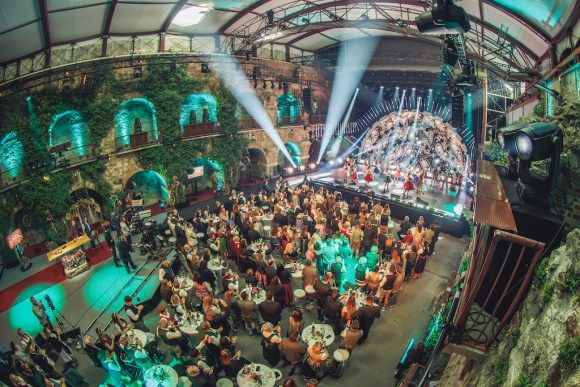
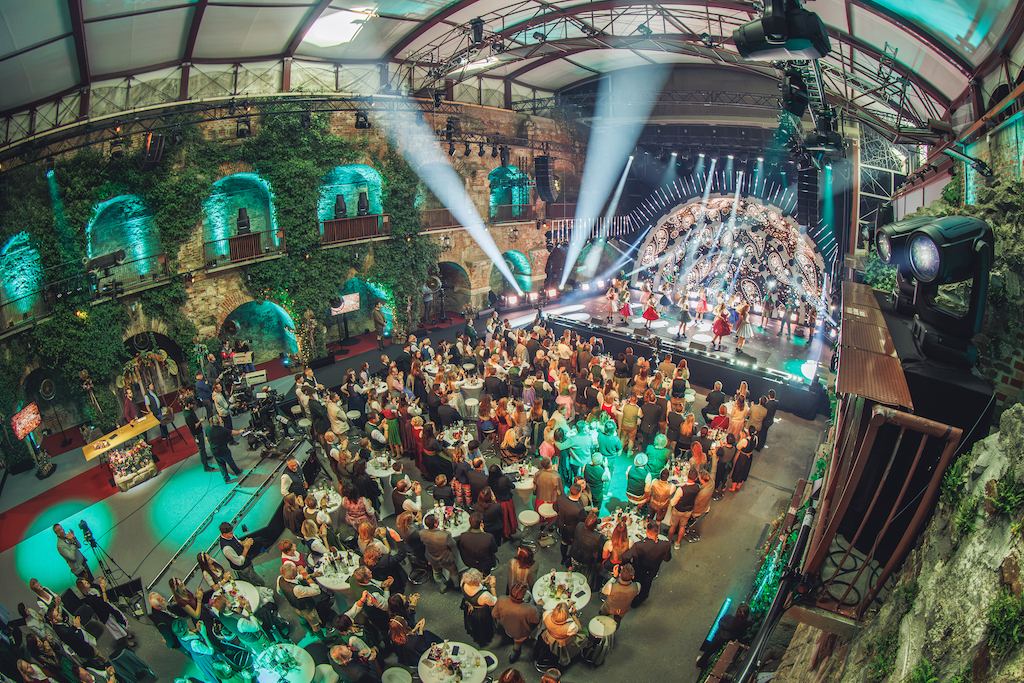
The Kasematten, a former fortification and storage cellar turned open-air theater, presents a unique set of logistical hurdles for production designers. As a monument-protected site, the stone structures of the Schloßberg impose strict limits on hanging points and weight loads. Manfred Nikitser’s design strategy focused on balancing high-output illumination with lightweight, compact fixtures that could be integrated into the historical substance without causing structural strain.
A central component of this year’s technical evolution was the strategic shift to the GLP WildWash 12. Nikitser utilized 36 of these units for the main show stage, citing the critical ratio of weight to output as the deciding factor. In an environment where every kilogram matters, the WildWash 12 provided the necessary luminosity to fill the expansive stone arena while staying within the load-bearing capacities of the temporary rigging. This move ensured that the grandeur of the "Aufsteirern" production was maintained without compromising the integrity of the 16th-century architecture.
Deployment of the GLP X5 Series and the New Dot Wash
The 2026 rig was anchored by the latest advancements in the GLP X5 family. For the first time, Nikitser integrated 24 GLP X5 Dot Wash units into the design. These ultra-compact, static fixtures are part of GLP’s new Dot-Range, featuring RGBL color mixing and a versatile manual zoom range of 16 to 68 degrees.
Initially, Nikitser expressed hesitation about moving away from the X-Par 12Z, a fixture that had served the production well in previous years. However, the X5 Dot Wash proved to be a superior solution for camera backgrounds and moderation positions. One of the primary advantages noted by the design team was the seamless color matching across the X5 family. The RGBL engine allowed for immediate color fidelity, ensuring that the light quality remained consistent between the compact Dot Wash units and the larger moving heads. Furthermore, the passive cooling system of the Dot Wash was a significant benefit for the television recording, as it eliminated fan noise during sensitive acoustic performances and dialogue segments.
The broader X5 deployment included 23 impression X5 Compact and 8 impression X5 units. These were used to provide key, front, and backlighting across the two stages. To maintain the visual purity of the historical site, the fixtures were mounted on pipes specifically designed to blend into the masonry, creating a "hidden" technology effect that allowed the focus to remain on the performers and the architecture.
Dynamic Lighting and Single-Pixel Control
To add texture and depth to the stone walls and natural greenery of the Kasematten, the design utilized 49 GLP WildBar 16 units. These linear fixtures were tasked with illuminating columns and ivy-covered sections of the venue. By operating the WildBars in single-pixel mode, Nikitser was able to create subtle accents and kinetic movements along the stage’s front edge, bridging the gap between static architectural lighting and dynamic show effects.
Further movement was provided by 34 GLP impression FR1 units. These compact moving heads were distributed throughout the entire space, serving as versatile "swing" lights. Depending on the segment—whether a high-energy musical performance or a seated talk segment—the FR1s could be pivoted to provide specialized illumination for either the show stage or the interview area.

The JDC2 IP: Advancing Beyond the Traditional Strobe
A significant highlight of the technical setup was the inclusion of 27 JDC2 IP hybrid strobes. Positioned on the stage floor, these units were utilized far beyond their standard strobe capabilities. Nikitser leveraged the integrated DigiFX of the new Firmware 2.0 to create complex visual textures directly for the camera.
The JDC2 IP allows designers to manipulate graphical layers to create "sparkling" effects and intricate patterns that are highly effective in a broadcast environment. A key efficiency gain for this production was the ability to control these effects directly via the lighting console, bypassing the need for external media servers or complex video signal chains. This streamlined the workflow and reduced the technical footprint on-site.
The preparation for these effects was enhanced by the use of the JDC2 Simulator. This software allowed the lighting team to pre-configure the DigiFX and test sequences in a virtual environment before the physical hardware was installed. This digital pre-visualization was crucial for ensuring that the complex musical cues were perfectly synchronized with the lighting responses during the live recording.
Chronology of the 2026 Production
The timeline for "Aufsteirern – Die Show der Volkskultur" 2026 followed a rigorous schedule typical of high-end television specials:
- September 2026: Finalization of the lighting plot and pre-programming using the JDC2 Simulator.
- Late September 2026: Load-in and installation at the Graz Kasematten by the technical service provider NoiseGate.
- October 1, 2026: Full-day recording session featuring various folk music ensembles, dancers, and celebrity guests.
- October 2–23, 2026: Post-production and editing by ORF Styria to prepare the broadcast master.
- October 24, 2026: Prime-time broadcast on ORF 2 at 20:15 CET.
The technical execution was managed by NoiseGate under the leadership of Daniel Haidinger. Egon Waltl served as the Production Manager, ensuring that the logistical needs of the ORF and the performers were met. Martin Rupprecht was responsible for the critical "white light" management, a task essential for ensuring that skin tones and traditional costumes (Tracht) were rendered accurately for the high-definition cameras.
Broader Implications for Cultural Broadcasts
The success of the seventh "Aufsteirern" show underscores a growing trend in the event industry: the integration of high-performance, IP-rated LED technology in sensitive heritage environments. The use of fixtures like the GLP X5 series and the WildWash 12 demonstrates that modern television standards do not have to come at the expense of historical preservation.
Furthermore, the high viewership ratings—reaching half a million people in a country of nine million—indicate a sustained public interest in "Volkskultur" when presented with modern production values. By investing in top-tier production design and cutting-edge lighting technology, the ORF and Ivents Kulturagentur have successfully transitioned traditional folk culture from a niche interest into a mainstream television spectacle.
The technical choices made by Manfred Nikitser reflect a move toward versatility and efficiency. The ability to achieve media-server-style effects through the lighting console (via DigiFX) and the reliance on fixtures with high color consistency reduces the time required for on-site calibration. As broadcast budgets and setup windows continue to tighten, these technological advancements from manufacturers like GLP become indispensable for delivering world-class visual content.
In conclusion, the 2026 edition of "Aufsteirern" stands as a benchmark for how regional culture can be elevated through professional production design. The synergy between Manfred Nikitser’s creative vision, GLP’s technical innovation, and the historic backdrop of Graz has once again proven that the "Show der Volkskultur" is a vital and visually stunning component of the European cultural landscape.
